
Travel Zealand Australia: Severe Disruptions as Middle East Tensions Escalate
Multiple Asia-Pacific nations including New Zealand and Australia face severe air travel disruptions in March 2026. UK issues urgent warnings as Middle East tensions impact global aviation routes and passenger schedules.

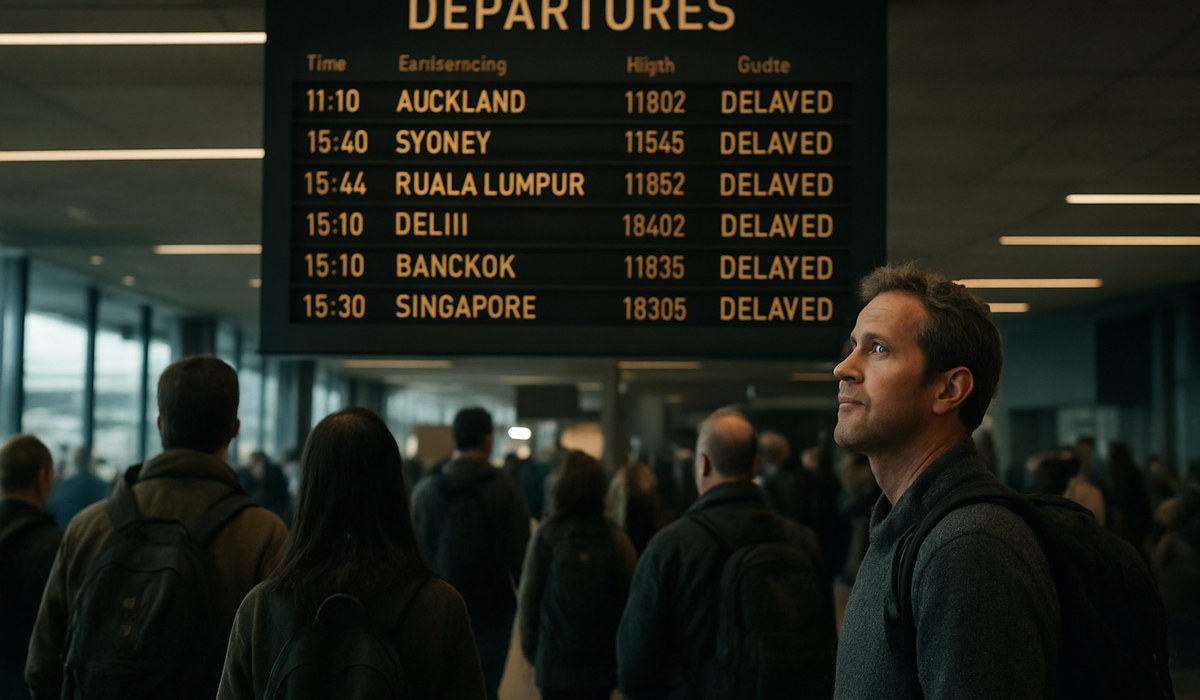
Image generated by AI
Air Travel Crisis: Travel Zealand Australia and Asian Hubs Face Major Disruptions
New Zealand and Australia join a growing list of Asia-Pacific destinations experiencing unprecedented flight delays and cancellations throughout March 2026. The disruptions stem from escalating Middle East tensions affecting major international air corridors. Passengers traveling between these regions and beyond are facing extended delays, route diversions, and significant operational challenges across multiple carriers.
The aviation crisis extends far beyond Oceania. Singapore, Malaysia, India, and Thailand have all reported severe service interruptions. Airlines operating on transcontinental routes are implementing emergency protocols. Authorities across affected regions have issued travel advisories warning passengers of potential further disruptions in coming weeks.
Regional Impact: Disruptions Across Multiple Continents
The cascading effects of Middle East airspace restrictions have created a domino effect throughout global aviation networks. Auckland Airport (AKL) and Sydney Airport (SYD) have emerged as key bottlenecks for international passenger flows. Airlines have been forced to reroute flights through longer pathways, adding 3-5 hours to typical journey times.
Singapore Changi Airport (SIN) serves as a critical hub connecting travel between New Zealand, Australia, Malaysia, and India. Current congestion at this facility has created backups affecting thousands of passengers daily. Thai Airways International and other Southeast Asian carriers report cancellation rates exceeding 12% on select routes.
For detailed tracking of affected flights, passengers should consult FlightAware for real-time updates. The International Air Transport Association (IATA) has coordinated with governments to establish temporary flight corridors.
Affected Airlines and Route Modifications
Major carriers operating routes between travel destinations like New Zealand, Australia, and Asia-Pacific hubs have implemented sweeping changes. Air New Zealand, Qantas Airways, Malaysia Airlines, Air India, Thai Airways, and Singapore Airlines have all announced modified schedules and alternate routings.
Air New Zealand has suspended 18 transpacific services temporarily. The airline is rebooking passengers on alternative flights with partners, creating extended layovers in Singapore and Malaysia. Qantas Airways has similarly announced capacity reductions on its India and Southeast Asia routes.
Malaysia Airlines has rerouted flights from Kuala Lumpur (KUL) to bypass traditional Middle East corridors entirely. This adds approximately 4-6 hours to journeys between travel zones in Malaysia and Australia. Air India flights from New Delhi (DEL) to Australian cities now require unscheduled stops in Thailand.
Passengers holding tickets on these carriers should contact their airlines directly for rebooking options. Visit airline websites or contact the US Department of Transportation for passenger rights information applicable to international travel.
Current Flight Status and Tracking Resources
Real-time information on specific flight delays remains critical for travelers with upcoming bookings. Passengers planning travel between New Zealand, Australia, Malaysia, India, Thailand, and Singapore should monitor status updates hourly rather than daily.
Current operational status by major hub:
| Airport Code | Location | Flight Delays (Average) | Cancellation Rate | Affected Airlines |
|---|---|---|---|---|
| AKL | Auckland, New Zealand | 2-3 hours | 8% | Air New Zealand, United Airlines |
| SYD | Sydney, Australia | 1.5-2.5 hours | 6% | Qantas, Jetstar, Air New Zealand |
| SIN | Singapore | 3-4 hours | 12% | Singapore Airlines, Malaysia Airlines |
| KUL | Kuala Lumpur, Malaysia | 2.5-3.5 hours | 10% | Malaysia Airlines, AirAsia X |
| DEL | New Delhi, India | 2-3 hours | 7% | Air India, IndiGo |
| BKK | Bangkok, Thailand | 1.5-2 hours | 5% | Thai Airways, Thai AirAsia |
Check FlightAware for live aircraft position data. The Federal Aviation Administration has published guidance for US-registered carriers operating in affected airspace.
Passenger Rights and Compensation Information
Travelers whose flights have been disrupted due to these circumstances maintain specific legal protections. The European Union's flight delay compensation framework applies to EU carriers regardless of departure location. Passengers on affected flights should document all expenses incurred due to cancellations or significant delays.
International Air Transport Association guidelines establish minimum compensation thresholds. Passengers experiencing delays exceeding three hours are typically eligible for compensation of €250-€600 depending on flight distance. Airlines must provide meals, accommodation, and communication services during extended delays.
For flights within the Asia-Pacific region, passengers should contact their respective national aviation authorities. Airlines cannot deny compensation claiming "extraordinary circumstances" for operational decisions related to route changes. Comprehensive travel insurance remains advisable for anyone planning travel to affected destinations during the current period.
Keep documentation of all delays, cancellations, and expenses. Photographs of airport signage indicating disruption reasons strengthen compensation claims filed through official channels.
What This Means for Travelers: Action Steps
The current aviation crisis demands active passenger engagement rather than passive acceptance of delays. Taking proactive measures now can minimize travel disruption impact and maximize compensation eligibility.
Immediate actions for travelers with upcoming bookings:
-
Monitor your booking daily – Check email, airline apps, and FlightAware for status updates on specific flight numbers.
-
Consider rerouting options – Contact your airline immediately to explore alternative routes, even if they add 6-8 hours to your journey. Confirmed alternate flights carry more protection than standby options.
-
Document everything – Photograph boarding passes, delay notices, and receipts for meals and accommodations. These documents support future compensation claims.
-
Verify insurance coverage – Review your travel insurance policy for coverage of delays exceeding 12 hours and airline cancellations.
-
Plan buffer time – If connecting through Singapore, Malaysia, or Australia, add minimum 4-hour layovers to account for current congestion.
-
Register for airline alerts – Enable push notifications from your airline's app to receive real-time update before official delays are announced.
-
Know your carrier's rebooking policy – Different airlines offer varying benefits on complimentary rebooking and accommodation during disruptions.
Passengers should avoid accepting initial airline offers without comparing options from competitors on similar routes.
Frequently Asked Questions
What is causing these severe travel disruptions affecting travel between New Zealand and Australia in March 2026?
Escalating tensions in the Middle East have forced closure of major air corridors typically used by carriers flying routes connecting New Zealand, Australia, Malaysia, India, Thailand, and Singapore. Airlines must now use significantly longer alternative routing, overwhelming hubs like Singapore Changi and creating cascading delays across the entire region.
Which airlines are most affected by current disruptions on travel routes from New Zealand and Australia?
Air New Zealand, Qantas Airways, Singapore Airlines, Malaysia Airlines, Thai Airways International, and Air India face the highest disruption rates. Carriers operating flights between New Zealand, Australia, and Southeast Asian cities experience the most significant schedule modifications and cancellations.
Can I receive compensation if my flight to Malaysia or Thailand is delayed beyond 12 hours?
Yes. International carriers must provide €250-€600 compensation depending on flight distance for delays exceeding 3 hours (EU regulation applies to EU carriers; other jurisdictions have similar frameworks). You must file claims directly with your airline within specified timeframes, typically 2-3 years from disruption date.
Will travel between Singapore, India, and Australia improve by April 2026?
Current geopolitical assessments suggest Middle East airspace restrictions may persist through April. Airlines recommend passengers book flexibility into itineraries through May 2026. Monitor official IATA announcements for updates on corridor reopening timelines.
Related Travel Guides
- Phoenix Sky Harbor Tops 30.8 Million Passengers in 2026: Surge in Spring Traffic and Asian Routes Drive Arizona Tourism
- US Customs and Border Protection to Deploy Biometric Walkthrough Scans at 38 Airport Terminals in 2026
- Ontario and Miami Ignite America’s Explosive Sports Tourism Race as Billion-Dollar Venues Set to Reshape Travel in 2026
Disclaimer
Disclaimer
This article is for informational and educational purposes only. It does not constitute legal, financial, or professional advice. While we strive to provide accurate and up-to-date information, travel policies, regulations, and conditions change rapidly. Always verify information with official sources before making travel decisions. Nomad Lawyer makes no representations about the accuracy, reliability, completeness, or suitability of the information provided. Readers should consult qualified professionals for advice specific to their circumstances. The views expressed in this article are those of the author and do not necessarily reflect the views of Nomad Lawyer.
Preeti Gunjan
Contributor & Community Manager
A passionate traveller and community builder. Preeti helps grow the Nomad Lawyer community, fostering engagement and bringing the reader experience to life.
Learn more about our team →