
Caribbean Rainforest and Hiking Guide 2026: From Tobago's 1776 Main Ridge to Guadeloupe and Dominica

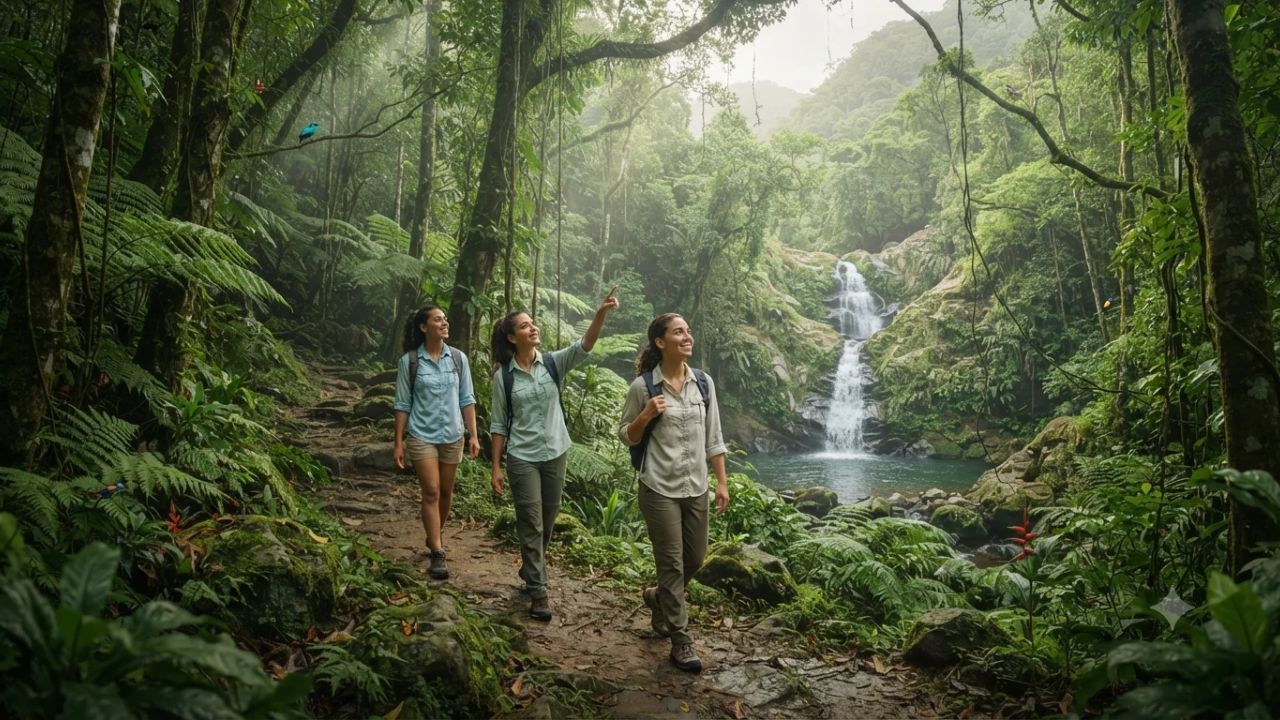
Established by parliamentary ordinance in 1776 to attract rainfall and prevent soil erosion, Tobago's Main Ridge Forest Reserve stands as the oldest legally protected rainforest in the Western Hemisphere. Covering roughly 3,958 hectares—or nearly 9,780 acres—across two-thirds of Tobago's mountainous spine, this ancient sanctuary represents the vanguard of Caribbean ecotourism. While sun-seeking tourists flock to all-inclusive beach resorts, adventurous travelers are venturing inland across the archipelago to discover cloud forests, volcanic crater lakes, and biodiversity sanctuaries.
Following the reopening of borders on July 17, 2021, tourism figures across Trinidad and Tobago rebounded from 41,091 combined arrivals in 2021 to 227,403 in 2022, 310,237 in 2023, 336,696 in 2024, and 373,027 in 2025. In Tobago specifically, international arrivals surged by 52% between 2022 and 2024, recovering steadily from 14,157 arrivals in 2022 toward its historical pre-pandemic levels. Across the wider Caribbean basin, protected reserves in Puerto Rico, Dominica, Jamaica, Guadeloupe, and Barbados are similarly transforming island vacations into deep nature expeditions.
The Premier Tropical Rainforest Sanctuaries of the Caribbean Arc
Each protected reserve across the Antilles features distinct elevations, geological histories, and biodiversity:
1. Main Ridge Forest Reserve (Tobago)
According to the Tobago Tourism Agency, Main Ridge forms the island's primary watershed, feeding 26 converging rivers and more than 14 known waterfalls. The historic five-kilometer Gilpin Trace takes roughly two hours to complete, providing world-class birdwatching for rare avian species such as the white-tailed sabrewing hummingbird, blue-backed manakin, and white-necked jacobin. Nearby, the 54-meter Argyle Falls features three cascading tiers with swimming pools accessible via a 20-minute rainforest walk for an entrance fee of TT$60.
2. El Yunque National Forest (Puerto Rico)
Spanning nearly 29,000 acres across eight municipalities, El Yunque National Forest is the only tropical rainforest managed within the United States National Forest System. Reopened following complete hurricane reconstruction in January 2022, the El Portal Visitor Center welcomes over 600,000 annual travelers. Towering peaks like Mount Britton and El Yunque Peak offer panoramic views above cloud forest canopies, drawing from Puerto Rico's 8.1 million overall visitors recorded in 2025.
3. Morne Trois Pitons National Park (Dominica)
Encompassing 64.85 square kilometers of volcanic terrain, Morne Trois Pitons was established in 1975 and inscribed as a UNESCO World Heritage Site in 1998. The park contains the Boiling Lake, Emerald Pool, and Freshwater Lake, situated 3.2 kilometers east of Laudat at an elevation exceeding 2,500 feet. Hikers can tackle the demanding 1.3-kilometer mountain track to Boeri Lake while spotting endangered Imperial Amazon and Red-necked Amazon parrots.
4. Guadeloupe National Park (Guadeloupe)
Enclosing more than one million annual visitors across its core volcanic zone along the Route de la Traversée, Guadeloupe National Park protects 2,138 plant species, 358 tree species, 308 fern varieties, and 100 orchid species. Popular trailheads include Maison de la Forêt along the Bras-David River and the majestic Carbet Falls, which records over 200,000 annual hikers.
5. Blue and John Crow Mountains (Jamaica)
Covering approximately 100,000 acres of montane cloud forest, this UNESCO World Heritage Site shelters the rare Homerus swallowtail butterfly and over 120 endemic bird species around Holywell's highland trails, supporting Jamaica's growing eco-tourism sector that welcomed 4.27 million visitors in 2024.
6. Turner's Hall Wood and Coco Hill Forest (Barbados)
In Barbados, Turner's Hall Wood preserves the island's final 50 acres of original tropical canopy in St. Andrew. Nearby, the 53-acre Coco Hill Forest ranges from 680 to 1,085 feet above sea level, showcasing agroforestry restoration with 1,400 trees across 80 plant varieties including heirloom cocoa, pineapple, and ackee.
What Makes Caribbean Mountain Ecosystems Geographically Unique
Unlike mainland continental rainforests in South America, Caribbean island forests developed in extreme geographic isolation. Volcanic activity, trade wind orographic precipitation, and steep elevational gradients produce microclimates where lowland bamboo groves transition into elfin cloud forests in under two miles of vertical ascent.
This insular evolution created high rates of endemism. In Guadeloupe alone, scientists record 214 plant species endemic to the Lesser Antilles, including 24 species found nowhere else on Earth.
Visitor Insider Tips for Caribbean Rainforest Exploration
Navigating tropical mountain trails requires specialized preparation and respect for unpredictable mountain weather:
- Hire Certified Local Guides for Remote Trails: In Tobago, hiring an accredited guide for Gilpin Trace significantly increases your odds of spotting nesting sabrewing hummingbirds. In Dominica, guides are strongly recommended for the strenuous Boeri Lake and Boiling Lake crossings.
- Base in Coastal Villages Adjacent to Trailheads: In Tobago, stay in Speyside, Roxborough, or Castara to reach Main Ridge before midday clouds lower visibility. In Dominica, guesthouses around Laudat place you right at the national park boundary.
- Pack Sturdy Grip Footwear and Waterproof Dry Bags: Tropical downpours occur suddenly in cloud forest zones. Wear trail shoes with deep rubber lugs to navigate slippery clay switchbacks, and keep cameras and phones sealed in dry sacks.
- Sample Local Farm-to-Table Cuisine After Hiking: Pair your Tobago hike with authentic curried crab and dumplings or pelau in Roxborough. In Dominica, savor fresh mountain river callaloo and plantains, while Guadeloupe offers fresh accras cod fritters along Basse-Terre.
- Avoid Entering Mountain Rivers During Heavy Rains: Flash floods can surge through canyon waterfalls like Argyle Falls and Cascade aux Écrevisses within minutes of an upstream downpour. Always heed posted park warnings and ranger notices.
Community Conservation and Environmental Stewardship
Caribbean rainforests serve as essential ecological anchors, protecting island communities from soil erosion, landslides, and storm runoff during Atlantic hurricane seasons. In Tobago, local villagers in Roxborough and Bloody Bay have formed community forestry cooperatives that balance trail maintenance with wildlife habitat monitoring.
Similarly, sustainable agroforestry initiatives like Coco Hill Forest in Barbados prove that reforestation can regenerate degraded historic sugar plantation lands into thriving permaculture systems that supply organic produce to regional restaurants.
By patronizing community guides, respecting trail boundaries, and supporting local eco-lodges, travelers ensure that tourism revenue directly finances forest conservation across these fragile island biospheres.
FAQ: Caribbean Rainforest Hiking 2026
What is the oldest protected rainforest in the Western Hemisphere?
Tobago's Main Ridge Forest Reserve, legally established in 1776 to preserve watershed hydrology and forest ecology across roughly 3,958 hectares.
Do I need a permit or guide to hike El Yunque in Puerto Rico?
While main interpretive trails and the El Portal Visitor Center are self-guided, advance vehicle reservations may be required during peak periods via Recreation.gov due to limited parking.
What should I wear when hiking Caribbean rainforest trails?
Wear lightweight quick-drying long trousers, breathable moisture-wicking shirts, sturdy hiking boots with aggressive traction, and carry a compact waterproof rain jacket.
Which island is best for seeing active volcanic features?
Dominica's Morne Trois Pitons National Park features the Boiling Lake and sulfur fumaroles in the Valley of Desolation, offering unmatched geothermal hiking.
Stepping under the ancient rainforest canopy of Tobago reveals an untamed Caribbean where mountain rivers, rare hummingbirds, and timeless greenery endure.
Related Travel Guides
Disclaimer
This article is for informational and educational purposes only. It does not constitute legal, financial, or professional advice. While we strive to provide accurate and up-to-date information, travel policies, regulations, and conditions change rapidly. Always verify information with official sources before making travel decisions. Nomad Lawyer makes no representations about the accuracy, reliability, completeness, or suitability of the information provided. Readers should consult qualified professionals for advice specific to their circumstances. The views expressed in this article are those of the author and do not necessarily reflect the views of Nomad Lawyer.
Raushan Kumar
Founder & Lead Developer
Full-stack developer with 11+ years of experience and a passionate traveller. Raushan built Nomad Lawyer from the ground up with a vision to create the best travel and law experience on the web.
Learn more about our team →