
Malta Gears Up for WTTC Global Summit as Justin Trudeau Joins Top Tourism Leaders in Valletta
Malta Gears Up for WTTC Global Summit as Justin Trudeau Joins Top Tourism Leaders in Valletta

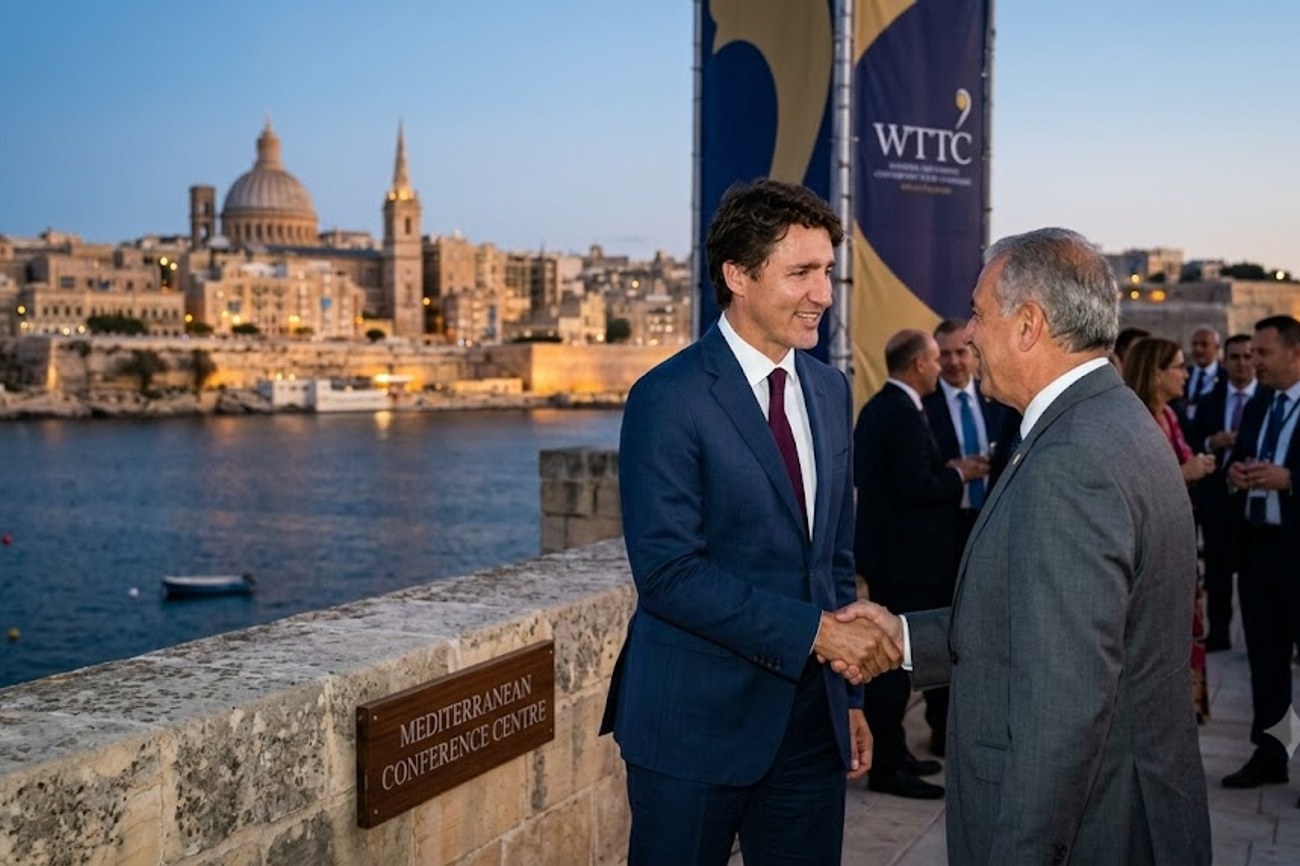
Image generated by AI
title: Valletta's High-Stakes Moment: Inside the 2026 WTTC Global Summit description: A deep dive into Malta's hosting of the WTTC Global Summit 2026, exploring the intersection of luxury tourism, global policy, and the cultural heartbeat of Valletta.
Malta beat out 21 other competing destinations to secure the hosting rights for the 2026 WTTC Global Summit. This selection transforms the fortified capital of Valletta into the epicenter of the global visitor economy from 7 to 9 October 2026, moving the conversation beyond the usual hubs of London or Singapore to a Mediterranean archipelago that balances ancient history with high-stakes diplomacy.
The "FUTU[RE]SET" Shift in Valletta
The upcoming gathering in Valletta is not merely a corporate retreat for the travel elite; it is a strategic pivot point for the industry. Under the theme "FUTU[RE]SET," the 26th edition of the summit arrives at a time when the economic scale of travel has reached an unprecedented peak. In 2025, global investment in the sector climbed by 8.5 per cent year-on-year, surpassing US$1 trillion, while the total contribution to global GDP hit a record US$11.6 trillion.
When you walk through the limestone streets of Valletta during the summit, you will see more than just tourists. Over 1,000 delegates from more than 100 countries will descend on the city. The guest list is a who's who of global power, featuring former Canadian prime minister Justin Trudeau and more than 200 CEOs and senior executives. Local leadership, including Tourism Minister Jo Etienne Abela and Deputy Prime Minister Ian Borg, will be integrating Malta's specific regional challenges into a broader dialogue on artificial intelligence, geopolitical volatility, and connectivity.
For the first time, the WTTC is breaking its traditional membership exclusivity by offering a limited number of Executive Access Passes. This allows senior professionals from outside the inner circle to participate in the networking and social functions, effectively opening the doors of the "global tourism boardroom" to a wider array of industry innovators.
What Makes Malta Different
To understand why Malta is the ideal backdrop for a summit on the future of travel, one must look past the luxury hotels. Malta is a geographic anomaly—a tiny cluster of islands that has served as a bridge between Europe, Africa, and Asia for millennia. This history of connectivity is exactly what the WTTC aims to discuss.
Valletta itself is a living museum. As a UNESCO World Heritage site, the city is a fortress carved from globigerina limestone, where every alleyway leads to a Baroque church or a hidden courtyard. The experiential uniqueness of Malta lies in this contrast: the summit will discuss cutting-edge AI and trillion-dollar investment portfolios while hosted in a city where the rhythm of life is still dictated by the Mediterranean sun and the slow pace of the pastizzi shops.
Unlike larger destinations, Malta offers an intimacy that allows for organic networking. The "Valletta experience" means that a CEO of a global airline and a local government minister are likely to cross paths at a small cafe in Republic Street. This density creates a pressure cooker of ideas, making the 7 to 9 October window a period of intense intellectual and commercial exchange.
Visitor Insider Tips
If you are visiting Malta during or around the summit, or planning a trip to experience the destination the delegates will be praising, you need to navigate the islands with a local's mindset.
Timing and Crowds October is the "golden window" for Malta. The oppressive summer heat has faded, but the sea remains warm enough for swimming. However, during the summit dates (7-9 October), Valletta will be heavily congested. To avoid the chaos, base yourself in Sliema or St. Julian's and take the ferry across the harbor to Valletta. It is faster than the bus and offers the best view of the city's fortifications.
Local Etiquette and Rhythms Maltese culture is deeply communal. When visiting local shops or cafes, a simple "Bonġu" (Good morning) goes a long way. Avoid the temptation to rush; the islands operate on a relaxed schedule. If you are dining in traditional spots, expect dinner to start later than in Northern Europe—usually after 8:00 PM.
Regional Specialties Skip the tourist menus. Seek out Pastizzi (flaky pastries filled with ricotta or mushy peas) from a hole-in-the-wall kiosk. For a more substantial meal, try the rabbit stew (Fenkata), which is the national dish. For drinks, try Kinnie, a bitter orange soda that is uniquely Maltese and incredibly refreshing in the October warmth.
Transport Hacks While the public bus system is extensive, it can be unpredictable. For seamless movement, use ride-sharing apps like Bolt or Uber, which are widely available and more reliable for getting to specific venues in Valletta. For a truly local experience, explore the Three Cities (Vittoriosa, Senglea, and Cospicua) via the traditional dgħajsa (water taxis).
Cultural and Environmental Context
The influx of 1,000 high-profile delegates and the broader push to increase Malta's global profile bring a complex set of challenges. Malta is one of the most densely populated countries in the world, and the tension between tourism growth and environmental preservation is a constant local debate.
The summit's focus on sustainability is not just a buzzword—it is a necessity for the archipelago. Over-tourism in the narrow streets of Valletta and the degradation of coastal areas are real concerns. The Malta Tourism Authority is currently attempting to shift the narrative from "mass tourism" to "high-value tourism." By hosting the WTTC, Malta is signaling that it wants to attract investors and visitors who prioritize quality, sustainability, and cultural respect over sheer volume.
Furthermore, the integration of AI into the visitor economy, a key theme of the "FUTU[RE]SET" agenda, is being viewed locally as a way to manage tourist flows more intelligently. The goal is to use data to divert crowds away from the saturated center of Valletta and toward the underrated rural villages of Gozo and the northern cliffs, ensuring that the economic benefits of tourism are distributed more equitably across the islands.
FAQ: Visiting Malta 2026
What is the best time to visit Malta? The best times are spring (March to May) and autumn (September to November). October is particularly ideal as the weather is mild and the summer crowds have departed, though the WTTC summit in early October will increase activity in Valletta.
Do I need a visa to visit Malta? Malta is part of the Schengen Area. Citizens of the US, Canada, and the UK generally do not need a visa for short stays, but always check the latest requirements via the official European Union travel portal.
How do I get to Valletta from the airport? The easiest way is via a licensed taxi or a ride-sharing app like Bolt. The journey from Malta International Airport to the center of Valletta typically takes 20 to 30 minutes depending on traffic.
Is Malta safe for solo travelers? Yes, Malta is consistently ranked as one of the safest destinations in Europe. Solo travelers can feel comfortable exploring the islands, though standard urban precautions should be taken in crowded tourist areas.
Valletta is no longer just a fortress of stone; it is becoming a fortress of global tourism strategy.
#Valletta2026 #WTTCGlobalSummit #MaltaTravel2026 #MediterraneanTourism #VisitMalta2026 #GlobalVisitorEconomy
Related Travel Guides
- India Stuns The World As Delhi Luxury Hotels Become Elite Diplomatic Addresses During BRICS Summit 2026
- Discovery Saudi Targets Global Growth with Multi-Country Gulf Tours, Stronger Travel Trade Partnerships and Vision 2030
- AI Is Transforming Event Planning: Here’s How France is Utilising It To The Fullest
Disclaimer
This article is for informational and educational purposes only. It does not constitute legal, financial, or professional advice. While we strive to provide accurate and up-to-date information, travel policies, regulations, and conditions change rapidly. Always verify information with official sources before making travel decisions. Nomad Lawyer makes no representations about the accuracy, reliability, completeness, or suitability of the information provided. Readers should consult qualified professionals for advice specific to their circumstances. The views expressed in this article are those of the author and do not necessarily reflect the views of Nomad Lawyer.
Naina Thakur
Contributor & Travel Specialist
Travel enthusiast and legal writer covering visa regulations, responsible tourism, and cultural journeys across global destinations.
Learn more about our team →