
Maldives Ranks 2nd in Global Noise Index Amid High Tourism Density
The Maldives received a quiet score of 8.48 out of 100 in the Noise-Free Nations Index, reflecting high visitor density of 17,800 tourists per square mile.

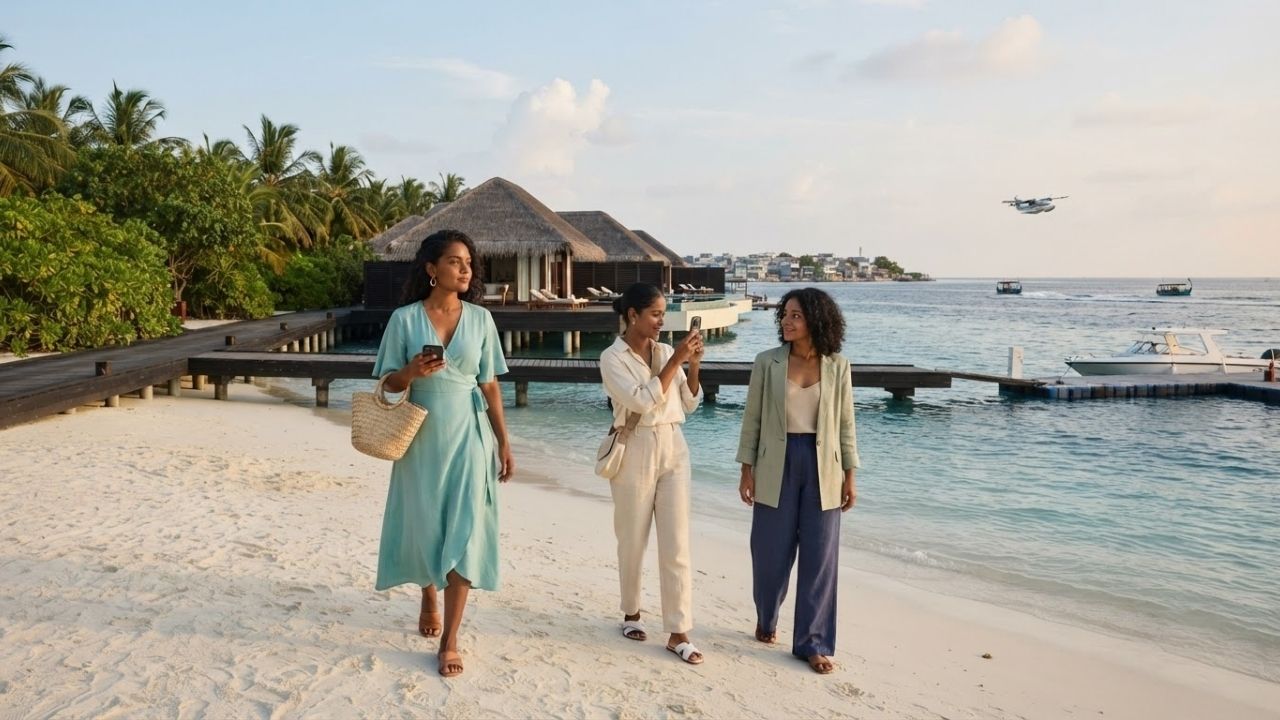
Image generated by AI
The Maldives has entered a global tourism debate after receiving a quiet score of just 8.48 out of 100 in the latest Noise-Free Nations Index. Ranking second behind Singapore among the world's least quiet nations, the finding highlights the contrast between secluded private island resorts and high urban density in the capital of Malé.
Noise-Free Nations Index: Malé Urban Density vs Secluded Resorts
[MALÉ, Maldives] — Long celebrated as a tranquil tropical sanctuary, the Maldives faces new international attention regarding its overall environmental noise footprint. In the newly published Noise-Free Nations Index, the Indian Ocean nation received a quiet score of 8.48 out of 100, placing it second globally among the least quiet destinations, directly behind Singapore.
The index evaluated nations across seven core noise-related metrics:
- Population density
- Tourist arrival numbers
- Rural land availability
- Ratio of protected natural areas
- Motor vehicle presence
- Airport density and flight operations
- Railway network activity
Analysts clarify that the index evaluates national conditions rather than isolated resort properties. While private island resorts across outer atolls maintain quiet surroundings, national scores reflect heavy concentration in Malé—a densely populated capital featuring heavy motor vehicle traffic, construction, and continuous commercial activity.
Other destinations appearing among the least quiet nations in the index include Barbados, Qatar, and Lebanon. Conversely, Bhutan was named the world’s quietest nation due to low population density, strict urban controls, and expansive protected forest reserves.
17,800 Visitors Per Square Mile: Arrival Stats and 2026 Market Shift
A major driver behind the Maldives' ranking is the relationship between high visitor numbers and extremely limited land area. Covering approximately 116 square miles of land across more than 1,000 coral islands, the Maldives possesses one of the smallest land footprints in the world.
Tourism data indicates that the country experiences a visitor density of approximately 17,800 tourists per square mile of land area, putting intense operational pressure on transport hubs and populated islands:
- 2025 Full-Year Performance: The Maldives welcomed approximately 2 million international visitors in 2025, solidifying its status as a premier luxury destination.
- Jan–Jul 2026 Performance: During the first seven months of 2026, the country recorded 1.23 million tourist arrivals. This represents a 5.2 percent decline compared to the same period in 2025, driven by flight schedule adjustments and rising international travel costs.
- Global Recognition: Despite noise index rankings, the Maldives placed second among the world's best islands in the 2026 Travelersare awards, trailing only Thailand's Koh Samui.
Transit Logistics: Speedboats, Seaplanes, and Environmental Balance
Moving two million annual visitors across an oceanic archipelago requires continuous transport operations. Constant transfers via speedboats, domestic turboprop flights, and seaplane fleets operating out of Velana International Airport create round-the-clock activity across key transit corridors.
Tourism authorities emphasize that the resort experience remains distinct from urban hubs. The vast majority of international visitors bypass Malé entirely, transferring directly from airport terminals to secluded private island resorts.
However, managing urban growth in Malé while expanding transport infrastructure represents an important long-term challenge for Maldivian tourism planners seeking to balance economic growth with environmental protection.
The table below outlines the Noise-Free Nations Index benchmarks, land area metrics, and Maldives visitor statistics:
| Indicator Metric | Maldives / Index Data | Comparative Global Benchmark | Operational Impact & Context |
|---|---|---|---|
| Noise-Free Index Score | 8.48 out of 100 | #2 Least Quiet (Behind Singapore) | Reflects urban density in Malé & transport hubs |
| World's Quietest Nation | Bhutan (Ranked #1 Quietest) | High rural land & protected forests | Low population density & controlled tourism |
| Other Low-Quiet Nations | Barbados, Qatar, Lebanon | High urban / infrastructure density | Small land footprint with heavy transit networks |
| Maldives Total Land Area | 116 Square Miles | One of world's smallest nations | Spread across 1,000+ coral islands |
| Tourist Density Metric | 17,800 Visitors per Sq Mile | High concentration on developed islands | Puts high operational demand on infrastructure |
| 2025 Full-Year Arrivals | ~2,000,000 International Visitors | Peak annual tourism milestone | Primary source of national foreign exchange |
| Jan–Jul 2026 Arrivals | 1.23 Million Visitors (-5.2% YoY) | Temporary market adjustment | Impacted by flight shifts & travel costs |
| 2026 Travelersare Rank | #2 Best Island (Behind Koh Samui) | High global consumer satisfaction | Retains world-class luxury island status |
Why This Matters for Passengers and Island Travelers
For travelers planning a trip to the Maldives, understanding the distinction between transit hubs and private resorts is essential for trip planning. Visitors seeking complete quiet should choose private island resorts in outer atolls accessible via direct seaplane or speedboat transfers, avoiding extended stays in urban Malé. While the capital city and airport transit zones experience constant movement, private resort islands continue to deliver pristine, secluded beach holidays.
Frequently Asked Questions
Why did the Maldives receive a low quiet score in the Noise-Free Nations Index?
The Maldives received an 8.48 out of 100 score due to high population density in Malé, heavy seaport and seaplane transport activity, and a high tourist density of 17,800 visitors per square mile of land area.
How many tourists visited the Maldives between January and July 2026?
The Maldives recorded 1.23 million international tourist arrivals between January and July 2026, representing a 5.2 percent decline compared to the same period in 2025.
Are private resort islands in the Maldives affected by urban noise?
No. The vast majority of private island resorts are located on isolated outer islands, providing secluded and quiet environments far removed from the urban density and traffic of Malé.
Related Travel Guides
Maldives Luxury Resort Transfer Guide: Seaplanes vs Speedboats
Indian Ocean Eco-Tourism and Sustainable Island Travel
10 Best Private Island Resorts in the Maldives, According to Reddit
Disclaimer
This article is for informational and educational purposes only. It does not constitute legal, financial, or professional advice. While we strive to provide accurate and up-to-date information, travel policies, regulations, and conditions change rapidly. Always verify information with official sources before making travel decisions. Nomad Lawyer makes no representations about the accuracy, reliability, completeness, or suitability of the information provided. Readers should consult qualified professionals for advice specific to their circumstances. The views expressed in this article are those of the author and do not necessarily reflect the views of Nomad Lawyer.
Raushan Kumar
Founder & Lead Developer
Full-stack developer with 11+ years of experience and a passionate traveller. Raushan built Nomad Lawyer from the ground up with a vision to create the best travel and law experience on the web.
Learn more about our team →