Malaysia’s Penang Hotel Industry Faces Tough New Challenge As Airbnb Boom Changes Traveller Choices

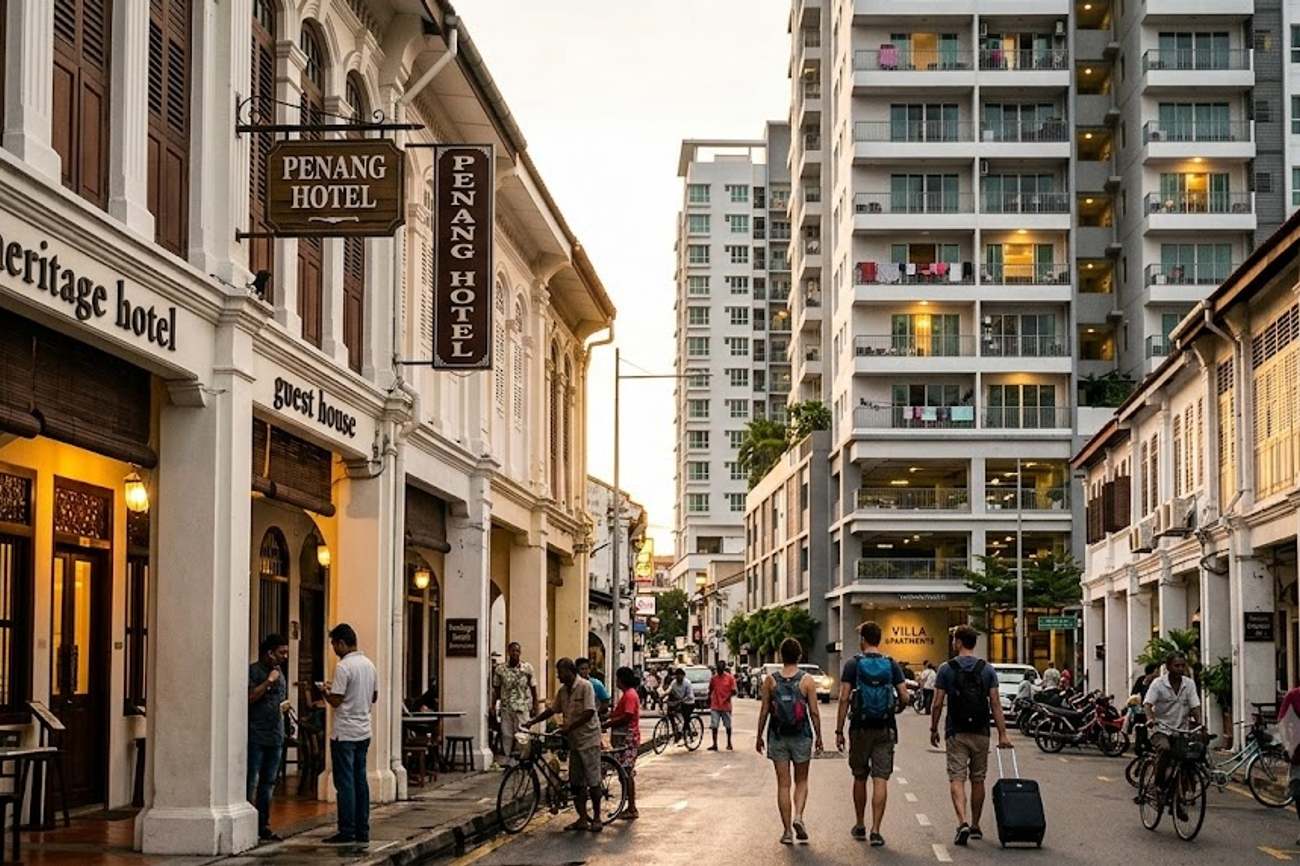
Image generated by AI
Penang’s licensed hotel sector is currently operating at an average occupancy rate of 60%, a figure that lags significantly behind the surge in total visitor arrivals and international connectivity. This decoupling of arrival data from hotel revenue signals a systemic shift in the regional accommodation market, where unregulated short-term rentals (STRs) are capturing a growing share of the tourist wallet at the expense of traditional hospitality infrastructure.
The Penang Accommodation Gap in Numbers
The current friction in Penang's tourism economy is rooted in a widening disparity between supply and utilization. While the destination boasts a robust inventory of over 20,000 rooms across hundreds of registered hotels—ranging from luxury beachfront resorts to budget boutique properties—the utilization of this capacity is uneven. The reported 60% occupancy rate for licensed hotels suggests that nearly 40% of the formal room supply remains vacant during peak periods, even as airport arrival figures indicate a strong recovery in tourism momentum.
This gap is largely attributed to the proliferation of Airbnb-style rentals and unlicensed homestays. These platforms have successfully pivoted to meet the demands of younger, independent travelers who prioritize location flexibility and price points that traditional hotels, burdened by higher operational overheads, cannot match. The economic impact is twofold: licensed hotels are seeing a stagnation in earnings despite increased foot traffic, and the distribution of tourism revenue is shifting away from corporate entities toward private residential owners.
According to data from the World Travel & Tourism Council (WTTC), the shift toward alternative accommodations is a global phenomenon, but in heritage-heavy destinations like Penang, it creates specific tensions regarding the preservation of safety standards and fair competition.
Comparative Market Analysis: Formal vs. Informal Sector
The tension in Penang reflects a broader regional trend where the "sharing economy" disrupts established hospitality norms. Traditional hotels operate under strict mandates regarding fire protection, security systems, and public safety measures. In contrast, the unregulated STR sector operates with minimal oversight, creating an asymmetrical competitive environment.
The following table illustrates the operational divergence between the two sectors currently competing for the Penang market:
| Metric | Licensed Hotel Sector | Unregulated STR/Homestays |
|---|---|---|
| Average Occupancy | ~60% | High (estimated, non-reported) |
| Regulatory Compliance | Mandatory (Fire, Security, Licensing) | Minimal to None |
| Room Inventory | 20,000+ registered rooms | Unquantified / Rapidly Expanding |
| Primary Target Demo | Luxury, Corporate, Heritage Seekers | Gen Z, Millennials, Budget Independent |
| Revenue Distribution | Corporate/Institutional | Individual Private Owners |
| Quality Assurance | Standardized / MICHELIN recognized | Variable / User-review dependent |
When comparing this to other Southeast Asian hubs, Penang's struggle is mirrored in cities like Bangkok or Bali, where local governments have had to intervene to prevent "over-tourism" in residential zones. The mismatch between airport arrivals and hotel occupancy also suggests a "transit effect," where international travelers use Penang as a gateway to other destinations, reducing their overnight stay duration in licensed hotels.
Practical Traveler Advisory and Strategic Insights
For the individual traveler, this market volatility creates a trade-off between cost and security. While the surge in STRs has lowered the entry price for visiting Penang, it has introduced a level of risk regarding safety and service consistency.
Actionable Booking Advice:
- Safety Prioritization: If you are traveling with family or elderly guests, prioritize the 20,000+ registered hotel rooms. These properties adhere to strict fire and security codes that unlicensed homestays are not required to follow.
- Luxury Value Hunting: With hotel occupancy hovering around 60%, there is significant leverage for travelers to negotiate better rates or upgrades at high-end properties. The luxury sector is currently fighting for market share against STRs, meaning premium heritage stays may be more accessible than in previous years.
- Booking Windows: For Q3 and Q4 travel, booking 4-6 weeks in advance for boutique hotels is recommended. While occupancy is lower than peak historical levels, the high-quality, MICHELIN-recognized properties maintain higher demand than budget licensed hotels.
The rise of short-term rentals has forced traditional hospitality providers in Penang to diversify their offerings to remain competitive. To sustain growth, the region continues to leverage strategic promotions managed by Tourism Malaysia to attract high-spending international visitors. 4. Verification: When using STR platforms, cross-reference the property with local tourism guidelines to ensure the stay does not violate residential zoning laws, which can occasionally lead to abrupt cancellations.
Projection: The Shift Toward a Unified Framework
The trajectory of Penang's hospitality market is moving toward a "Unified Regulatory Framework." The current state of imbalance is unsustainable for the licensed sector, which provides the bulk of the city's professional tourism infrastructure. Industry stakeholders are pushing for a system where STRs are required to meet a baseline of safety and licensing standards comparable to hotels.
We can expect to see a shift in how tourism data is collected. The reliance on airport arrival figures is being phased out in favor of granular spending patterns and movement data. This will likely be supported by IATA standards for passenger flow and local government initiatives to track the actual economic contribution of each visitor.
Furthermore, the luxury segment will likely decouple itself from the STR battle. By leaning into global recognitions—such as the MICHELIN Guide’s hotel system—Penang's high-end hotels are repositioning themselves as "experience providers" rather than just "room providers." This strategy targets high-net-worth individuals who are less likely to use an Airbnb and more likely to contribute to the local economy through high-spend culinary and heritage tourism.
FAQ: Penang Accommodation Trends 2024-2025
Will hotel prices in Penang increase due to regulation? Likely not in the short term. With occupancy at 60%, hotels are currently incentivized to keep prices competitive to lure guests away from short-term rentals. Any new regulations on Airbnbs may actually stabilize hotel pricing by creating a fairer playing field.
Is now a good time to book a luxury stay in Penang? Yes. The luxury sector is gaining international visibility via the MICHELIN Guide, but the overall hotel market is struggling with occupancy. This creates a window for travelers to access world-class hospitality at more competitive rates.
Which accommodation type is safest for international tourists? Licensed hotels remain the safest option. They are legally mandated to maintain fire safety and security protocols, whereas unregulated homestays operate without the same government oversight.
Are STRs still a viable option for budget travelers? Yes, they provide flexibility and lower costs. However, travelers should be aware that the government is reviewing regulations, which could lead to changes in availability or pricing for unlicensed properties.
The tension between the sharing economy and traditional hospitality in Penang is a microcosm of a global struggle to define the future of urban tourism.
Tags: Penang-Hospitality-Market-2024, Malaysia-Hotel-Occupancy-Rates, Airbnb-Regulation-Penang, Southeast-Asia-STR-Trends, MICHELIN-Hotel-Recognition-Penang
Related Travel Guides
This article is for informational purposes. Flight routes, passenger regulations, visa rules, and transit advisories are subject to change by airlines and aviation authorities. Readers are advised to verify schedules and travel documentation with relevant carriers and border agencies before departure.
Related Stories

Philippines Domestic Tourism Hits PHP3.26 Trillion as Asian Staycation Trends Shift Toward 2027

Thailand Tourism Slowdown Tests Small Businesses as Kingdom Pivots to High-Yield Travel and Secondary Provinces