
Malaysia Restores Sabah Air Links as Kota Kinabalu Airport Resumes Operations Following Runway Shutdown
Malaysia Restores Sabah Air Links as Kota Kinabalu Airport Resumes Operations Following Runway Shutdown

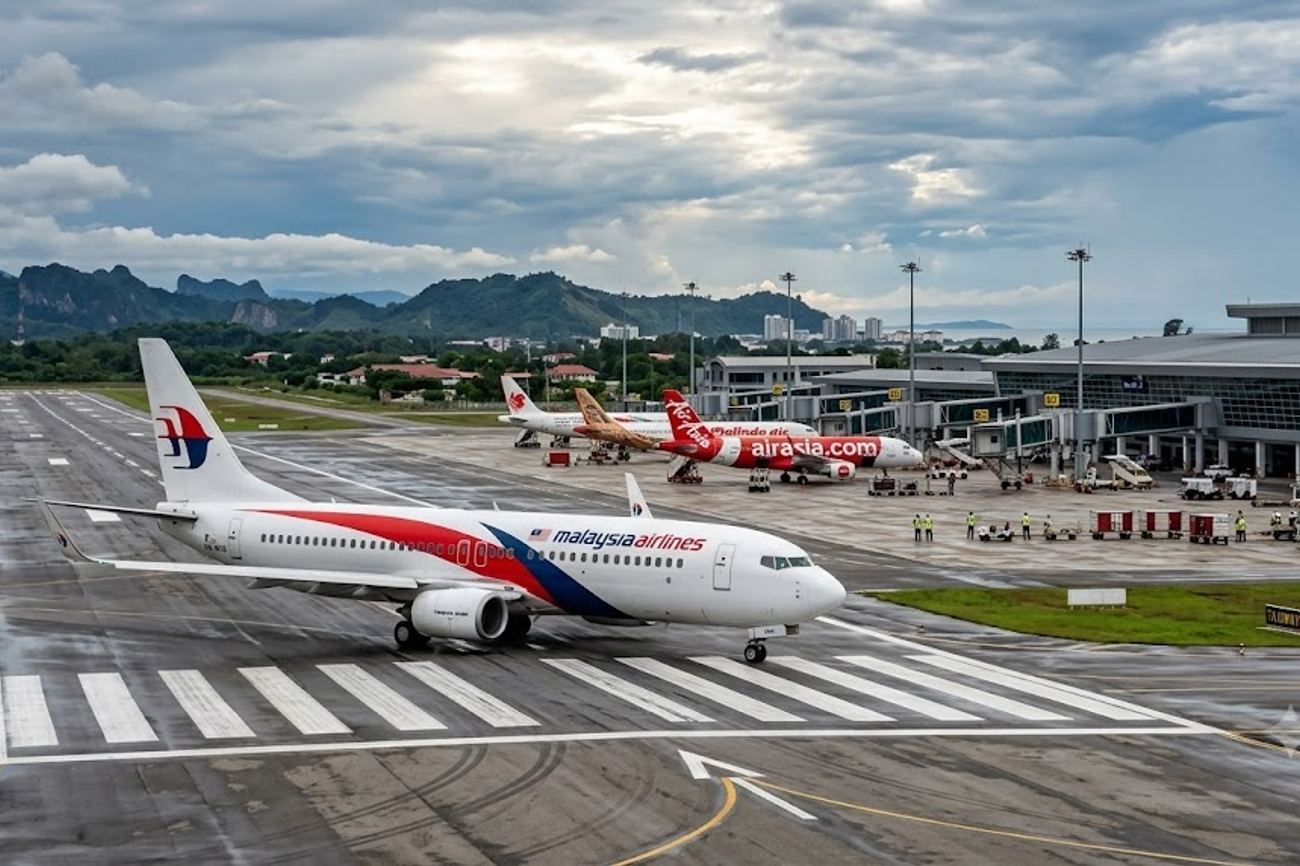
Image generated by AI
[Kota Kinabalu, September 17, 2026] — Kota Kinabalu International Airport (KKIA) has resumed full flight operations following a disruptive runway closure that lasted nearly nine hours on September 17. The facility, which ranks as the second-busiest aviation hub in Malaysia, reopened its runway at 11:30 p.m. after a series of emergency rectification works and mandatory safety inspections.
The outage began at 2:45 p.m. when Malaysia Airports shuttered the runway to perform essential repairs and routine safety tests. The operation was severely hampered by persistent, heavy rainfall, which delayed the completion of the technical works and extended the period of disruption. The closure forced the diversion of arriving aircraft and caused a ripple effect of cancellations and delays across the regional network.
Emergency Rectification and Weather Delays
The immediate trigger for the shutdown was the need for urgent rectification work on the runway surface. While such maintenance is often scheduled during low-traffic windows, the duration of this specific event was prolonged by atmospheric conditions. According to reports from the Civil Aviation Authority of Malaysia, continuous rainfall complicated the repair process, preventing engineers from finalizing the surface work according to the original timeline.
Safety protocols dictated that the runway remain closed until a comprehensive set of final safety checks could be completed. These checks were only finalized late in the evening, leading to the 11:30 p.m. clearance for aircraft to resume landings and take-offs.
Scope of Operational Impact
The outage created immediate logistical challenges for airlines and passengers, impacting the primary gateway to northern Borneo. The disruption was not limited to Kota Kinabalu but affected the broader Sabah aviation ecosystem.
The following data outlines the specific impact of the September 17 closure:
- Total Flights Affected: At least 20 flights experienced disruptions.
- Primary Impacts: A combination of flight cancellations, significant scheduling delays, and aircraft diversions.
- Diversion Hubs: Arriving aircraft were rerouted to Labuan and Sandakan airports to avoid circling or attempting landings at the closed KKIA.
- Timeframe: Total runway downtime spanned from 2:45 p.m. to 11:30 p.m.
Practical Traveler Advisory and Strategic Insights
For passengers currently traveling to or from Sabah, the reopening of the runway does not mean an immediate return to a perfect schedule. While the physical infrastructure is now operational, the "knock-on" effect of a nine-hour closure creates secondary disruptions.
Passenger Impact Assessment:
- Crew and Aircraft Rotations: Because planes were diverted to Sandakan and Labuan, or cancelled entirely, aircraft and flight crews are currently out of position. This means flights scheduled for September 18 may still face delays even though the runway is open.
- Verification Required: Travelers should not rely on original itineraries. It is mandatory to check current flight status directly via airline mobile apps or official websites.
- Diversion Logistics: Passengers who were diverted to alternative airports must coordinate with their carriers for shuttle transport or rescheduled flights back into Kota Kinabalu.
Sabah's High-Stakes Aviation Dependency
The volatility caused by this closure highlights the extreme pressure on KKIA’s infrastructure. The airport is currently operating at or above its intended design limits. The Ministry of Transport Malaysia has noted that while the terminal's official annual capacity is nine million passengers, the facility has previously handled up to 9.4 million passengers in a single year (2019).
Recent growth metrics indicate that the airport is under increasing strain:
- December 2025 Volume: KKIA processed approximately 802,000 passengers, marking a 23.5% month-on-month increase.
- January 2025 Growth: Passenger traffic surged by 34.5% year-on-year.
This surge in traffic makes any runway interruption economically significant. Sabah’s economy is heavily leveraged toward tourism, which welcomed 3.79 million visitors in 2025, generating RM8.74 billion in revenue. With the sector supporting nearly 400,000 jobs—specifically in retail (44.5% of tourism employment) and hospitality (41.6%)—the efficiency of KKIA is directly tied to the state's financial stability.
Tourism Growth and International Trends
The disruption occurred during a period of aggressive growth for Sabah tourism. Data from the Sabah Tourism Board reveals that between January and April 2026, gross visitor arrivals reached 1,380,830, a 17.2% increase over the same period in 2025.
International markets are driving this expansion, with a particular surge in arrivals from China. Between January and April 2026, 292,396 visitors arrived from China, representing a 49.8% increase compared to the 195,147 arrivals in the previous year. In April 2026 alone, Chinese arrivals hit 79,973, nearly double the April 2025 figure of 40,828.
Other key international growth markers for the first four months of 2026 include:
- India: 3,802 arrivals (up 27.6%).
- Canada: 3,279 arrivals (up 26.1%).
- Europe: 32,832 arrivals (up 13.5%).
- Australia: 7,577 arrivals (up 6.7%).
Domestic travel remains the largest volume driver, with 833,476 Malaysian arrivals in the first four months of 2026, a 16.4% increase.
Economic Implications for the Region
The dependence on KKIA is further underscored by the Department of Statistics Malaysia (DOSM), which reports that tourism employment in Sabah reached 387,600 people in 2024. This accounts for 22.6% of the total employment in the state.
With inbound tourism expenditure reaching RM6.2 billion in 2024, any failure in aviation infrastructure threatens a massive segment of the workforce. Because Sabah is located on northern Borneo, there are few viable alternatives to air travel for international visitors, making the reliability of the KKIA runway a matter of regional economic security.
FAQ: KKIA Runway Disruption 2026
Is the Kota Kinabalu airport runway open now? Yes. The runway reopened at 11:30 p.m. on September 17, 2026, following the completion of rectification works and safety checks. Normal flight operations have resumed.
My flight was diverted to Sandakan or Labuan; what do I do? Contact your airline immediately. While the runway is open, aircraft and crew rotations are still being reorganized. Your airline will provide the revised schedule for your transit to Kota Kinabalu.
Why did the runway closure take so long? The closure began at 2:45 p.m. for necessary repairs, but continuous rainfall delayed the technical work and the subsequent safety inspections required to clear the runway for use.
Are flights still being cancelled today? While the runway is operational, some cancellations may persist due to the backlog of flights and crew scheduling conflicts. Check your flight status directly with your carrier.
Aviation stability remains the linchpin for Sabah's multi-billion ringgit tourism engine.
Related Travel Guides
Disclaimer
This article is for informational and educational purposes only. It does not constitute legal, financial, or professional advice. While we strive to provide accurate and up-to-date information, travel policies, regulations, and conditions change rapidly. Always verify information with official sources before making travel decisions. Nomad Lawyer makes no representations about the accuracy, reliability, completeness, or suitability of the information provided. Readers should consult qualified professionals for advice specific to their circumstances. The views expressed in this article are those of the author and do not necessarily reflect the views of Nomad Lawyer.
Preeti Gunjan
Contributor & Community Manager
A passionate traveller and community builder. Preeti helps grow the Nomad Lawyer community, fostering engagement and bringing the reader experience to life.
Learn more about our team →