
Breaking Airline News: Major US Carriers Trigger Travel Chaos with Covert Route Terminations and Sudden Schedule Shifts
Breaking airline news: Amidst an environment of extreme operational volatility, major US carriers including United, Delta, and American are quietly executing aggressive network realignments, threatening to plunge millions into travel chaos.

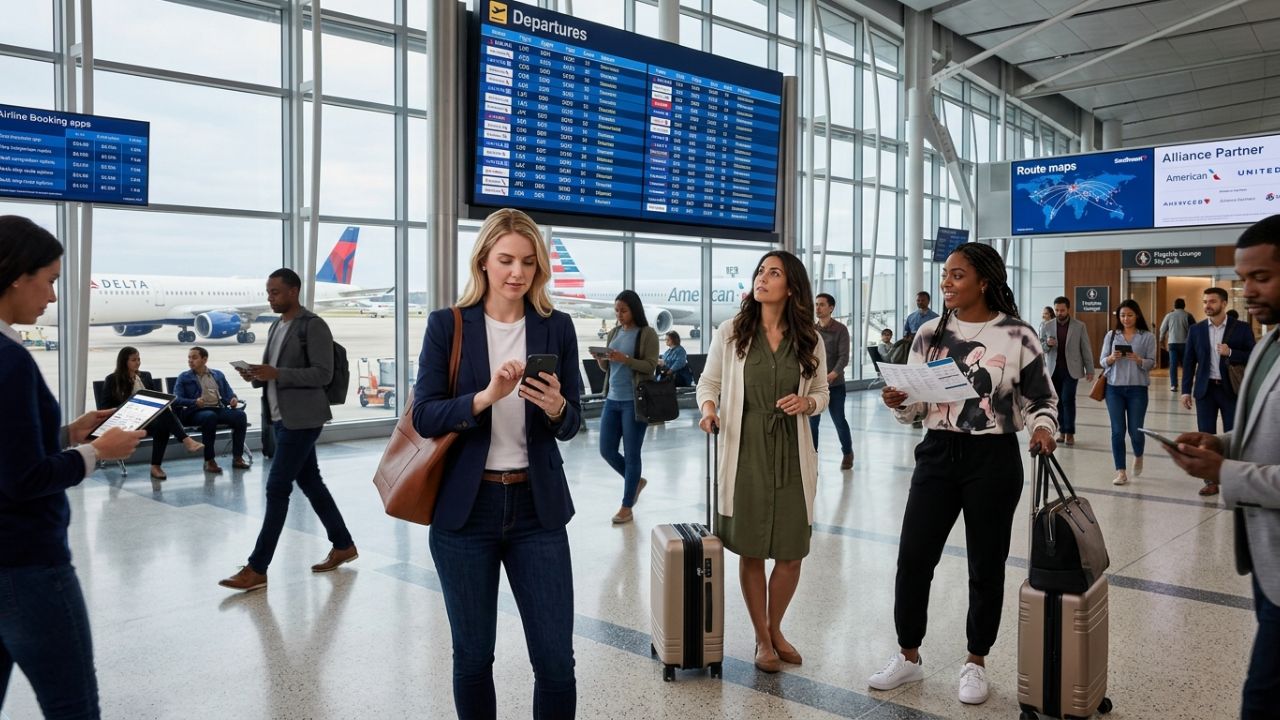
Image representing the intense psychological shock and operational strain as major US airlines quietly execute massive schedule shifts, completely severing nonstop routes and trapping millions of passengers in a terrifying surge of travel chaos.
Breaking Airline News: Major US Carriers Trigger Travel Chaos with Covert Route Terminations and Sudden Schedule Shifts
As paralyzing terminal bottlenecks, severe airspace congestion, and catastrophic operational fragility violently transform domestic transit into a grueling endurance test, a hidden, systemic threat is actively reshaping the US aviation landscape. In a massive behind-the-scenes maneuver that threatens to trigger unprecedented airport disruptions, major US carriers—including industry titans United Airlines, Delta Air Lines, and American Airlines—are currently executing a series of quiet, highly aggressive schedule changes. By constantly altering flight routes, shifting massive deployment schedules, and drastically manipulating ticket prices, these airlines are actively rewriting the rules of the 2026 summer transit grid. This covert network realignment threatens to plunge millions of unsuspecting travelers into massive travel chaos on their next trip, transforming what was once a routine nonstop journey into an agonizing, multi-hub logistical nightmare heavily prone to flight cancellations.
In a brutal demonstration of how desperately domestic passengers require absolute transparency to survive systemic transit failures, this aggressive operational pivot represents far more than standard administrative adjustments. Most travelers falsely believe their journey begins when they open a booking app; in reality, the most critical decisions guaranteeing their travel survival were made months in advance by corporate network planners. While these invisible teams evaluate air travel demand, passenger booking trends, seasonal shifts, and ballooning operational costs, their massive network realignments can instantly dictate whether a passenger suffers a flight cancellation or safely reaches their destination.
Expanded Overview: Weaponizing Network Capacity
The terrifying crisis of overwhelming passenger stress currently testing regional and international hubs brutally exposes the extreme consequences of these quiet schedule updates. If demand on a specific corridor weakens, airlines ruthlessly cut back services or completely obliterate routes. For travelers, these sudden corporate decisions manifest as terrifying real-world airport disruptions: dramatically fewer flight choices, excruciatingly longer connection times at congested mega-hubs, and violent changes to departure and arrival schedules.
Section-Wise Breakdown: Navigating the Schedule Collapse
To fully comprehend the massive logistical and economic damage of this operational overhaul, corporate travel planners and domestic tourists must rigorously review exactly how these flight schedule adjustments are driving systemic travel chaos.
The "Disappearing Nonstop Flight" Crisis Perhaps the most devastating tactic currently deployed by major carriers is the systematic elimination of point-to-point transit. Nothing secures a passenger's itinerary better than a nonstop flight. Yet, in the current climate of extreme capacity management, nonstop routes are aggressively targeted by airline planners. If bookings fall even slightly below aggressive profit expectations, airlines will ruthlessly terminate the nonstop service, forcing travelers onto highly complex connecting itineraries. This deliberate structural change instantly exposes passengers to massive airport disruptions, turning a straightforward journey into a grueling, multi-city ordeal highly susceptible to systemic delays.
Airfare Spikes: The Cost of Artificial Scarcity One of the most terrifying symptoms of this network realignment is watching fares violently increase seemingly overnight. These massive price surges are not accidents; they are the direct mathematical result of capacity reduction. When airlines like United, Delta, and American quietly reduce the number of flights on a specific route, the artificial scarcity pushes fares astronomically higher. This is heavily compounded by extreme seasonal travel demand, severe airport operating limitations, surging fuel costs, and massive aircraft availability deficits.
The Terminal Ripple Effect: Why One Delay Paralyzes the Grid When passengers are forced into complex connecting itineraries due to canceled nonstop routes, their vulnerability to the "ripple effect" skyrockets. Airline networks are highly interconnected, highly fragile systems. An aircraft violently delayed in one city will trigger catastrophic knock-on effects, severely disrupting several subsequent flights later that day. This interconnected fragility guarantees that massive travel chaos can spread coast-to-coast in mere hours.
Strategic Operational Factors Matrix
To guarantee that travelers can aggressively track the specific metrics driving this massive operational collapse, the following matrix details the exact, verified factors identified in the latest aviation intelligence driving route changes and delays.
| Operational Disruption Category | Verified Triggering Factors |
|---|---|
| Primary Causes of Systemic Delays | Weather-related operational issues, Aircraft arriving late from another airport, Air traffic restrictions, Crew scheduling complications |
| Factors Driving Sudden Airfare Spikes | Aircraft availability deficits, Extreme seasonal travel demand, Airport operating limitations, Severe fuel and operating costs, Sudden network planning decisions |
| The "Disappearing Nonstop" Crisis | Low passenger demand prompting the immediate replacement of nonstop flights with complex connecting itineraries |
Data reflects the verified operational triggers driving the current wave of US airline schedule adjustments.
Passenger Impact: Surviving the Frontline Nightmare
For the millions of tourists attempting to confidently navigate the rapidly swelling, chaotic terminals, these covert schedule changes represent a highly critical threat. When the network violently collapses due to a cascading delay, passengers do not interact with the invisible route planners; instead, they are thrust into confrontation with frontline airline employees. Flight attendants, gate agents, dispatchers, and operations staff become the sole lifeline for furious, stranded passengers. The absolute destruction of a meticulously planned itinerary due to a sudden schedule shift or flight cancellation plunges travelers into severe psychological distress, completely ruining vacations and critical business engagements.
Industry Analysis: The Social Media Surge
From a strategic aviation perspective, these massive route realignments are increasingly dictated by highly volatile social trends. A destination suddenly featured in viral travel videos or highlighted in major news reports can instantly experience a massive, unpredictable surge in popularity. Airlines aggressively monitor these digital shifts, rapidly deploying additional flights or larger aircraft to capture the revenue. Conversely, a sudden drop in digital interest can trigger immediate route terminations. In this hyper-reactive environment, travelers themselves inadvertently fuel the very travel chaos they are attempting to avoid.
Conclusion: The Absolute Necessity of Vigilance
As the extremely critical domestic transit network continues to face terrifying strain from unprecedented operational volatility, the quiet schedule updates executed by United, Delta, and American represent a massive warning. It signals a critical reality: your flight route, schedule, and ticket price are never safe until the aircraft actually leaves the tarmac. Travelers facing the very real threat of sudden flight cancellations and airport disruptions must maintain intense vigilance, obsessively tracking airline updates. This intelligence proves that surviving the upcoming travel season relies entirely on anticipating these massive corporate network shifts before they violently destroy your itinerary.
Key Takeaways
- Covert Route Terminations: Major US airlines (United, Delta, American) are quietly executing massive network shifts, completely altering flight routes and schedules.
- The Nonstop Extinction: Airlines are aggressively replacing highly reliable nonstop flights with dangerous, complex connecting itineraries to maximize route profitability.
- Artificial Price Surges: Sudden reductions in flight frequency deliberately create seat scarcity, driving ticket prices astronomically high during peak travel seasons.
- The Ripple Effect: Systemic delays are violently triggered by interconnected failures: weather issues, late arriving aircraft, air traffic restrictions, and crew scheduling complications.
- Passenger Defense: Travelers are aggressively urged to constantly monitor their bookings, as airlines frequently execute departure time changes long after the initial ticket purchase.
Related Travel Guides
Disclaimer
This article is for informational and educational purposes only. It does not constitute legal, financial, or professional advice. While we strive to provide accurate and up-to-date information, travel policies, regulations, and conditions change rapidly. Always verify information with official sources before making travel decisions. Nomad Lawyer makes no representations about the accuracy, reliability, completeness, or suitability of the information provided. Readers should consult qualified professionals for advice specific to their circumstances. The views expressed in this article are those of the author and do not necessarily reflect the views of Nomad Lawyer.
Kunal K Choudhary
Co-Founder & Contributor
A passionate traveller and tech enthusiast. Kunal contributes to the vision and growth of Nomad Lawyer, bringing fresh perspectives and driving the community forward.
Learn more about our team →