
Major Flight Disruptions Across China as Beijing, Shanghai, and Guangzhou Airports Record 2,760 Delays and 63 Cancellations in 2026
Severe weather and operational pressure lead to 2,760 flight delays and 63 cancellations across China's primary aviation hubs, heavily impacting China Eastern and China Southern Airlines.

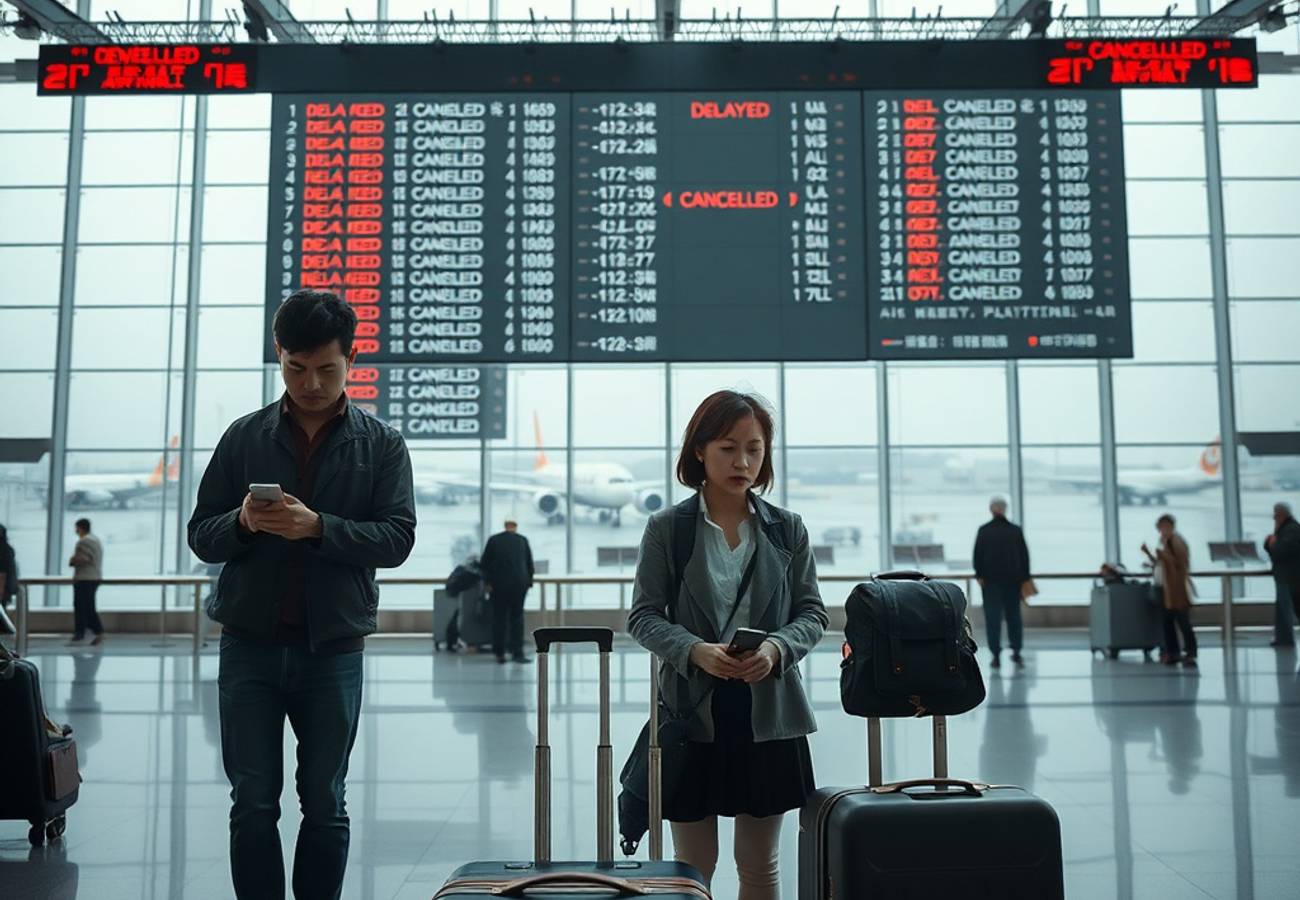
Image generated by AI
Severe weather conditions and operational bottlenecks have triggered widespread disruptions across China’s aviation network, resulting in 63 cancelled flights and 2,760 delays. The crisis is centered around the country's largest international gateways, primarily impacting passengers flying with China Eastern, China Southern, and Air China.
Core Transit Update: Systemic Aviation Disruptions
The Chinese aviation infrastructure is currently experiencing significant operational pressure, primarily driven by storms and heavy rainfall. This weather-induced instability has cascaded through the network, creating a backlog of delayed departures and forced cancellations. The impact is most acute at high-volume hubs where connecting traffic is densest, leading to a "knock-on" effect that disrupts both domestic regional routes and international transit flows.
Data indicates that the disruptions are not limited to the primary "Tier 1" cities but extend to regional centers such as Xi’an, Haikou, and Wuhan, suggesting a broad atmospheric or systemic challenge affecting the national airspace.
Airport Operational Impact Specifications
The following table details the specific flight disruptions recorded across the most affected Chinese aviation hubs.
| Airport Name | IATA Code | Delayed Flights | Cancelled Flights |
|---|---|---|---|
| Shanghai Pudong International | PVG | 506 | 10 |
| Beijing Capital International | PEK | 316 | 8 |
| Beijing Daxing International | PKX | 274 | 6 |
| Guangzhou Baiyun International | CAN | 242 | 2 |
| Xi’an Xianyang International | XIY | 220 | 5 |
| Wuhan Tianhe International | WUH | 215 | 3 |
| Qingdao Jiaodong International | TAO | 215 | 4 |
| Haikou Meilan International | HAK | 202 | 4 |
| Jieyang Chaoshan International | SWA | 148 | 4 |
| Dalian Zhoushuizi International | DLC | 133 | 6 |
| Nanning Wuxu International | NNG | 125 | 2 |
| Changsha Huanghua International | CSX | 91 | 2 |
| Korla Airport | KRL | 39 | 4 |
| Lhasa Gonggar Airport | LXA | 34 | 3 |
Carrier Performance and Disruption Data
Major carriers have borne the brunt of the operational failures, with China Eastern recording the highest volume of interruptions.
| Airline | Delayed Flights | Cancelled Flights |
|---|---|---|
| China Eastern | 879 | 14 |
| China Southern Airlines | 724 | 6 |
| Air China | 420 | 9 |
| Shenzhen Airlines | 299 | 1 |
| Hainan Airlines | 254 | 3 |
| China Express Airlines | 149 | 11 |
| Spring Airlines | 149 | 4 |
| Tianjin Airlines | 141 | 6 |
| Lucky Air | 107 | 1 |
| Chengdu Airlines | 75 | 4 |
| West Air | 72 | 1 |
| Tibet Airlines | 71 | 2 |
| Qingdao Airlines | 39 | 2 |
| Beijing Airlines | 3 | 2 |
Traveler Logistics Guide: Navigating China Airspace Disruptions
For passengers currently traversing the Chinese aviation network, standard operating procedures must be adjusted to account for these systemic delays.
1. Connection Management If you are connecting through Shanghai Pudong (PVG) or the Beijing hubs (PEK/PKX), assume a high probability of missed connections. It is advised to verify the status of onward journeys via the airline's mobile app rather than relying on airport terminal screens, which may lag during peak disruptions.
2. Digital Transit and Documentation Ensure all digital boarding passes and visa documents are accessible offline. In the event of a cancellation, keep a digital log of all communications with the airline to facilitate claims for hotel vouchers or rebooking priority.
3. Rebooking Strategies Passengers on cancelled flights should prioritize direct contact with airline representatives via official channels. Given the volume of delays, manual rebooking at airport kiosks may result in excessive wait times.
4. Buffer Times Increase the planned arrival time at the airport by at least 3 hours. Even with delays, security and check-in queues often lengthen as passengers from cancelled flights congregate in terminals.
Infrastructure Impact Assessment
The concentration of delays in Shanghai and Beijing underscores the vulnerability of China's hub-and-spoke aviation model. When the primary gateways (PVG, PEK, PKX) experience operational slowdowns, the entire national network suffers due to the high volume of aircraft and crew rotations based in these cities.
The significant impact on China Eastern and China Southern suggests that the weather patterns were likely aligned with the primary flight paths of these carriers' main hubs. This event highlights a critical need for enhanced meteorological predictive modeling to better manage airspace flow and reduce the economic impact of mass cancellations.
Travelers are urged to monitor real-time data via FlightAware and official Civil Aviation Administration of China (CAAC) updates.
Related Travel Guides
Disclaimer
This article is for informational and educational purposes only. It does not constitute legal, financial, or professional advice. While we strive to provide accurate and up-to-date information, travel policies, regulations, and conditions change rapidly. Always verify information with official sources before making travel decisions. Nomad Lawyer makes no representations about the accuracy, reliability, completeness, or suitability of the information provided. Readers should consult qualified professionals for advice specific to their circumstances. The views expressed in this article are those of the author and do not necessarily reflect the views of Nomad Lawyer.
Kunal K Choudhary
Co-Founder & Contributor
A passionate traveller and tech enthusiast. Kunal contributes to the vision and growth of Nomad Lawyer, bringing fresh perspectives and driving the community forward.
Learn more about our team →