
The Transatlantic Bridge: How Madrid-Barajas Handled 47 Million Passengers as Latin America Routes Expand

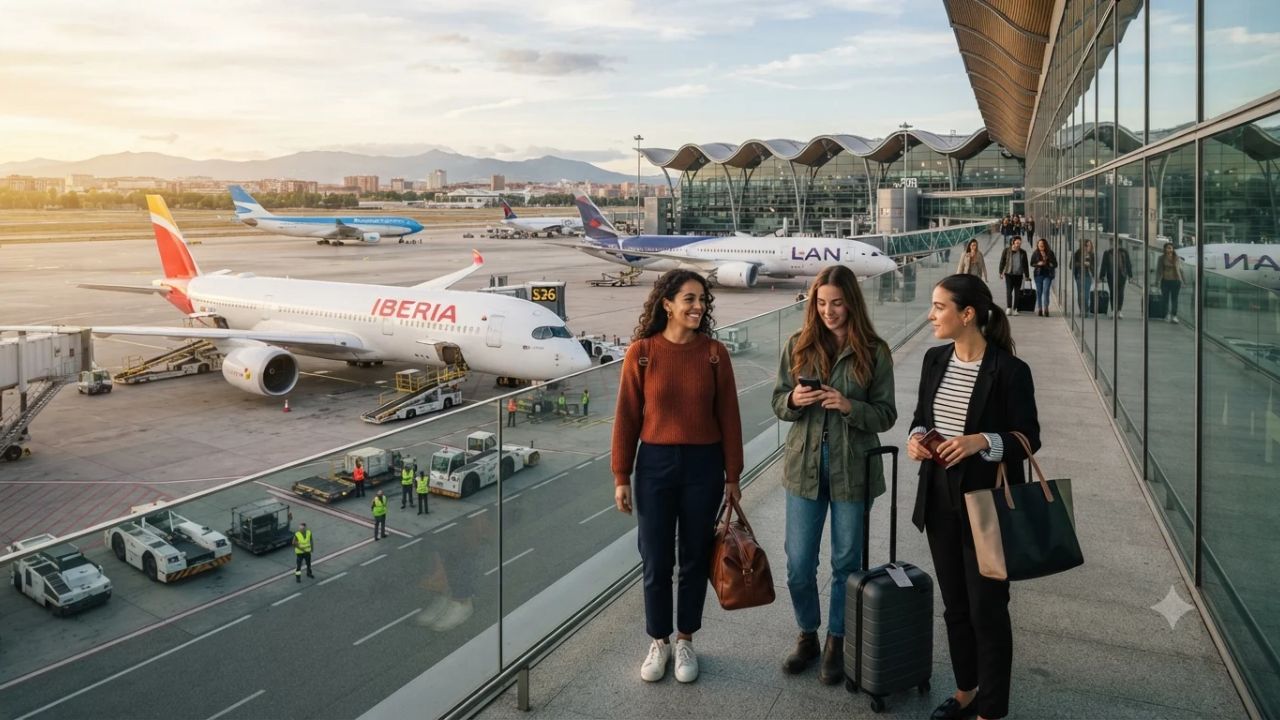
Handling an impressive 47,072,394 passengers across the first eight months of 2026—including 6,544,815 travelers and 39,606 aircraft movements in August alone—Adolfo Suárez Madrid-Barajas Airport has consolidated its standing as Europe’s premier bridge to the Americas. Far from functioning merely as a Spanish entry point, airport authority Aena data confirms that Madrid is outperforming broader European growth rates, driven by a record 3.35 million summer transatlantic seats scheduled across 366 weekly flights by flag carrier Iberia alongside expanding networks from Air Europa and LATAM.
This transatlantic aviation corridor allows travelers to hop seamlessly from European capitals directly into South American hubs like Buenos Aires, Rio de Janeiro, Bogotá, and Santiago de Chile. With international travelers representing nearly 4.97 million passengers in August alone (a 4.4 per cent year-on-year increase), Madrid has converted historical, linguistic, and cultural ties into one of the world's most resilient air travel networks.
Inside the Transatlantic Grid: Iberia, Air Europa, and LATAM Expansions
The massive expansion across Madrid-Barajas reflects intense airline investment in long-haul capacity between the Old World and the New World.
Iberia scheduled 3,354,159 seats between Europe and Latin America for the 2026 summer season, marking a 7.6 per cent increase over 2025. This includes expanding Buenos Aires services to 23 weekly flights (offering around 456,000 summer seats, a 12 per cent surge) and increasing Brazil capacity by 15 per cent to nearly 400,000 seats with new routes to Recife and Fortaleza alongside expanded Rio de Janeiro flights. In Mexico, Iberia inaugurated a direct three-times-weekly Madrid-Monterrey service on 2 June, while Santiago de Chile reached 12 weekly flights with almost 240,000 seats (up 7 per cent).
| Airline & Operator | Summer / Autumn 2026 Strategic Expansion | Core Route Highlights & New City Pairs |
|---|---|---|
| Iberia (Flag Carrier) | 3,354,159 Latin America seats (+7.6% YoY) | Buenos Aires (23x weekly), Recife, Fortaleza, Monterrey (launched 2 June), Santiago (12x weekly) |
| Air Europa | ~9.3 million total network seats (+5.9% YoY) | Launching Madrid-Barranquilla (18 Dec, 3x weekly, >92,000 seats), Madrid-San Salvador (Dec) |
| LATAM Airlines | Direct Santiago & Lima to Madrid widebody links | Direct connectivity linking South American hubs with Europe |
| Aena Madrid Total (Jan–Aug) | 47,072,394 passengers (+4.4% YoY) | 300,410 aircraft movements (+5.8% YoY) across 8 months |
| August Peak Performance | 6,544,815 passengers (+4.8% YoY) | 4.97 million international commercial flyers |
Air Europa is expanding its footprint by offering 9.3 million seats from June through September 2026 (+5.9 per cent), preparing to launch non-stop flights to Barranquilla, Colombia, on 18 December 2026 (adding over 92,000 annual seats alongside Bogotá and Medellín) and inaugurating San Salvador in December.
What Sets Madrid Apart: The Cultural Heart of the Spanish-Speaking World
Beyond its role as a global aviation junction, Madrid is an essential destination in its own right. Travelers utilizing stopover programs can explore world-class art collections, historic plazas, and an electric culinary culture.
The city’s historic core is anchored by the "Paseo del Prado and Buen Retiro," inscribed on the UNESCO World Heritage register as an urban sanctuary of arts and sciences. Here, visitors stroll beneath leafy canopies between the Prado Museum, the Thyssen-Bornemisza National Museum, and the Reina Sofía, home to Picasso’s Guernica.
Surrounding these cultural monuments are historic neighborhoods (barrios) like La Latina, Malasaña, and Chueca, where traditional taverns serve vermouth on tap (vermut de grifo) alongside plates of jamón ibérico and sizzling garlic prawns (gambas al ajillo).
Travelers can research seasonal exhibitions and regional day trips through the official Spain Tourism Portal.
Visitor Insider Tips: Timing, Local Feasts, and Airport Hacks
Navigating Madrid-Barajas and the Spanish capital like an experienced traveler requires adopting local rhythms and utilizing efficient public transit:
- Ride Metro Line 8 Directly to the City Center: Skip costly taxi queues by taking Line 8 of the Metro de Madrid directly from Terminal 2 or Terminal 4 to Nuevos Ministerios station in under 15 minutes, where you can transfer to city lines or regional Renfe Cercanías commuter trains.
- Utilize the Free Terminal Shuttle Bus: Madrid-Barajas is massive, spanning several kilometers between the historic T1-T2-T3 complex and the Richard Rogers-designed Terminal 4/4S. If connecting between different airline alliances, allow at least 45 minutes to transfer via the green 24-hour airport shuttle bus.
- Embrace the Madrid Dining Clock: Never attempt to eat dinner at 18:00. Traditional Madrid restaurants open for evening service around 20:30, with peak dining occurring between 21:30 and 23:00. Use late afternoons for merienda (coffee and warm churros with thick dark chocolate at Chocolatería San Ginés).
- Take Advantage of Free Museum Hours: The Prado Museum offers free entry Monday through Saturday from 18:00 to 20:00 and Sundays from 17:00 to 19:00. Arrive 45 minutes early to secure your spot in line.
- Book Airline Stopover Programs: Both Iberia and Air Europa offer dedicated Madrid stopover programs that allow travelers to stay up to six nights in the capital without paying additional airfare penalties before continuing onward to Latin America or European destinations.
Cultural and Environmental Context: Sustainable Transatlantic Hubs
The expansion of Madrid-Barajas is tied directly to environmental modernization initiatives managed by Aena. Terminal 4 features extensive photovoltaic solar installations designed to power 100 per cent of airport operations with renewable energy, alongside sustainable aviation fuel (SAF) blending infrastructure for transatlantic widebody fleets.
Furthermore, Madrid’s high-speed railway integration at Chamartín and Atocha stations allows international flyers to replace short-haul domestic flights with zero-emission AVE trains connecting to Barcelona, Seville, and Valencia in under three hours.
By fostering cultural and educational exchanges between Europe and Latin America, Madrid serves as a vibrant melting pot where transatlantic literature, contemporary theater, and gastronomy flourish, benefiting local artisan bakeries, neighborhood guesthouses, and historic theater districts across the capital.
FAQ: Navigating Madrid-Barajas Airport in 2026
How many passengers traveled through Madrid-Barajas between January and August 2026?
Madrid-Barajas handled 47,072,394 passengers and recorded 300,410 aircraft movements during the first eight months of 2026, marking a 4.4% increase over 2025.
Which airlines operate the highest number of transatlantic flights from Madrid?
Iberia and Air Europa operate the largest networks to Latin America and the Caribbean, alongside direct widebody flights operated by LATAM Airlines.
How long does it take to travel from Madrid Airport to the city center?
Metro Line 8 connects all airport terminals to Nuevos Ministerios in central Madrid in approximately 12 to 15 minutes.
What new Latin American routes are launching from Madrid in late 2026?
New routes include Air Europa's direct service to Barranquilla, Colombia, launching on 18 December 2026 (3x weekly), and new services to San Salvador in December.
[From the grand sunlit arches of Terminal 4 to the vibrant plazas of old Madrid, the Spanish capital remains the world's most enduring gateway to the Americas.]
Related Travel Guides
This article is for informational purposes. Flight routes, passenger regulations, visa rules, and transit advisories are subject to change by airlines and aviation authorities. Readers are advised to verify schedules and travel documentation with relevant carriers and border agencies before departure.
Related Stories

Spain and France Lead Global Winter Tourism Rankings 2026 as Seasonal Travel Shifts

Spain Tourism 2030 Strategy: New Logistics and Regulations for Barcelona, Madrid, and the Islands
