Macau Economic Diversification: MOP130 Billion Plan to Shift Beyond Gaming

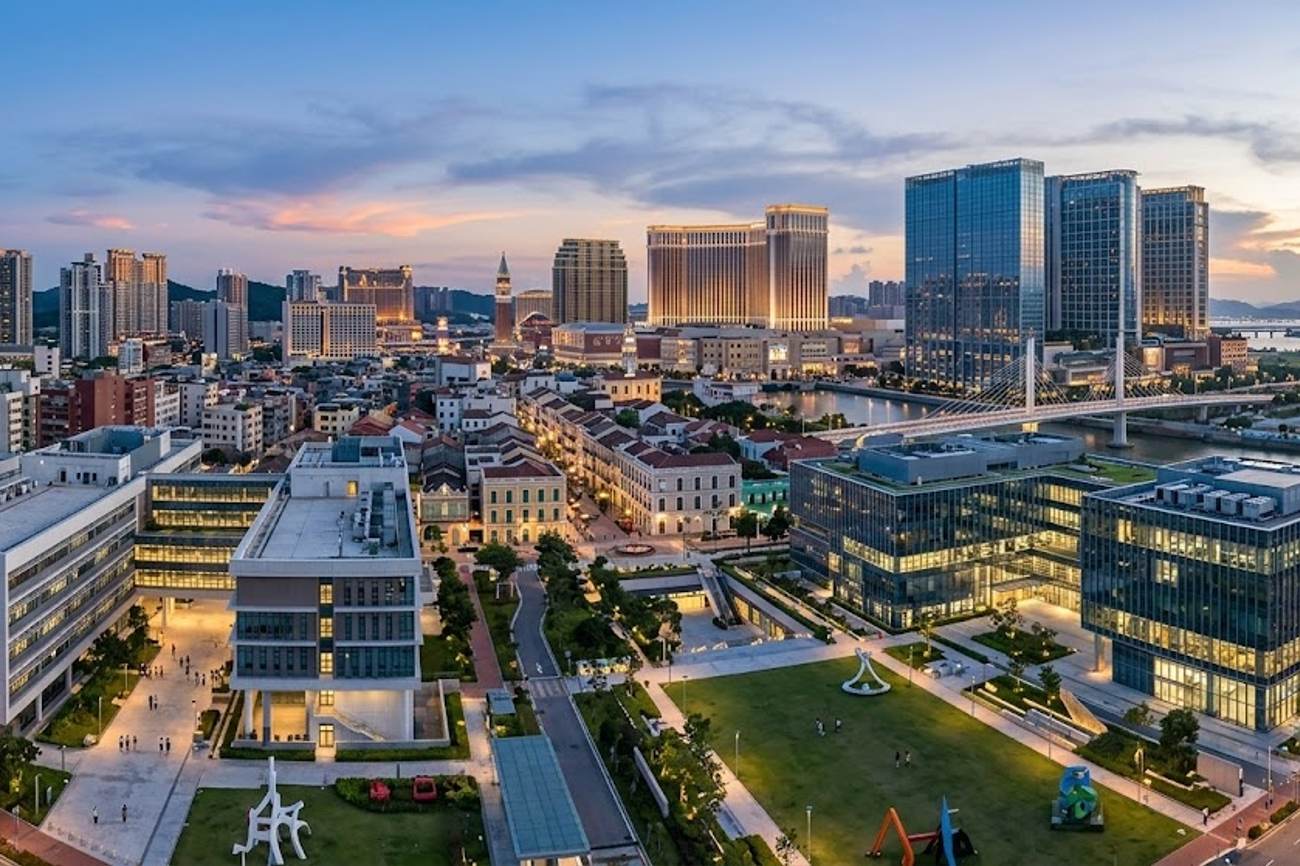
Image generated by AI
Macau Pivots to Tech and Culture in Massive Economic Overhaul
Macau has initiated a systemic shift in its economic architecture, moving away from its historical reliance on the gaming industry. The government is investing approximately MOP130 billion (US$16 billion) to establish new growth engines across education, technology, logistics, and cultural tourism.
The strategy focuses on transforming the territory into a balanced economic hub capable of attracting global businesses and skilled professionals. Rather than abandoning gaming, the administration is building a parallel economic structure to mitigate risk and ensure long-term stability.
The diversification effort is anchored by four primary infrastructure projects designed to catalyze specific industry verticals:
- Macao-Hengqin International Education University Town: Focused on talent cultivation and academic strengthening.
- Macao Technology Research Industrial Park: A dedicated hub for innovation and emerging industry research.
- Macao International Integrated Tourism and Cultural Zone: An expansion of the visitor experience beyond traditional casino attractions.
- Airport Cargo Terminal Upgrades: Enhancements to logistics infrastructure to tighten commercial links with regional markets.
Key Strategic Objectives
- Non-Gaming Target: Reach 60% of total gross value added from non-gaming sectors by 2030.
- Investment Scale: MOP130 billion / US$16 billion over a five-year window.
- Regional Integration: Leveraging the Greater Bay Area (GBA) and the Hengqin partnership to expand economic capacity.
- Cultural Leverage: Utilizing Portuguese and European heritage to act as a gateway between the GBA and Lusophone markets.
Project Breakdown
| Project | Primary Objective | Expected Economic Impact |
|---|---|---|
| Education University Town | Talent Development | Skilled workforce for new industries |
| Technology Research Park | Innovation Hub | R&D and emerging tech startups |
| Integrated Tourism Zone | Diversified Tourism | New visitor segments; longer stays |
| Airport Cargo Terminal | Logistics Optimization | Strengthened regional trade links |
Why This Matters (Industry Analysis)
From a logistical and market perspective, this is not merely a construction project; it is a survival strategy. For decades, Macau has been a "mono-industry" economy. Our analysis indicates that the real challenge lies in the "activation phase"—moving from physical infrastructure to operational ecosystems.
For travel operators and investors, the shift toward a "Cultural Zone" means a fundamental change in visitor demographics. We expect a transition from high-frequency gaming tourists to "experience seekers" and professional expats.
Furthermore, the focus on the Greater Bay Area suggests Macau is positioning itself as a specialized niche player. By avoiding direct competition with the massive tech ecosystems of Shenzhen or Hong Kong, and instead focusing on "Tourism Tech" and "Lusophone Gateway" services, Macau is creating a unique value proposition that larger hubs cannot replicate.
Industry Outlook
The success of the Technology Research Industrial Park will depend on hyper-specialization. If Macau attempts to be a generalist tech hub, it will likely fail against regional giants. However, if it focuses on FinTech for international markets and healthcare research, it can carve out a sustainable niche.
Expect a surge in demand for specialized workforce visas and a pivot in hotel development toward business-centric and cultural-tourism facilities. The next 24 months will be critical in determining whether the regulatory environment can evolve quickly enough to match the physical infrastructure being built.
Internal Link Suggestions:
- Analysis of Greater Bay Area Infrastructure Trends
- The Evolution of Luxury Tourism in East Asia
- Global Shifts in Gaming and Integrated Resort Models
Related Travel Guides
This article is for informational purposes. Flight routes, passenger regulations, visa rules, and transit advisories are subject to change by airlines and aviation authorities. Readers are advised to verify schedules and travel documentation with relevant carriers and border agencies before departure.
Related Stories
Dubai Introduces Digital Nol QR Tickets for Metro, Buses and Trams as Visitors Gain a Paper-Free Travel Option
Argentina Prepares for Three Specialist Conferences Linking Tourism Policy, Education and Interactive Technology