
AI-Powered Rideable Luggage Gains Traction Across North American and Global Travel Hubs
Airwheel's AI-powered rideable luggage is expanding across the US, Canada, and Europe, blending electric mobility with smart connectivity for modern travelers.

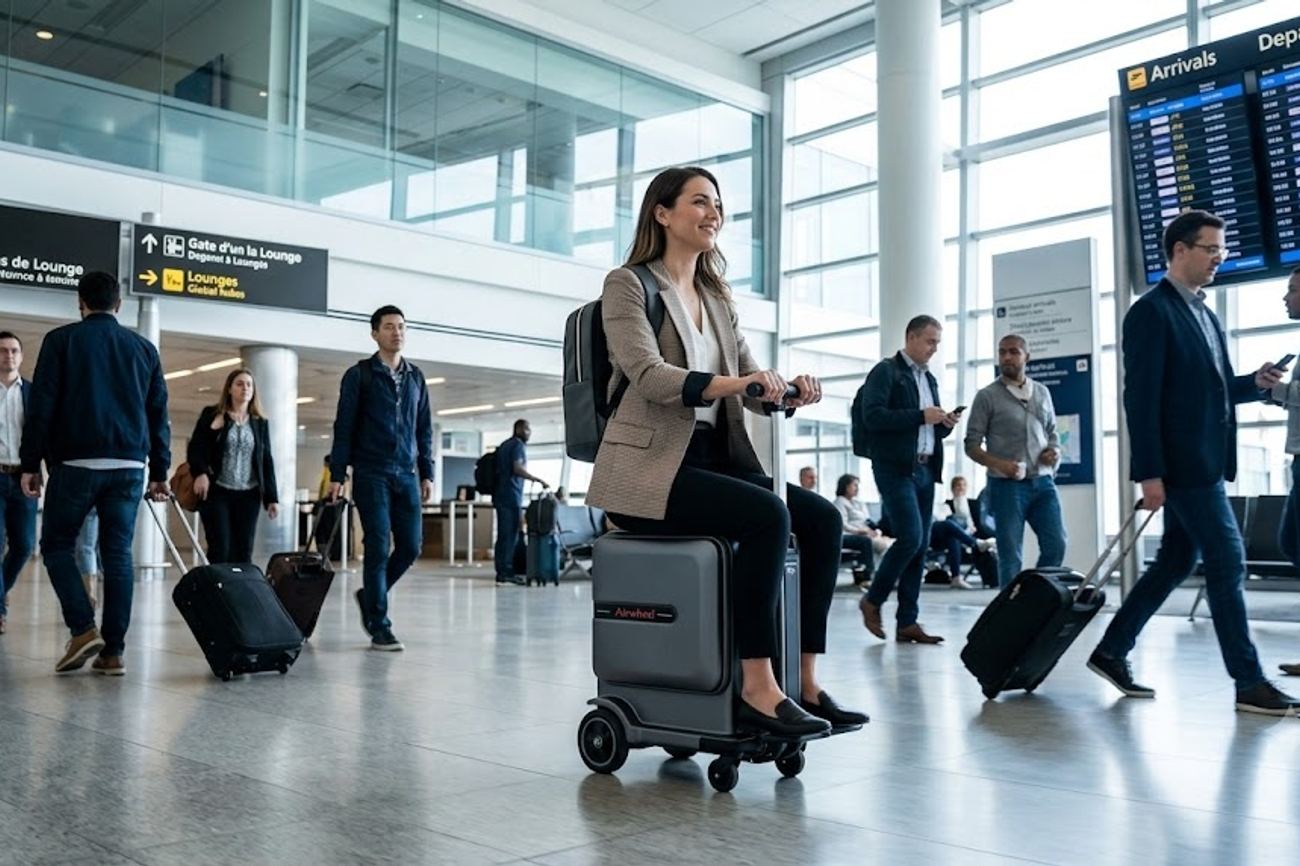
Image generated by AI
[GENEVA, September 7, 2026] — The global travel landscape is witnessing a fundamental shift in passenger logistics as AI-integrated smart luggage gains widespread adoption across North America, Europe, and Asia. Led by Airwheel's latest suite of intelligent mobility products, the industry is moving away from passive storage solutions toward active transportation devices that allow passengers to ride their suitcases through transit hubs.
Market data indicates a surging interest in these devices across a diverse array of high-traffic regions, including the United States, Canada, Belgium, Germany, France, Italy, the United Kingdom, China, India, the Philippines, Japan, Singapore, Australia, the UAE, and Saudi Arabia. As international airports and railway stations continue to expand in size, the demand for "connected journeys" has pushed rideable luggage from a novelty item into a functional travel necessity.
For decades, the luggage sector remained stagnant, with innovation limited to the use of lighter plastics, reinforced wheels, and optimized internal compartments. Current industry trends show a pivot toward integrating electric drive systems and digital connectivity, effectively creating a new category of travel technology that merges personal storage with urban mobility.
Transforming Airport Transit with Rideable Technology
The physical demand of navigating sprawling aviation hubs—often requiring miles of walking between check-in counters, security checkpoints, and distant boarding gates—has created a gap in the market for active mobility. The current design philosophy focuses on converting the suitcase from a burden into a vehicle.
Airwheel's engineering allows users to toggle between a traditional pulling mode and a motorized riding mode. This versatility is specifically tailored for environments such as exhibition centers, luxury hotels, and urban transit zones where distance and fatigue are primary concerns for the traveler.
A primary example of this evolution is the Airwheel SE3SXD. This model utilizes an automatic one-touch transformation system. By pressing a single button, the device extends its powered front wheel and deploys a smart riding handle, shifting the unit from a standard cabin-sized bag into an electric transport device.
Technically, the SE3SXD is capable of reaching speeds of up to 9.9 kilometres per hour. To ensure passenger safety and stability, the motorized front-wheel structure extends the overall wheelbase, providing a more secure ride across the varied surfaces found in modern terminals.
Engineering the SE3SXD AI Flagship
The SE3SXD is positioned as a premium AI travel assistant rather than a simple piece of luggage. It integrates four distinct roles: a smart suitcase, an electric vehicle, a rideable companion, and a standard cabin-approved bag.
To balance durability with weight, the chassis is constructed from a composite of lightweight ABS and PC shells, reinforced by an aviation-grade aluminium frame. This ensures the unit can withstand the rigors of international transit while maintaining a professional aesthetic suitable for corporate executives and frequent flyers.
A critical component for aviation compliance is the battery system. The SE3SXD features a 73.26Wh lithium battery that is fully removable. This design ensures that passengers can comply with airline safety regulations regarding battery transport and charging during flights.
Digital Ecosystems and Smart Connectivity
Beyond physical mobility, the integration of a dedicated software ecosystem allows for real-time management of the luggage. Through a mobile application compatible with major operating systems, users can monitor the health and performance of their suitcase.
The app provides a centralized dashboard for several critical functions:
- Velocity Management: Precise speed adjustment controls.
- Hardware Control: Remote operation of the telescopic handle.
- Power Tracking: Real-time battery monitoring and low-battery notifications.
- Telemetry: Mileage tracking and distance alerts.
- Connectivity: Bluetooth pairing alerts and cruise control settings.
- Aesthetics: Custom lighting configurations.
Security is further bolstered by the integration of Apple Find My technology. By leveraging a global tracking network, travelers can pinpoint the exact location of their luggage in crowded environments, significantly reducing the risk of loss at baggage carousels or transit lounges. Additionally, integrated USB ports allow passengers to maintain power for smartphones and tablets while in transit.
Diversified Product Portfolio for Varied Travel Needs
The expansion of smart luggage is not limited to a single flagship model. Different passenger profiles require different capacities and mobility levels.
| Model | Target User | Key Feature | Format |
|---|---|---|---|
| SE3SL+ | Business/Short-term | Compact Mobility | Airport/Cabin |
| SE3SX | Frequent Flyers | Portable AI Controls | Cabin |
| SE3T | Long-haul Travelers | High Storage Capacity | 24-inch Electric |
| SQ3 / SQ3S | Families/Children | Entertainment & Riding | Kids' Edition |
The SE3SL+ and SE3SX are designed for those prioritizing agility and cabin compliance, making them ideal for short business trips. Conversely, the SE3T caters to vacationers who require more volume without wanting to sacrifice the ability to ride their luggage. The SQ3 series represents a strategic move into the family market, blending mobility with entertainment for younger travelers.
Why This Matters: The Shift in Passenger Experience
From a logistical standpoint, the introduction of rideable AI luggage solves a specific "last-mile" problem within the airport ecosystem. For the traveler, this means a significant reduction in physical exhaustion and a decrease in the time spent traversing terminals.
However, this technology also introduces new considerations for airport security and airline policy. The shift toward removable batteries (like the 73.26Wh unit in the SE3SXD) is a direct response to safety mandates, signaling a future where luggage is treated more like a consumer electronic device than a textile product.
For the broader travel industry, this trend indicates that "luxury" is being redefined. It is no longer just about the materials of the bag, but about the time and energy saved during the journey. As these devices become more common, airports may eventually need to adapt their infrastructure—potentially introducing "smart lanes" for rideable luggage to prevent congestion in pedestrian walkways.
Related Travel Guides
Disclaimer
This article is for informational and educational purposes only. It does not constitute legal, financial, or professional advice. While we strive to provide accurate and up-to-date information, travel policies, regulations, and conditions change rapidly. Always verify information with official sources before making travel decisions. Nomad Lawyer makes no representations about the accuracy, reliability, completeness, or suitability of the information provided. Readers should consult qualified professionals for advice specific to their circumstances. The views expressed in this article are those of the author and do not necessarily reflect the views of Nomad Lawyer.
Kunal K Choudhary
Co-Founder & Contributor
A passionate traveller and tech enthusiast. Kunal contributes to the vision and growth of Nomad Lawyer, bringing fresh perspectives and driving the community forward.
Learn more about our team →