
Luxury Travel Shifts Inland: Exploring Eco-Luxury Estates in Andalusia, Tuscany, and Puglia 2026
Southern Europe's high-end tourism is migrating from crowded coasts to rural estates, where regenerative farming and historic masserie redefine luxury through authenticity and sustainability.

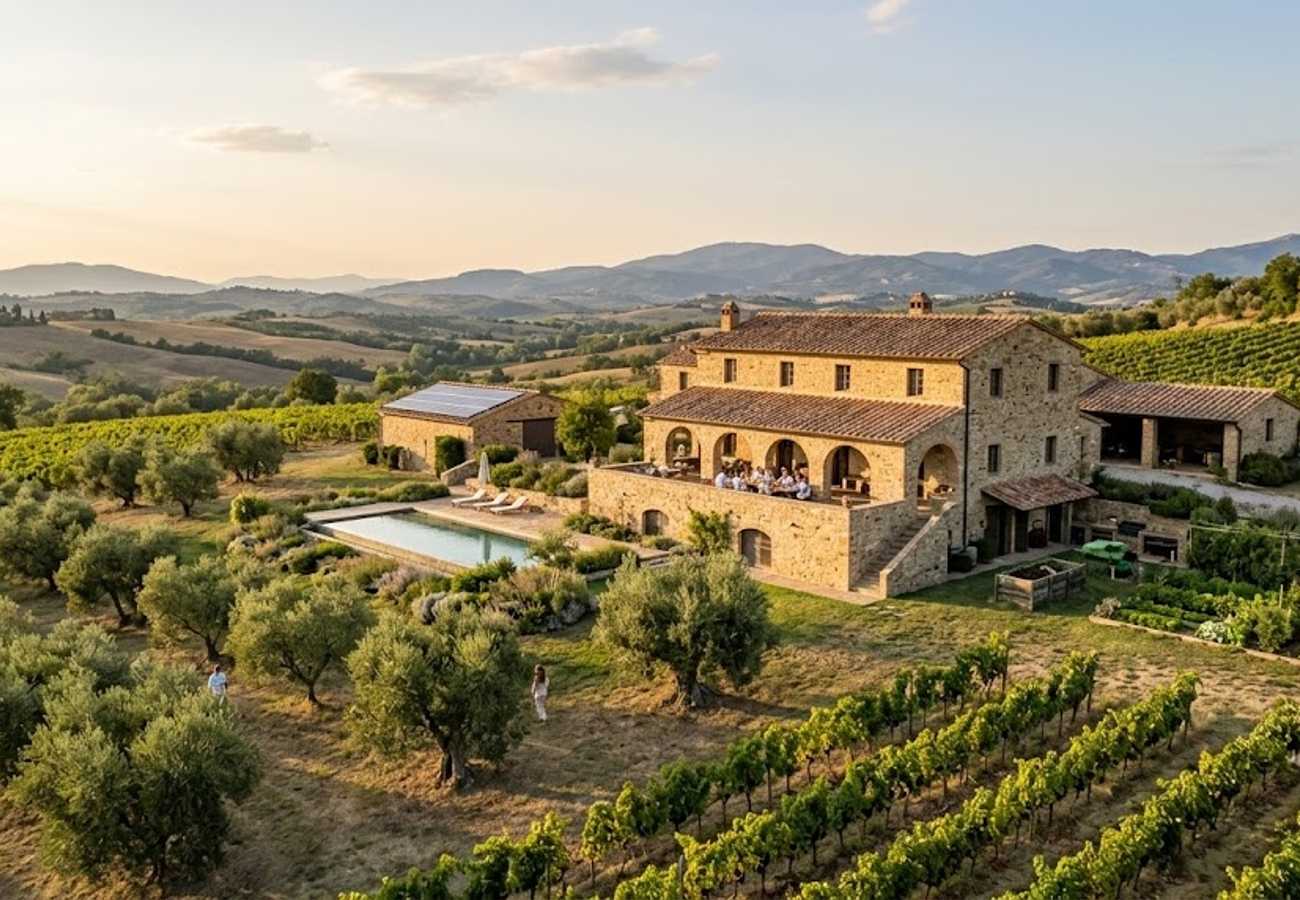
Image generated by AI
While the world focuses on the Mediterranean shoreline, a quiet revolution is happening inland where luxury is no longer measured by beachfront proximity, but by the acreage of an organic olive grove or the authenticity of a centuries-old farmhouse. The map of premium tourism in Southern Europe is shifting away from the saturated coastal hubs of the Costa del Sol and toward the rugged, agricultural heartlands of Andalusia, Tuscany, and Puglia.
The Migration Toward Regenerative Rurality
The current evolution of luxury travel in Southern Europe is characterized by a move toward "experiential" stays. In September 2026, the industry is seeing a push toward regional eco-luxury frameworks. These emerging standards emphasize closed-loop organic farming, the integration of on-site solar power, and highly personalized culinary education. Rather than simply staying in a high-end hotel, affluent travelers are seeking properties that function as productive ecosystems.
This shift is most evident in the transition from passive luxury—where the guest is a consumer—to regenerative hospitality, where the stay actively contributes to the preservation of the local environment. This means moving beyond the superficial addition of solar panels to implementing soil and water protection strategies and supporting the surrounding network of small-scale producers.
What Makes the Inland Experience Different
The allure of the interior lies in its ability to offer privacy and place-based narratives that large-scale resorts cannot replicate. By trading enormous beachfront complexes for private villas and small-group estates, the scale of tourism becomes more intimate and less intrusive.
In Andalusia, the focus has moved beyond the beaches of Málaga. The region is now leveraging its inland identity—defined by mountain villages, vineyards, and historic fincas. The Spain Official Tourism initiatives now promote regenerative agri-tourism, where guests engage in honey harvesting, artisan cheese-making, and the operation of traditional olive mills. Here, a restored finca serves as more than a residence; it is a gateway to the agricultural economy, blending high-end accommodation with the grit and reward of farm work.
Further east, Puglia has redefined the role of the masseria. These traditionally fortified farm estates have been transformed into luxury retreats that blend stark, traditional architecture with contemporary interiors. According to a 2026 report from the Region of Puglia, the area boasted 946 authorized agritourism businesses in 2024. Notably, international guests accounted for more than half of all recorded overnight stays, proving that the global appetite for these rural strongholds is surging. Many of these properties, particularly around Crispiano, now integrate traditional food production directly into the guest experience.
Tuscany continues to lead this trend by integrating hospitality with nature-based education. In regions like the Val d’Orcia, Chianti, and the Maremma, the focus is on properties that connect tourism revenue directly to productive land. A recent Tuscan agriturismo project exemplifies this by operating a four-room property that utilizes its own agricultural output for guest tastings, ensuring that the hospitality side of the business does not alienate the land from its primary purpose: farming. For those interested in the historical significance of these regions, the UNESCO World Heritage Centre provides extensive context on the cultural landscapes that these luxury estates strive to protect.
Visitor Insider Tips
Navigating the rural interior requires a different mindset than a coastal holiday. To truly experience the "inland luxury" shift, consider these local nuances:
- Timing the Harvest: To experience the authentic "farm-to-table" luxury, visit Andalusia or Tuscany during the olive harvest (typically November to January) or the grape harvest (September to October). Many estates offer private harvesting experiences that are only available during these windows.
- Transport Strategy: Do not rely on ride-sharing apps in the interior of Puglia or Andalusia. Renting a 4x4 or a sturdy vehicle is essential for reaching the most exclusive masserie and fincas, as many are located down unpaved agricultural tracks.
- Etiquette of the Agriturismo: Remember that these are working farms first and hotels second. Respect the early rhythms of rural life; loud music or late-night parties are often frowned upon in these community-centric environments.
- Dining Local: Look for "Km 0" labels on menus. In these regions, this indicates that the ingredients were sourced within a very short radius of the property, often from the estate's own gardens.
- Base Yourself Strategically: In Tuscany, avoid staying in the center of Siena or Florence. Instead, base yourself in the Val d’Orcia to get the full experience of the rolling hills and cypress-lined roads.
Cultural and Environmental Context
The shift toward rural luxury is not without its tensions. As high-net-worth individuals move into agricultural zones, there is a delicate balance between economic revitalization and the "museumification" of the countryside. The goal of the 2026 eco-luxury trend is to ensure that tourism supports, rather than replaces, the local agricultural identity.
In Andalusia, the regional strategy explicitly seeks a balance between social, economic, and environmental considerations. By promoting a model where guests participate in traditional production, the industry helps keep ancestral farming techniques alive. In Tuscany, the emphasis is on minimizing the environmental footprint and respecting the existing ecosystems. When done correctly, this model provides the financial capital necessary to restore crumbling historic buildings that would otherwise be lost to time, while providing local farmers with a diversified income stream that makes the land more resilient to climate fluctuations.
FAQ: Visiting Southern Europe 2026
What is the best time to visit the rural interior? Spring (April to June) and Autumn (September to November) offer the most temperate weather and coincide with the most vibrant agricultural activities, such as the harvest seasons.
Do I need a visa for these regions? Visitors from the US, UK, and Canada generally do not need a visa for short stays in the Schengen Area (including Spain and Italy), though you should check current ETIAS requirements for 2026.
How do I get to the rural estates from major hubs? Fly into Málaga for Andalusia, Florence or Rome for Tuscany, and Bari or Brindisi for Puglia. From there, a rental car is the only practical way to reach inland luxury properties.
Is it safe for solo travelers? Yes, these regions are very safe. However, because rural estates are isolated, it is recommended to share your itinerary with someone and ensure you have a reliable vehicle and offline maps.
True luxury is no longer about the gold leaf in the lobby, but the soil under your fingernails and the silence of a Tuscan valley.
Related Travel Guides
Disclaimer
This article is for informational and educational purposes only. It does not constitute legal, financial, or professional advice. While we strive to provide accurate and up-to-date information, travel policies, regulations, and conditions change rapidly. Always verify information with official sources before making travel decisions. Nomad Lawyer makes no representations about the accuracy, reliability, completeness, or suitability of the information provided. Readers should consult qualified professionals for advice specific to their circumstances. The views expressed in this article are those of the author and do not necessarily reflect the views of Nomad Lawyer.
Preeti Gunjan
Contributor & Community Manager
A passionate traveller and community builder. Preeti helps grow the Nomad Lawyer community, fostering engagement and bringing the reader experience to life.
Learn more about our team →