
Lucerne and Mount Pilatus 2026: Navigating the World's Steepest Cogwheel Railway and Alpine Myths
Experience the Golden Round Trip in Lucerne, featuring the world's steepest cogwheel railway and the mythological peaks of Mount Pilatus in 2026.

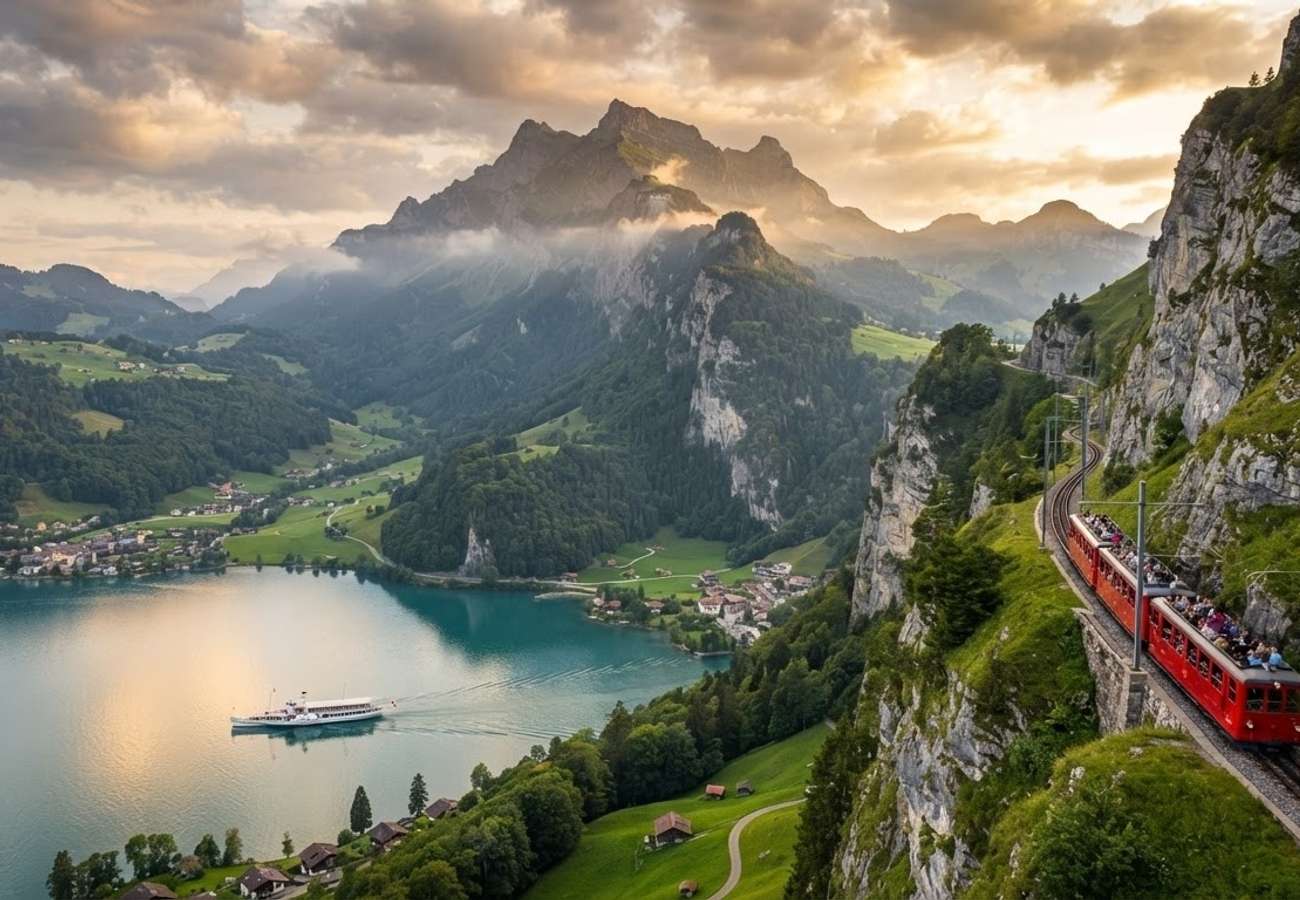
Image generated by AI
Until the late 16th century, climbing the slopes of Mount Pilatus was strictly prohibited by law, as locals believed the mountain's limestone caves were the dwelling place of curative dragons and the restless spirit of Pontius Pilate. Today, that medieval dread has been replaced by a sophisticated tourism infrastructure that allows visitors to traverse these once-forbidden peaks using some of the most daring engineering on the planet.
The Golden Round Trip: A Multi-Modal Alpine Circuit
The current trend for visitors to Lucerne is the "Golden Round Trip," a curated loop that integrates three distinct modes of transport to conquer the mountain. This journey begins with a lake cruise from the Lucerne shoreline to Alpnachstad. From there, the experience shifts to a mechanical marvel: the world's steepest cogwheel railway.
This railway is not merely a transport link but a feat of kinematics. Utilizing the specialized Locher rack system—which employs double horizontal cogwheels to prevent tooth disengagement—the train tackles a maximum gradient of 48% and an average slope of 38%. Over a total track length of 4,618 meters, the locomotive climbs from Alpnachstad (435 meters) to the summit terminal at Pilatus Kulm (2,070 meters), gaining 1,635 meters in vertical elevation. Traveling at a steady pace of 9 to 12 km/h, the ascent provides a visceral sense of the mountain's sheer verticality.
The return leg of the loop utilizes the "Dragon Ride" cableway and a network of panoramic gondolas that descend toward Kriens. This integration of heritage rail and high-tech aerial transport is a primary driver for international interest, as it allows travelers to experience the rugged Alpine environment without compromising safety or accessibility. For those planning their logistics, checking the Swiss Federal Railways (SBB) is the most efficient way to coordinate the initial transit into Lucerne.
What Makes Mount Pilatus Different
Beyond the engineering, Pilatus distinguishes itself through a commitment to "living history." While many peaks offer only a viewpoint, Pilatus utilizes its folklore to create an immersive narrative. The Dragon Path, a rocky walkway featuring artistic depictions of the mountain's mythical inhabitants, transforms a standard hike into a walk through Swiss legend.
For those seeking a physical challenge, the trek to Tomlishorn is the definitive experience. Reaching 2,132 meters, this is the highest point of the massif and offers a complete 360-degree vista of the surrounding Alps and the Swiss plateau. For families or adrenaline seekers, the Fräkmüntegg outdoor rope park provides a high-energy alternative to passive sightseeing, reflecting a broader 2026 shift toward active leisure where travelers demand physical engagement with the environment.
The region's status as a premier destination is further supported by its proximity to other UNESCO World Heritage sites within Switzerland, making Lucerne a strategic hub for those exploring the intersection of natural beauty and human history.
Visitor Insider Tips
Having spent significant time navigating the rhythms of Central Switzerland, I recommend avoiding the "tourist rush" by adhering to these local strategies:
- The Weather Window: Do not trust a clear morning in Lucerne. The summit weather is volatile. Always check the live mountain cameras available on the official Pilatus website before purchasing your tickets.
- Timing the Ascent: To avoid the heaviest crowds on the cogwheel railway, aim for the first ascent of the day. The mid-day window is often congested with large tour groups.
- Seasonal Planning: The cogwheel railway operates primarily between May and October. If you visit in the shoulder seasons, verify the operational dates for the Locher system specifically, as cable cars may operate on a different schedule.
- Gear Selection: Even in July, the temperature at 2,070 meters is significantly lower than in the city. Layering is non-negotiable; a windproof shell is essential for the summit plateau.
- The Local Route: While the Golden Round Trip is the standard, those with high fitness levels should consider hiking from Kriens to the summit for a more authentic, quiet connection with the limestone cliffs.
Cultural and Environmental Context
The evolution of Mount Pilatus from a site of superstition to a global attraction serves as a case study in sustainable regional development. The challenge for Lucerne has been balancing high visitor volumes with the preservation of the fragile Alpine ecosystem. By concentrating transport into specific corridors—like the cogwheel rail and the gondola lines—the region minimizes the environmental footprint on the surrounding slopes.
There is a conscious effort to move away from "sterile" luxury toward "unfiltered wilderness." This shift is evident in the promotion of the Tomlishorn trek and the Dragon Path, which encourage visitors to move on foot and engage with the terrain. This model ensures that the mountain remains a living entity rather than a static backdrop for photographs. The success of this approach has set a benchmark for other mountainous regions worldwide, proving that folklore and high-capacity innovation can coexist without erasing the spiritual essence of the land.
FAQ: Visiting Mount Pilatus 2026
What is the best time to visit? The ideal window is between May and October. This ensures the world's steepest cogwheel railway is fully operational and the hiking trails to Tomlishorn are clear of snow.
How do I get to Mount Pilatus from Lucerne? The most popular method is the Golden Round Trip: take a boat from Lucerne to Alpnachstad, ascend via the cogwheel railway, and descend via cable car to Kriens, where local buses return you to the city.
Is the cogwheel railway safe for people with vertigo? While the 48% gradient is steep, the Locher rack system is an engineering masterpiece designed for maximum stability. However, the "Dragon Ride" cableway offers open vistas that may be challenging for those with severe acrophobia.
Do I need a special permit to hike the trails? No permits are required for standard hiking trails like the Dragon Path or the trek to Tomlishorn, though staying on marked paths is mandatory to protect the local flora.
The mountain no longer guards its dragons; it now invites the world to climb.
Related Travel Guides
Disclaimer
This article is for informational and educational purposes only. It does not constitute legal, financial, or professional advice. While we strive to provide accurate and up-to-date information, travel policies, regulations, and conditions change rapidly. Always verify information with official sources before making travel decisions. Nomad Lawyer makes no representations about the accuracy, reliability, completeness, or suitability of the information provided. Readers should consult qualified professionals for advice specific to their circumstances. The views expressed in this article are those of the author and do not necessarily reflect the views of Nomad Lawyer.
Kunal K Choudhary
Co-Founder & Contributor
A passionate traveller and tech enthusiast. Kunal contributes to the vision and growth of Nomad Lawyer, bringing fresh perspectives and driving the community forward.
Learn more about our team →