
The History of the World's Oldest Subway Stations: From London Underground to Tokyo

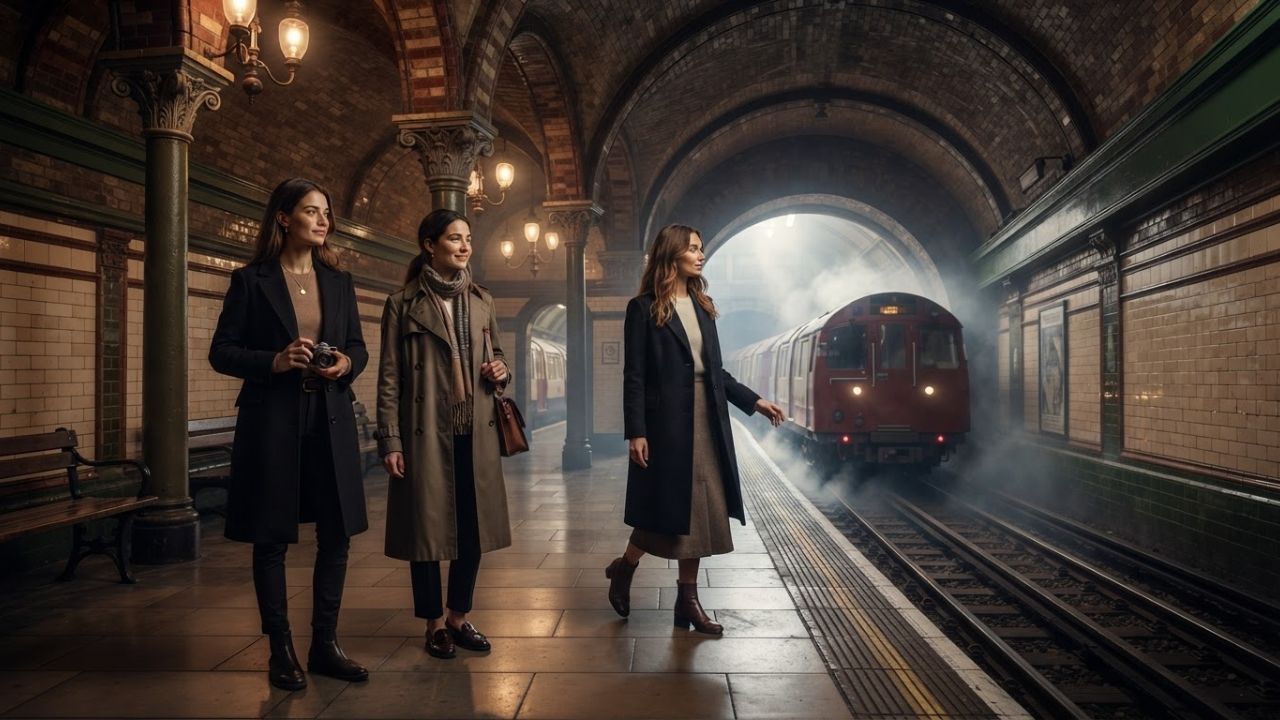
Image generated by AI
The history of rapid transit began on January 10, 1863, with the opening of London’s Metropolitan Railway, initiating a global underground transportation revolution that spread across Europe, North America, Latin America, and Asia.
LONDON, United Kingdom — Beneath the streets of modern global metropolises lies a legacy of engineering ingenuity preserved within the world's oldest underground railway stations. The history of subterranean mass transit traces back to Victorian London, where municipal leaders developed the first sub-surface steam railway to relieve severe surface road congestion.
Following London's pioneering achievement, underground passenger lines opened in Istanbul, Liverpool, Budapest, Glasgow, Boston, Paris, New York, Buenos Aires, and Tokyo. Today, these historic stations remain operational transit nodes while serving as architectural monuments showcasing the evolution of civil engineering and electric traction.
London 1863: The World's First Underground Railway Revolution
London holds the distinction of launching the world's first underground railway. On January 10, 1863, the Metropolitan Railway commenced public passenger operations, connecting Paddington to Farringdon using gas-lit wooden carriages pulled by steam locomotives.
The inaugural line featured seven original sub-surface stations: Baker Street, Edgware Road, Paddington, King’s Cross, Farringdon, Portland Road (now Great Portland Street), and Gower Street (now Euston Square).
Among these, Baker Street Station preserves intact 1863 architectural elements. Designated by Historic England, the station features surviving brick barrel vaults, underground platforms, and high-level light shafts designed to vent steam from early locomotives, offering travelers a direct connection to the birth of subway travel.
Global Timeline Matrix: World's Oldest Underground Railway Systems
The chronological reference table below details the world's oldest operating subway networks, opening dates, key historic stations, and engineering classifications:
| Global City & Nation | System Name / Network Line | Official Opening Date | Original Pioneer Stations | Engineering Classification & Milestone |
|---|---|---|---|---|
| London, UK | Metropolitan Railway | 10 January 1863 | Baker Street, Farringdon, Paddington | World's 1st sub-surface underground railway |
| Istanbul, Turkey | Tünel (IETT) | January 1875 | Galata to Pera | World's 2nd-oldest underground passenger funicular |
| Liverpool, UK | Mersey Railway | 1886 | Hamilton Square Station | Sub-river underground rail tunnel (River Mersey) |
| London, UK | City & South London | 1890 | Kennington Station | World's 1st deep-level electric tube railway |
| Budapest, Hungary | Millennium Metro (M1) | 2 May 1896 | Vörösmarty tér to Széchenyi fürdő | Continental Europe's 1st electric subway |
| Glasgow, Scotland | Glasgow Subway | 14 December 1896 | Circular Inner & Outer Loops | World's 3rd oldest electric subway system |
| Boston, USA | Tremont Street Subway | 1 September 1897 | Park Street & Boylston | North America's 1st underground subway |
| Paris, France | Paris Métro (Line 1) | 19 July 1900 | Porte de Vincennes to Porte Maillot | Classic Art Nouveau Hector Guimard design |
| New York, USA | IRT Subway Line | 1904 | Astor Place & City Hall | High-capacity express/local 4-track network |
| Buenos Aires, Arg | Subte (Line A) | 1 December 1913 | Plaza de Mayo to Plaza Miserere | Latin America's 1st underground subway |
| Tokyo, Japan | Tokyo Metro (Ginza Line) | 30 December 1927 | Ueno to Asakusa | Asia's 1st conventional underground metro |
Istanbul Tünel and Liverpool Hamilton Square Pioneers
Following London's initial success, international municipal engineers began developing specialized subterranean rail systems:
- Istanbul Tünel (1875): Opened in January 1875 by the Ottoman Empire, the Tünel funicular connected the waterfront Galata district to the elevated Pera (Beyoğlu) hilltop, becoming the world's second-oldest operating underground passenger line.
- Liverpool Hamilton Square (1886): Built as part of the Mersey Railway, Hamilton Square Station featured deep underground platforms constructed beneath the River Mersey, linking Liverpool with Birkenhead. Recognized by Historic England, it remains one of the world's earliest heavy-rail underground stations.
Deep Electric Tube Innovation: City & South London Railway 1890
The next major breakthrough occurred in 1890 with the opening of the City and South London Railway. Unlike earlier steam-driven cut-and-cover lines, this network utilized electric locomotives operating through deep cylindrical cast-iron tunnels.
Kennington Station stands out as a key surviving structure from this pioneering era. Electric traction eliminated coal smoke, allowing tunnels to be excavated far beneath existing building foundations.
This innovation established the structural template for modern deep-level "Tube" networks adopted worldwide.
Budapest M1, Glasgow, and Boston Tremont Street Milestones
In the late 19th century, rapid transit expanded across Continental Europe, Scotland, and North America:
- Budapest Metro Line M1 (1896): Opened on May 2, 1896, to celebrate Hungary’s Millennium, Line M1 became continental Europe’s first underground electric railway. The line preserves its historic tiled stations under Andrássy Avenue.
- Glasgow Subway (1896): Inaugurated on December 14, 1896, Scotland’s cable-operated (later electrified) subway featured a twin-tunnel circular route that remains active today.
- Boston Tremont Street Subway (1897): Opening on September 1, 1897, Boston established North America’s first subway system, placing streetcars underground at Park Street and Boylston stations.
Paris, New York, Buenos Aires, and Tokyo Asia Debut
The early 20th century witnessed subways becoming essential urban infrastructure across global capitals:
- Paris Métro (1900): Inaugurated on July 19, 1900, Line 1 introduced Hector Guimard's iconic Art Nouveau station entrances.
- New York City IRT (1904): Launched in 1904, the Interborough Rapid Transit company built a four-track express system with ornate tiled stations like Astor Place.
- Buenos Aires Subte (1913): Opened on December 1, 1913, Line A became Latin America’s first subway, utilizing wooden carriages between Plaza de Mayo and Plaza Miserere.
- Tokyo Metro (1927): On December 30, 1927, Asia’s first conventional subway line opened between Ueno and Asakusa, establishing the foundation of Japan's urban transit network.
Practical Implications for Transit Historians and Urban Travelers
For travelers and urban historians, visiting these pioneer subway stations offers a tangible perspective on 19th and 20th-century industrial heritage.
From a preservation perspective, public transport authorities are increasingly restoring original architectural features—such as Baker Street's brick vaults or Budapest's M1 tiled stations—integrating historic aesthetics with modern contactless ticketing systems.
Exploring these heritage transit systems provides insight into how early engineering solved urban congestion.
Railway Heritage Traveler Guide: Visiting Historic Metro Stations
Travelers interested in exploring historic underground railway heritage should consider these tips:
- Visit Baker Street Off-Peak (London): Explore Platforms 5 and 6 at Baker Street station during quiet midday hours to photograph the intact 1863 brick barrel vaults.
- Ride Budapest Metro Line M1 (Budapest): Purchase a single ticket to ride the restored 1896 yellow M1 line beneath Andrássy Avenue between Vörösmarty tér and Heroes' Square.
- Experience Istanbul's Tünel Funicular (Istanbul): Take the short 90-second underground funicular ride between Karaköy (Galata) and Beyoğlu (Pera).
- Tour Boston's Boylston Station (Boston): View vintage trolley cars displayed on the disused track bed at MBTA’s historic Boylston Station on the Green Line.
Related Travel Guides
Disclaimer
This article is for informational and educational purposes only. It does not constitute legal, financial, or professional advice. While we strive to provide accurate and up-to-date information, travel policies, regulations, and conditions change rapidly. Always verify information with official sources before making travel decisions. Nomad Lawyer makes no representations about the accuracy, reliability, completeness, or suitability of the information provided. Readers should consult qualified professionals for advice specific to their circumstances. The views expressed in this article are those of the author and do not necessarily reflect the views of Nomad Lawyer.
Raushan Kumar
Founder & Lead Developer
Full-stack developer with 11+ years of experience and a passionate traveller. Raushan built Nomad Lawyer from the ground up with a vision to create the best travel and law experience on the web.
Learn more about our team →