
London Is Now On Alert As Rail Disruption And Elizabeth Line Heathrow Disruption See Better Travel Options
London Is Now On Alert As Rail Disruption And Elizabeth Line Heathrow Disruption See Better Travel Options

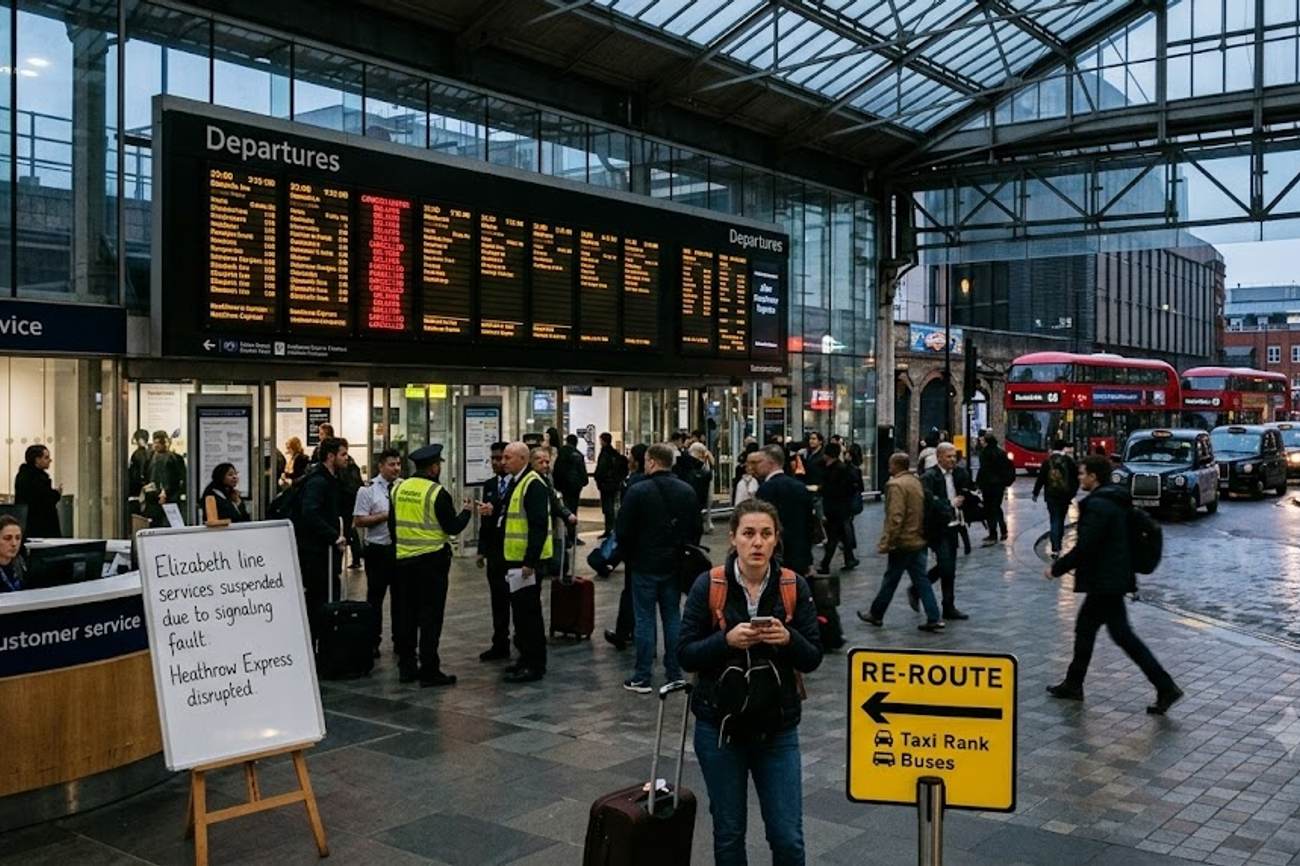
Image generated by AI
14.1% of all recorded railway journeys in Britain during 2025–26 were facilitated by the Elizabeth line, highlighting the systemic risk when a single section of this corridor fails. On 14 September 2026, a targeted operational collapse occurred on the western artery of this network, triggering a total suspension of service between Maidenhead and Reading. While the disruption was geographically isolated, the ripple effects created a logistical bottleneck for passengers attempting to navigate the critical link between the Thames Valley and London’s primary aviation hubs.
The Maidenhead-Reading Corridor Collapse
The disruption was triggered by a casualty on the tracks, necessitating an immediate emergency response. Under standard safety protocols, rail operations are halted entirely within the affected sector to allow emergency services to operate. In this instance, the suspension was absolute between Maidenhead and Reading, effectively severing the westernmost terminus of the line.
The instability extended eastward, manifesting as minor delays between Hayes & Harlington and Maidenhead. This "accordion effect" occurs because trains cannot maintain their scheduled slots when the forward path is blocked, forcing crews to hold positions or terminate journeys prematurely. Despite this, the core central London sections and the dedicated branch to Heathrow Airport remained operational, though the fluid nature of railway incidents means that platform congestion often spikes as passengers divert from the failed western route.
Operational Volume and Systemic Impact
To understand why a localized failure between two stations causes widespread anxiety, one must look at the sheer volume of traffic the Elizabeth line manages. The line has become a cornerstone of UK transit, seeing a steady climb in utilization.
| Metric | 2024–2025 Period | 2025–2026 Period | Variance |
|---|---|---|---|
| Elizabeth Line Journeys | 242.9 Million | 257.4 Million | +6% |
| Total UK Rail Journeys | 1.73 Billion | 1.83 Billion | +6% |
| Line Length (as of March 2025) | 118 Kilometres | 118 Kilometres | 0% |
| Passenger-Kilometres (24/25) | 2.38 Billion | N/A | N/A |
The dominance of this line is further evidenced by the fact that six of the ten most-used station-to-station flows in the UK involve Elizabeth line hubs. Specifically, the corridor between Liverpool Street and Tottenham Court Road alone handled 8.7 million journeys. When a disruption is reported—even if it is limited to the Reading end—the high visibility of the line leads to "disruption contagion," where travelers on the Heathrow branch erroneously assume their route is also closed.
Expert Analysis: The Logistics of the Western Bottleneck
For travelers booking routes through the Thames Valley, the direct consequence of a Maidenhead-Reading closure is the loss of the most efficient interchange for the West of England. Reading serves as the primary gateway for those heading toward Bath, Bristol, Oxford, and South Wales. When the Elizabeth line fails here, it doesn't just affect London commuters; it paralyzes the transit flow for international tourists moving from the airport toward the southwest.
The pricing and timing pressure created by such failures is significant. Passengers attempting to reach Heathrow from Reading typically travel east to Hayes & Harlington to switch branches. With the Reading-Maidenhead link severed, this path is erased. Travelers are forced into road-based alternatives, such as direct coaches which typically take 40 minutes, or private hire vehicles covering the approximately 44 kilometres between the city and the airport.
From a regulatory perspective, the reliance on a single high-capacity line creates a "single point of failure" risk. While the International Air Transport Association (IATA) focuses on the aviation side, the "last mile" of the journey—the rail link—is where the passenger experience is most vulnerable. For the business traveler, a 40-minute delay in the Thames Valley can result in a missed flight, as the buffers built into airport arrival times are often eroded by the unpredictability of rail diversions. Travelers should utilize real-time data from Transport for London (TfL) rather than relying on general news reports, which often conflate "partial disruption" with "total line closure."
Key Takeaways
- Localized Failure: The total suspension was strictly between Maidenhead and Reading; the Heathrow branch and Central London services remained active.
- High Dependency: The Elizabeth line now handles 14.1% of all UK rail traffic, making any disruption a high-visibility event.
- Alternative Transit: Reading to Heathrow travelers must pivot to road transport (approx. 44km) during rail failures, with coaches averaging a 40-minute transit time.
- Data Trend: A 6% year-on-year increase in passenger journeys (to 257.4 million) indicates increasing pressure on the line's infrastructure.
- Verification Necessity: Because the line is so vast, passengers must verify the specific segment of disruption to avoid unnecessary route changes.
FAQ: Elizabeth Line Disruption 2026
Was the Heathrow Airport branch closed on 14 September 2026? No. Official reports confirmed that the Heathrow branch was not suspended. The closure was concentrated between Maidenhead and Reading, though minor delays occurred as far east as Hayes & Harlington.
How do I get from Reading to Heathrow if the Elizabeth line is down? Travelers should use direct coaches or road transport. The distance is approximately 44 kilometres, and the journey typically takes between 30 and 45 minutes depending on traffic conditions.
Why did delays happen at Hayes & Harlington if the crash was near Reading? Railways operate on strict patterns. When trains cannot proceed past Maidenhead, they back up through the system, causing "minor delays" at preceding stations like Hayes & Harlington as crews adjust schedules.
Does this disruption affect travel to Bristol or Bath? Yes. Reading is a major interchange for the South West. Passengers connecting from the Elizabeth line to onward trains to Bristol, Bath, or South Wales would have faced significant delays or cancellations.
In an era of hyper-connectivity, the fragility of a single rail segment can redefine a traveler's entire itinerary.
#ElizabethLine #ReadingRail #HeathrowExpress #TfLDisruption2026 #UKTransitAnalysis #MaidenheadStation
Related Travel Guides
Disclaimer
This article is for informational and educational purposes only. It does not constitute legal, financial, or professional advice. While we strive to provide accurate and up-to-date information, travel policies, regulations, and conditions change rapidly. Always verify information with official sources before making travel decisions. Nomad Lawyer makes no representations about the accuracy, reliability, completeness, or suitability of the information provided. Readers should consult qualified professionals for advice specific to their circumstances. The views expressed in this article are those of the author and do not necessarily reflect the views of Nomad Lawyer.
Naina Thakur
Contributor & Travel Specialist
Travel enthusiast and legal writer covering visa regulations, responsible tourism, and cultural journeys across global destinations.
Learn more about our team →