
London Heathrow Airport Flooding Road Access Closures
Heathrow Airport experiences road closures to Terminal 2 and 3 due to central area flooding. Rail services remain active. Read travel updates.

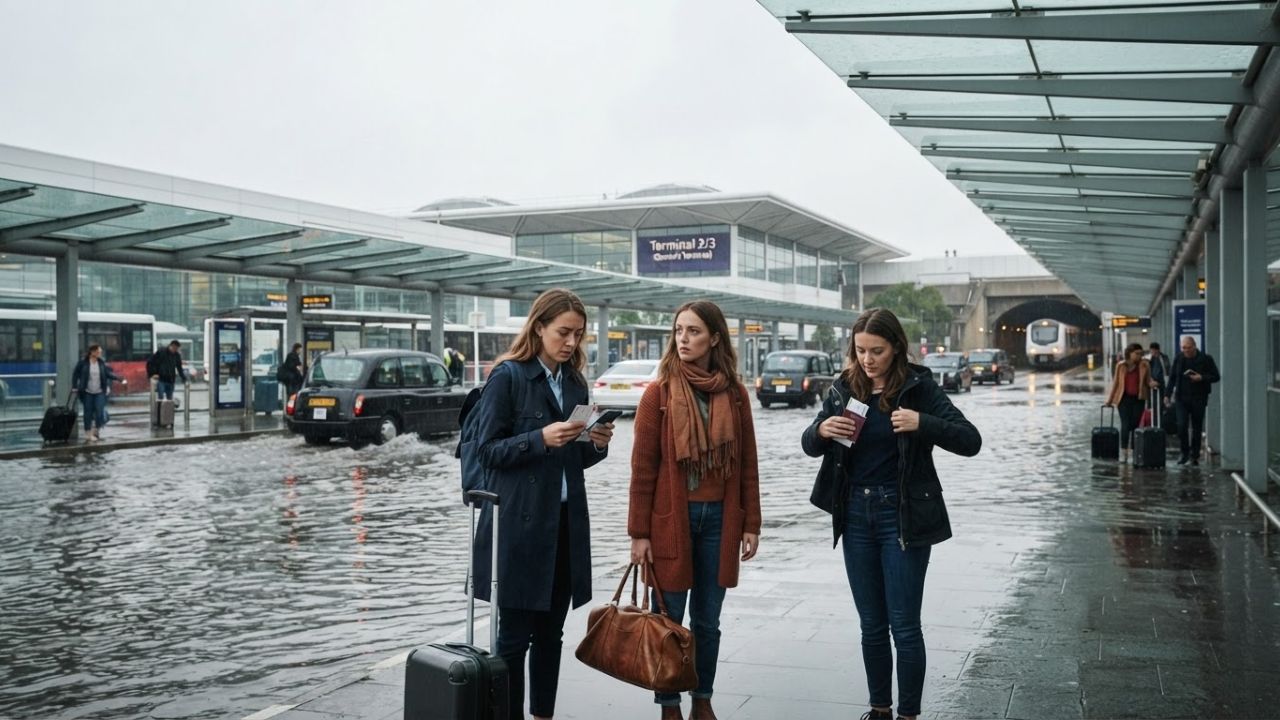
Image generated by AI
According to official statements from transit authorities, London Heathrow Airport implemented road access restrictions for Terminal 2 and Terminal 3 on August 15, 2026, after sudden, severe rainfall caused significant flooding in the central terminal area.
The flooding has affected important access routes around the airport's central hub, disrupting passengers who normally depend on cars, taxis, or private transfer vehicles to reach their flights. Airport emergency teams are working to pump water and restore normal access routes, but travelers are advised to expect longer journey times and make alternative transport arrangements. To bypass the flooded roadways, officials are urging passengers to choose public transit, specifically recommending the Heathrow Express, Elizabeth Line, or Piccadilly Line.
The disruption highlights the vulnerability of major international airports to extreme weather events, requiring coordination between airport operators, regional rail services, and local traffic control. Reaching the terminals by road is currently highly restricted, and travelers heading to Terminal 2 and Terminal 3 should avoid road routes entirely. By switching to the extensive rail network, passengers can ensure they arrive at the airport safely and avoid unexpected delays. The airport remains operational, but the access restrictions require careful preparation and adjustment from outbound and inbound travelers.
Heavy Rain Floods Access Roads in Heathrow's Central Terminal Area
Heathrow Airport has apologized for the inconvenience caused by the flooding and confirmed that engineering teams are actively working to clear affected roads as quickly as possible. The situation requires careful management because the airport handles thousands of travelers daily during this busy holiday travel period. Directing passengers safely through alternative entry points is a key priority while teams work to manage the flooding. Travelers are advised to check real-time flight statuses and traffic updates before leaving their homes.
To help passengers navigate the current transport disruption and plan their journeys, the following table summarizes the terminal access options and recommended rail connections:
| Airport Terminal | Road Access Status | Recommended Rail / Transit Option | Alternative Transfer Method |
|---|---|---|---|
| Terminal 2 | Restricted / Closed due to central terminal flooding | Heathrow Express, Elizabeth Line, Piccadilly Line | Park at Terminals 4/5, then use free rail transfers |
| Terminal 3 | Restricted / Closed due to central terminal flooding | Heathrow Express, Elizabeth Line, Piccadilly Line | Park at Terminals 4/5, then use free rail transfers |
| Terminal 4 | Open and Operational with normal road access | Piccadilly Line, local transport services | Free rail transfer to Terminals 2 and 3 |
| Terminal 5 | Open and Operational with normal road access | Heathrow Express, Piccadilly Line, Elizabeth Line | Free rail transfer to Terminals 2 and 3 |
Travel Restrictions Imposed at Terminal 2 and Terminal 3
The airport’s warning is clear: passengers flying from or arriving at Terminal 2 and Terminal 3 should not use road transport today. This advice affects anyone intending to travel by private car, taxi, rideshare services, or private airport transfers. Direct road access to these central terminals is blocked, and vehicles attempting to enter the central terminal area are facing significant delays. Instead, travelers are urged to utilize rail networks, which remain unaffected by the flooding and offer direct connections to the airport.
The Heathrow Express, Elizabeth Line, and Piccadilly Line provide reliable connections to all terminals, allowing passengers to continue their journeys despite the road closures. Travelers should ensure they purchase valid tickets or use contactless payment systems to pass through the station gates quickly. Switching to rail transport requires additional planning, particularly for passengers carrying heavy luggage or traveling in large groups, but it remains the most reliable way to reach the airport during the disruption.
Alternative Park and Ride Routes via Terminal 4 and Terminal 5
For passengers who must travel by car, the airport has established alternative park-and-ride arrangements. Instead of attempting to drive directly to the affected central terminals, drivers are advised to head toward Terminal 4 or Terminal 5, where parking facilities remain open and accessible. From these outer terminals, passengers can use the airport’s free rail transfer system to reach Terminal 2 or Terminal 3. This option allows travelers to avoid the flooded central roads entirely.
This alternative route reduces pressure on the restricted access points in the central terminal area and helps keep traffic moving around the airport perimeter. Travelers using this option should allow at least an extra hour for parking, transferring luggage, and riding the shuttle trains to their target terminals. Airport staff are positioned at key transit points to assist passengers and provide directions, ensuring a smooth transition between different parts of the airport.
Why This Matters (Information Gain & Experience)
For the traveler, this means that the choice of airport transportation is the deciding factor in whether you make your flight today. Relying on road transport, such as taxis or rideshares, is likely to result in missed connections due to the closures in the central terminal area. Choosing rail transport is the most effective way to ensure a predictable and low-stress journey to Terminal 2 or Terminal 3, as the trains run directly beneath the flooded surface roads and arrive at the terminal stations on schedule.
Additionally, choosing to travel by rail is a more sustainable option that reduces carbon emissions and avoids contributing to traffic congestion around the airport perimeter. Outbound travelers can enjoy a relaxed journey by boarding the Heathrow Express or the Elizabeth Line from central London, using contactless credit cards or Oyster cards for seamless gate access. While at the airport, passengers can sample local dining specialties like pie and mash, fish and chips, or a traditional full English breakfast at terminal pubs, supporting local hospitality operators during the wait. For those with extra time, the viewing deck at Terminal 4 offers panoramic views of the airfield, transforming a travel disruption into an opportunity to relax before departure.
Related Travel Guides
Disclaimer
This article is for informational and educational purposes only. It does not constitute legal, financial, or professional advice. While we strive to provide accurate and up-to-date information, travel policies, regulations, and conditions change rapidly. Always verify information with official sources before making travel decisions. Nomad Lawyer makes no representations about the accuracy, reliability, completeness, or suitability of the information provided. Readers should consult qualified professionals for advice specific to their circumstances. The views expressed in this article are those of the author and do not necessarily reflect the views of Nomad Lawyer.
Raushan Kumar
Founder & Lead Developer
Full-stack developer with 11+ years of experience and a passionate traveller. Raushan built Nomad Lawyer from the ground up with a vision to create the best travel and law experience on the web.
Learn more about our team →