
Lightning Strike Halts Air Traffic Control at London Luton Airport on August 27 2026
A lightning strike on August 27, 2026, disabled critical air traffic control equipment at London Luton Airport, triggering flight suspensions and diversions.

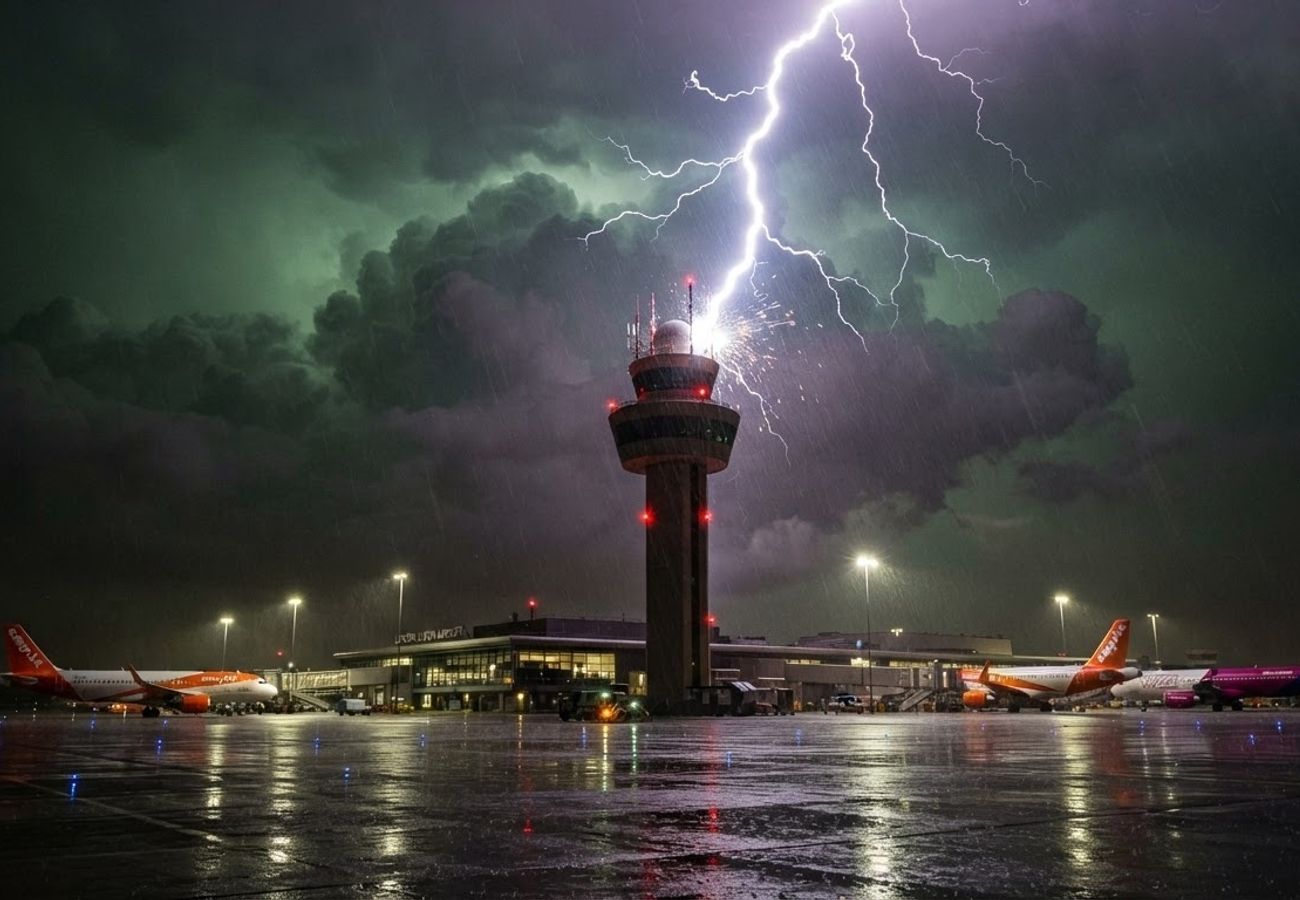
Image generated by AI
A lightning strike on Thursday, August 27, 2026, disabled critical air traffic control (ATC) equipment at London Luton Airport, forcing a temporary suspension of all flight operations. The incident triggered a wave of diversions and delays across southern England during a period of intense convective weather.
The disruption occurred as a line of severe thunderstorms tracked across the East of England. The strike specifically impacted ground-based ATC systems, necessitating an immediate halt to take-offs and landings while technical teams performed safety audits and system resets. While the suspension was brief, the ripple effect was felt throughout the evening, particularly for short-haul leisure routes that operate on tight turnaround schedules.
The Operational Impact of Convective Weather
For the traveler, the immediate result was a chaotic departure board. Aircraft already on the tarmac remained grounded, while inbound flights were forced into holding patterns or diverted to other southeast England airports. This created a cascading effect: late arrivals from earlier sectors delayed evening departures, leaving passengers stranded in terminal lounges.
According to the Met Office, the weather pattern on August 27 featured repeated bands of thundery showers moving north overnight. These localized cells are particularly dangerous for airport infrastructure. While aircraft are designed to withstand lightning strikes in flight, ground-based installations—such as radar, navigation beacons, and power supplies—are more vulnerable. A single strike to a critical node can paralyze an entire hub, as seen during this event.
Regional Heritage and Infrastructure Resilience
The vulnerability of budget hubs like Luton highlights a broader challenge for UK aviation. As one of the primary gateways for low-cost carriers, Luton operates near peak capacity. When a technical failure occurs, there is very little "slack" in the system to absorb the delay.
From a cultural and environmental perspective, these events are becoming more frequent. Climate projections indicate an increase in intense downpours and convective storms across the UK. For the local community and the airport's operational bodies, this necessitates a shift toward "climate-resilient" infrastructure. The goal is to move beyond simple recovery and toward systems that can maintain partial functionality even when specific ground nodes are compromised.
Visitor Insider Tips for London Luton
Navigating Luton during the unsettled late summer pattern requires more than just checking a flight board. To avoid the stress of weather-related shutdowns, consider these local strategies:
- The "Buffer" Rule: During August and September, build an additional 2-3 hours into your journey to the airport. Luton's road access is prone to congestion during storm events, which can compound flight delays.
- Digital Redundancy: Do not rely solely on airport screens. Enable push notifications for your specific airline app and sign up for SMS alerts. During the August 27 event, digital updates often preceded the physical board changes.
- Transport Contingencies: If you have a tight connection to central London, avoid booking non-refundable rail or coach tickets for the immediate hour after your landing. Use flexible fare options to account for the "ripple effect" of ATC delays.
- Off-Peak Navigation: To avoid the peak-hour crush that exacerbates delay stress, aim for flights arriving or departing between 10:00 AM and 2:00 PM, when the airport typically has more operational breathing room.
Tourism and Aviation Outlook
The long-term impact of these weather events is a push for greater synchronization between the Met Office and airport operators. The August 27 incident serves as a case study in how quickly a localized weather event can disrupt the regional economy, affecting everything from hotel bookings to onward rail travel.
As the UK aviation network continues to refine its resilience measures, travelers should expect "weather-aware" scheduling to become more common. The ability of an airport to recover quickly from a lightning strike—rather than suffering a total system collapse—will be the primary benchmark for destination reliability in the coming years.
Summer travel in the UK now requires a strategy of flexibility and real-time monitoring.
Related Travel Guides
Disclaimer
This article is for informational and educational purposes only. It does not constitute legal, financial, or professional advice. While we strive to provide accurate and up-to-date information, travel policies, regulations, and conditions change rapidly. Always verify information with official sources before making travel decisions. Nomad Lawyer makes no representations about the accuracy, reliability, completeness, or suitability of the information provided. Readers should consult qualified professionals for advice specific to their circumstances. The views expressed in this article are those of the author and do not necessarily reflect the views of Nomad Lawyer.
Raushan Kumar
Founder & Lead Developer
Full-stack developer with 11+ years of experience and a passionate traveller. Raushan built Nomad Lawyer from the ground up with a vision to create the best travel and law experience on the web.
Learn more about our team →