Latin America Deploys Coordinated Tech and Police Crackdown on Street Crime and Phone Snatching Across Major Tourist Hubs

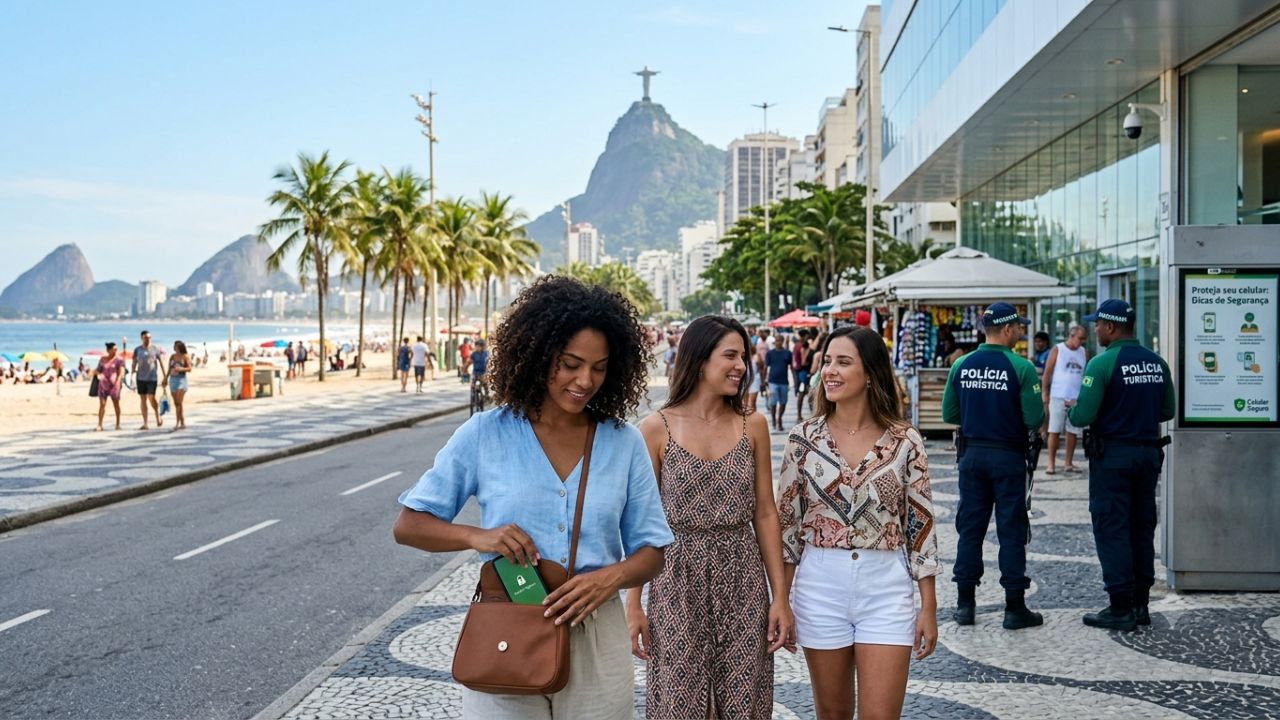
RIO DE JANEIRO / BOGOTÁ — In a coordinated continental counter-offensive against opportunistic street crime, governments across South and Central America are rolling out advanced biometric surveillance, automated telecommunications kill-switches, and aggressive intelligence-led police raids to dismantle criminal syndicates targeting international tourists.
For decades, the diverse cultural corridors, sun-drenched beaches, and historic architectural quarters of Latin America have captivated global travelers. From the golden sands of Copacabana in Rio de Janeiro and the colonial cobblestones of Bogotá’s La Candelaria to the imperial plazas of Cusco and the bohemian avenues of Buenos Aires, international visitors contribute billions of dollars annually to regional economies.
However, persistent safety concerns—particularly smartphone snatching, motorcycle-assisted robbery, and sophisticated distraction theft—have cast a shadow over visitor confidence.
Throughout 2026, security ministries across Brazil, Peru, Colombia, Chile, and Argentina have recognized that traditional physical foot patrols alone are insufficient to combat agile, tech-savvy street criminals.
Instead, authorities are executing an aggressive doctrine that attacks the economic incentive structure behind petty crime: severing the multi-million-dollar illicit resale supply chain for stolen mobile devices.
By pairing nationwide IMEI blocking protocols and instantaneous banking app lockouts with targeted commercial raids on underground electronics repair galleries, Latin American destinations are fighting to protect their tourism reputations and guarantee traveler safety.
       CONTINENTAL ANTI-THEFT ARCHITECTURE: FROM STREET TO KILL-SWITCH

  [ The Street Incident ] ===> [ Immediate Digital Lockout ] ===> [ Supply Chain Death ]
  * Motorcycle snatching        * Brazil: Celular Seguro          * Permanent IMEI block
  * Distraction theft           * Peru: OSIPTEL RENTESE           * Blacklisted by carriers
  * Public transit pocketing    * Chile: Teléfono Bloqueado       * Unlocking galleries raided
  * Crowded beach robbery       * Banking apps frozen (1-click)   * Zero hardware resale value
The Changing Economics of Street Crime: Why the Smartphone Became Public Enemy Number One
To understand the scale of the security mobilization unfolding across Latin America, one must analyze how the criminal economy evolved over the past decade.
Historically, street muggers and pickpockets sought physical cash, high-end mechanical watches, and imported camera lenses.
Today, modern smartphones—particularly flagship Apple iPhone and high-tier Samsung Galaxy devices—have become the primary currency of Latin American street gangs.
THE FOUR-TIER VALUE MATRIX OF A STOLEN SMARTPHONE
| Column 1 |
|---|
| 1. HARDWARE RESALE & DOMESTIC BLACK MARKETS |
| - Devices wiped via firmware exploit tools and resold in unlicensed stalls |
| - Premium models sold domestically for 40% to 60% of retail market value |
| 2. COMPONENT HARVESTING & PARTS CANNIBALIZATION |
| - Cloud-locked devices disassembled in clandestine repair workshops |
| - Original OLED displays, cameras, and batteries sold for repair inventory |
| 3. FINANCIAL HIJACKING & INSTANT PAYMENT FRAUD |
| - Bypass of biometric security to drain domestic instant-payment networks |
| - Exploitation of Brazil's Pix, Colombia's Nequi, and Peru's Yape systems |
| 4. CROSS-BORDER CONTRABAND SMUGGLING |
| - Devices blocked in one country smuggled across land borders into neighbors |
| - Reprogrammed onto foreign carrier networks lacking shared IMEI blacklists |
The motivation behind smartphone theft extends far beyond the physical value of the glass and aluminum casing:
- Hardware Resale and Clandestine Electronics Galleries: In major metropolitan centers, stolen phones are funneled within hours into dense, multi-story electronics markets. Specialized technicians utilize unauthorized firmware flashing software to bypass factory security locks, packaging devices for rapid domestic resale.
- Component Harvesting: If a stolen device cannot be wiped due to remote cloud activation locks, criminal syndicates disassemble the hardware for component harvesting. Authentic smartphone replacement parts—especially original OLED display assemblies, camera sensors, and lithium batteries—command exorbitant prices in Latin America due to heavy import tariffs on genuine consumer electronics.
- Financial Hijacking: In digital-first economies, gaining access to an unlocked smartphone allows criminals to exploit stored banking credentials, mobile payment platforms, and instant-transfer apps (such as Pix in Brazil, Nequi and Daviplata in Colombia, and Yape or Plin in Peru). Syndicates employ social engineering and password-reset exploits to siphon funds into untraceable digital accounts before the victim can contact their bank.
- Cross-Border Contraband Networks: Mobile devices blacklisted by telecommunications carriers in one country are frequently smuggled across porous terrestrial borders into neighboring republics where regional carriers do not share synchronized IMEI databases, allowing stolen handsets to operate on foreign cellular networks.
Country-by-Country Operational Breakdown: How Latin American Republics Are Fighting Back
Recognizing these systemic challenges, law enforcement agencies and telecommunications regulators across the continent have rolled out coordinated security operations tailored to their unique urban landscapes.
       REGIONAL SECURITY MATRIX: STRATEGIES ACROSS SOUTH AMERICA

  [ BRAZIL: ENFORCEMENT & PLATFORM TECH ]
  * Operação Última Chamada: 9,989 phones recovered; 601 shops raided
  * Celular Seguro app: Instantaneous multi-stakeholder IMEI & banking freeze
  * Hotspots: Copacabana, Ipanema, Avenida Paulista, Praça da Sé
                     |
  [ COLOMBIA: URBAN CAMINA SEGURA ]
  * Bogotá: 33% drop in phone theft complaints via commercial raids
  * Drone surveillance & undercover transit patrols in La Candelaria
  * Warning focus: Dating app drugging & nightlife scams in Medellín
                     |
  [ PERU: REGULATORY MASS DISCONNECTION ]
  * OSIPTEL RENTESE: 300,000 irregular devices blocked in Sept 2026
  * Nationwide crackdown on cloned IMEIs & fraudulent biometric SIM sales
  * Hotspots: Miraflores, Barranco, Cusco Plaza de Armas, Sacred Valley
                     |
  [ CHILE & ARGENTINA: COMMERCIAL SMUGGLING INTERCEPTION ]
  * Chile: "Teléfono Robado, Teléfono Bloqueado" Subtel campaign
  * Argentina: 112 illicit repair premises shuttered across Buenos Aires
  * Targeted sweeps against "motochorros" in Palermo, San Telmo, and La Boca
1. Brazil: Operação Última Chamada and the Celular Seguro Revolution
Brazil has deployed one of the world's most sophisticated, multi-agency legal and technological frameworks to dismantle smartphone theft. Coordinated by the Ministry of Justice and Public Security (Ministério da Justiça e Segurança Pública - MJSP) alongside state civil and military police commands, Brazil launched Operação Última Chamada (Operation Last Call).
During an intense enforcement wave in August 2026, federal and state police executed simultaneous search warrants across 601 commercial repair shops, electronics bazaars, and street kiosks:
- Enforcement Metrics and Forensic Discoveries: Authorities recovered 9,989 stolen or cloned mobile phones, arrested 396 individuals caught in the act of theft, fencing (receptação), or digital fraud, and seized dozens of proprietary computer decoding devices used to rewrite IMEI identification serial numbers. In São Paulo’s historic commercial quarters around Rua Santa Ifigênia and Rua 25 de Março, specialized forensic units from the State Department of Criminal Investigations (DEIC) discovered clandestine workshops equipped with imported flashing boxes capable of altering flash memory chips on seized devices within minutes.
- The Celular Seguro Ecosystem: Brazil’s flagship prevention breakthrough is Celular Seguro, a free government-backed digital platform created by the MJSP in collaboration with the National Telecommunications Agency (Anatel) and the Brazilian Federation of Banks (Febraban). By registering their device IMEI, tax ID (CPF), and trusted emergency contacts on the platform, a victim who suffers a robbery can activate a single emergency panic button via a web portal. Within minutes, the system triggers simultaneous, automated actions:
- Telecom operators permanently block the device IMEI across all national cellular carriers, rendering the handset incapable of connecting to Brazilian cellular towers.
- Participating financial institutions (including major commercial banks and fintech platforms) instantly freeze all mobile banking applications, payment authorizations, and Pix instant-transfer services, preventing financial drainage.
- The Central Bank of Brazil (BCB) has complemented this framework with strict nocturnal transaction ceilings, capping Pix transfers at R$ 1,000 between 20:00 and 06:00 to eliminate the profitability of express kidnapping (sequestro relâmpago) and forced digital transfers.
- Urban Focus in Rio and São Paulo: Physical enforcement has concentrated heavily in high-density visitor districts. In Rio de Janeiro, the Specialized Battalion for Tourist Policing (BPTur) deployed bicycle squads along the beach boardwalks of Copacabana, Ipanema, and Leblon, while motorized quad bikes patrol the sand line to intercept youth gangs executing rapid snatch-and-grab runs against sunbathers. In São Paulo, reinforced patrols along Avenida Paulista, Praça da Sé, and the Pinheiros dining quarter have targeted cycling syndicates who mount sidewalks to snatch phones from unsuspecting pedestrians.
2. Peru: OSIPTEL’s Massive IMEI Disconnection Wave
In Peru, the national telecommunications supervisory agency, OSIPTEL (Organismo Supervisor de Inversión Privada en Telecomunicaciones), has taken a hardline regulatory approach by systematically purging invalid and cloned devices from the national spectrum.
In September 2026, OSIPTEL scheduled the mandatory blocking of approximately 300,000 mobile phones identified with irregular, altered, or duplicate IMEI numbers.
This enforcement wave is managed through the RENTESE system (Registro Nacional de Equipos Terminales Móviles para la Seguridad), a centralized state database that cross-references SIM card registrations with biometric national identity records (RENIEC).
PERU'S OSIPTEL RENTESE DISCONNECTION ENGINE
| Column 1 |
|---|
| STEP 1: Automated Spectrum Scanning |
| - OSIPTEL algorithms identify invalid, duplicated, or altered IMEI sequences |
| STEP 2: Biometric Validation Protocol |
| - Users receive mandatory SMS directive to verify device ownership biometrically |
| - Unverified devices flagged as illicit hardware within 48 hours |
| STEP 3: Nationwide Cellular Deactivation |
| - Hardware permanently disconnected across Claro, Movistar, Entel, and Bitel |
| - Carrier SIM cards registered to fraudulent identities revoked |
The regulatory sweep has yielded tangible results. Official statistics published by the Peruvian National Police (PNP) revealed that total reported phone thefts in 2025 dropped noticeably compared to 2024 benchmarks. Under the companion "White List" (Lista Blanca) regulation enacted by OSIPTEL, newly imported or activated devices must be authenticated against the international GSMA database. Foreign tourists purchasing local physical SIM cards or eSIMs from domestic providers (such as Claro, Movistar, Entel, or Bitel) are advised to register their device IMEI using their passport at an official carrier service center to prevent automated network disconnection.
Simultaneously, joint operations by the PNP and the national customs agency (SUNAT) have zeroed in on high-volume fencing epicenters, most notably the sprawling commercial galleries of Las Malvinas on Avenida Argentina in central Lima. Multi-agency raids in late 2026 resulted in the confiscation of thousands of disassembled motherboards, stolen camera modules, and proprietary hardware cracking tools.
Despite these regulatory advancements, authorities emphasize that international visitors exploring cultural circuits require heightened personal vigilance:
- Lima: Handbag snatching and drive-by phone grabs remain prevalent near busy intersections along the Miraflores Malecón, the bohemian quarter of Barranco, and the historic Plaza Mayor. Criminals on lightweight scooters frequently mount pedestrian sidewalks to rip devices from tourists capturing coastal photographs.
- Cusco and the Sacred Valley: Crowded tourist markets—such as the San Pedro Central Market and transit hubs connecting visitors to Machu Picchu trains in Ollantaytambo—require constant personal vigilance. To counter organized pickpocketing syndicates operating in pedestrian bottlenecks, the National Police Directorate of Tourism (DIRTUR) deployed plainclothes undercover officers (tiras) fluent in English and Quechua along the steep cobblestone pedestrian stairways of the San Blas neighborhood.
3. Colombia: The "Camina Segura" Strategy Yields Double-Digit Drops
In Colombia, urban municipal administrations have combined intelligence-led commercial raids with high-visibility street policing to restore safety across historic tourist neighborhoods.
In Bogotá, the municipal security secretariat deployed the Camina Segura (Walk Safely) strategy. The initiative coordinates uniformed National Police patrols with overhead drone surveillance units (halcones), high-resolution surveillance rings linked to the municipal C4 command center, and regular administrative inspections of commercial galleries in commercial districts like San Victorino, Chapinero, and Avenida Caracas. Undercover transit police have also been integrated into primary TransMilenio trunk stations—including Las Aguas, Universidades, and Portal Norte—to counter organized pickpocketing teams that operate during peak commuter hours.
The empirical data demonstrates substantial progress: official crime reports compiled during early 2026 documented 4,175 formal mobile phone theft complaints across Bogotá, down from 6,262 complaints during the identical period in 2025—representing a remarkable 33 percent reduction in reported street thefts.
Despite these statistical gains, official travel advisories issued by the UK Foreign, Commonwealth & Development Office (FCDO) and the US Department of State continue to urge heightened vigilance across Colombia’s major urban tourist epicenters:
- Bogotá (La Candelaria): The historic colonial quarter, home to the Gold Museum and the Botero Museum, contains narrow alleys where bag-snatching and distraction muggings can occur, particularly after dusk. Visitors hiking the pedestrian trail to the Monserrate Sanctuary are advised to travel during morning hours when police trail posts are fully manned.
- Medellín (El Poblado, Provenza, and Laureles): While violent crime has dropped dramatically since the 1990s, high-density nightlife districts experience opportunistic phone grabs orchestrated by criminal networks. Spotters (campaneros) disguised as informal street vendors selling cigarettes and candy track tourists carrying expensive devices, alerting motorized accomplices (fleteros) via instant messaging. In addition, travelers face severe risks associated with dating application scams, where victims are lured into private meetings and incapacitated with scopolamine (a potent anticholinergic drug known locally as borrachero) to drain bank accounts and steal valuables.
- Cartagena (Walled City and Getsemaní): Aggressive unlicensed street vendors, unauthorized tour guides, and opportunistic pickpockets target vacationers along coastal plazas, colonial battlements, and crowded ferry departure docks heading to the Rosario Islands.
4. Chile and Argentina: Attacking Motorcycle Snatching and Resale Dens
In the Southern Cone, Chile and Argentina have directed law enforcement resources toward intercepting motorcycle-assisted criminals (motochorros) and shuttering unauthorized repair workshops.
- Chile’s "Teléfono Robado, Teléfono Bloqueado": In July 2026, the Undersecretariat of Telecommunications (Subtel) launched a nationwide public campaign designed to close a dangerous security loophole. Subtel data revealed that while approximately 500,000 mobile phones were stolen across Chile annually, only about half were formally reported and blocked by their owners, leaving hundreds of thousands of active devices circulating on the secondary market. The new campaign streamlines online IMEI deactivation, empowering victims to render stolen devices useless within minutes. Specialized Carabineros patrols have increased presence across Santiago’s Bellavista dining district, the historic Santa Lucía hill, and the bohemian funicular neighborhoods of Valparaíso (Cerro Alegre and Cerro Concepción) to counter youth gangs (pirañas) who surround lone pedestrians in swarms before scattering into maze-like hillside stairways.
- Argentina’s Commercial Raid Operations and Law 6.009: In Buenos Aires, the City Police (Policía de la Ciudad) and the Judicial Investigation Body (CIJ) executed comprehensive sweeps enforcing City Law 6.009, which mandates strict digital traceability logs for all secondhand telecommunications equipment. Municipal judges ordered the closure of 112 commercial premises in high-density transit zones like Once, Retiro, and Liniers, detaining key fencing operators and seizing thousands of cloned motherboards. The operations aim to protect tourists exploring the historic antique markets of San Telmo, the colorful alleyways of Caminito in La Boca, and the boutique avenues of Palermo Soho, where motorcycle snatchers historically targeted pedestrians holding phones near roadways. Municipal authorities have also established specialized motorcycle interdiction units along Avenida 9 de Julio and the Corrientes theater district to intercept suspicious two-up riders operating without visible helmet registration markings.
| Country | Principal Tourist Hotspots of Concern | Common Modus Operandi | Verified State Countermeasure |
|---|---|---|---|
| Brazil | Copacabana, Ipanema, Avenida Paulista, Pelourinho | Bike snatching, distraction, group mugging | Operação Última Chamada & Celular Seguro |
| Peru | Miraflores, Barranco, Cusco Plaza de Armas | Motorcycle snatching, market pickpocketing | OSIPTEL mass IMEI disconnection (300k devices) |
| Colombia | La Candelaria, El Poblado, Walled City Cartagena | Snatching, distraction scams, scopolamine | Camina Segura drone sweeps & shop inspections |
| Chile | Bellavista, Lastarria, Valparaíso Funiculars | Distraction stains, handbag cuts, snatching | Subtel Teléfono Robado, Teléfono Bloqueado |
| Argentina | Palermo Soho, San Telmo, Caminito La Boca | Motochorros (motorcycle drive-by), pickpocketing | Shuttering 112 illegal phone repair shops |
| Dom. Rep. | Santo Domingo Zona Colonial, Punta Cana | Motorcycle drive-by bag snatching | POLITUR specialized tourism police patrols |
| Costa Rica | San José Terminal 7-10, Tamarindo beach | Luggage theft on buses, rental car break-ins | Fuerza Pública tourist transit interdictions |
| Mexico | Mexico City Centro Histórico, public transit | Pickpocketing on Metro, distraction theft | Specialized Tourist Police and C5 camera monitoring |
Anatomy of Common Street Crime Modus Operandi in Latin America
International travelers who fall victim to street crime in Latin America rarely encounter random acts of spontaneous violence; rather, they encounter highly practiced, choreographed criminal tactics designed to exploit cognitive distraction and physical vulnerability.
                  CHOREOGRAPHY OF OPPORTUNISTIC STREET THEFT

  [ The Target Identified ]  ===> Tourist walking near curb holding smartphone
                 |
                 +-----------------------+-----------------------+
                 |                                               |
                 v                                               v
  [ Modus 1: The Drive-By ]                       [ Modus 2: The Distraction ]
  - Two-up motorcycle approaches from behind      - Accomplice 1 sprays mustard or "bird poop"
  - Pillion rider snatches phone from hands       - Accomplice 2 offers napkins and assistance
  - Driver accelerates into heavy traffic         - Accomplice 3 quietly removes bag from behind
Law enforcement intelligence briefings identify three primary criminal execution methods across the region:
1. Motorcycle-Assisted Theft (Motochorros)
Motorcycle snatching represents the most prevalent and aggressive form of street robbery across South America.
Operating in pairs (dos en moto), the driver maneuvers a lightweight, highly maneuverable motorcycle onto the pedestrian curb or close to the roadway, while the pillion passenger reaches out and snatches a smartphone, handbag, or camera directly from the victim’s hands before accelerating rapidly against the flow of traffic.
This tactic is particularly dangerous because victims who instinctively resist can be pulled to the pavement and dragged, suffering severe orthopedic trauma.
2. The Multi-Person Distraction Scam
Distraction theft relies on social manipulation and sensory diversion:
- The "Bird Dropping" or Mustard Scam: A criminal quietly squirts a noxious liquid (mustard, water, or fake bird droppings) onto the traveler’s shoulder or backpack. An accomplice immediately approaches with feigned concern, offering tissues and helping the victim clean their clothing. While the traveler is distracted, a third accomplice picks up the victim’s unattended daypack or extracts valuables from unzipped pockets.
- The Dropped Item Diversion: A stranger drops a stack of coins, maps, or baby items at the traveler's feet, creating an instinctive urge to bend down and assist. As the traveler reaches downward, an accomplice standing behind them removes their wallet or phone.
- The Artificial Crowd Surge: On crowded public transit platforms—such as the São Paulo Metrô, the Santiago Metro, or the TransMilenio bus system in Bogotá—teams of pickpockets crowd around a passenger as train doors open, creating physical jostling that masks the extraction of valuables.
3. Electronic and Nightlife Vulnerabilities
In nightlife districts across Medellín, Rio de Janeiro, and Lima, criminals target travelers through social environments.
Individuals using dating applications (such as Tinder or Bumble) are lured into meetings at private apartments or dimly lit bars where their beverages are spiked with sedatives like scopolamine or high-dose benzodiazepines.
Once incapacitated, victims are coerced into surrendering banking PINs or left unconscious while their hotel rooms and bank accounts are emptied.
Central America and the Caribbean: Specialized Tourist Police and Transport Defense
While South American nations concentrate heavily on telecommunications kill-switches and firmware blacklists, tourist destinations across Central America and the Caribbean have scaled up physical and specialized police units to safeguard visitor corridors.
       CENTRAL AMERICAN & CARIBBEAN SPECIALIZED TOURIST SECURITY

  [ MEXICO: C5 SURVEILLANCE & POLICÍA TURÍSTICA ]
  * Mexico City: Over 75,000 C5 cameras monitoring Paseo de la Reforma & Zócalo
  * Undercover squads deployed across high-density Metro transit stations

  [ DOMINICAN REPUBLIC: POLITUR MOTORCYCLE DEFENSE ]
  * Specialized Tourism Police (POLITUR) patrolling Santo Domingo & Punta Cana
  * Quad-bike beach sweeps and quick-response motorcycle escort units

  [ COSTA RICA: FUERZA PÚBLICA TRANSIT INTERDICTIONS ]
  * San José bus terminal stings (Terminal 7-10) intercepting luggage rings
  * Dedicated tourist security posts in Tamarindo, Jacó, and Manuel Antonio

  [ GUATEMALA: DISETUR HIGHWAY CONVOYS ]
  * Tourist Security Division (DISETUR) escorting international shuttles
  * Secured travel corridors between Antigua, Lake Atitlán, and Tikal
1. Mexico: C5 Surveillance and Bilingual Tourist Brigades
In Mexico City, municipal authorities have integrated high-technology surveillance with dedicated street presence to protect foreign travelers. The capital's C5 Command and Control Center operates a network exceeding 75,000 optical and facial-recognition cameras covering prime tourist corridors, including Paseo de la Reforma, the Historic Center (Zócalo), and the bohemian enclaves of Roma and Condesa.
Complementing digital surveillance, the Ministry of Citizen Security (SSC) deployed the Specialized Tourist Police (Policía Turística). Officers trained in English, French, and traveler assistance maintain permanent foot and bicycle patrols in pedestrian zones, providing immediate intervention against pickpocketing teams and unauthorized street solicitors.
On the Mexico City Metro system, plainclothes surveillance teams monitor crowded platform transfers on Lines 1, 2, and 3, intercepting pickpocket rings that target tourists carrying smartphones in loose pockets.
2. The Dominican Republic: POLITUR’s Rapid-Response Deployments
In the Caribbean, the Dominican Republic has long recognized that tourist safety requires a dedicated, autonomous security force. The Specialized Tourism Security Corps (POLITUR - Cuerpo Especializado de Seguridad Turística) operates as an independent multi-branch command dedicated entirely to visitor protection.
In response to motorcycle-assisted bag-snatching along urban perimeters, POLITUR has increased two-wheel motorized patrols throughout Santo Domingo’s historic Colonial Zone (Zona Colonial) and along the seaside Malecón.
In premier resort corridors like Bavaro and Punta Cana, POLITUR officers operate all-terrain quad bikes along resort beaches, enforcing strict vendor licensing regulations and preventing unlicensed water-taxi operators from soliciting unvetted tours.
3. Costa Rica: Intercepting Luggage Theft at Long-Distance Bus Hubs
In Costa Rica, where eco-tourism and wildlife exploration drive international arrivals, property theft historically concentrated around transit points. In the capital of San José, long-distance bus terminals—such as Terminal 7-10, where travelers board buses to Monteverde, Tamarindo, and the Nicoya Peninsula—faced organized luggage diversion rings.
To combat this, the National Police (Fuerza Pública) launched permanent transit interdiction units. Undercover officers monitor passenger boarding queues, while uniformed checkpoint teams inspect commercial bus luggage holds, requiring passengers to present matched baggage claim tickets before retrieval.
In popular coastal towns like Jacó and Tamarindo, specialized tourist police detachments patrol sandy beach fronts and beachside vehicle parking lots to deter smash-and-grab thefts targeting rental vehicles.
4. Guatemala: DISETUR Highway Convoys and Cultural Corridor Defense
In Guatemala, the Tourist Security Division (DISETUR - División de Seguridad Turística) of the National Civil Police provides structured physical security across the country's primary cultural circuit.
Recognizing that international backpackers and cultural tourists frequently travel via chartered minibuses, DISETUR established scheduled security convoys along vulnerable highway corridors linking Antigua Guatemala, Lake Atitlán (Panajachel), and the highland market town of Chichicastenango.
Travelers booking transport through registered agencies can request free DISETUR accompaniment, deterring highway robbery and ensuring safe transit to the ancient Mayan archaeological complexes of Tikal National Park.
The Travel Industry Dimension: How Security Protects Tourism Revenue
For national tourism boards, hotel associations, and tour operators across Latin America, the aggressive crackdown on street crime is not merely an exercise in civil policing—it is a high-stakes economic imperative.
International leisure and business tourism represents a critical economic lifeline for Latin American economies, providing millions of direct jobs in hospitality, aviation, culinary arts, and transport:
- In Peru, the tourism economy directly supports more than one million livelihoods, with destinations like Cusco relying almost entirely on international visitor spending.
- In Brazil, the hospitality sector generates over 8 percent of national gross domestic product, with the international recovery of Rio de Janeiro and Salvador contingent on reassuring foreign travelers that iconic beaches are safe to explore.
- In Colombia, international tourism has become the country’s third-largest earner of foreign exchange, outstripping traditional agricultural exports like coffee and flowers.
       THE VICIOUS VS. VIRTUOUS CYCLE OF TOURISM SECURITY

  [ The Negative Feedback Loop ]          [ The Regenerative Security Loop ]
  High visible street crime               Targeted tech & police crackdowns
          |                                               |
          v                                               v
  Viral social media warnings             Demonstrated drops in theft stats
          |                                               |
          v                                               v
  Government travel advisories            Relaxed international advisories
          |                                               |
          v                                               v
  Booking cancellations & losses          Surging arrivals & local prosperity
When viral videos of motorcycle phone snatchings circulate on social media platforms like TikTok and Instagram, the reputational damage is immediate. Prospective holidaymakers cancel flight reservations, cruise lines alter port calls, and foreign governments issue elevated travel warnings that drive up travel insurance premiums.
By implementing transparent, high-visibility counter-theft measures—and publishing verified reductions in street theft complaints—Latin American destinations are actively reshaping international sentiment, proving that regional security is advancing toward modern global standards.
Practical Travel Playbook: Safeguarding Your Tech and Valuables in Latin America
For independent backpackers, luxury holidaymakers, and business executives traveling through Latin America, implementing proactive digital security and situational awareness protocols virtually eliminates the risk of theft.
       ACTIONABLE TRAVEL PLAYBOOK: PERSONAL TECH DEFENSE

  [ Pre-Departure Digital Shielding ]
  * Record all hardware IMEI numbers (dial *#06#) and store in secure cloud
  * Enable multi-factor biometric authentication on all banking & email apps
  * Install and configure cloud tracking: Apple Find My or Google Find My Device
  * In Brazil: Register your device and CPF on the official Celular Seguro portal

  [ Street Behavioral Protocols ]
  * Never walk along street curbs while holding an unsecured smartphone
  * Step inside a bank, hotel lobby, or retail store before checking maps
  * Keep handbags cross-body and positioned on the wall-side of sidewalks
  * Never accept food, drinks, or cigarettes from casual acquaintances

  [ Emergency Incident Protocol ]
  * Never resist an armed or physical robbery; property can be replaced
  * Immediately report to local tourist police: DEAT (Rio), POLITUR (Cusco/DR)
  * Trigger remote cloud erasure via Find My to wipe sensitive credentials
  * Contact financial institutions to cancel cards and freeze digital banking
1. Pre-Trip Technical Hardening
Before departing for Latin America, travelers should configure their smartphones to withstand loss or theft:
- Record Device Identifiers: Dial
*#06#on your mobile handset to display your unique 15-digit International Mobile Equipment Identity (IMEI) number. Store this number, along with the serial number and proof of purchase, in an encrypted, cloud-accessible document separate from your phone. - Establish Cloud Kill-Switches: Verify that Apple’s "Find My" or Google’s "Find My Device" is active, ensuring that remote erasure, tracking, and activation lock features are functioning. Enable "Stolen Device Protection" on iOS, which mandates biometric authentication (Face ID) to alter Apple ID security settings.
- Segregate Banking Applications: If traveling for extended periods, remove primary domestic investment and high-balance savings accounts from your daily carry device. Utilize secondary digital checking accounts with limited balances for routine travel spending.
- Deploy a Secondary "Decoy" Travel Handset: Experienced travelers frequently carry an inexpensive, unlocked secondary smartphone for everyday street navigation and rideshare hailing. By leaving their primary flagship phone secured within a hotel room safe, travelers eliminate the risk of catastrophic financial or data loss if targeted by opportunistic street thieves.
- Register with Celular Seguro (Brazil): Travelers possessing a Brazilian Tax ID (CPF) should register their handset on the federal Celular Seguro portal upon acquiring a local SIM card to enable instantaneous device and banking freezes if targeted.
2. Street-Smart Behavioral Protocols
The simplest defense against opportunistic robbery is eliminating the visual display of wealth:
- The "Curtain Principle": Treat your smartphone like a wallet full of cash. Avoid walking down street sidewalks, waiting at pedestrian crosswalks, or riding in open-window taxis while staring down at your screen. If you must consult navigation maps or order a rideshare vehicle, step inside an enclosed commercial establishment—such as a pharmacy, café, or hotel lobby—before retrieving your device.
- Maintain Buffer from Curbs: When walking along urban avenues, stay toward the building wall rather than the roadway curb. This simple physical buffer eliminates the angle of approach required by motorcycle snatchers (motochorros) and cycling thieves.
- Secure Belongings on Transit: On buses, metros, and crowded funiculars, wear your daypack on your chest rather than your back. Keep your hands resting over zipper pulls, and avoid keeping wallets or smartphones in external coat or trouser pockets.
3. Emergency Post-Incident Procedures
In the unfortunate event of a robbery, travelers must prioritize personal physical safety above all material possessions:
- Never Resist: Street criminals in Latin America may be armed with knives or firearms. Hand over the requested belongings immediately without hesitation, maintain open hands, avoid making sudden movements, and do not attempt to pursue fleeing assailants.
- File Official Tourist Police Reports: Report the incident immediately to specialized tourist police branches:
- In Rio de Janeiro: Contact the DEAT (Delegacia Especial de Apoio ao Turismo) in Leblon.
- In Bogotá: Visit a designated CAI (Centro de Atención Inmediata) or the National Police Tourist Division.
- In Lima: Contact the DIRTUR (Dirección de Turismo de la Policía Nacional) in Miraflores.
- In Buenos Aires: File a report with the Comisaría del Turista on Avenida Corrientes.
- Activate Cloud Remote Erasure: Log into an internet-connected computer at your hotel and trigger a remote device wipe via Apple iCloud or Google Find My. This permanently scrambles all stored personal data, photos, and payment tokens, safeguarding your digital identity.
The sweeping security operations unfolding across Brazil, Peru, Colombia, Chile, and Argentina demonstrate that Latin American governments are no longer accepting street crime as an inevitable reality of urban life.
By taking the fight to illicit secondary electronics markets and deploying sophisticated digital defense platforms, the region is actively breaking the cycle of criminal profitability.
For the informed traveler who pairs these state-level advancements with prudent situational awareness, Latin America remains one of the world's most rewarding, historically magnificent, and culturally inspiring travel frontiers.
Related Travel Guides
- Thailand Pushed by Vietnam in Tourism Race as Visa Shake-Ups and Escalating In-Country Costs Erode Bangkok Dominance
- Austria and European Allies Pioneer Continental Model for Balanced Regional Dispersal and Anti-Overtourism
- Colorado and Southwest Tourism Paralyzed as Atmospheric River Flash Floods Batter Ski Resorts, Rails, and Desert Parks
- UK Travel Safety Under Scrutiny as Carlisle Safest Places Claim Resurfaces Amid Geopolitical Tensions
This article is for informational purposes. Flight routes, passenger regulations, visa rules, and transit advisories are subject to change by airlines and aviation authorities. Readers are advised to verify schedules and travel documentation with relevant carriers and border agencies before departure.
Related Stories

Haiti Marine Weather Alert 2026: Navigating 6-Foot Waves and Storm Risks on Northern Coast
Middle East Flight Disruptions: Over 820 Delays and 90 Cancellations Hit Dubai, Riyadh, and Istanbul