
Ladakh Issues Urgent Landslide Warning, Activating Proactive Disaster Management Protocols for Hilly Corridors: New Travel Alert
Ladakh Administration issues weather warning alerts as India Meteorological Department tracks heavy rain, landslide risks, and flash flood threats in 2026.

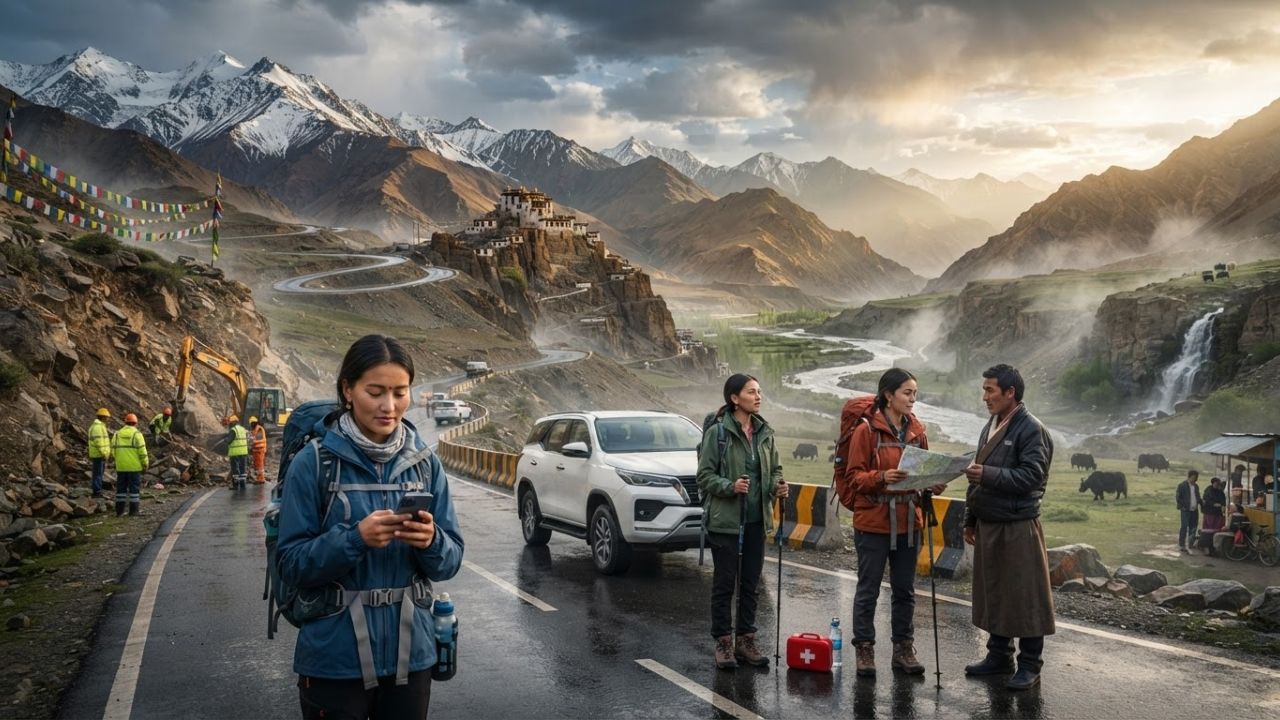
Image generated by AI
Published on July 21, 2026
The Ladakh Administration has issued an urgent weather warning advisory for travelers and residents across the region as heavy precipitation threatens mountain stability. The India Meteorological Department (IMD) is tracking continuous rainfall that has significantly increased the threat of flash floods and sudden landslips. In response, local governance bodies are activating preventative disaster management protocols to manage transit risks and protect public safety.
Quick Summary
- Active Weather Warning: The Ladakh Administration is distributing daily safety bulletins amid continuous heavy rainfall.
- Landslide & Flood Threat: Soil stability is weakening in high-altitude zones, creating high risks of landslides and flash floods.
- Suspended Night Transit: Motorists are prohibited from driving through mountainous corridors and hilly stretches after dark.
- Tourism Service Interruptions: Tour operators are experiencing trip cancellations, while transport syndicates pause risky routes.
- Proactive Resource Positioning: Emergency responders, police, and heavy clearing machinery are pre-positioned near vulnerable corridors.
Context and Background
Ladakh's high-altitude geography makes it particularly vulnerable to severe weather conditions during the monsoon season. Historically, the regional administration relied on reactive measures, waiting for physical blockages or structural damages to occur before mobilizing rescue teams. However, the unpredictability of climate patterns has prompted a shift toward early intervention and preventative planning.
To manage the current threat, local authorities are utilizing advanced forecasting data provided by the India Meteorological Department. By tracking rain patterns days in advance, the administration can publish daily updates and restrict travel before hazards peak. This pre-emptive strategy helps prevent major accidents and coordinates emergency resources across all districts.
Proactive Interventions Under Modern Disaster Management Protocols
The transition to contemporary safety guidelines has transformed how multiple departments cooperate during weather crises. Strategic planning involves coordination between law enforcement, public works departments, and medical networks. Police units are deployed to manage diversions, while the public works department has pre-positioned earthmovers and heavy machinery near accident-prone corridors.
Furthermore, medical authorities are reviewing emergency inventories, ensuring that local hospitals are fully stocked with trauma supplies. Specialized search and rescue teams stand ready to deploy if communication failures occur. By integrating these systems under modern disaster management protocols, the local government aims to minimize response times and secure vulnerable territories.
To clarify the responsibilities of various agencies under this model, the following table summarizes the coordinated activities:
| Government Agency | Operational Responsibility | Key Action Triggered | Safety Objective |
|---|---|---|---|
| Meteorological Unit | Real-time weather monitoring | Continuous precipitation tracking | Early warning dissemination |
| Law Enforcement | Traffic diversions & securing zones | Strategic road closures and patrols | Stranded traveler mitigation |
| Public Works | Heavy machinery pre-positioning | Deploying earthmovers near slips | Rapid corridor clearance |
| Health Department | Trauma inventory audits | Stocking essential medical supplies | Emergency response readiness |
| Rescue Units | Rapid deployment operations | Activation during local emergencies | Life-saving search efforts |
Environmental Risks and Travel Disruptions in Hilly Corridors
The current weather patterns introduce several severe hazards that travelers in Ladakh must prepare for:
- Sudden Mudslides and Landslips: Saturated soil on steep mountain slopes can slide without warning, blocking main transit routes.
- Swollen Streams and Nallahs: Rapid runoffs can turn quiet streams into fast-flowing torrents, washing away bridges and roads.
- Poor Nighttime Visibility: Heavy rainfall and low cloud cover make navigating narrow winding passes after dark extremely dangerous.
- Stranded Commuter Zones: Sudden route blockages can leave tourists trapped in isolated mountain valleys without immediate assistance.
Economic Implications and Strategic Disaster Management Protocols
The enforcement of safety advisories has immediate economic consequences for Ladakh's tourism and hospitality sectors. Tour operators are managing a wave of booking cancellations, requiring flexible rebooking rules to support affected travelers. Additionally, local hoteliers are experiencing contractions in occupancy rates as tourists postpone their trips.
Despite these short-term financial losses, business owners and analysts view these closures as essential trade-offs. Prioritizing human safety helps protect the long-term reputation of the region as a secure travel destination. By managing risks cooperatively under established disaster management protocols, local stakeholders support sustainable travel growth.
What Authorities and Emergency Cells Are Saying
Local administrative officials have urged all travelers currently in Ladakh to exercise extreme caution and follow safety bulletins. Spokespersons emphasize that tourists intending to visit the region should defer their travel plans until weather patterns stabilize.
Additionally, police cells have warned motorists that traveling through unverified routes or after-dark stretches will be penalized. Emergency response cells note that staying away from fast-flowing rivers and steep slopes is the most effective way to prevent accidents.
Practical Traveler Advice
For guests currently in Ladakh or planning a trip in 2026, the following tips are recommended:
- Postpone Unnecessary Journeys: Defer sightseeing trips and travel plans until the weather advisory is officially lifted.
- Stock Essential Supplies: Keep non-perishable food, clean drinking water, and first-aid kits accessible in your lodging.
- Avoid Nighttime Driving: Do not navigate mountainous passes or hilly corridors after sunset due to debris risks.
- Monitor Official Broadcasts: Keep communication devices charged and monitor disaster management cell channels for updates.
- Comply with Evacuation Orders: Follow all directives from police and local governance bodies immediately.
- Steer Clear of Waterways: Maintain a safe distance from swollen rivers, local nallahs, and flood-prone low-lying areas.
- Ensure Travel Flexibility: Prepare for sudden route changes, road closures, and transport delays.
Broader Context and Regional Significance
The shift from legacy reactive systems to early warning protocols highlights the evolution of safety management in the Himalayas. In previous years, delayed interventions often resulted in damage happening first, leaving emergency services to manage crises in the aftermath.
By restricting tourist inflow before hazardous conditions peak, Ladakh establishes a model for other mountainous territories in India. This preventative approach minimizes both human risk and long-term economic damage.
What to Expect Next / Looking Ahead
Over the coming days, clearing crews will remain stationed along key national highways to resolve road blockages. The local administration will continue to publish daily safety updates until the rain system clears.
For future travelers, these proactive measures ensure that visiting Ladakh remains a safe experience even during erratic seasons. Monitoring official channels will help vacationers plan itineraries that avoid weather-related disruptions.
Summary and Preparedness
In conclusion, the active weather advisory in Ladakh demonstrates the importance of early intervention and preventative planning. By cooperating with local authorities, staying away from high-risk zones, and maintaining flexible plans, travelers can support safety efforts. Ultimately, careful preparation remains key to experiencing a successful mountain holiday.
Related Travel Guides
10 Essential Mountain Travel Safety Tips for High-Altitude Destinations
FAQ: Ladakh Weather Warning and Landslides
Why has the Ladakh Administration issued a travel advisory?
The advisory was issued due to heavy rain, flash flood threats, and high landslide risks that disrupt transportation networks.
What are the main rules for motorists in the region?
Motorists must suspend driving through mountainous corridors after dark and comply immediately with police traffic diversions.
How does the current disaster management protocol differ from legacy systems?
Legacy systems were reactive, whereas modern protocols utilize forecasting to restrict tourist inflow and pre-position machinery before hazards peak.
Which government organizations are coordinating safety efforts?
The Ladakh Administration coordinates with the India Meteorological Department (IMD), police forces, public works, and health departments.
What should stranded travelers do during weather disruptions?
Stranded guests should remain in safe lodging, stock food and water, keep devices charged, and monitor official disaster updates.
Disclaimer
This article is for informational and educational purposes only. It does not constitute legal, financial, or professional advice. While we strive to provide accurate and up-to-date information, travel policies, regulations, and conditions change rapidly. Always verify information with official sources before making travel decisions. Nomad Lawyer makes no representations about the accuracy, reliability, completeness, or suitability of the information provided. Readers should consult qualified professionals for advice specific to their circumstances. The views expressed in this article are those of the author and do not necessarily reflect the views of Nomad Lawyer.
Kunal K Choudhary
Co-Founder & Contributor
A passionate traveller and tech enthusiast. Kunal contributes to the vision and growth of Nomad Lawyer, bringing fresh perspectives and driving the community forward.
Learn more about our team →