
Labor Day Travel Warning 2026: 8 Strategies to Avoid Record Crowds and Airport Delays
With record-breaking crowds and surging fuel costs, Labor Day 2026 travel requires strategic planning. Learn how to bypass peak congestion and streamline your airport experience.
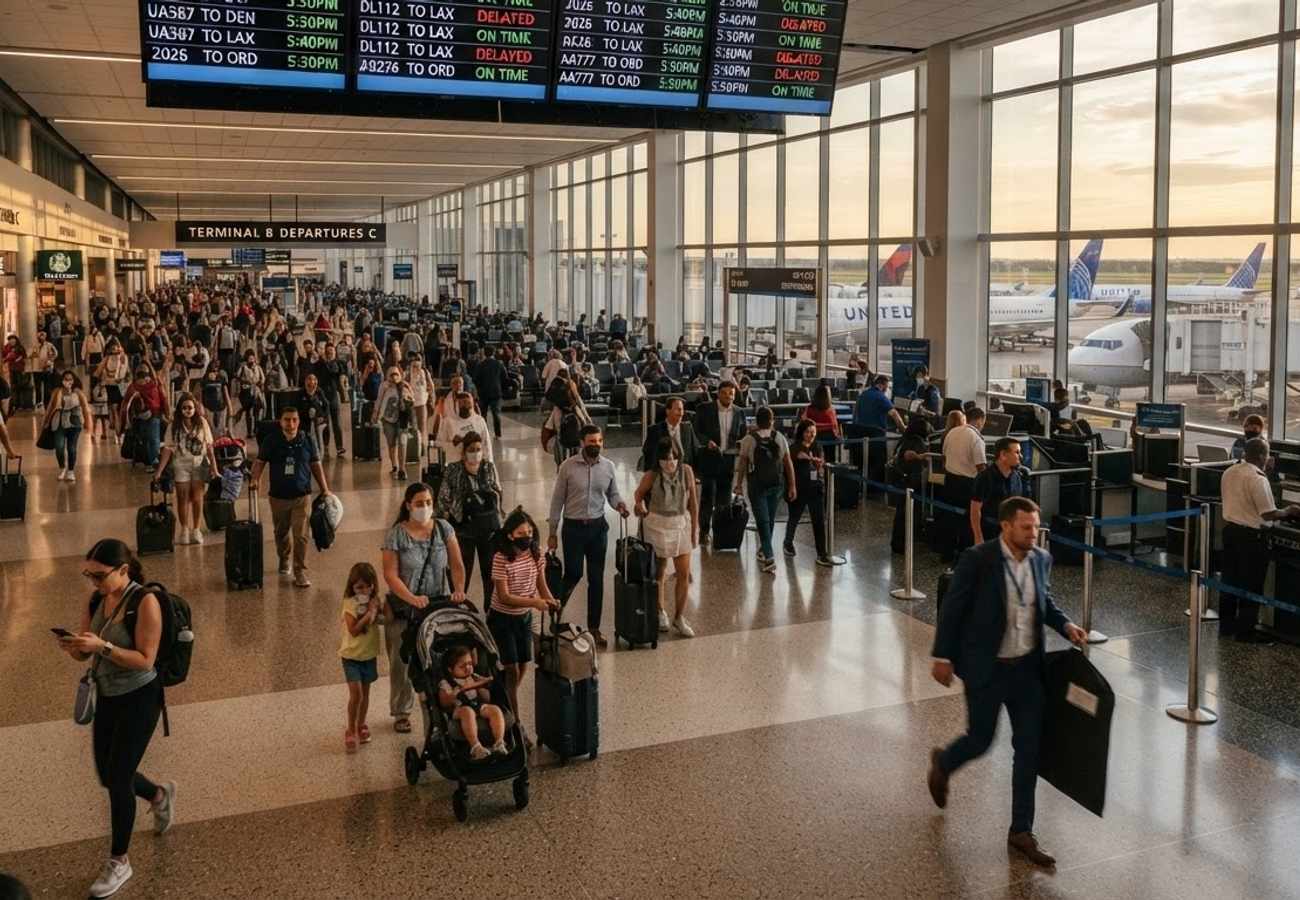
Image generated by AI
Millions of Americans are facing some of the most congested travel conditions of the year this Labor Day weekend. With passenger volumes hitting record highs and fuel prices remaining elevated, strategic timing is the only way to avoid hours of lost time.
The convergence of peak demand and high pricing has created a volatile environment for both air and road travelers. Data from transportation analytics firms and travel organizations indicate that the window between Thursday and Friday will be the most critical period for bottlenecks, as holiday departures overlap with standard commuter traffic.
Analyzing the 2026 Holiday Traffic Surge
Current projections from AAA and other industry trackers show that domestic travel demand has either matched or surpassed previous records. This trend is particularly evident in the road trip and domestic flight sectors, ensuring that major transit corridors will be under significant pressure.
Transportation analytics firm INRIX has identified Thursday and Friday as the primary danger zones for highway congestion. In major metropolitan hubs, travel times are expected to more than double during the afternoon and early evening rush. This "double-peak" effect occurs when the standard workday exit coincides with the holiday getaway wave.
The aviation sector is seeing a similar spike. Data from the Transportation Security Administration (TSA) confirms that Labor Day now ranks alongside Memorial Day and Independence Day as a top-three busiest travel weekends. Los Angeles International Airport (LAX), for example, is anticipating nearly 2 million passengers over the broader Labor Day period in 2026.
Strategic Timing to Bypass Gridlock
To avoid the worst of the congestion, travelers must shift their schedules away from the identified peak windows.
For Road Travelers:
- Avoid: Thursday afternoon and Friday evening.
- Optimal Windows: Early Thursday morning or Saturday morning.
- Lightest Day: Sunday is traditionally one of the lowest-volume days on the road once the initial wave of departures has subsided.
For Air Travelers:
- The Early Bird Advantage: TSA trend data suggests that the first flights of the day are less susceptible to cascading delays and typically feature shorter security lines.
- The Holiday Pivot: Flying on Labor Day Monday itself often results in a smoother experience and potentially lower fares compared to the preceding Friday or Saturday.
Streamlining the Airport Experience
With record passenger counts becoming the new norm, standard arrival times may no longer be sufficient. Airport operators and the TSA recommend arriving at least two hours before domestic flights and three hours before international departures.
At massive hubs, the presence of infrequent travelers—who may be less familiar with security protocols—often slows down check-in and screening lanes. To mitigate this, travelers should utilize expedited screening programs:
- TSA PreCheck and CLEAR: These services are highly recommended for frequent travelers to bypass the longest lines.
- Digital Integration: Use airline apps to track baggage in real-time and receive push notifications for gate changes. This allows for faster reactions to disruptions than relying on terminal display boards.
Mitigating Road Trip Risks and Costs
High gasoline prices are adding financial pressure to the 2026 holiday window. To manage costs and avoid delays, drivers should employ specific preparation tactics.
Vehicle Readiness AAA roadside assistance data reveals that hundreds of thousands of calls during Labor Day weekends are for preventable issues. To avoid being stranded in heavy traffic, perform a pre-trip check on:
- Battery health and coolant levels.
- Tire pressure and tread depth.
- All essential fluid levels.
Route Optimization Rather than sticking to primary interstates, which are prone to crawling speeds, INRIX suggests reviewing real-time data to identify secondary corridors. In many cases, a longer route in mileage can result in a shorter overall travel time if it bypasses known chokepoints.
Travel Volume and Risk Factors
| Travel Mode | Peak Congestion Window | Primary Risk Factor | Recommended Mitigation |
|---|---|---|---|
| Highway | Thursday/Friday Afternoon | Commuter Overlap | Depart early Thursday or Saturday morning |
| Air Travel | Friday/Saturday | Cascading Delays | Book earliest flight or travel on Monday |
| Major Hubs | All Weekend | Record Passenger Volume | Arrive 3 hours early (International) |
| Road Trips | Outbound Corridors | Vehicle Breakdown | Pre-trip battery and tire inspection |
Key Takeaways for Travelers
- Timing is Everything: Shift departures to early morning or the holiday Monday to avoid the Thursday-Friday peak.
- Buffer Your Time: Treat the 2-3 hour airport arrival rule as a minimum, not a suggestion, especially at hubs like LAX.
- Prepare the Vehicle: Preventable breakdowns (batteries/tires) are a leading cause of holiday delays.
- Go Digital: Use real-time traffic apps and airline notifications to pivot routes and gates instantly.
Frequently Asked Questions
When is the worst time to drive this Labor Day? Thursday afternoon and Friday evening are the most congested periods, as holiday travelers and daily commuters share the same roads.
Which airports are seeing the most growth? Major hubs like Los Angeles International (LAX) are seeing sustained growth, with expectations of nearly 2 million passengers over the 2026 holiday period.
How can I avoid long TSA lines? Enrolling in TSA PreCheck or CLEAR is the most effective way to shorten security wait times. Additionally, taking the earliest flight of the day typically reduces wait times.
Plan for the worst, time for the best, and keep your digital tools active to navigate the 2026 holiday rush.
Related Travel Guides
Disclaimer
This article is for informational and educational purposes only. It does not constitute legal, financial, or professional advice. While we strive to provide accurate and up-to-date information, travel policies, regulations, and conditions change rapidly. Always verify information with official sources before making travel decisions. Nomad Lawyer makes no representations about the accuracy, reliability, completeness, or suitability of the information provided. Readers should consult qualified professionals for advice specific to their circumstances. The views expressed in this article are those of the author and do not necessarily reflect the views of Nomad Lawyer.