
Maldives Tourism Rebounds in 2026 with China Leading Source Markets

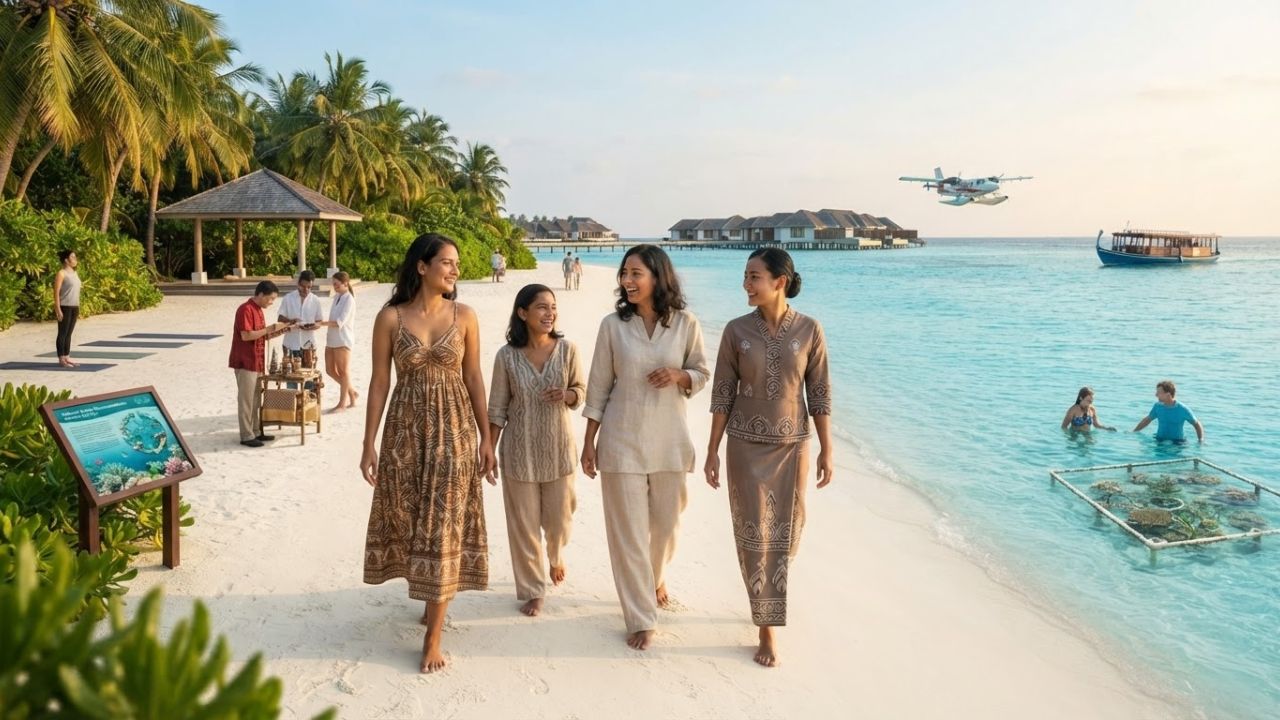
Image generated by AI
The Maldives welcomed 1,304,317 international tourists between 1 January and 11 August 2026, with China leading as the largest source market contributing 237,271 arrivals and representing 18.2% of the country's total visitor base. The island nation is implementing international marketing campaigns, connectivity upgrades, and local island guesthouse developments to achieve its ambitious annual target of 2.5 million arrivals, backed by a projected $5.6 billion in tourism revenue forecast by the Maldives Monetary Authority.
While the cumulative arrival figure remains 4.7% behind the 1,368,180 visitors recorded during the same period in 2025, early August arrivals showed positive signs of growth. Between 1 August and 11 August 2026, the country registered 76,531 tourist arrivals — representing a 4.4% year-on-year increase compared to the 73,312 arrivals recorded during the opening days of August 2025.
The Local Trend: Segment Diversification and Community-Based Tourism
The primary trend transforming Maldivian tourism is the diversification of accommodation types to include local community guesthouses alongside traditional private island resorts. While luxury resorts continue to dominate the industry — welcoming 955,696 tourists (73.3% of arrivals) across 179 operational properties — community guesthouses hosted 291,113 visitors (22.3% of arrivals) across 947 operational locations.
The rise of guesthouse tourism also supports conservation education, as local operators coordinate with communities to implement waste reduction practices and reef protection guides. By staying on islands such as Maafushi, Dharavandhoo, or Thoddoo, travellers can enjoy local dining, support family-owned guesthouses, and participate in daily cultural routines. This integration creates a more balanced travel sector where tourism proceeds directly support the local population and finance municipal services across the islands.
This structural shift provides distinct benefits for both visitors and residents:
- Supporting Local Economies: Guesthouse tourism allows visitors to stay on inhabited islands, distributing economic benefits directly to local shops, restaurants, and boat operators.
- Cultural Exchange: Travellers can experience traditional Maldivian island life, participate in local craft making, and observe regional customs first-hand.
- Divergent Price Points: The expansion of local guesthouses provides affordable travel options, opening the destination to budget-conscious and independent travellers.
To support this growth, the government has signed lease agreements to develop tourism in six less-developed atolls. These initiatives include awarding eight tourism sites, planning one island specifically for Halal tourism, and proposing the development of 10 resorts through a state-owned enterprise over a three-year period.
Cultural & Environmental Value: Marine Conservation and Creative Festivals
For the visitor, the real value of the Maldives' modern tourism strategy is the integration of creative arts, wellness, and environmental stewardship into the travel experience. A key example is the Fari Islands Festival 2026, scheduled from 13 to 15 August 2026, which combines art, gastronomy, music, and ocean conservation across Patina Maldives and The Ritz-Carlton Maldives, Fari Islands.
The collaboration between resort operators and local conservationists ensures that festival activities directly benefit the environment. During the Fari Islands Festival, guests can participate in workshops on coral reef ecology, beach cleanups, and sea turtle rehabilitation. These interactive experiences help travellers understand the fragility of the archipelago's ecosystems, fostering a culture of environmental awareness and responsibility that extends beyond their stay.
These events support regional conservation by funding local marine research and environmental protection programs:
- Coral Reef Restoration: Resorts and local communities operate coral propagation nurseries, allowing guests to participate in planting and monitoring coral fragments to combat bleaching.
- Manta Ray and Whale Shark Protection: Marine biology centers work with the Maldives Ministry of Tourism to establish protected areas, ensuring that wildlife encounters are conducted under strict ecological guidelines.
- Digital Integration: MMPRC (Visit Maldives) has partnered with Ooredoo Maldives as the Digital Partner for the World Travel Awards Asia, Oceania & Indian Ocean 2026, which will be hosted on 27 September 2026 to showcase the nation's sustainable luxury infrastructure.
By connecting cultural festivals with environmental protection, the Maldives aims to preserve its fragile ecosystems while providing meaningful travel experiences.
Traditional Gastronomy: Culinary Classics of the Maldives
Maldivian cuisine, historically known as Dhivehi Kaju, relies on fresh local ingredients such as tuna, coconut, and starch:
- Mas Huni: A traditional breakfast dish made of shredded smoked tuna mixed with grated coconut, sliced onions, fresh green chilies, and lime juice, served alongside warm Roshi flatbread.
- Garudhiya: A clear, fragrant fish broth made from fresh skipjack tuna, salt, and water, served hot with white rice, lime wedges, fresh chilies, and onions.
- Hedhikaa (Short Eats): Traditional savory snacks including Bajiya (pastry filled with fish, onions, and coconut) and Gulha (fried dough balls stuffed with spiced tuna and coconut).
- Rihaakuru: A thick, dark brown paste made by boiling tuna broth for hours until concentrated, eaten with flatbread or rice.
- Handulu Bondibai: A sweet rice pudding made from sticky rice, coconut milk, sugar, and cardamom, prepared during traditional celebrations and national festivals.
Visitor Insider Tips: Navigating the Maldives Respectfully
To ensure a smooth journey and respect local island regulations, follow these guidelines:
- Respect Inhabited Island Dress Codes: When visiting inhabited local islands, Malé, or cultural sites like the Friday Mosque, dress modestly. Ensure shoulders and knees are covered.
- Understand Local Alcohol Restrictions: Alcohol is prohibited on local inhabited islands and in Malé. It is only permitted on private resort islands and registered safari vessels.
- Travel Off-Peak for Better Value: The monsoon season from May to November offers lower resort rates and smaller crowds, though visitors should expect occasional rain showers.
- Use the Airport Express Speedboats: Velana International Airport, which handled 1,300,205 arrivals by 11 August 2026, connects to Malé via regular ferry boats and express speedboats.
- Explore Fuvahmulah for Shark Diving: For an adventure away from resort lagoons, visit the southern island of Fuvahmulah, a single-island atoll famous for its resident tiger sharks and unique mud baths.
Outlook: Velana Airport Expansion and Visit Maldives Year 2027
The future of Maldivian tourism depends on expanding air connectivity and developing regional transport hubs. Velana International Airport remains the primary gateway, with other international gateways like Gan, Maafaru, Hanimaadhoo, Villa, and Dhaalu airports supporting arrivals across the atolls. The ongoing expansion of Velana's terminal facilities will allow the country to handle larger passenger volumes and welcome direct flights from new markets.
The ongoing upgrades at Velana International Airport include a new passenger terminal, an expanded cargo facility, and a second runway designed to accommodate larger commercial aircraft. These infrastructure developments will improve the travel experience for international arrivals, reducing flight delays and terminal congestion. By enhancing regional airport capacity, the Maldives aims to encourage investment in remote atolls, creating new tourism zones and supporting economic growth across the entire archipelago.
As the tourism sector prepares for the Visit Maldives Year 2027 campaign, the government will continue to focus on sustainable development, clean energy, and community integration. Russia ranked second in arrivals with 191,530 visitors, followed by the United Kingdom with 102,596, Italy with 84,726, Germany with 80,490, and India with 74,629. By balancing growth across diverse international markets, expanding regional infrastructure, and protecting its marine environment, the Maldives aims to secure its position as a leading global travel destination.
Related Travel Guides
Mauritius SSR Airport Upgrades Gateway with Smart Parking Technology
Spain Tourism Surge: Madrid, Barcelona, and Andalusia Lead Beach Escapes
New York City Ranks Third in Global Tourism City Attractiveness Index 2026
Disclaimer
This article is for informational and educational purposes only. It does not constitute legal, financial, or professional advice. While we strive to provide accurate and up-to-date information, travel policies, regulations, and conditions change rapidly. Always verify information with official sources before making travel decisions. Nomad Lawyer makes no representations about the accuracy, reliability, completeness, or suitability of the information provided. Readers should consult qualified professionals for advice specific to their circumstances. The views expressed in this article are those of the author and do not necessarily reflect the views of Nomad Lawyer.
Raushan Kumar
Founder & Lead Developer
Full-stack developer with 11+ years of experience and a passionate traveller. Raushan built Nomad Lawyer from the ground up with a vision to create the best travel and law experience on the web.
Learn more about our team →