
The Rise of the Mountain Republic: How Kyrgyzstan’s 11 Percent Economic Boom Is Opening Central Asia’s Frontier
As Kyrgyzstan posts a remarkable 11 percent GDP surge reaching 1,396.8 billion soms, expanding infrastructure, alpine roads, and nomadic heritage tourism turn the Central Asian mountain nation into an accessible adventure frontier.

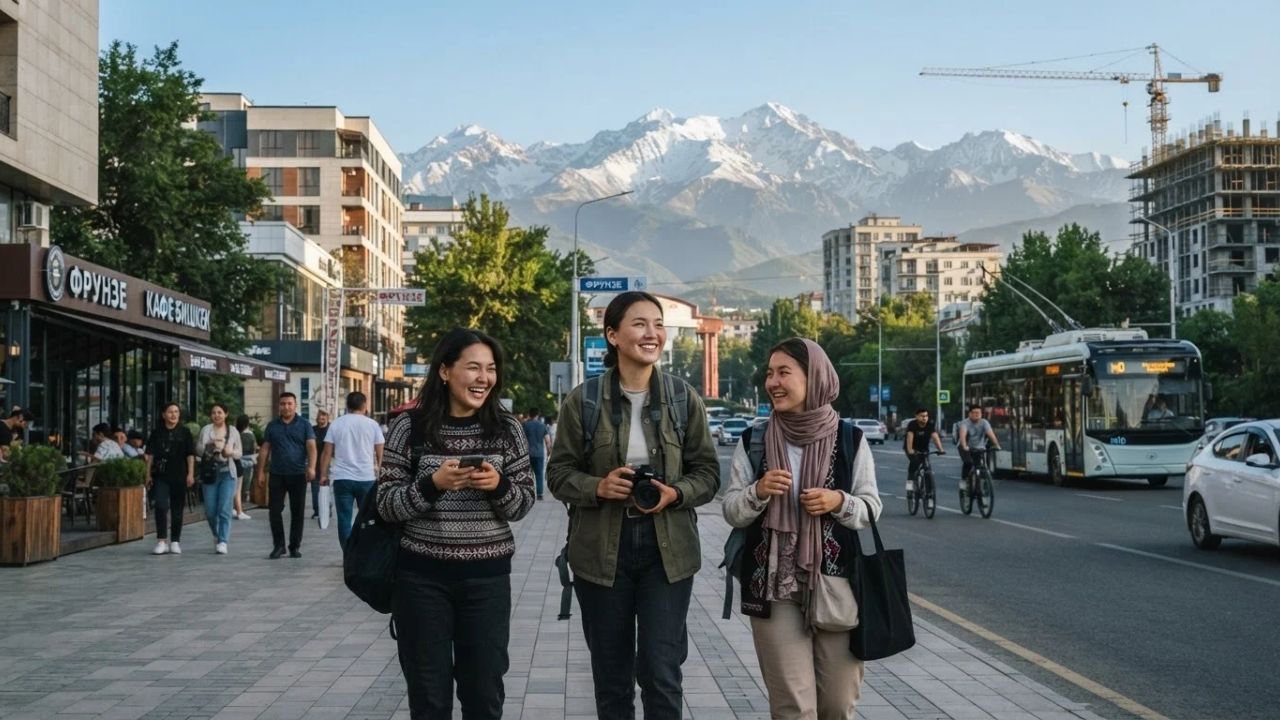
Kyrgyzstan combines rapid infrastructure expansion with centuries of nomadic hospitality across the Tien Shan
While much of global tourism contends with rising travel friction and slowing growth, Kyrgyzstan recorded an astounding 11.0 percent economic expansion during the first eight months of 2026, driving its gross domestic product to 1,396.8 billion soms. According to official preliminary data released by the National Statistics Committee, this double-digit leap was spearheaded by goods-producing industries, which surged by 18.6 percent year-on-year to capture 34.7 percent of national economic output—an increase of 2.7 percentage points over 2025. With construction expanding its share of GDP by 2.0 percentage points and the industrial sector growing by 1.2 percentage points, this landlocked Central Asian republic is undergoing a rapid infrastructural awakening.
For independent travelers and cultural wanderers, this economic acceleration is fundamentally altering the travel experience. Historically, crossing the jagged ranges of the Celestial Mountains (Tien Shan) meant enduring spine-rattling journeys across unpaved mountain tracks, intermittent electricity in rural settlements, and logistical bottlenecks between river valleys. Today, the influx of capital into transportation arteries, civil construction, and services—which still represent the largest segment of the economy at 49.2 percent of GDP with a 6.3 percent annual expansion—is bridging remote nomadic pastures with modern transit. Travelers can now land at Manas International Airport in Bishkek and reach pristine high-altitude lakes and Silk Road ruins with unprecedented ease.
The Mountain Awakening: How Production and Infrastructure Reshape Central Asian Travel
The structural evolution revealed in the 2026 economic data highlights how Kyrgyzstan is transforming its domestic foundations. While traditional agriculture remains the cultural backbone of rural communities—accounting for animal husbandry, food security, and pastoral livelihoods despite a slight 0.5 percentage point drop in its GDP share—the dramatic expansion of industrial manufacturing and heavy civil construction has unlocked long-delayed regional connectivity projects. Net product taxes rose by 11.0 percent, reflecting vigorous commercial momentum across domestic supply chains.
The most visible manifestation for international visitors is the modernization of scenic mountain corridors. Ambitious engineering projects, including the North-South Alternative Road cutting through dramatic mountain passes toward Jalal-Abad and Osh, are dramatically shortening overland travel times that once required entire days of bone-jarring navigation. In parallel, global diplomatic and travel ties are broadening; Thailand recently enacted 30-day visa-free entry arrangements for Kyrgyz citizens, reflecting reciprocal international recognition of Kyrgyzstan's emerging mobility.
Rather than paving over its ancient identity, the country is utilizing its economic windfalls to bolster community-based tourism infrastructure. Supported by networks like Community Based Tourism Kyrgyzstan, rural families are upgrading high-pasture summer camps (jailoo) with solar-powered water heating, eco-friendly composting facilities, and satellite communications, allowing travelers to experience unfiltered nomadic hospitality without compromising environmental sustainability.
What Makes Kyrgyzstan Different: Nomads, Glaciers, and Silk Road Memory
Kyrgyzstan is an alpine realm where over 90 percent of the territory lies above 1,500 metres, crowned by glaciated peaks exceeding 7,000 metres. Unlike heavily urbanized travel corridors across Eurasia, life here remains deeply tethered to semi-nomadic seasonal transhumance. As summer approaches, Kyrgyz herders pack their wooden yurt lattices onto horse-drawn carts and light trucks, driving herds of horses, sheep, and yaks up to high mountain pastures where edelweiss carpets the earth beneath glistening glacier tongues.
The jewel of the northern circuit is Lake Issyk-Kul, the world’s second-largest alpine lake. Framed by the snow-crested ridges of the Terskey and Kungey Alatoo ranges, its slightly saline, mineral-rich waters never freeze, even in the depths of winter. On the southern shore, quiet villages like Tamga and Bokonbaevo serve as epicenters for ancient eagle hunting traditions (salbuurun), where master berkutchi hunters communicate with golden eagles through centuries-old vocal commands.
Deeper in the central highlands at 3,016 metres sits Lake Son-Kul, a mirror-like freshwater basin surrounded by undulating grassy plains entirely devoid of permanent structures. Here, travelers sleep inside felt yurts warmed by wood-burning iron stoves (pechka), waking to the thud of galloping stallions and the smell of freshly baked boorsok (puffy fried dough). Further south along the rugged road toward the Torugart Pass into China lies Tash Rabat, a 15th-century stone caravanserai nestled in a secluded canyon along the ancient Chang'an-Tianshan corridor inscribed under the UNESCO World Heritage Centre. Standing inside its domed central hall, where Silk Road merchants and camel caravans once sheltered from mountain blizzards, the romance of ancient trade feels entirely alive.
Visitor Insider Tips: Navigating the Kyrgyz Highlands
- Time Your Highland Yurt Stays for Peak Summer: While Bishkek and Issyk-Kul are accessible year-round, high-altitude alpine passes leading to Lake Son-Kul and Tash Rabat are strictly seasonal. Plan your highland journeys between late June and early September. Outside this narrow window, mountain passes such as the Kalmak-Ashu (3,446 metres) can be blocked by sudden blizzards, and herders dismantle their yurts to return to valley villages.
- Embrace Yurt and Table Etiquette with Respect: When entering a Kyrgyz yurt, step over the wooden threshold rather than on it, as stepping on the threshold is traditionally believed to bring misfortune to the household. Remove your outdoor footwear at the entrance. When bread (nan) is served at the low dining cloth (dastorkhan), break off a piece with your hands rather than cutting it with a knife, and never place bread upside down.
- Sample Authentic Nomadic Cuisine Beyond Bishkek: Do not leave without trying beshbarmak, the revered national dish of boiled hand-pulled noodles topped with finely minced horsemeat or tender mutton, served in a rich meat broth (chyk). In the summer pastures, accept a wooden bowl of kymyz (fermented mare’s milk); its sour, smoky flavor is an acquired taste regarded by locals as a powerful natural medicine. In the southern oasis town of Osh, visit the historic bazaar to savor clay-oven baked samsa stuffed with spiced mutton, onions, and tail fat.
- Hire Experienced Four-Wheel-Drive Mountain Drivers: While main paved highways connecting Bishkek, Balykchy, and Karakol are smooth, remote roads crossing the Moldo-Ashu Pass or climbing to Song-Kul require high-clearance four-wheel-drive vehicles. Self-driving without mountain experience is hazardous due to steep unprotected drop-offs and gravel washouts. Arrange reliable drivers and certified local guides through official channels at Tourism Department of the Kyrgyz Republic.
- Purchase Authentic Shyrdak Rugs Directly from Female Cooperatives: In towns like Kochkor and Kyzyl-Tuu, stop at local women's wool cooperatives where artisans hand-craft traditional shyrdak felt floor coverings. These intricate geometric mosaics, inscribed on UNESCO’s intangible cultural heritage list, use natural vegetable dyes and dense sheep wool to tell ancestral stories of mountain peaks, ram horns, and family blessings.
Cultural and Environmental Context: Glacial Stewardship and Pastoral Balance
Kyrgyzstan’s ongoing economic expansion brings vital development to rural populations, but it also underscores pressing environmental responsibilities. As global temperatures rise, the glaciers of the Tien Shan—which feed the Syr Darya and Chu river basins supplying water to millions across Uzbekistan, Kazakhstan, and Kyrgyzstan—are retreating at alarming rates. The rapid growth in industrial production and construction highlighted in the 2026 economic report has prompted stricter national environmental regulations to safeguard high-altitude watersheds and alpine meadows from overgrazing and industrial runoff.
Simultaneously, the delicate balance between tourism expansion and pastoral life requires careful community oversight. In alpine gathering spots like Lake Son-Kul, the sudden influx of international tour vehicles risks scarring sensitive alpine turf and disturbing fragile wetland habitats for migratory bar-headed geese. Local grazing associations and tourism collectives are actively introducing designated vehicle tracks, restricting permanent concrete construction, and mandating that all guest waste be hauled back down to valley municipal centers.
By staying in family-operated yurt camps, hiring local horse trek guides, and paying community pasture fees, travelers directly support a decentralized economic model. This ensures that the prosperity generated by the country’s 11 percent economic boom reaches rural horse breeders, carpet weavers, and village homestay hosts, protecting the ancient nomadic soul of the mountains for generations to come.
FAQ: Visiting Kyrgyzstan in 2026
Do foreign tourists need a visa to enter Kyrgyzstan? Citizens of more than 60 countries, including the European Union, United States, Canada, Australia, and the United Kingdom, can enter Kyrgyzstan visa-free for tourist stays of up to 60 days.
What is the best way to get around the country? Shared minibuses (marshrutkas) connect major towns along paved routes, but private four-wheel-drive hires with experienced local drivers are essential for reaching high-altitude lakes, trekking trailheads, and mountain passes.
Is Kyrgyzstan safe for solo and female travelers? Yes. Kyrgyzstan is generally very safe, and violent crime against tourists is rare. Kyrgyz culture places high value on hospitality to guests. Standard precautions apply when navigating crowded night bazaars or unlit city streets in Bishkek.
Can travelers find vegetarian food in Kyrgyzstan? While traditional nomadic cuisine is heavily meat-centric, fresh produce, breads, cheeses, and vegetarian salads are abundant at bazaars. Ordering potato samsas, lagman noodles prepared without meat, or lentil soups is widely accommodated in cities and community homestays.
Beneath the eternal ice of the Celestial Mountains, Kyrgyzstan invites you to slow your pace to the cadence of galloping hooves, where the warm glow of a felt yurt welcomes every stranger as family.
Related Travel Guides
Disclaimer
This article is for informational and educational purposes only. It does not constitute legal, financial, or professional advice. While we strive to provide accurate and up-to-date information, travel policies, regulations, and conditions change rapidly. Always verify information with official sources before making travel decisions. Nomad Lawyer makes no representations about the accuracy, reliability, completeness, or suitability of the information provided. Readers should consult qualified professionals for advice specific to their circumstances. The views expressed in this article are those of the author and do not necessarily reflect the views of Nomad Lawyer.
Raushan Kumar
Founder & Lead Developer
Full-stack developer with 11+ years of experience and a passionate traveller. Raushan built Nomad Lawyer from the ground up with a vision to create the best travel and law experience on the web.
Learn more about our team →