
Kuressaare Airport Closure 2026: Major Disruptions to Estonia and Helsinki Flight Routes
The sudden closure of Kuressaare Airport from August 10 to 31, 2026, disrupts Baltic aviation during a record-growth year, impacting 3.5 million annual passengers and key Finnair routes.

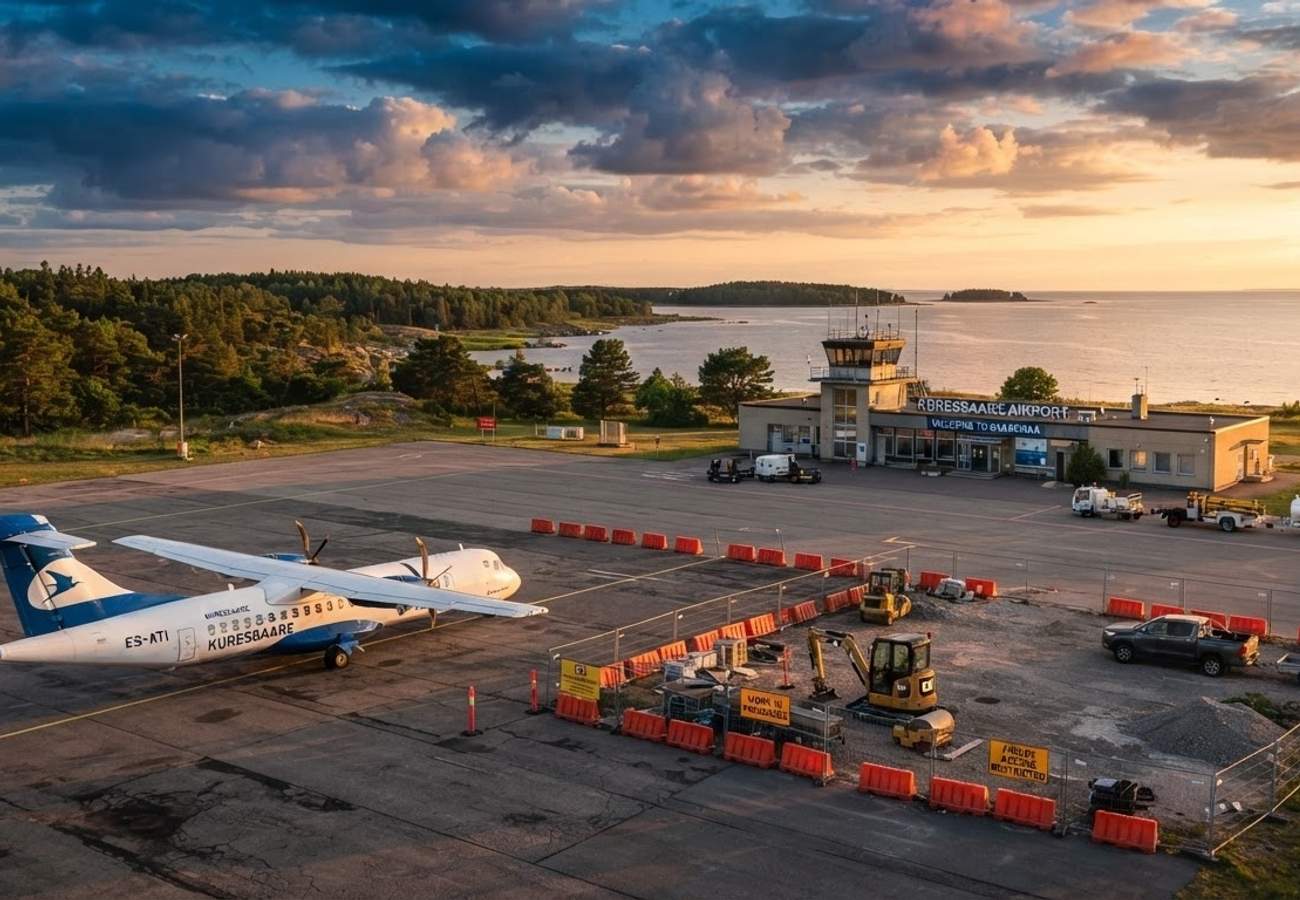
Image generated by AI
The abrupt closure of Kuressaare Airport from August 10 to August 31, 2026, threatens to derail a record-breaking tourism season in the Baltics, despite the sector projecting over 3.5 million passengers annually.
Regional Aviation Growth Meets Infrastructure Halt
Estonia's aviation sector is currently navigating a period of significant expansion. National statistics indicate a strong post-pandemic recovery, with foreign tourism increasing by 8% in July 2026. However, this growth is countered by a critical infrastructure failure on Saaremaa island. While the national market sets historical passenger records, the primary air link to the region's most prominent tourism hub is completely severed during the most lucrative month of the year.
For the hospitality sector, August is the peak of the summer holiday season. High-spending international tourists from Finland, Sweden, and Germany typically utilize air travel to avoid lengthy ferry crossings. The sudden cessation of operations disrupts regional supply chains and revenue forecasts for local businesses.
Maintenance Mandate and Official Timeline
AS Tallinna Lennujaam, the state-owned enterprise managing Estonia's air hubs, has confirmed that the closure is mandatory. The hiatus is required for large-scale construction and surface upgrades to ensure long-term safety and regulatory compliance. Due to the harsh Baltic climate—characterized by coastal storms and freezing temperatures—officials stated that late summer provides the only technically feasible window for these heavy engineering works.
Closure Schedule and Route Impact
| Route | Operator | Aircraft Model | Frequency | Status (Aug 10–31) |
|---|---|---|---|---|
| Tallinn $\leftrightarrow$ Kuressaare | NyxAir | Regional Turboprop | Multiple Daily | Suspended |
| Helsinki $\leftrightarrow$ Kuressaare | Finnair | ATR72-600 | 4x Weekly (M, W, F, Su) | Suspended |
Impact on International and Domestic Connectivity
The suspension of NyxAir operations removes a vital 40-minute economic lifeline. This route is used not only by tourists but by business professionals and patients requiring mainland healthcare. The removal of this capacity forces commuters onto the Virtsu-Kuivastu ferry route, which is already operating at high capacity.
The most significant international loss is the Finnair connection. Launched on June 8, 2026, this route connected Helsinki (Vantaa Airport) to Kuressaare, making Finnair the only foreign carrier to serve three distinct Estonian airports (Tallinn, Tartu, and Kuressaare). The 275-kilometre flight reduced a complex multi-modal journey to a 40-minute transit. The closure forces Finnish travelers—some of the highest per capita spenders in the region—to fly into Tallinn and navigate overland routes, likely leading to a spike in holiday cancellations.
Traveler Logistics Guide: Navigating Saaremaa Without Air Travel
From a ground-level perspective, the best way to navigate this closure is to pivot to maritime transit immediately. The primary alternative is the ferry service operated by TS Laevad.
Booking and Transit Strategy:
- Route: Utilize the Virtsu (mainland) to Kuivastu (island) ferry.
- Timing: Avoid weekend peak hours. Expect extended waiting times as displaced airline passengers flood the ports.
- Booking: Pre-book ferry slots where possible to avoid several-hour queues at the Virtsu terminal.
- Alternative Entry: For those arriving from Helsinki, fly into Tallinn Airport (TLL). From there, rent a vehicle or use shuttle services to Virtsu. The drive from Tallinn to Virtsu typically takes 2 to 2.5 hours depending on traffic.
Digital Transit Policies: Ensure all travel documents are digitized. While Estonia is highly digitized, having offline copies of hotel bookings and ferry tickets is recommended for the high-traffic port areas where mobile networks can occasionally congest.
Infrastructure Impact Assessment
This closure highlights a critical vulnerability in regional transit: the over-reliance on a single point of failure during peak demand. While the maintenance is essential for safety, the timing creates a "bottleneck effect" that stresses the maritime infrastructure. In the long term, the upgrades will allow Kuressaare to handle the projected 3.5 million passenger growth, but the immediate cost is a measurable dip in August tourism revenue and a decrease in commercial velocity for Saaremaa’s business community.
Essential maintenance ensures future safety, but the timing leaves the Baltic tourism sector grounded.
Related Travel Guides
Disclaimer
This article is for informational and educational purposes only. It does not constitute legal, financial, or professional advice. While we strive to provide accurate and up-to-date information, travel policies, regulations, and conditions change rapidly. Always verify information with official sources before making travel decisions. Nomad Lawyer makes no representations about the accuracy, reliability, completeness, or suitability of the information provided. Readers should consult qualified professionals for advice specific to their circumstances. The views expressed in this article are those of the author and do not necessarily reflect the views of Nomad Lawyer.
Raushan Kumar
Founder & Lead Developer
Full-stack developer with 11+ years of experience and a passionate traveller. Raushan built Nomad Lawyer from the ground up with a vision to create the best travel and law experience on the web.
Learn more about our team →