
America's Legendary Hypersonic Fighters: Engineering the Fastest Combat Jets in History
Breaking airline news and aviation industry updates for 2026.

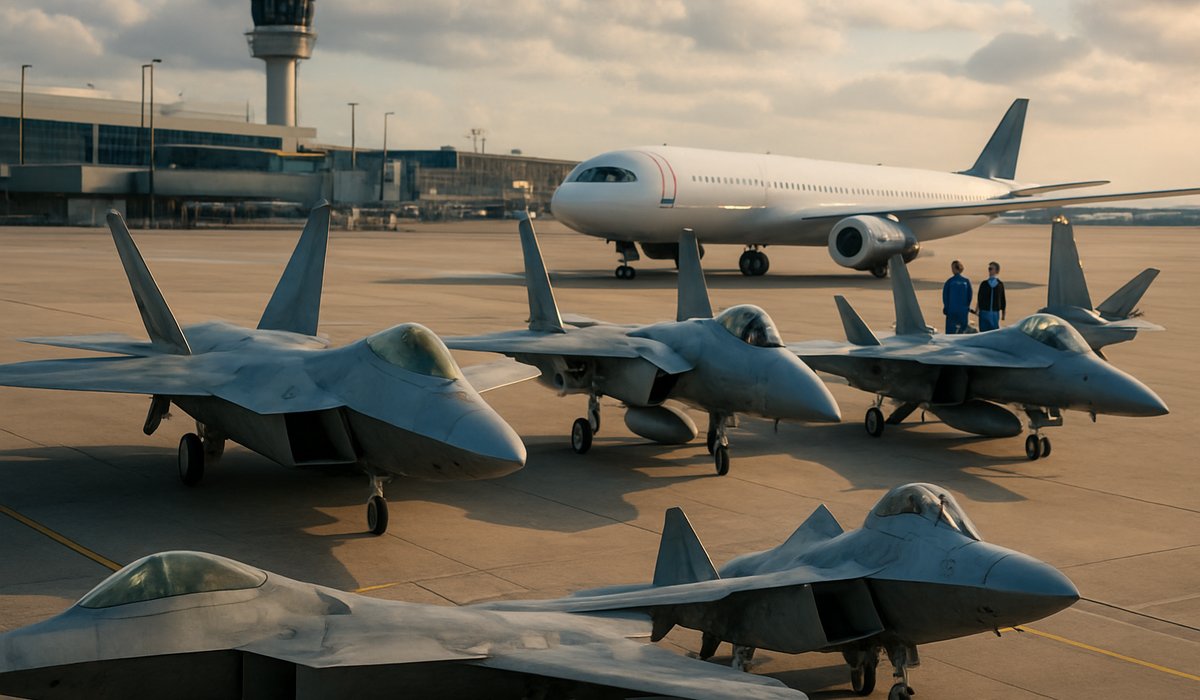
Image generated by AI
America's Legendary Hypersonic Fighters: Engineering the Fastest Combat Jets in History
From Cold War supremacy to modern stealth technology, the United States has dominated high-speed aviation through decades of innovation
The American Quest for Air Superiority Through Speed
The United States military aviation program has consistently pushed the boundaries of aeronautical engineering, producing some of the world's most formidable fighter jets. Throughout the decades, American defense contractors and aerospace engineers have engineered aircraft designed not only for combat effectiveness but also for record-breaking velocity. The pursuit of speed has remained a defining characteristic of U.S. fighter development, from the earliest supersonic platforms through today's advanced stealth fighters, each generation establishing new performance benchmarks that influence global military aviation standards.
Speed as a Strategic Advantage in Modern Combat
In fighter aircraft design, raw velocity represents far more than engineering bragging rights—it translates directly to tactical advantage. Speed determines an aircraft's ability to intercept threats, execute tactical maneuvers, and achieve operational superiority in contested airspace. Throughout aviation history, the fastest American fighters have shaped military doctrine and influenced procurement decisions by allied nations worldwide. The continuous innovation in propulsion systems, aerodynamic design, and materials technology has enabled successive generations of American fighters to achieve previously unattainable speeds.
A Century of Performance Excellence
The evolution of American fighter speed reflects broader developments in jet engine technology, computational design capabilities, and materials science. From the early supersonic breakthroughs of the 1950s through contemporary platforms incorporating stealth and hypersonic considerations, each aircraft represents the pinnacle of its era's technological achievement. Military planners and defense strategists have consistently recognized that commanding the speed advantage in aerial combat provides decisive operational benefits, justifying substantial research and development investments.
Defining Speed in Modern Fighter Classification
Determining which American fighter holds the title of "fastest" requires examining multiple performance metrics across different operational contexts. Maximum velocity, sustained speed in combat scenarios, and acceleration rates all factor into comprehensive performance assessments. Furthermore, comparing aircraft from different eras—when engine technology, fuel compositions, and testing methodologies varied significantly—presents unique analytical challenges that aerospace historians and military analysts continue to debate.
The American commitment to fighter speed supremacy continues to drive current and future development programs, ensuring that U.S. military aviation maintains technological leadership in the increasingly competitive global defense landscape.
FAQ: Understanding American Fighter Jet Speed and Performance
What defines a fighter jet's maximum speed capability? Maximum speed represents the fastest velocity an aircraft can achieve under optimal conditions, typically measured at specific altitudes and with full fuel loads or minimal payload configurations.
How do modern stealth fighters compare in speed to Cold War-era supersonic jets? While contemporary stealth platforms prioritize maneuverability and reduced radar signature over maximum velocity, they remain highly capable supersonic aircraft, though some Cold War fighters achieved higher theoretical top speeds.
Why does speed matter less in modern air combat than previous decades? Advanced avionics, beyond-visual-range weaponry, and sensor fusion capabilities have reduced dogfighting frequency, making sustained performance and situational awareness increasingly important relative to raw speed.
Which American fighter currently serves as the military's fastest operational platform? Current operational American fighters include the F-15 Eagle variants and F-22 Raptor, each offering distinct speed and performance characteristics suited to specific mission profiles.
How do jet fuel prices and engine efficiency influence fighter speed development? Modern fighter development increasingly emphasizes fuel efficiency and range without sacrificing performance, requiring sophisticated engine design and aerodynamic optimization to maintain speed while reducing operational costs.
Related Travel Guides
- Why Lufthansa's Airbus A340-600 Has Working Restrooms Hidden in the Cargo Hold Below Deck
- Houston Hobby Airport Gripped by Travel Chaos: Southwest Airlines Grounds Flights to Dallas, Orlando, and Phoenix as Delays Hit San Diego and San Jose; Major Airport Disruptions Reported in May 2026
- Vietnam Airlines Ignites Mega Tourism Surge with Game-Changing Ho Chi Minh to Phuket Route, Defying Regional Travel Chaos: Latest Airline News
Disclaimer
This article is for informational and educational purposes only. It does not constitute legal, financial, or professional advice. While we strive to provide accurate and up-to-date information, travel policies, regulations, and conditions change rapidly. Always verify information with official sources before making travel decisions. Nomad Lawyer makes no representations about the accuracy, reliability, completeness, or suitability of the information provided. Readers should consult qualified professionals for advice specific to their circumstances. The views expressed in this article are those of the author and do not necessarily reflect the views of Nomad Lawyer.
Kunal K Choudhary
Co-Founder & Contributor
A passionate traveller and tech enthusiast. Kunal contributes to the vision and growth of Nomad Lawyer, bringing fresh perspectives and driving the community forward.
Learn more about our team →