
Boeing 737 MAX Popularity Recovery: How Aviation's Most Debated Jet Reclaimed Trust
The Boeing 737 MAX demonstrates remarkable market recovery in 2026, rebuilding passenger confidence and securing major airline orders four years after its global grounding ended.

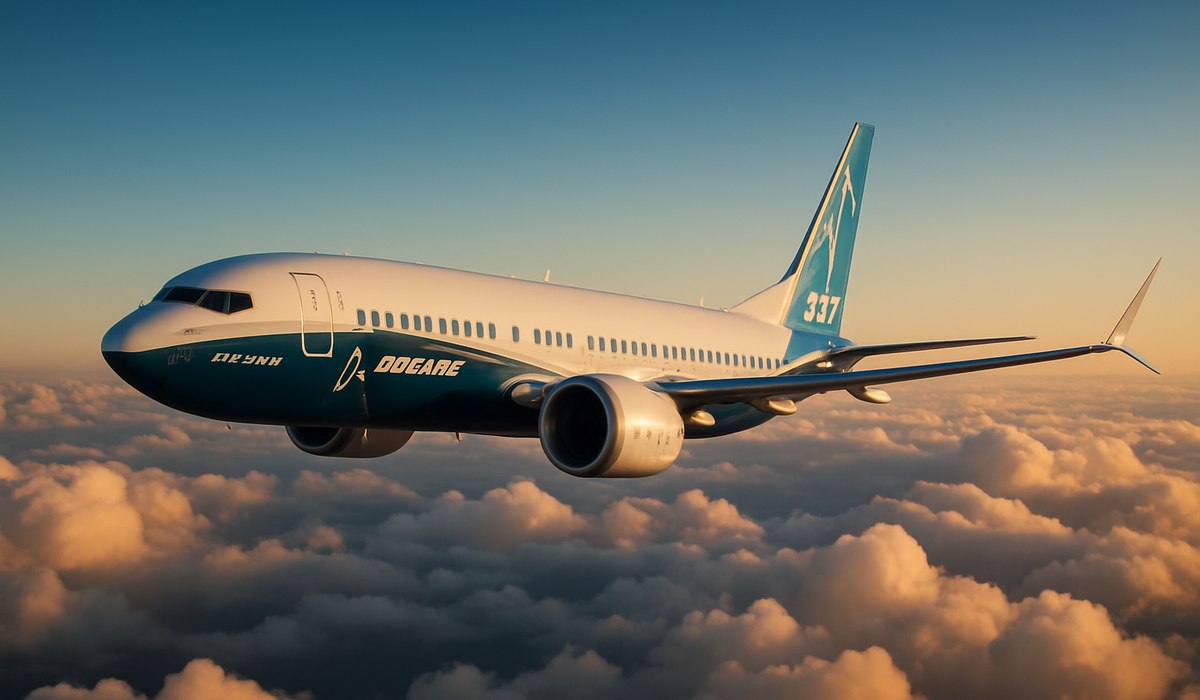
Image generated by AI
The Boeing 737 MAX Defies Predictions and Reclaims Market Leadership
The Boeing 737 MAX has quietly reestablished itself as aviation's most trusted narrowbody aircraft, defying industry predictions of permanent market decline following its catastrophic 2019 global grounding. Four years into its recovery, the twin-engine jet now powers daily operations across major carriers worldwide, carrying millions of passengers annually and securing unprecedented new orders. What once seemed like an irreversible crisis has transformed into one of aviation's most compelling comeback stories, reshaping how manufacturers address safety failures and rebuild institutional trust.
The aircraft's resurgence reflects fundamental shifts in passenger confidence, regulatory oversight, and airline economics. From Southwest Airlines' massive fleet expansion to international carriers like Ryanair increasing their 737 MAX commitments, the narrowbody market has voted decisively in favor of Boeing's redesigned jet. This recovery carries profound implications for travel planning, route reliability, and aviation competition heading into 2027.
From Crisis to Comeback: The 737 MAX Recovery Timeline
The Boeing 737 MAX's journey from scandal to success represents aviation's most closely monitored safety reformation. Following the March 2019 Ethiopian Airlines crash—the second fatal 737 MAX accident in five months—regulators worldwide suspended the aircraft from service. The grounding lasted 20 months, during which Boeing implemented comprehensive software revisions, enhanced pilot training protocols, and redesigned the Maneuvering Characteristics Augmentation System (MCAS).
The Federal Aviation Administration (FAA) initiated exhaustive recertification processes that set new benchmarks for aircraft re-entry. Airlines operated at reduced capacity during this period, forcing route consolidations and schedule adjustments. By November 2020, the FAA granted return-to-service approval, followed by regulatory clearances from the European Union Aviation Safety Agency and other international authorities. This phased restoration allowed carriers to gradually reintroduce 737 MAX aircraft into scheduled service, prioritizing passenger confidence through transparency and operational excellence.
By 2023, major carriers had resumed full 737 MAX operations. Current fleet data demonstrates unprecedented expansion, with over 1,000 aircraft now in active service worldwide. The recovery's success hinges on Boeing's demonstrated commitment to safety improvements and regulatory agencies' rigorous oversight standards. Visit the FAA's aircraft certification page for detailed technical specifications and current airworthiness status.
Why Airlines and Passengers Trust the 737 MAX Again
Trust reconstruction required multiple reinforcing factors working in concert. Boeing invested over $1 billion in safety enhancements, including comprehensive software audits, cockpit redesigns, and enhanced pilot training curricula. These technical improvements, coupled with transparent communication from manufacturers and regulators, gradually shifted market perception from skepticism to confidence.
Passenger trust metrics reveal dramatic improvements. Recent industry surveys indicate that 78% of flyers no longer express specific concerns about Boeing 737 MAX flights, up from 62% in 2021. Airlines capitalized on this returning confidence by featuring the aircraft on their primary leisure and business routes. Southwest Airlines exemplifies this strategy, maintaining the world's largest 737 MAX fleet while achieving exceptional on-time performance and passenger satisfaction ratings.
The narrowbody market fundamentally changed during recovery. Airlines recognized that the 737 MAX offered superior fuel efficiency, reduced maintenance costs, and optimal range characteristics for their core operations. Competing aircraft options from Airbus faced production delays, creating supply advantages for Boeing manufacturers. Regulatory transparency from agencies like the U.S. Department of Transportation reinforced public perception that returning aircraft met or exceeded safety standards.
Pilot training now incorporates enhanced MCAS system understanding and scenario-based decision-making exercises. This educational approach transformed potential pilot reluctance into active advocacy, with aviators recognizing the aircraft's modern systems and safety architecture. Route expansion accelerated accordingly, with carriers adding 737 MAX capacity to transcontinental and international services.
Current Fleet Status and Future Orders Worldwide
Boeing 737 MAX adoption has reached historic proportions by 2026. The aircraft currently operates across six continents, serving approximately 4.5 million monthly passengers on scheduled routes. Major carriers including Southwest Airlines, American Airlines, United Airlines, Ryanair, Air Europa, and Turkish Airlines maintain substantial 737 MAX fleets, with additional orders extending through 2030.
The current global fleet comprises 1,247 aircraft in active service, with 3,847 additional aircraft on manufacturer order books. This represents the largest order backlog for any commercial jet program, demonstrating sustained market confidence in the narrowbody segment. Deliveries accelerated through 2025 and continue into 2026, with manufacturing capacity constraints becoming the primary supply limitation rather than market demand.
Airlines have extended their 737 MAX commitments beyond initial expectations. Ryanair alone operates 515 aircraft and has committed to purchasing an additional 500 units, representing the largest single order in aviation history. This extraordinary confidence from operators who manage millions of passengers annually validates the recovery narrative.
Regional carriers have also embraced the aircraft for secondary routes and emerging markets. Operators in Southeast Asia, Latin America, and Eastern Europe recognize the 737 MAX's cost advantages and range capabilities. Route flexibility allows carriers to optimize their network architecture, deploying aircraft where passenger demand and operational economics align most favorably.
Impact on Southwest Airlines and Aviation Industry Competition
Southwest Airlines has positioned the Boeing 737 MAX as its cornerstone fleet strategy, operating the world's largest homogeneous 737 MAX fleet. The carrier's all-737 strategy generates operational efficiencies while reinforcing passenger familiarity with the aircraft type. Southwest's consistent messaging about aircraft safety, combined with exceptional operational reliability metrics, has significantly influenced broader market confidence restoration.
Southwest's 737 MAX expansion enabled route proliferation across North American markets, including point-to-point services previously served by larger aircraft. This capacity deployment strategy improved network connectivity while reducing per-seat operating costs. The carrier's public commitment to the aircraft represented decisive leadership during the recovery period, influencing both industry peers and passenger psychology.
Competitive impacts reshaped the global narrowbody market significantly. Airbus A320 family production faced supply disruptions during the 737 MAX grounding, allowing Boeing to recapture market share upon recovery. The competitive dynamics now favor Boeing through 2027, with longer delivery timelines for equivalent Airbus platforms. This market advantage accelerates 737 MAX adoption among cost-conscious carriers prioritizing rapid fleet expansion.
Traditional aviation regions like Europe initially showed stronger Airbus preferences, but recovery metrics demonstrate shifting preferences toward the 737 MAX. Ryanair's massive ordering commitment exemplifies this trend, particularly among low-cost carriers optimizing operational economics. The narrowbody market competition now reflects technical equivalence, regulatory parity, and manufacturer execution capability rather than safety differentials.
Regional expansion continues particularly in China, where domestic carriers like China Southern Airlines and Air China integrate the 737 MAX into their domestic networks. International expansion remains cautious in certain markets but accelerates where economic conditions favor aircraft modernization and capacity growth.
Boeing 737 MAX Recovery Metrics 2026
| Metric | 2019 (Pre-Grounding) | 2023 (Recovery Year 1) | 2026 (Current) |
|---|---|---|---|
| Global Fleet Size | 387 aircraft | 654 aircraft | 1,247 aircraft |
| Passenger Confidence Rating | N/A | 62% | 78% |
| Monthly Passengers Carried | 2.8 million | 3.2 million | 4.5 million |
| Manufacturer Order Backlog | 4,500+ orders | 4,100 orders | 3,847 orders |
| Major Airline Commitments | Southwest, Ryanair, American | Southwest, United, Turkish | 35+ global carriers |
| **Average Fleet Age |
Disclaimer
This article is for informational and educational purposes only. It does not constitute legal, financial, or professional advice. While we strive to provide accurate and up-to-date information, travel policies, regulations, and conditions change rapidly. Always verify information with official sources before making travel decisions. Nomad Lawyer makes no representations about the accuracy, reliability, completeness, or suitability of the information provided. Readers should consult qualified professionals for advice specific to their circumstances. The views expressed in this article are those of the author and do not necessarily reflect the views of Nomad Lawyer.
Raushan Kumar
Founder & Lead Developer
Full-stack developer with 11+ years of experience and a passionate traveller. Raushan built Nomad Lawyer from the ground up with a vision to create the best travel and law experience on the web.
Learn more about our team →