
Kerala Floods 2026: IMD Red Alerts Trigger Massive Travel Disruptions and Flight Cancellations
Severe monsoon flooding in Kerala has resulted in 26 fatalities and widespread travel chaos, with IMD red alerts impacting Pathanamthitta and Kottayam districts.

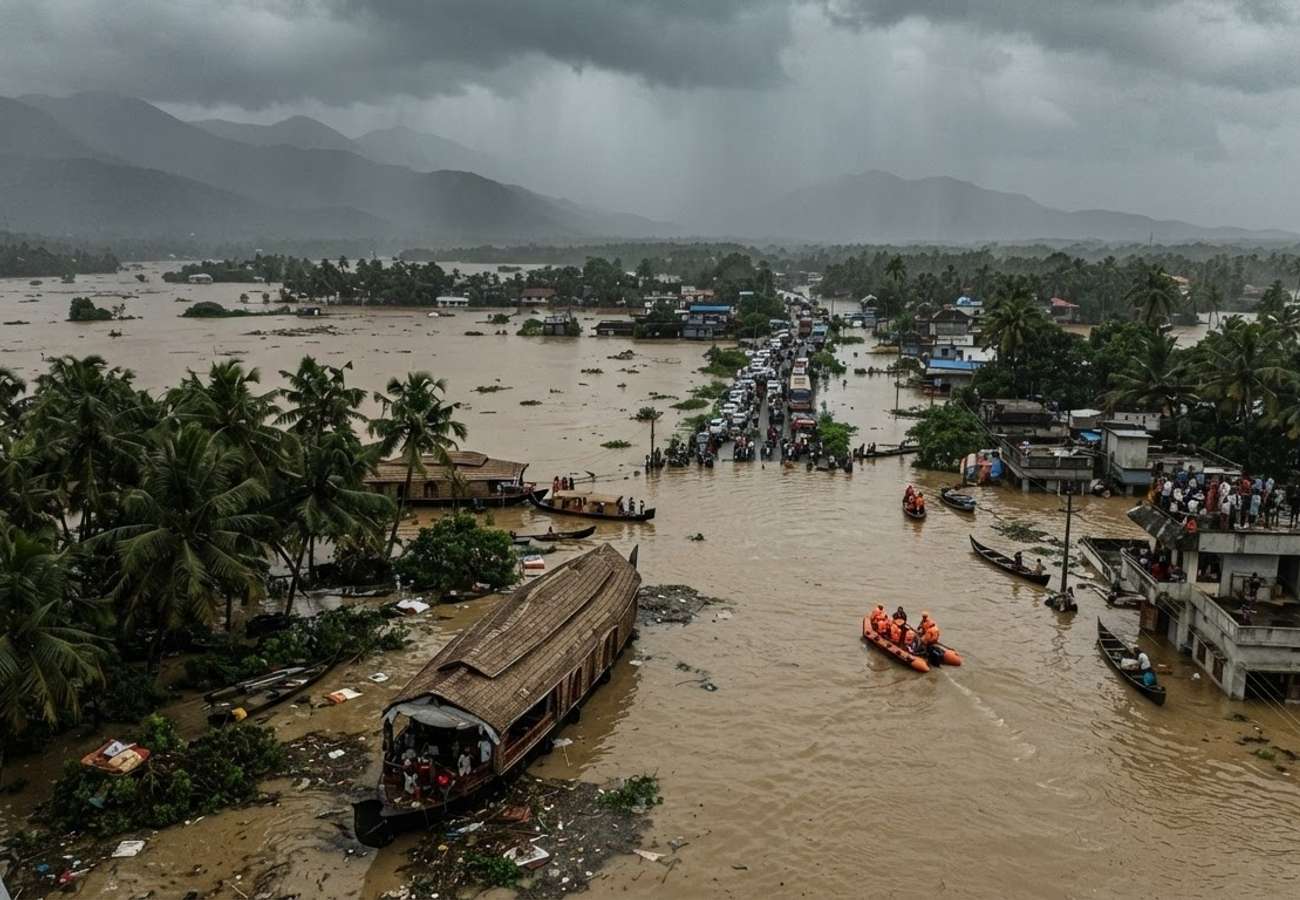
Image generated by AI
Severe monsoon precipitation across Kerala has resulted in 26 confirmed fatalities and the displacement of thousands. Immediate travel warnings are in effect for high-risk districts, with critical infrastructure failure impacting aviation, rail, and road networks.
State of Emergency and Meteorological Data
Continuous monsoon downpours since early August 2026 have triggered widespread flooding across southern India. The India Meteorological Department (IMD) has issued critical weather alerts, specifically designating Pathanamthitta and Kottayam as high-risk zones.
Chief Minister V D Satheesan has confirmed the casualty figures and initiated relief packages to address the destruction of residential properties and low-lying terrains. Precipitation levels have been particularly extreme in northern sectors, including Kozhikode and Kannur, with Panathur in Kasaragod identified as a primary wet zone.
Flight and Airport Impact Breakdown
Our analysis of regional transit data indicates a systemic failure of mobility across the state. The disruption is categorized as follows:
- Aviation: Regional airports are reporting periodic flight cancellations and diversions. These are primarily driven by poor visibility and torrential rainfall affecting takeoff and landing protocols.
- Rail Services: Temporary suspensions are in effect for railway lines traversing hilly tracts due to landslide risks.
- Road Networks: Major highways in high-range destinations are isolated. Entry points to Pathanamthitta and Kottayam remain blocked by floodwaters.
- Leisure Transit: All houseboat cruises, backwater excursions, and Western Ghats trekking tours are under mandatory suspension.
Passenger Rights and Advisory
For the affected passenger, this crisis creates complex legal and logistical challenges regarding bookings and safety. Our analysis of travel policy and safety protocols suggests the following actions:
Compensation and Rebooking Rights Passengers facing flight cancellations due to "Acts of God" (extreme weather) are generally not entitled to cash compensation under most aviation frameworks (such as EU261 or similar national policies). However, the carrier is still obligated to provide:
- Rebooking: A flight to the final destination at the earliest opportunity.
- Refunds: A full refund of the ticket price if the traveler chooses not to travel.
- Duty of Care: Provision of meals, refreshments, and hotel accommodation if an overnight stay becomes necessary.
Immediate Safety Protocols for Tourists
- Avoid Red/Orange Zones: Do not attempt to enter districts under IMD red or orange alerts, specifically landslide-prone highlands.
- Document Everything: Keep physical and digital copies of hotel front-desk details and district control room contacts.
- Registration: Inform hotel management of your daily itinerary to ensure emergency tracking is possible if communication networks fail.
- Supply Management: Maintain a minimum 72-hour stock of non-perishable food, potable water, and prescribed medications.
Industry Analyst View
The 2026 monsoon crisis has exposed significant vulnerabilities in the regional tourism economic cycle. Hospitality stakeholders report a sharp decline in occupancy rates and unprecedented financial losses for local guides and tour operators.
From an analytical perspective, the industry is shifting toward "Resilient Infrastructure Design." There is a growing demand for the integration of live IMD weather alert data directly into B2C booking platforms. This would allow for automated warnings and proactive itinerary adjustments before a traveler reaches a danger zone.
While disaster management has evolved from the fragmented communication of previous years to a more centralized approach, the scale of the 2026 event demonstrates that digital alerts must be paired with physical rescue networks to prevent tourists from becoming stranded in remote lodges.
Stay vigilant and prioritize official government directives over third-party travel blogs.
Related Travel Guides
Disclaimer
This article is for informational and educational purposes only. It does not constitute legal, financial, or professional advice. While we strive to provide accurate and up-to-date information, travel policies, regulations, and conditions change rapidly. Always verify information with official sources before making travel decisions. Nomad Lawyer makes no representations about the accuracy, reliability, completeness, or suitability of the information provided. Readers should consult qualified professionals for advice specific to their circumstances. The views expressed in this article are those of the author and do not necessarily reflect the views of Nomad Lawyer.
Raushan Kumar
Founder & Lead Developer
Full-stack developer with 11+ years of experience and a passionate traveller. Raushan built Nomad Lawyer from the ground up with a vision to create the best travel and law experience on the web.
Learn more about our team →