
Kenya Airport Strike 2026: Thousands Stranded at Jomo Kenyatta International Airport (JKIA)
A major aviation strike at Nairobi's Jomo Kenyatta International Airport has disrupted regional travel, stranding thousands of passengers and impacting East African tourism.

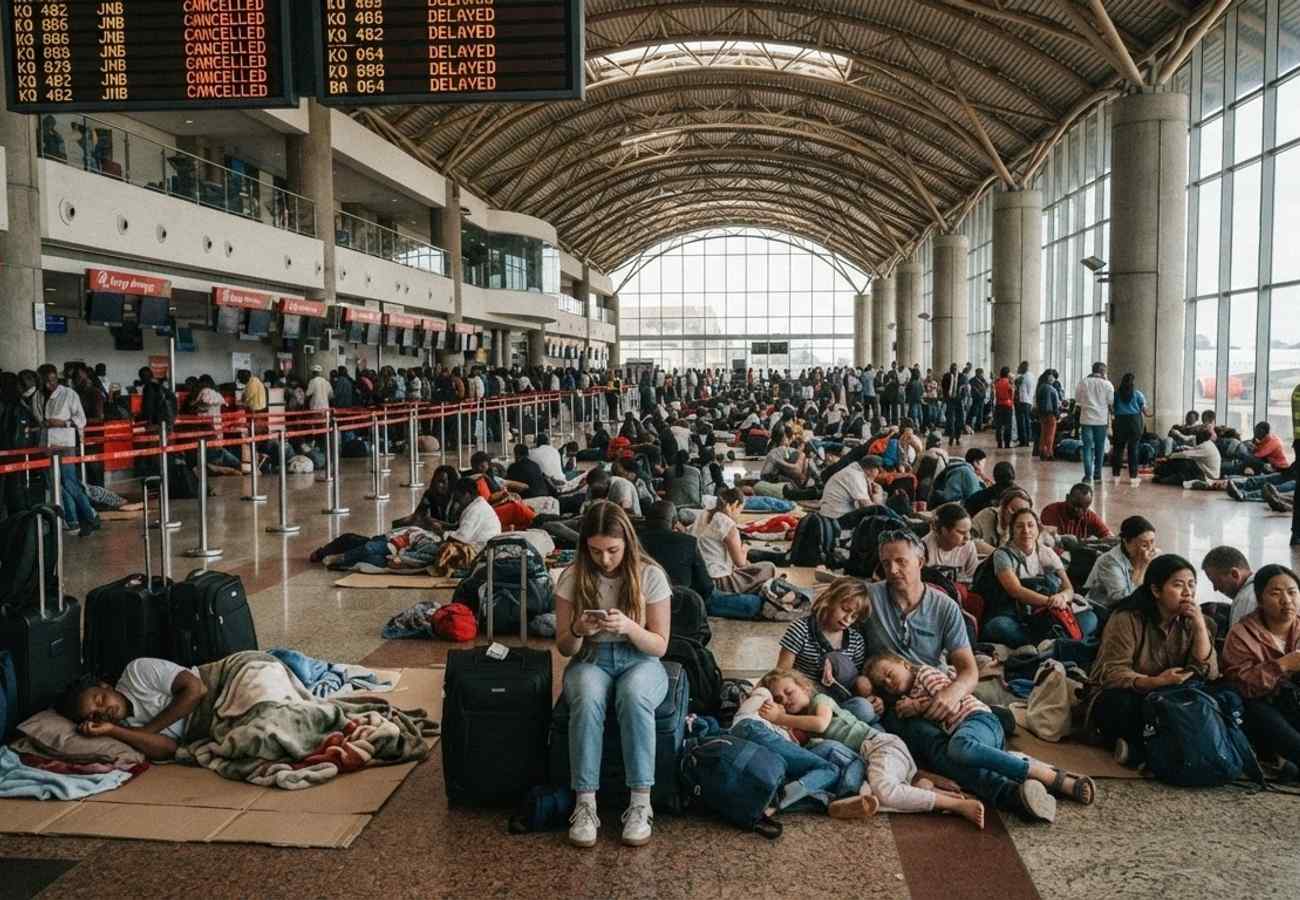
Image generated by AI
Thousands of travelers have been stranded across Kenya’s aviation network after a massive strike at Jomo Kenyatta International Airport (JKIA) triggered systemic delays and cancellations starting August 30, 2026.
The Aviation Crisis at JKIA
The disruption began on Sunday, August 30, 2026, as a "go-slow" action involving staff from the Kenya Airports Authority (KAA) and the Kenya Civil Aviation Authority (KCAA). This initial slowdown rapidly escalated by August 31 into a full-scale strike led by the Kenya Aviation Workers’ Union. The result was immediate operational paralysis at Jomo Kenyatta International Airport in Nairobi, with staff walking off posts and drastically reducing essential services.
The impact was felt instantly across check-in counters, immigration halls, and security checkpoints. Beyond the passenger terminals, ground handling and cargo operations faced severe bottlenecks. The unrest extended to Wilson Airport, where entrances were partially blocked, and Moi International Airport in Mombasa, creating a ripple effect that disrupted crew rotations and aircraft repositioning across the country.
Root Causes of the Industrial Action
The walkout is the culmination of long-standing labor disputes. The Kenya Aviation Workers’ Union has cited a failure to finalize a collective bargaining agreement with the Kenya Civil Aviation Authority, the body responsible for regulating air navigation services.
Tensions have also peaked between the union and the Kenya Airports Authority, as well as Jambojet, the low-cost subsidiary of Kenya Airways. The primary grievances center on:
- Unresolved pay scales and remuneration.
- Job security concerns.
- Disputes over union dues deductions and staff grading.
- Lack of management cooperation in negotiating outstanding contract terms.
These issues have simmered for over a year, with the current strike triggering only after statutory notice periods expired.
Impact on the Traveler Experience
For the visitor, the real impact has been a total breakdown of the transit experience. Reports indicate passengers sleeping on terminal floors and families spending entire nights in queues. Many business travelers were forced to scrap their itineraries, rerouting through alternative regional hubs like Kigali or Addis Ababa.
The disruption has caused significant financial and logistical strain:
- Flight Delays: Many passengers reported delays exceeding six hours.
- Missed Connections: Onward journeys to North America, Asia, and Europe were severed.
- Tourism Loss: Travelers reported missed safari bookings and cancelled regional connections.
- Accommodation Surges: Hotels surrounding JKIA reached full capacity as stranded passengers sought shelter.
Airlines have been forced to consolidate services and, in several instances, suspend departures entirely until staffing levels stabilize.
Cultural & Environmental Value: Supporting the Local Economy
While the strike highlights labor instability, it also underscores the fragility of the regional "visitor economy." Nairobi serves as the primary gateway for safari tourism in Kenya and a vital transit point for those visiting Uganda, Rwanda, and Tanzania.
When a hub like JKIA falters, the economic hit extends beyond the airport to local guides, eco-lodges, and community-based tourism initiatives that rely on a steady flow of international arrivals. To mitigate such risks, there is a growing movement toward diversifying entry points into East Africa and supporting local transport cooperatives that can provide overland alternatives during aviation crises.
Visitor Insider Tips
For those navigating travel to or through Nairobi during periods of industrial unrest, these practical strategies are essential:
- The "Alternative Hub" Strategy: If JKIA is compromised, check flight availability through Kigali (Rwanda) or Entebbe (Uganda) and utilize regional shuttles to reach your final destination.
- Airport Timing: During "go-slow" periods, arrive at the airport at least 5-6 hours before international departures.
- Local Communication: Use WhatsApp groups or local travel forums to get real-time updates on terminal access, as official boards may lag behind actual operational status.
- Booking Flexibility: Always opt for fully refundable tickets or comprehensive travel insurance that specifically covers "industrial action" or "strikes."
- Off-Peak Windows: Historically, mid-week departures (Tuesday/Wednesday) face less congestion than the weekend surges, even during partial disruptions.
Tourism Outlook
The long-term impact of this strike depends on the durability of the settlement between the union and the authorities. As East Africa sees a surge in travel demand for 2026, the reliability of JKIA is paramount. If labor relations remain volatile, there is a risk that international carriers may shift more transit volume to competing hubs in the region. However, a successful resolution could lead to better-funded staffing and improved infrastructure, ultimately enhancing the passenger experience for the millions who use Kenya as their gateway to the continent.
A stable aviation sector is the heartbeat of East African exploration.
Related Travel Guides
Disclaimer
This article is for informational and educational purposes only. It does not constitute legal, financial, or professional advice. While we strive to provide accurate and up-to-date information, travel policies, regulations, and conditions change rapidly. Always verify information with official sources before making travel decisions. Nomad Lawyer makes no representations about the accuracy, reliability, completeness, or suitability of the information provided. Readers should consult qualified professionals for advice specific to their circumstances. The views expressed in this article are those of the author and do not necessarily reflect the views of Nomad Lawyer.
Raushan Kumar
Founder & Lead Developer
Full-stack developer with 11+ years of experience and a passionate traveller. Raushan built Nomad Lawyer from the ground up with a vision to create the best travel and law experience on the web.
Learn more about our team →