
Kathmandu Issues Urgent Monsoon Advisory as Landslide Risks Mount, Urging Travelers to Adhere to Kathmandu Landslide Safety Guidelines and Stay Vigilant: New Travel Alert
Nepal DAO issues travel alert for Kathmandu Valley. Learn about monsoon landslide safety guidelines, road hazards, and police updates.

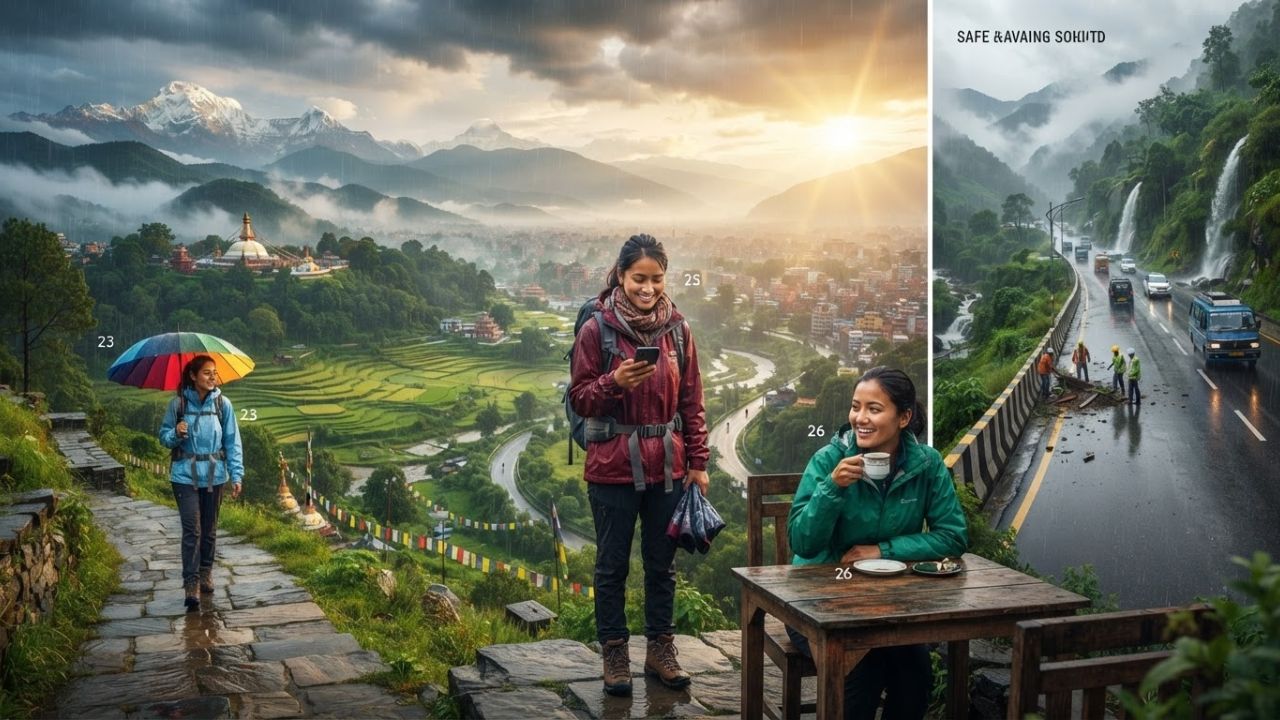
Image generated by AI
Published on July 19, 2026
The District Administration Office (DAO) in Kathmandu has issued an urgent monsoon advisory warning of severe road hazards, flash flooding, and geological instability across the Kathmandu Valley. Extreme seasonal rains have saturated soil in the Himalayan foothills, making transit highly volatile and highlighting the critical need for strict compliance with Kathmandu landslide safety protocols. Commuters and international tourists are urged to avoid night travel, monitor official police clearances, and remain prepared for significant route delays.
Quick Summary
- Official Safety Alert: The District Administration Office (DAO) of Kathmandu has issued a critical warning regarding high landslide risks and flash flooding on regional routes leading into and out of the Kathmandu Valley.
- Geological Transit Danger: Saturated soils in the Himalayan foothills have made narrow, winding mountain passes highly volatile, where minor debris can block paths for extended periods.
- Night-Time Restrictions: Authorities have restricted night-time travel for public buses and private vehicles across several districts to prevent accidents caused by hidden mud, rockfalls, and road damage.
- Police Clearance Mandate: Commuters are strictly prohibited from bypassing blockages, and vehicles must wait for official police clearance before resuming journeys on affected routes.
- Precautionary Preparation: Travelers are instructed to maintain flexible schedules, verify conditions through government portals, and carry fully stocked emergency kits.
Context and Background: Why Monsoon Rain Triggers Severe Landslide Risks
The monsoon season in Nepal introduces intense, long-lasting rainfall that significantly alters the stability of the Himalayan foothills. Due to the region's unique geological makeup, heavy volumes of water saturate the soil structure. This high water volume often leads to rapid slope failures, flash floods, and mudslides.
Because the Kathmandu Valley serves as a central hub for transport and regional connectivity, protecting these transit pathways is critical. The administrative response from the DAO serves as a precautionary measure to prevent loss of life and protect property. Narrow, winding roads are vulnerable to minor debris blockages, which can halt traffic for hours.
Event/Incident Details: The DAO's Emergency Monsoon Declarations
The District Administration Office (DAO) in Kathmandu issued the travel alert in direct response to intense monsoon rainfall. The alert highlights the severe dangers of traveling on regional roads due to unstable terrain, mudslides, and flash flooding. Authorities currently consider travel into or out of the Kathmandu Valley highly volatile.
In addition to road closures, weather advisories indicate that rainfall levels will remain elevated. According to Department of Hydrology and Meteorology of Nepal weather reports, heavy water volumes will persist. The meteorological conditions indicate that soil saturation has reached critical levels, increasing the risk of sudden environmental shifts.
Risk/Impact: How Geological Shifts Under Kathmandu Landslide Safety Rules Affect Transit
The risks associated with monsoon road hazards impact individual commuters and the logistics industry. Commuters face physical dangers along with schedule uncertainties, detours, and road closures.
- Unpredictable Journey Times: Routine transit can turn into extended delays due to active debris clearance or unexpected road blockages.
- Stranded Commuters: Travelers run the risk of becoming stranded in high-risk landslide zones with limited communication options.
- Hidden Night Road Hazards: In the darkness, falling rocks, mudslides, and structural road failures are difficult to identify.
- Restricted Night Transit: Night-time operations are restricted on paths entering the Kathmandu Valley to reduce transport accidents.
- Transport Sector Adjustments: Stricter operational guidelines have been enforced for transport companies to maintain road viability.
What Authorities Are Saying: Administrative Enforcement and Oversight
Local administrators and police forces emphasize that safety must be prioritized over punctuality during the monsoon season. The DAO has introduced tighter oversight for transport operators, public buses, and private vehicles to manage the crisis.
According to the District Administration Office (DAO) Kathmandu official portals, strict compliance with police directives is mandatory. State security forces and transport agencies are collaborating to monitor road conditions in real-time. Travelers are warned not to bypass road barriers, and must wait for official police clearance before resuming transit.
Practical Traveler Advice: Safeguarding Your Commute on Winding Passes
To minimize exposure to road hazards during the monsoon, the DAO recommends that travelers observe the following safety guidelines:
- Conduct a Pre-Departure Assessment: Always verify road conditions through official government portals and cross-reference your route with real-time weather reports.
- Avoid Night Travel Entirely: Do not travel between sunset and sunrise. Darkness hides structural roadway damage and mudslides. If movement is unavoidable, reduce your speed.
- Implement Safe Harbor Protocols: If you encounter a road blockage, do not attempt to bypass it. Immediately seek a safe harbor or high-ground area and remain stationary.
- Obey Police Directives: Do not proceed on roads closed due to safety concerns. Wait for explicit instructions and official clearance from local law enforcement.
- Pack an Emergency Kit: Keep a well-stocked kit in your vehicle, including drinking water, non-perishable food, a first-aid kit, a flashlight with extra batteries, and a fully charged power bank.
- Maintain Constant Communication: Keep family or friends updated on your location. In areas with weak signals, register your transit plans with local checkpoints.
- Prioritize Flexible Itineraries: If extreme rainfall is predicted, postpone non-essential travel. Building flexibility into your schedule prevents the pressure to rush through hazardous areas.
Broader Context: Navigating Himalayan Foothills During the Monsoon Season
Nepal’s Himalayan foothills present unique geological challenges during the wet season. Long-lasting monsoon rains saturate the soil, leading to sudden slope failures. For a country highly dependent on holiday traffic and tourism revenue, managing these risks is essential to support regional businesses.
According to Nepal Tourism Board travel advisories, travelers should adapt to local guidelines rather than focusing on the efficiency of the journey. Understanding geological hazards and cooperating with regional checkpoints allows visitors to travel safely while supporting sustainable tourism.
Looking Ahead: Stricter Oversight for Public and Private Transit Operators
Over the coming weeks, state security forces and transport companies will continue to coordinate debris clearance in real-time. Night-time travel restrictions on routes leading into the Kathmandu Valley will remain active until the soil stabilizes. Authorities will continue to enforce checkpoint clearances and monitor weather forecasts to safeguard all commuters.
Conclusion: Emphasizing Preparedness and Vigilance
Navigating the Kathmandu Valley during the monsoon requires a disciplined approach and cooperation with local directives. By staying informed, carrying emergency supplies, and avoiding night-time travel, commuters can ensure safe arrival at their destinations. Emphasizing preparedness and vigilance remains essential to successfully manage the seasonal road hazards.
FAQ: Kathmandu Landslide Safety and Monsoon Travel Guide
Why has the DAO issued a travel alert for Kathmandu?
The DAO issued the alert due to heavy monsoon rains that trigger high landslide risks, flash flooding, and dangerous road conditions along regional routes.
What are the rules for night travel during the monsoon?
Night-time travel has been restricted on routes leading into the Kathmandu Valley to prevent accidents caused by hidden mudslides and road failures.
Is police clearance required to travel on blocked roads?
Yes, public and private vehicles are strictly prohibited from bypassing barriers and must wait for official police clearance before resuming transit.
What should be included in a vehicle's emergency kit?
A basic kit should include drinking water, non-perishable food, a first-aid kit, a flashlight with extra batteries, and a fully charged power bank.
How should travelers handle a road blockage during a landslide warning?
Do not attempt to cross or bypass the obstruction. Immediately seek a safe harbor or high-ground area and wait for instructions from local police.
Related Travel Guides
Disclaimer
This article is for informational and educational purposes only. It does not constitute legal, financial, or professional advice. While we strive to provide accurate and up-to-date information, travel policies, regulations, and conditions change rapidly. Always verify information with official sources before making travel decisions. Nomad Lawyer makes no representations about the accuracy, reliability, completeness, or suitability of the information provided. Readers should consult qualified professionals for advice specific to their circumstances. The views expressed in this article are those of the author and do not necessarily reflect the views of Nomad Lawyer.
Kunal K Choudhary
Co-Founder & Contributor
A passionate traveller and tech enthusiast. Kunal contributes to the vision and growth of Nomad Lawyer, bringing fresh perspectives and driving the community forward.
Learn more about our team →