
Kansas Route 66 Centennial: Why the Shortest 13.2-Mile Mother Road Stretch Delivers the Biggest Road Trip Experience
Covering just 13.2 miles across Cherokee County, the Kansas stretch of Route 66 is celebrating the Mother Road's 100th anniversary with massive traveler appeal.

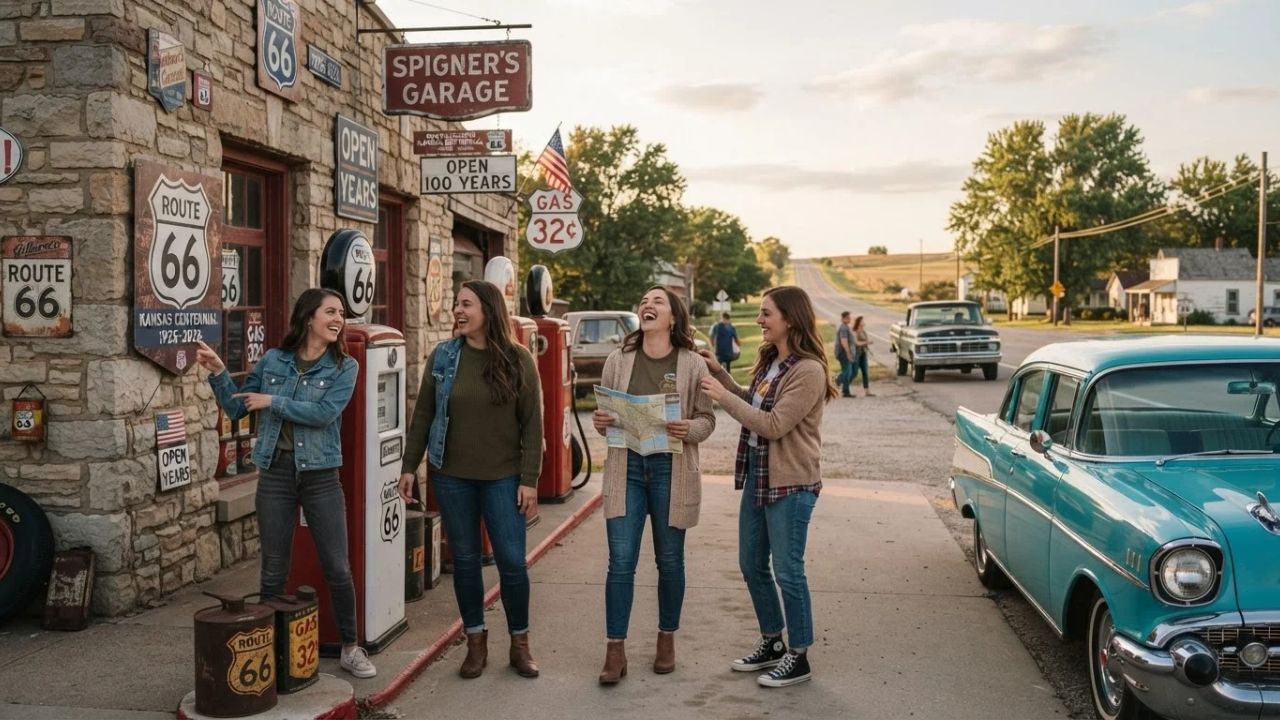
Image generated by AI
At precisely 13.2 miles, Kansas claims the shortest section of Route 66 in the entire country, yet it packs more living roadside history per mile than almost any other stretch between Chicago and Santa Monica. Slicing across the far southeastern pocket of Cherokee County, this compact ribbon of two-lane asphalt takes less than twenty minutes to drive without stopping. Doing so, however, means missing an authentic slice of Americana where vintage neon still hums, community general stores remain family-owned after a century of continuous service, and the very vehicles that inspired Hollywood animation sit parked beneath vintage tin awnings.
The Centennial Highway Revival Across Cherokee County
As the United States commemorates the 100th anniversary of the commissioning of Route 66, global travelers are converging on this quiet corner where Missouri, Kansas, and Oklahoma converge. While marathon driving days across Texas or Arizona often blur into endless interstate bypasses, the Kansas corridor forces travelers to slow down. The route bypasses modern interstates entirely, guiding visitors through three historic communities: Galena, Riverton, and Baxter Springs. Each town preserves a distinct chapter of the highway's golden age, offering an intimate alternative to corporate travel strips.
The centennial milestone has ignited a regional renaissance driven by grassroots preservationists rather than corporate developers. Independent business operators, antique restorers, and local historical societies are reporting unprecedented numbers of road trippers arriving from Germany, the United Kingdom, France, and Japan alongside domestic cross-country travelers. This steady flow of heritage tourism translates directly into local restaurant receipts, fuel stops, museum donations, and overnight motel stays, giving small agricultural communities an economic lifeline that honors their cultural heritage.
Federal and regional initiatives documented by the National Park Service Route 66 Corridor Preservation Program demonstrate that authentic historic assets—when carefully maintained by the families who inherited them—consistently outperform synthetic roadside attractions. Travelers in 2026 are actively rejecting commercialized tourist corridors in favor of places where they can lean over a counter, drink a glass-bottle soda, and converse with shopkeepers whose grandparents greeted Dust Bowl migrants along the exact same roadway.
What Makes Kansas Route 66 Different
Geographically, this 13.2-mile corridor belongs to the historic Ozark plateau margin and the Tri-State Mining District, once among the world's most productive lead and zinc mining regions. That industrial past gives towns like Galena a weathered, red-brick architectural dignity that starkly contrasts with the desert trading posts of New Mexico or the flat agricultural plains of western Oklahoma. The streetscapes feature multi-story commercial brick blocks erected during the late nineteenth-century mineral boom, later repurposed to serve automobile travelers during the mid-twentieth century.
Pop-culture pilgrimage adds another layer of modern distinction. In Galena, the restored 1934 Kan-O-Tex service station, now operated as Cars on the Route, served as the physical inspiration for characters in the beloved Pixar motion picture Cars. Parked beside the vintage gas pumps sits the original 1951 International Harvester L-170 boom truck that direct filmmakers used as the blueprint for Tow Mater. Just down the block stands Gearhead Curios, a reimagined 1939 Texaco station decorated with oversized automotive relics and hand-restored neon signs that illuminate the prairie dusk.
Between Galena and Baxter Springs, the route crosses Brush Creek via the Marsh Arch Rainbow Bridge. Constructed in 1923 and designed by engineer James Barney Marsh, this elegant reinforced-concrete through-arch structure is the sole surviving bridge of its design on the Kansas alignment. Further west in Riverton stands the Eisler Bros. Old Riverton Store, operating continuously since 1925. The general store still sells dry goods, cold cuts, and road maps beneath pressed-tin ceilings, serving as the official headquarters of the Route 66 Association of Kansas.
The journey concludes in Baxter Springs, an old cow town with roots stretching into the Civil War. Here, the Baxter Springs Route 66 Visitors Center occupies an artfully restored 1940s Phillips 66 cottage-style service station, complete with Tudor-style brickwork and vintage gas pumps that illustrate how fuel brands adapted residential architectural styles to blend into neighborhood surroundings during the Great Depression.
Visitor Insider Tips
Experiencing this compact stretch requires a mindset geared toward deliberate exploration rather than rapid transit. These proven tips will help travelers make the most of their visit:
- Time your drive for late-afternoon golden hour: The brick facades of Galena and the sweeping concrete arches of the Marsh Arch Rainbow Bridge over Brush Creek catch spectacular warm sunlight between 5:00 PM and 7:00 PM. This window also offers the best conditions to capture the neon signs glowing as twilight settles over Cherokee County.
- Order the deli lunch at Eisler Bros. Old Riverton Store: Skip fast-food exits on nearby Interstate 44. Walk to the back counter of the Old Riverton Store, order a custom sliced-ham and sharp-cheddar sandwich wrapped in brown butcher paper, pick up a bottle of cold sarsaparilla, and enjoy your meal on the wooden porch benches overlooking the historic alignment.
- Observe unwritten road etiquette around single-lane bridges: While modern traffic primarily bypasses the Marsh Arch Rainbow Bridge via an adjacent bypass road, visitors can still drive across the historic concrete structure. Drive under 10 miles per hour, yield to oncoming vehicles, and keep a sharp eye out for walking photographers setting up tripods along the arch railings.
- Base yourself in Baxter Springs or nearby Joplin: While lodging directly on the 13.2-mile Kansas stretch consists of historic independent motels and bed-and-breakfasts, booking rooms months in advance is essential during the centennial season. Staying in Baxter Springs allows easy walking access to local heritage sites, while nearby Joplin, Missouri, provides larger regional accommodations just ten minutes east.
- Engage the curators at community museums: At the Baxter Springs Heritage Center & Museum, volunteers possess encyclopedic knowledge regarding the transition from Osage hunting territories to mining boomtowns and Mother Road transit. Take time to examine the original Route 66 artifacts, vintage road signs, and mining equipment displays rather than rushing through the galleries.
Cultural and Environmental Context
The preservation of Kansas Route 66 cannot be understood without examining the environmental legacy of the Tri-State Mining District. For decades, intensive zinc and lead extraction created massive underground voids and expansive surface deposits known locally as chat piles. Over recent decades, coordinated state and federal remediation projects across Cherokee County have successfully stabilized these grounds, allowing native tallgrass prairie vegetation and wetland habitats to reclaim contaminated terrain. Today, regional tourism initiatives actively demonstrate how brownfield rehabilitation can coexist with heritage travel.
Culturally, the highway represents a delicate balance between authentic preservation and modern commercial pressures. Residents in Galena and Baxter Springs are acutely aware that their historic streetscapes survived largely because post-interstate economic stagnation prevented urban renewal projects from tearing down historic structures. Now, local governments are implementing design review guidelines to ensure that new storefront investments preserve historic brickwork, hand-painted ghost murals, and vintage neon signage.
By supporting independent diners, restored filling stations, and non-profit museums along this route, road trippers contribute directly to rural economic resilience. Rather than funneling dollars into multinational corporate franchises along the interstate, spending money along the Kansas Mother Road sustains family businesses that have anchored these rural main streets across five generations. For state-wide travel itineraries and regional event calendars, explore the official resources provided by TravelKS and the nationwide network at Visit The USA.
FAQ: Visiting Kansas Route 66 in 2026
What is the best time to visit Kansas Route 66?
Spring and autumn offer ideal driving weather, with comfortable daytime temperatures in the 60s and 70s Fahrenheit. October is especially scenic, combining fall foliage with mild weather and regional classic car events celebrating the Route 66 centennial.
How long does it take to explore the Kansas stretch?
While driving the 13.2 miles takes only twenty minutes, plan for two to four hours. This provides ample time to tour Galena, walk across the Marsh Arch Rainbow Bridge, enjoy lunch in Riverton, and visit the museums in Baxter Springs.
How do I get to Kansas Route 66 from a major airport?
The closest commercial aviation gateway is Springfield-Branson National Airport (SGF) in Missouri, located approximately 75 miles east. Alternatively, Tulsa International Airport (TUL) in Oklahoma sits about 85 miles southwest, providing straightforward rental car access via Interstate 44.
Are the Kansas Route 66 roadside attractions free to visit?
Most outdoor landmarks, including the Marsh Arch Rainbow Bridge and exterior displays at Cars on the Route, are free to view. Local heritage museums and visitor centers welcome small donations to support ongoing community preservation efforts.
In a world that prizes high-speed efficiency, thirteen miles in southeast Kansas prove that the richest journeys are found in the slowest turns.
Related Travel Guides
Barstow Station McDonald's Revives Route 66 Nostalgia With Historic Train Car Dining in 2026
Exploring Monett Missouri: A Guide to Ozark Railway Heritage and Small-Town Charm in 2026
10 Best Route 66 Road Trip Stops Across the Midwest, According To Reddit
Disclaimer
This article is for informational and educational purposes only. It does not constitute legal, financial, or professional advice. While we strive to provide accurate and up-to-date information, travel policies, regulations, and conditions change rapidly. Always verify information with official sources before making travel decisions. Nomad Lawyer makes no representations about the accuracy, reliability, completeness, or suitability of the information provided. Readers should consult qualified professionals for advice specific to their circumstances. The views expressed in this article are those of the author and do not necessarily reflect the views of Nomad Lawyer.
Preeti Gunjan
Contributor & Community Manager
A passionate traveller and community builder. Preeti helps grow the Nomad Lawyer community, fostering engagement and bringing the reader experience to life.
Learn more about our team →