Japan Overhauls Tax-Free Shopping as Tourists Must Pay Upfront Consumption Tax Before Airport Exit Checks

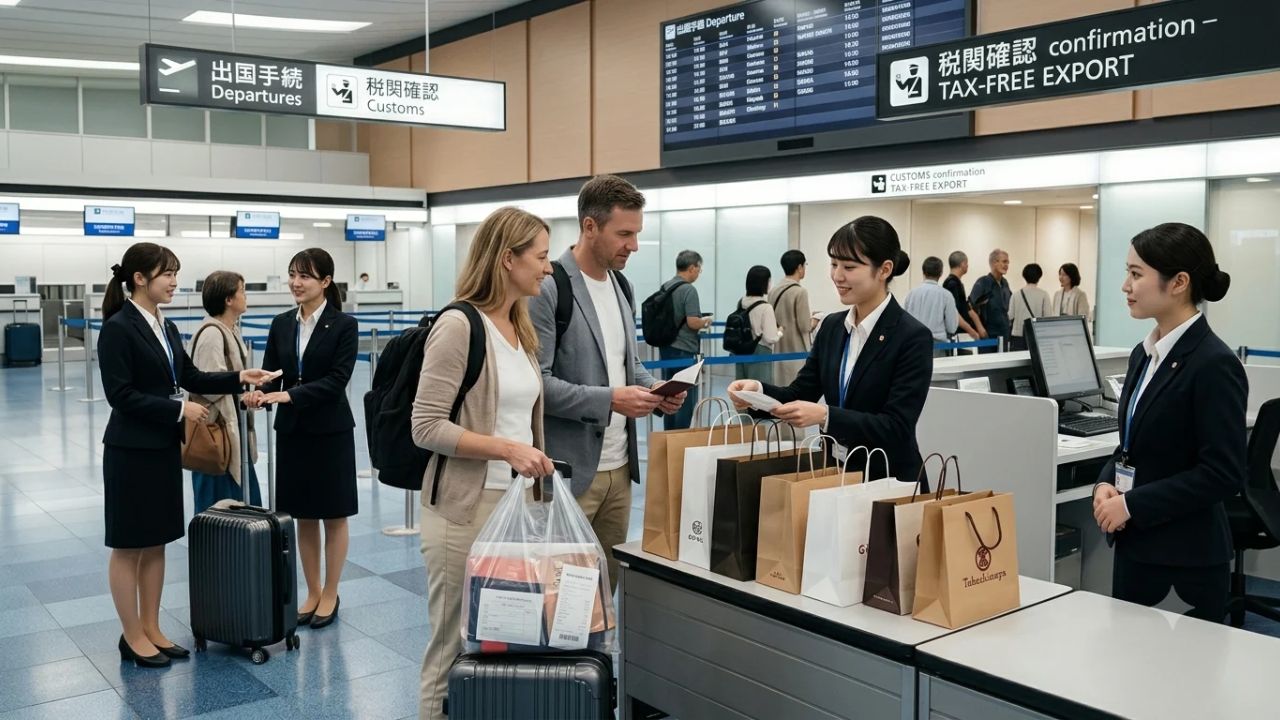
TOKYO / OSAKA — Japan has officially enacted the most sweeping overhaul of its inbound tourist tax-free shopping regime in decades, eliminating point-of-sale tax exemptions and requiring all international visitors to pay the full 10 percent consumption tax upfront at retail checkout. Enforced nationwide on November 1, 2026, as the centerpiece of the Japanese Government's Fiscal 2025 Tax Reform, the revised system transitions Japan from its historical immediate-deduction model to an airport-validated post-export refund structure. Under the new statutory framework, foreign tourists can only reclaim consumption tax payments after Japan Customs electronically confirms at international departure airports and seaports that qualifying merchandise is physically exiting the country within ninety days of purchase.
The regulatory shift introduces fundamental changes for international sightseers, retail conglomerates, and commercial airport operators across the archipelago. Designed by the National Tax Agency (NTA) and the Japan Tourism Agency (JTA) to eradicate multi-billion-yen domestic tax evasion schemes perpetrated by unauthorized resale rings, the reform alters traveler budgeting dynamics. Visitors must now possess sufficient upfront liquidity or credit limits to fund tax-inclusive prices during their journeys. Simultaneously, departure logistics have been transformed: tourists must keep tax-free items accessible for customs inspection before completing airline baggage check-in, fundamentally reshaping terminal arrival schedules and baggage preparation across Japan’s primary gateway airports.
       JAPAN'S TAX-FREE SHOPPING REFORM: TRANSACTION TO REFUND WORKFLOW
       ================================================================

       [ STEP 1: RETAIL PURCHASE AT LICENSED TAX-FREE STORE ]
       * Minimum spend: ¥5,000 (pre-tax) at same store/mall on same day
       * Consumables ¥500,000 ceiling ABOLISHED | Sealed bags ELIMINATED
       * Tourist pays FULL 10% CONSUMPTION TAX UPFRONT at checkout counter
       * Passport registered electronically via NTA digital tax-free portal
                                       |
                                       v
       [ STEP 2: PRE-DEPARTURE PACKING LOGISTICS (WITHIN 90 DAYS) ]
       * Goods must physically exit Japan within 90 days from purchase
       * Tax-free purchases packed in accessible carry-on or top of luggage
       * DO NOT CHECK IN BAGGAGE containing tax-free goods before customs
                                       |
                                       v
       [ STEP 3: AIRPORT / SEAPORT CUSTOMS ELECTRONIC CONFIRMATION ]
       * Scan passport at Customs Kiosks (e-Tax Free Gates) prior to bag drop
       * Available on dedicated Customs Wi-Fi at 7 major international airports
       * Green Screen: Instant automated clearance approved
       * Red Screen: Mandatory physical inspection of goods by customs officer
                                       |
                 +---------------------+---------------------+
                 |                                           |
                 v                                           v
       [ STEP 4A: SUCCESSFUL REPAYMENT ]           [ STEP 4B: REJECTION RISKS ]
       * Refund routed via Card, App, or Bank      * Any missing item voids ENTIRE receipt
       * Third-party private fees (1.5%–3.5%)      * Checked-in bags unverified = Tax LOST
       * Cash refunds where authorized counters    * Goods consumed in Japan without tax
         operate post-security                       penalized under customs law
The Anti-Resale Mandate: Dismantling the Domestic Black Market
To understand why Japan dismantled its globally recognized, frictionless point-of-sale tax exemption, one must examine the scale of financial exploitation that plagued the previous system. For years, Japan was one of the few developed economies allowing non-resident tourists to purchase duty-free goods directly at retail cash registers without paying consumption tax. While this zero-friction approach stimulated unprecedented inbound retail spending, it created an enormous loophole exploited by professional reselling syndicates, commonly known as daigou operations or commercial parallel exporters.
Under the former regulations, bad actors recruited temporary visitors or used stolen tourist identities to buy vast quantities of high-value merchandise—including luxury Swiss timepieces, designer leather goods, high-end consumer electronics, Japanese whisky, and premium cosmetics—completely exempt from Japan’s 10 percent consumption tax. Instead of carrying these items out of the country, the purchasers immediately diverted them onto the domestic Japanese grey market, selling them to domestic buyers at a discount while pocketing the 10 percent tax spread as illicit profit.
CHRONOLOGY OF JAPAN'S TAX-FREE SYSTEM EVOLUTION
| Entity / Facility | Delays | Cancellations | Details |
|---|---|---|---|
| Regulatory Era | System Architecture | Compliance Model | Operational Outcome |
| Pre-2020 | Paper Passport | Physical paper | High friction; heavy |
| Historical Phase | Receipts (Stapled) | customs inspection | paperwork at departure |
| 2020–October 2026 | Digital POS | Real-time merchant | Massive domestic resale |
| Frictionless Era | Exemption (Zero JCT | data transmission; | abuse; billions in lost |
| Paid at Register) | theoretical checks | consumption tax revenue | |
| November 2026 Onward | Post-Export Refund | Airport customs | Zero upfront leakage; |
| Modernized Reform | (10% Tax Paid at | validation gate | international standard |
| POS; Reimbursed) | before bag check-in | alignment (EU-style) |
When these individuals reached international departure terminals, airport customs officers possessed digital records of the transactions transmitted by retailers. However, customs officials faced a major administrative impasse: departing passengers routinely claimed they had already shipped the merchandise overseas via unaccompanied international postal parcels, or claimed they had forgotten the items in checked luggage. Under Japanese law, customs authorities were forced to assess delinquent consumption tax assessments on the spot.
However, in practice, departing foreign nationals frequently lacked the financial assets in Japan to settle multi-million-yen tax liabilities, leaving the country with unpaid tax assessments that the National Tax Agency could never recover. NTA audits revealed that over 90 percent of delinquent consumption tax assessments levied at international airports remained entirely uncollectible, resulting in billions of yen in annual losses for the Japanese treasury.
By shifting the tax-free mechanism to a post-export refund model—aligning Japan with the standard operating procedures of the European Union, the United Kingdom, and Singapore—the Japanese government has eliminated this fiscal vulnerability. Because travelers must fund the 10 percent consumption tax at the cash register, the financial risk is transferred entirely to the purchaser. If a traveler fails to present the merchandise to customs upon departure, the consumption tax remains in the state treasury, instantly neutralizing the economic incentive for domestic black-market resale.
Structural Shopping Rules: New Spending Thresholds and Packaging Deregulation
While the obligation to pay upfront consumption tax represents an operational adjustment for tourists, the November 1, 2026 reform includes significant simplifications that eliminate longstanding pain points in Japan's retail shopping environment.
Under the modernized rules, the foundational spending threshold remains unchanged: purchases must total at least ¥5,000 before consumption tax (¥5,500 tax-inclusive) at the same licensed tax-free merchant on the same calendar day. In large commercial shopping centers, department stores (such as Isetan, Mitsukoshi, Takashimaya, and Daimaru), and transit-connected retail complexes (such as Ginza Six or Shibuya Scramble Square), purchases from multiple participating boutiques can continue to be consolidated at authorized shared tax-free counters to reach the ¥5,000 baseline.
CORE TAX-FREE SHOPPING PARAMETERS: BEFORE VS. AFTER REFORM
| Entity / Facility | Delays | Cancellations | Details |
|---|---|---|---|
| Policy Dimension | Old System (Pre-Nov 2026) | New System (Effective Nov 2026) | Strategic Impact |
| Payment at Register | Pre-tax amount only | Full 10% tax- | Higher upfront traveler |
| (Zero tax paid) | inclusive price | liquidity required | |
| Consumables Ceiling | Capped at ¥500,000 | UNLIMITED | Facilitates high-value |
| per store per day | (No upper limit) | cosmetic/liquor sales | |
| Category Division | Strict split: | UNIFIED | Easy threshold reach; |
| General vs Consumed | Single category | no receipt splitting | |
| Special Packaging | Mandatory sealed | PERMANENTLY | Reduces single-use |
| tamper-proof bags | ELIMINATED | plastic waste; packs easy | |
| Export Timeline | 30 days for sealed | 90 DAYS for all | Accommodates extended |
| consumables | qualifying goods | regional itineraries | |
| High-Value Checks | Random spot checks | Mandatory document | Eliminates parallel |
| at customs exit | audit for ¥1M+ items | luxury watch diversion |
The most welcome structural deregulation is the complete abolition of the distinction between "general goods" (such as clothing, footwear, electronics, cameras, and souvenirs) and "consumable goods" (such as skincare products, cosmetics, confectioneries, over-the-counter pharmaceuticals, and liquor). Under the former system, travelers had to spend ¥5,000 separately in each distinct category, preventing the combination of a ¥3,000 shirt and a ¥2,500 bottle of sake on a single tax-free claim. Under the 2026 rules, all qualifying merchandise is merged into a single, unified spending category.
Concurrently, the Japanese government has completely abolished the controversial ¥500,000 daily expenditure ceiling previously imposed on consumable items. Affluent tourists purchasing rare vintage whiskies, luxury skincare regimes, or high-grade health supplements can now purchase without artificial caps.
Equally significant is the permanent elimination of the mandatory sealed plastic packaging for consumables. For over a decade, retail clerks were legally mandated to pack all consumable goods into heavy-duty, tamper-evident plastic bags that could not be opened while inside Japan without voiding the tax exemption. This rule generated intense traveler frustration, as bulky sealed bags consumed massive suitcase volume and produced tons of non-recyclable plastic waste.
Under the 2026 system, goods no longer require special sealed bags because customs verification occurs directly at the departure port. However, travelers must observe a strict legal caveat: goods intended for tax refund must still be exported in an unconsumed state. If a tourist opens and consumes food, drinks, or cosmetics while inside Japan, those items become subject to domestic consumption tax and must be declared to customs officers prior to departure.
The reform maintains strict statutory exclusions. Gold and platinum bullion, collectible investment coins, and commodities already exempt from Japanese consumption tax remain completely ineligible for tax-free claims. Additionally, individual luxury purchases exceeding ¥1 million before tax (such as high-end horology or fine jewelry) are automatically flagged by customs software, requiring the passenger to present physical authenticity certificates, serial numbers, and manufacturer warranties during the departure inspection.
The 90-Day Clock and the Strict "Single Missing Item" Rule
Two statutory provisions within the 2026 reform demand the utmost attention from international travelers: the ninety-day export clock and the zero-tolerance "single missing item" invalidation standard.
Under official National Tax Agency regulations, all tax-free purchases must undergo customs electronic confirmation and physically exit Japan within ninety days. The ninety-day countdown begins on the day immediately following the date of purchase. For example, merchandise purchased on November 1, 2026, must be cleared through customs and exported no later than January 30, 2027.
Importantly, the ninety-day tax-free window operates independently of immigration permissions. Holding an unexpired tax-free receipt does not extend an authorized Temporary Visitor landing permission, which is typically capped at fifteen, thirty, or ninety days depending on the traveler's nationality.
       THE ZERO-TOLERANCE TRANSACTION INVALIDATION WORKFLOW
       ====================================================

       [ RETAIL INVOICE: 5 QUALIFYING ITEMS (TOTAL: ¥50,000) ]
       * Item 1: Designer Jacket (¥20,000)   ====> PRESENT IN LUGGAGE
       * Item 2: Ceramic Teapot (¥10,000)    ====> PRESENT IN LUGGAGE
       * Item 3: Silk Scarf (¥8,000)         ====> PRESENT IN LUGGAGE
       * Item 4: Green Tea Canister (¥6,000) ====> PRESENT IN LUGGAGE
       * Item 5: Box of Sweets (¥6,000)      ====> CONSUMED IN HOTEL (MISSING)
                                       |
                                       v
       [ CUSTOMS PHYSICAL AUDIT AT DEPARTURE TERMINAL ]
       Customs Officer scans invoice and inspects physical contents
       Finding: Item 5 is missing / consumed prior to export
                                       |
                                       v
       [ STATUTORY OUTCOME: 100% TRANSACTION CANCELLATION ]
       * The refund for Item 5 is DENIED
       * CRITICAL PENALTY: The refund for Items 1, 2, 3, and 4 is ALSO DENIED
       * ENTIRE ¥5,000 CONSUMPTION TAX REFUND FORFEITED
Even more critical is the administrative doctrine governing multi-item transactions. Under official Japan Tourism Agency guidelines, a tax-free transaction is legally treated as an indivisible commercial unit. If an international traveler purchases five items on a single receipt and subsequently gifts, misplaces, or consumes even one of those items inside Japan, customs officers will not simply deduct the missing item and approve the remainder. Instead, the failure to present that single missing item invalidates the tax-free approval for the entire associated transaction.
This strict rule makes organized packing essential. If a tourist purchases luxury cosmetics alongside consumable snacks on a single department store invoice, eating one packet of snacks in an Osaka hotel room will disqualify the entire multi-thousand-yen refund on the accompanying cosmetics. Travel advisors strongly counsel visitors to request separate retail transactions if they anticipate wanting to consume certain souvenirs or foodstuffs while still traveling within the country.
Airport and Seaport Departure Protocols: The Mandatory Pre-Check-in Baggage Sequence
The most consequential operational change for departing tourists concerns the sequence of events at international airport and seaport terminals. Under the new system, customs confirmation must be executed before airline baggage check-in.
In international aviation standard practice, passengers arrive at the airport, proceed directly to their airline check-in desk, hand over their heavy suitcases for hold storage, and then proceed through security and passport control. Under Japan’s 2026 tax refund rules, following this customary sequence results in the total loss of the tax refund.
       MANDATORY AIRPORT SEQUENCE: CUSTOMS VALIDATION BEFORE BAG DROP
       ==============================================================

       [ WRONG AIRPORT SEQUENCE (TAX REFUND FORFEITED) ]
       Arrive Terminal ===> Drop Luggage at Airline Desk ===> Pass Security
       ===> Scan Passport at Customs ===> RED SCREEN: "Present Goods for Audit"
       ===> Goods are inside airline cargo hold ===> REFUND PERMANENTLY DENIED!

                                    vs.

       [ CORRECT AIRPORT SEQUENCE (TAX REFUND SECURED) ]
       1. Arrive at Airport Terminal 3.5 to 4 Hours Prior to Flight Departure
                                       |
       2. Proceed to CUSTOMS TAX REFUND KIOSK (Located in Check-in Concourse)
          (Connect to designated Customs Wi-Fi; scan passport & boarding pass)
                                       |
       3A. GREEN SCREEN: Automated Clearance Approved ===> Proceed to Airline Desk
                                       |
       3B. RED SCREEN: Proceed to Customs Inspection Counter with Luggage
          (Officer inspects physical goods against digital receipts)
          (Officer validates clearance digitally) ===> Proceed to Airline Desk
                                       |
       4. Drop Checked Luggage at Airline Check-in Counter
                                       |
       5. Proceed through Standard Airport Security & Passport Control
                                       |
       6. Collect Refund via Digital Account or Terminal Repayment Counter
Because customs officers maintain the statutory right to physically inspect any tax-free item, merchandise packed inside checked luggage must be validated before that luggage is surrendered to airline ground handlers. To accommodate this requirement, Japan Customs has installed banks of automated electronic Customs Kiosks (e-Tax Free Gates) within the public departures check-in concourses across all major international terminals.
The departure procedure follows a precise operational protocol:
First, arriving at the international departure terminal, travelers must not join their airline check-in queue immediately. Instead, they must proceed to the dedicated Customs Tax Refund Area located within the departure hall.
Second, travelers connect to the secure, designated Customs Wi-Fi network—available across Japan’s seven primary international gateway airports: Tokyo Narita (NRT), Tokyo Haneda (HND), Osaka Kansai (KIX), Nagoya Chubu Centrair (NGO), Fukuoka (FUK), Sapporo New Chitose (CTS), and Okinawa Naha (OKA). Using the dedicated government web portal or scanning their physical passport at the automated kiosk, the traveler retrieves their centralized digital shopping ledger.
Third, the automated kiosk scans the passport barcode and cross-references transaction volumes against algorithmic risk profiles:
- Green Screen Clearance: If the transaction history complies with standard tourist expenditure parameters, the kiosk displays an automated green approval screen. The transaction is validated in the national database, and the traveler is free to proceed immediately to their airline counter to check in their luggage.
- Red Screen Inspection Trigger: If the traveler purchased high-value items exceeding ¥1 million, accumulated unusually high quantities of identical luxury or electronic goods, or was selected through randomized statistical auditing, the kiosk illuminates a red warning screen. The traveler must wheel their luggage directly to the adjacent Customs Inspection Counter. A customs officer will physically inspect the goods against digital receipts, verify serial numbers, and validate export approval in the system.
Only after securing customs electronic approval may the passenger proceed to their airline check-in counter to surrender their luggage. If a traveler checks their luggage first and subsequently receives a red inspection screen at an airside customs counter past security, customs officers cannot verify the items. In that scenario, customs approval is categorically rejected, and the upfront consumption tax paid at retail stores is permanently forfeited. Customs authorities and commercial airlines maintain explicit public notices confirming that no financial compensation or flight rebooking assistance will be provided to passengers who fail to complete customs procedures on time.
For travelers taking domestic connecting flights within Japan before departing internationally (for example, flying from Sapporo Chitose to Tokyo Haneda before boarding an intercontinental flight to London or New York), customs confirmation must take place at the final international departure airport (Haneda), rather than the initial domestic origin.
The Repayment Mechanism: Digital Accounts, Private Fees, and Cash Constraints
Securing customs export approval does not result in instantaneous cash dispensing at the customs kiosk. Rather, customs clearance functions as the digital authorization trigger that instructs the merchant or its contracted third-party refund operator to process reimbursement.
Under Japan's decentralized retail structure, the actual repayment of consumption tax is managed through several distinct channels depending on the store where the merchandise was purchased:
REPAYMENT CHANNEL CHARACTERISTICS & TIMELINES
| Entity / Facility | Delays | Cancellations | Details |
|---|---|---|---|
| Repayment Channel | Processing Window | Operational Method | Private Fee Impact |
| Credit Card Reversal | 5 to 30 Business | Automatic credit to | 1.5% to 3.5% deduction |
| (Visa/Mastercard/Amex) | Days post-departure | original card used | by private tax agent |
| Digital Mobile Wallet | Instantaneous to | Direct deposit into | Currency conversion |
| (Alipay, WeChat Pay) | 48 Hours | tourist digital app | spread applied |
| Direct Bank Wire | 10 to 45 Business | International SWIFT | Recipient bank wire fees |
| (Commercial Account) | Days | wire transfer | absorb portion of refund |
| Airport Cash Counter | Same-day (Prior to | Physical cash at | Long queues; limited |
| (Airside Booths) | boarding flight) | authorized agent | currency availability |
While the Japanese Government charges absolutely zero processing fees for customs validation, private third-party refund operators—such as Global Blue, Pie Systems, and domestic department store concessionaires—routinely deduct administrative service charges ranging between 1.5 percent and 3.5 percent of the total refund amount.
When purchasing goods at major department stores, tourists must register their preferred reimbursement method at the store's tax-free customer service desk. If selecting a credit card reversal, the refund is generally processed within five to thirty business days following departure, appearing as a credit against the cardholder's statement. For digital wallets such as Alipay or WeChat Pay, repayments can clear within twenty-four to forty-eight hours of customs validation.
While physical cash refund counters operate past security control in major hubs like Narita, Haneda, and Kansai, travel authorities caution visitors against relying exclusively on cash payouts. Long passenger queues at peak departure banks, combined with potential foreign currency conversion markups, make automated digital credit card reversals the preferred repayment channel for international visitors.
Macroeconomic Footprint: Shopping’s Dominance in Japan’s Inbound Economy
The timing of Japan’s tax-free shopping reform coincides with historic peaks in international visitor spending. According to preliminary economic expenditure data published by the Japan Tourism Agency, total international visitor spending reached ¥2.2076 trillion in the third quarter of 2026 (July through September), representing a 3.2 percent increase compared to the same period in 2025.
Within this massive economic footprint, retail shopping constitutes the second-largest expenditure category, capturing ¥610.9 billion—or 27.7 percent of all foreign visitor capital deployed in the country. Shopping expenditures trail only lodging (which accounts for 35.2 percent of visitor spending) and surpass food and beverage outlays (22.9 percent). Across all general international visitors, average expenditure per person reached approximately ¥234,000, climbing 6.1 percent year-on-year.
       JAPAN INBOUND TOURISM EXPENDITURE COMPOSITION (Q3 2026: ¥2.207T)
       ================================================================

       [ LODGING & ACCOMMODATION: 35.2% (¥777.1 Billion) ]
       Hotels, ryokans, boutique resorts & urban serviced apartments
                                       |
                 +---------------------+---------------------+
                 |                                           |
                 v                                           v
       [ RETAIL SHOPPING: 27.7% ]                  [ FOOD & BEVERAGE: 22.9% ]
       ¥610.9 Billion Inbound Spend                ¥505.5 Billion Inbound Spend
       Department stores, electronics,             Michelin dining, izakayas, ramen,
       cosmetics, fashion & luxury items           tea ceremonies & regional gastronomy
                 |                                           |
                 +---------------------+---------------------+
                                       |
                                       v
       [ TRANSPORTATION & ENTERTAINMENT: 14.2% (¥313.5 Billion) ]
       Shinkansen rail, domestic flights, theme parks & cultural sites
Cumulative inbound arrivals to Japan surpassed 30 million visitors through September 2026, confirming that international demand for Japanese travel remains robust despite monthly fluctuations caused by seasonal typhoons. The critical economic question confronting policymakers is whether the transition to an upfront payment model will dampen tourist shopping enthusiasm.
Economic analysts suggest that while casual budget travelers may trim impulsive purchases due to upfront liquidity constraints, overall luxury and high-value retail volume will remain resilient. Japan’s combination of authentic retail variety, favorable foreign exchange valuations against major Western currencies, and the removal of the ¥500,000 consumables ceiling creates powerful structural incentives for affluent overseas shoppers.
However, retail analysts emphasize that department stores and boutique retailers must invest in proactive customer education. Sales staff must clearly explain the upfront tax collection mechanism, guide visitors through digital registration, and distribute multilingual explanatory brochures to prevent confusion at point of sale.
Strategic Traveler Blueprint: Step-by-Step Compliance for Visitors
To navigate Japan’s modernized tax refund environment without friction, international travelers planning visits should incorporate the following operational guidelines into their trip planning:
       ESSENTIAL TAX-FREE SHOPPING & DEPARTURE CHECKLIST
       ================================================

       [ AT THE STORE ]
       1. Present physical passport (Temporary Visitor stamp) or cruise permit
       2. Maintain minimum ¥5,000 pre-tax threshold per store per day
       3. Request separate receipts for items you intend to eat/use in Japan
       4. Pay tax-inclusive total; confirm refund registration with clerk
                                       |
                                       v
       [ BEFORE LEAVING THE HOTEL ]
       5. Group all tax-free purchases into an accessible bag or suitcase top
       6. Keep authenticity certificates handy for luxury items (¥1M+)
       7. Ensure departure is within 90 days from the day after purchase
                                       |
                                       v
       [ AT THE AIRPORT (3.5 TO 4 HOURS BEFORE FLIGHT) ]
       8. Head DIRECTLY to Customs Kiosk BEFORE airline check-in
       9. Connect to designated Customs Wi-Fi; scan passport & boarding pass
       10. If Green: Drop baggage at airline desk immediately
       11. If Red: Present physical items to Customs Officer for inspection
       12. Proceed through security and monitor digital account for refund
- Verify Eligibility Status Upon Entry: Tax-free privileges are restricted to non-residents holding "Temporary Visitor" status (typically valid for up to 90 days), Diplomats, or Official passport holders. When entering Japan through automated immigration gates, ensure you receive a physical landing permission sticker in your passport, as retail optical scanners cannot verify electronic entries without the physical stamp. Non-resident Japanese citizens must carry proof of at least two years’ continuous foreign residency (such as a residency certificate or consular family register attachment).
- Budget for Upfront Tax Liquidity: Recognize that all retail purchases will require an immediate 10 percent cash or credit outlay. Ensure your international credit cards possess sufficient credit limits to handle tax-inclusive pricing, especially if you plan to acquire high-ticket electronics, luxury timepieces, or designer apparel.
- Keep Receipts and Luxury Documentation Synchronized: For individual purchases exceeding ¥1 million before tax, store authenticity papers, warranty cards, and merchant sales slips together in your travel wallet. Customs officers will cross-reference serial numbers stamped on timepieces or jewelry with physical documentation.
- Pack Tax-Free Items for Rapid Access: When packing luggage on the eve of departure, place all tax-free items together in a dedicated carry-on bag or at the very top of your primary suitcase. If an automated customs kiosk flags your passport with a red inspection screen, you must be able to open your bag and present the items to customs officers within two minutes, avoiding chaotic rummaging in public concourses.
- Expand Airport Arrival Buffers to Four Hours: Eliminate the risk of missing your flight by arriving at Narita, Haneda, Kansai, or other international gateways 3.5 to 4 hours before scheduled departure. Peak morning and evening departure waves frequently see dense queues at both customs validation kiosks and physical inspection counters.
- Protect Transaction Integrity: Never consume, gift, or unbundle items listed on a tax-free receipt while traveling within Japan. Treat every tax-free receipt as a legally binding export manifest, understanding that a single missing item will result in the total forfeiture of the refund for the entire transaction.
Japan’s new tax refund regime modernizes an antiquated system, aligning national tax governance with global best practices while preserving valuable savings for international visitors. By understanding the upfront payment structure, respecting the ninety-day export timeline, and executing customs checks prior to baggage drop, travelers can continue to enjoy Japan's world-class retail offerings with complete confidence.
Related Travel Guides
- European Business Travel Spending to Surge to €404 Billion in 2026 as Germany and UK Lead
- Haiti Issues Marine Weather Warning as Six-Foot Waves and Thunderstorms Threaten Northern Waters
- Kyoto Sagano Romantic Train Enters Final Season as Historic Rolling Stock Retires
- Global Travel Spending to Hit $1.8 Trillion in 2026 as International Arrivals Reach 1.57 Billion
- Australia and Oceania Shift Regional Tourism and Major Events Into Twilight to Beat Diurnal Heatwaves
This article is for informational purposes. Flight routes, passenger regulations, visa rules, and transit advisories are subject to change by airlines and aviation authorities. Readers are advised to verify schedules and travel documentation with relevant carriers and border agencies before departure.
Related Stories
Japan Overhauls Tax-Free Shopping on 1 November 2026: New Airport Refund System, Customs Checks, and Higher Upfront Costs
Japan Implements New Tax Refund Rules 2026: Tourists Must Pay Upfront and Pass Exit Checks