
Japan Golden Week 2026 Crisis: Water Shortage Hits Mount Fuji and Lake Kawaguchi Tourism
Japan’s peak Golden Week travel season in 2026 is facing major disruptions as severe water shortages and dwindling lake levels at Mount Fuji and Lake Kawaguchi force boat suspensions and onsen closures.

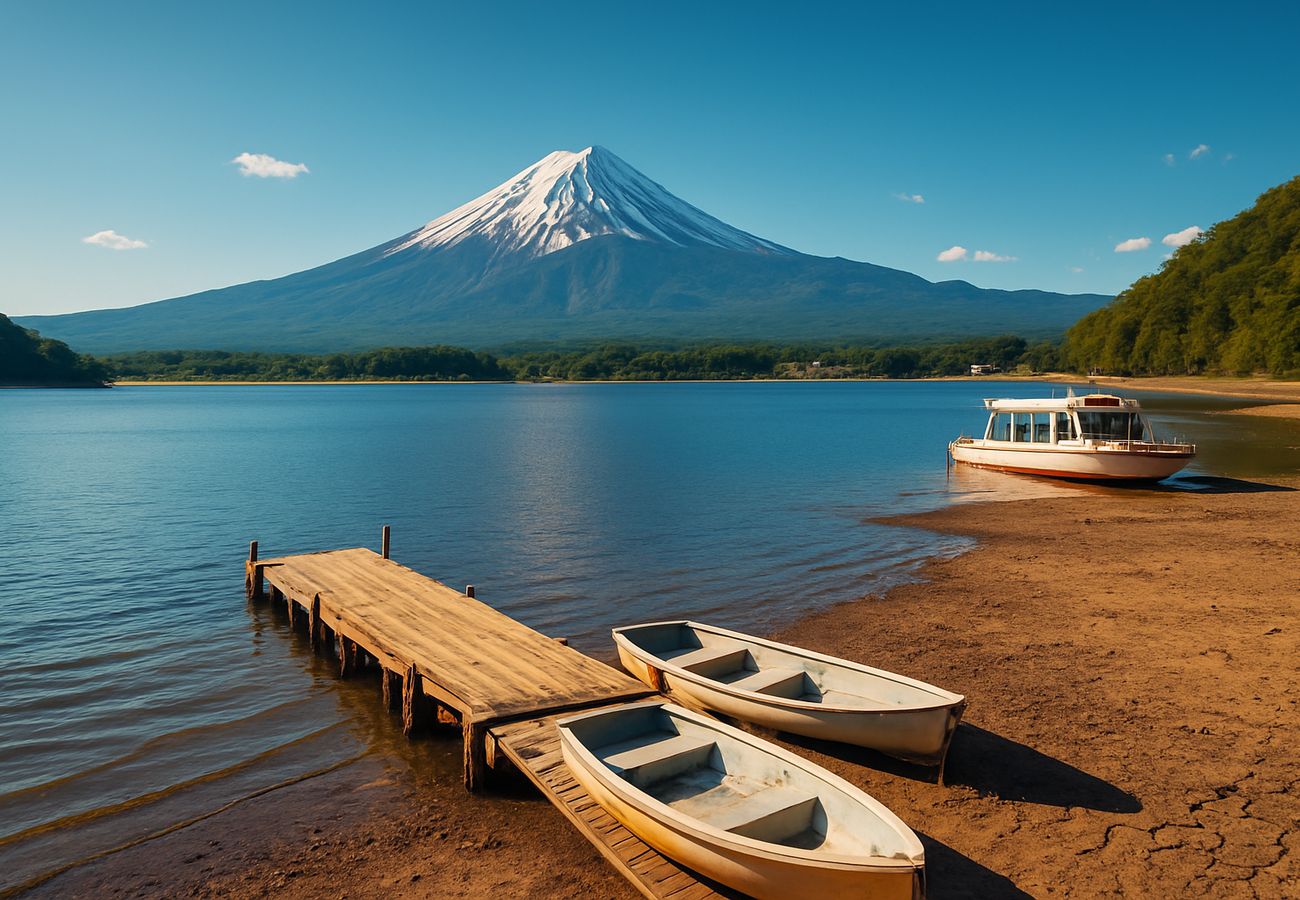
Image generated by AI
Quick Summary
- Japan’s 2026 Golden Week, traditionally the country's busiest travel period, is being marred by a severe water shortage crisis caused by record-low rainfall and reduced snowmelt.
- Lake Kawaguchi and Lake Chuzenji are experiencing significantly receding shorelines, forcing the suspension of sightseeing boat services and restricted access to major water-based attractions.
- The iconic onsen (hot spring) industry near Mount Fuji is facing operational strain, with many facilities forced to implement limited bathing hours or temporary closures to conserve dwindling resources.
- Local tourism businesses, including hotels and restaurants, are reporting a sharp decline in visitor engagement and revenue as environmental conditions disrupt peak holiday itineraries.
Japan’s most significant annual holiday period, Golden Week, is facing an unprecedented environmental challenge in 2026. A combination of unusually low rainfall and a lack of seasonal snowmelt has triggered a widespread water shortage crisis, specifically targeting the tourism-heavy regions surrounding Mount Fuji.
As of May 4, 2026, the drying shores of Lake Kawaguchi and Lake Chuzenji have become symbols of the disruption, with the environmental strain casting a long shadow over the peak travel season for both domestic and international visitors.
Receding Waters at Lake Kawaguchi and Lake Chuzenji
The Five Lakes region, a cornerstone of Japanese tourism, is the epicenter of the current crisis. At Lake Kawaguchi, the receding water levels have rendered many docking facilities unusable for sightseeing boats.
- Operational Suspensions: Numerous sightseeing boat operators have been forced to cancel or significantly reduce their service frequency due to safety concerns and insufficient water depth for navigation.
- Accessibility Issues: Visitors are encountering restricted access to several shoreline recreational zones, drastically altering the traditional Golden Week experience.
- Lake Chuzenji: Similar conditions at Lake Chuzenji have led to temporary suspensions of ferry services, impacting the flow of tourists through the Nikko National Park area.
Impact on the Onsen (Hot Spring) Sector
Japan’s world-renowned onsen industry is also grappling with the fallout. Facilities in the Fuji Five Lakes district and broader Yamanashi Prefecture have reported a sharp decline in water supply.
To manage the scarcity, many high-end ryokans and public bathhouses have implemented emergency measures:
- Restricted Hours: Bathing facilities are increasingly limiting their operating hours to peak periods only.
- Partial Closures: Some establishments have temporarily closed specific open-air baths (rotenburo) or saunas to prioritize water conservation for essential services.
These disruptions are particularly impactful as hot spring visits are a primary draw for travelers during the Golden Week holidays, leading to shorter stays and a drop in overall visitor satisfaction.
Economic Strain on Local Tourism Businesses
The combined effect of reduced service availability and altered landscapes has created a challenging economic environment for local stakeholders.
Hotels and Restaurants: Hospitality providers have reported a noticeable decrease in walk-in customer activity. The inability to offer standard water-based activities or full onsen experiences has led to a wave of last-minute cancellations. Operational Costs: Businesses are facing increased costs associated with adapting to the shortage, including hauling in alternative water supplies or investing in emergency resource management infrastructure.
Long-Term Resilience and Sustainable Tourism
Tourism authorities and environmental experts suggest that the 2026 crisis is a symptom of broader climate variability. The frequency of such "low-melt" years is expected to increase, prompting calls for more robust long-term resource management strategies.
Local governments have introduced public awareness campaigns to encourage responsible water usage among visitors. Furthermore, there is a growing emphasis on diversifying Japan's tourism offerings to reduce dependency on water-sensitive natural attractions.
As Golden Week 2026 draws to a close, the focus remains on supporting affected businesses and developing sustainable infrastructure to ensure that Japan's natural icons, like Mount Fuji, remain resilient in the face of future environmental fluctuations.
FAQ: Japan Golden Week Water Shortage 2026
Are sightseeing boats running at Lake Kawaguchi? Many boat services at Lake Kawaguchi are currently suspended or operating on a highly restricted schedule due to dangerously low water levels. Travelers should check with individual operators for real-time status.
Are hot springs (onsens) near Mount Fuji closed? While most remain open, many are operating with limited hours or have closed specific sections of their facilities to conserve water. It is recommended to contact your accommodation directly for their specific bathing policies.
Will the water shortage affect travel to other parts of Japan? The most severe disruptions are currently concentrated in the regions surrounding Mount Fuji, though some impacts on water-based activities have been reported in Nikko and other highland areas.
Related Travel Guides
Disclaimer
This article is for informational and educational purposes only. It does not constitute legal, financial, or professional advice. While we strive to provide accurate and up-to-date information, travel policies, regulations, and conditions change rapidly. Always verify information with official sources before making travel decisions. Nomad Lawyer makes no representations about the accuracy, reliability, completeness, or suitability of the information provided. Readers should consult qualified professionals for advice specific to their circumstances. The views expressed in this article are those of the author and do not necessarily reflect the views of Nomad Lawyer.
Kunal K Choudhary
Co-Founder & Contributor
A passionate traveller and tech enthusiast. Kunal contributes to the vision and growth of Nomad Lawyer, bringing fresh perspectives and driving the community forward.
Learn more about our team →