
Te Matau a Pohe Bridge Closure: Iconic Whangārei Landmark Shut Down Over Structural Cracks
Whangārei's iconic Te Matau a Pohe bridge has been indefinitely closed to vehicles and pedestrians after engineers discovered cracks in its distinctive fishhook steel structure.

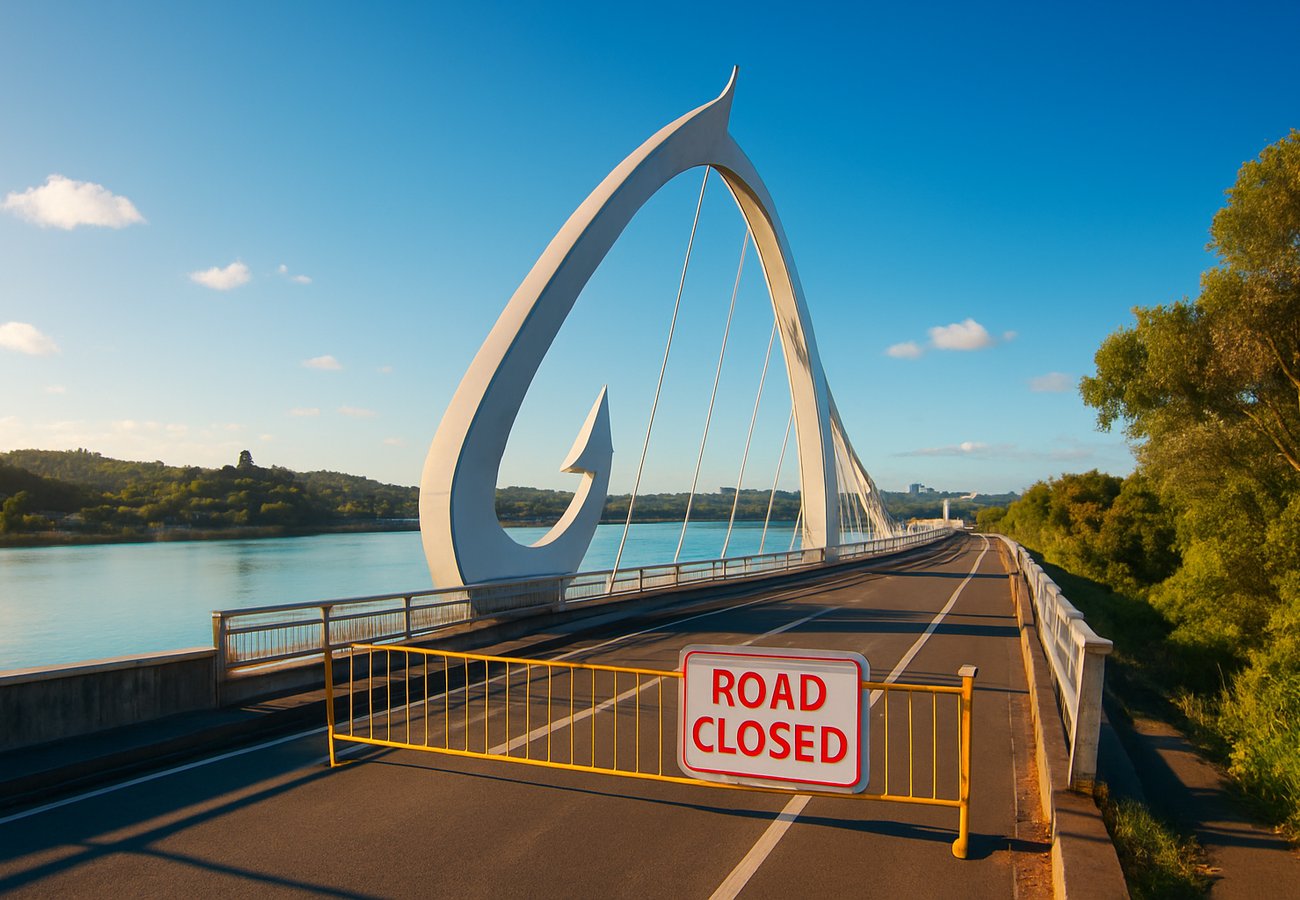
Image generated by AI
Quick Summary
- The Whangārei District Council has officially closed the Te Matau a Pohe bridge indefinitely following the discovery of structural cracks in its iconic "fishhook" steel arches.
- The bridge, a vital link spanning the Hātea River since 2013, is now prohibited to both vehicles and pedestrians while engineers conduct emergency forensic inspections.
- Commuters and tourists are facing significant delays, with traffic being rerouted to the Wellington Street bridge and Kensington Avenue.
- Local authorities have emphasized that the shutdown is a precautionary measure to ensure public safety, though the timeline for repairs remains unconfirmed.
The Te Matau a Pohe bridge, one of New Zealand’s most recognizable maritime landmarks, has been abruptly shut down after engineers identified structural cracks in its distinctive fishhook components.
The closure of the bridge, which connects Whangārei’s central business district to its eastern suburbs, has triggered widespread travel disruptions across the Northland region. As a key artery for both local commuters and the region's tourism industry, the loss of the Hātea River crossing is creating significant bottlenecks during peak travel hours.
The Discovery: Cracks in the Fishhook Structure
Completed in 2013, the Te Matau a Pohe bridge is celebrated for its award-winning design, featuring rolling bascule arches shaped like traditional Māori fishhooks (hei matau). However, recent routine inspections revealed hairline fractures within the steel components of these arches.
Despite a decade of structural integrity, the Whangārei District Council moved to close the bridge immediately on May 4, 2026. Engineers are currently on-site performing non-destructive testing to determine the depth and severity of the cracks. Until a comprehensive repair plan is finalized and the "fishhook" structures are deemed safe, the bridge will remain closed to all traffic, including foot traffic and cyclists.
Impact on Local Travel and Tourism
The bridge is more than just a transportation link; it is a centerpiece of Whangārei tourism.
For Travelers and Tourists: Visitors to Whangārei often include the bridge in their itineraries due to its unique aesthetics and the panoramic views it offers of the Town Basin. The sudden closure has forced tour operators to alter sightseeing routes. Those staying in local accommodations near the waterfront are advised to allow for extra transit time when heading toward coastal attractions or the CBD.
For Local Commuters: With the Hātea River effectively cut in half at this crossing, the local transport network is under immense strain. Public bus services have been rerouted, and travel times for cross-city trips have increased by an estimated 15 to 25 minutes during peak morning and evening periods.
Alternative Routes and Traffic Management
To manage the displaced volume of vehicles, the council has implemented a temporary traffic management plan. Drivers are being directed to use the following alternative routes:
| Alternative Route | Expected Impact |
|---|---|
| Wellington Street Bridge | Heavy congestion; primary detour for CBD-bound traffic. |
| Kensington Avenue | Increased volume; recommended for northern suburb residents. |
| Western Hills Drive (SH1) | Expected delays as traffic avoids the central basin area. |
Authorities are encouraging locals to carpool or use off-peak times where possible to alleviate the pressure on the Wellington Street corridor.
Economic and Long-Term Implications
The Whangārei District Council is working closely with local business associations and Northland tourism boards to mitigate the economic fallout. The bridge is a symbol of the city’s modernization, and its absence is expected to impact foot traffic at the Town Basin’s retail and hospitality hubs.
Safety remains the council's top priority. "While we understand the inconvenience this causes for the community and our visitors, we cannot compromise on the structural safety of an icon like Te Matau a Pohe," a council spokesperson stated. Regular updates are expected as the engineering reports are finalized.
FAQ: Te Matau a Pohe Bridge Closure 2026
Why is the Te Matau a Pohe bridge closed? The bridge was closed on May 4, 2026, after structural cracks were discovered in the steel fishhook arches. It is closed as a safety precaution while repairs are assessed.
What are the detour routes for Whangārei drivers? Motorists should use the Wellington Street bridge or Kensington Avenue as primary detours. Expect significant delays during peak hours.
How long will the bridge remain shut? The Whangārei District Council has not yet provided a definitive reopening date, stating the bridge will remain closed for the "foreseeable future" until repairs are complete.
Related Travel Guides
Disclaimer
This article is for informational and educational purposes only. It does not constitute legal, financial, or professional advice. While we strive to provide accurate and up-to-date information, travel policies, regulations, and conditions change rapidly. Always verify information with official sources before making travel decisions. Nomad Lawyer makes no representations about the accuracy, reliability, completeness, or suitability of the information provided. Readers should consult qualified professionals for advice specific to their circumstances. The views expressed in this article are those of the author and do not necessarily reflect the views of Nomad Lawyer.
Kunal K Choudhary
Co-Founder & Contributor
A passionate traveller and tech enthusiast. Kunal contributes to the vision and growth of Nomad Lawyer, bringing fresh perspectives and driving the community forward.
Learn more about our team →