
The One Million Milestone: How Australia’s Love Affair with Japan Is Redrawing Asia-Pacific Travel
As 990,950 Australian travelers visit Japan by July 2026, the country stands on the brink of a historic one-million-visitor milestone, transforming winter ski trails, regional rail circuits, and cultural travel across the archipelago.

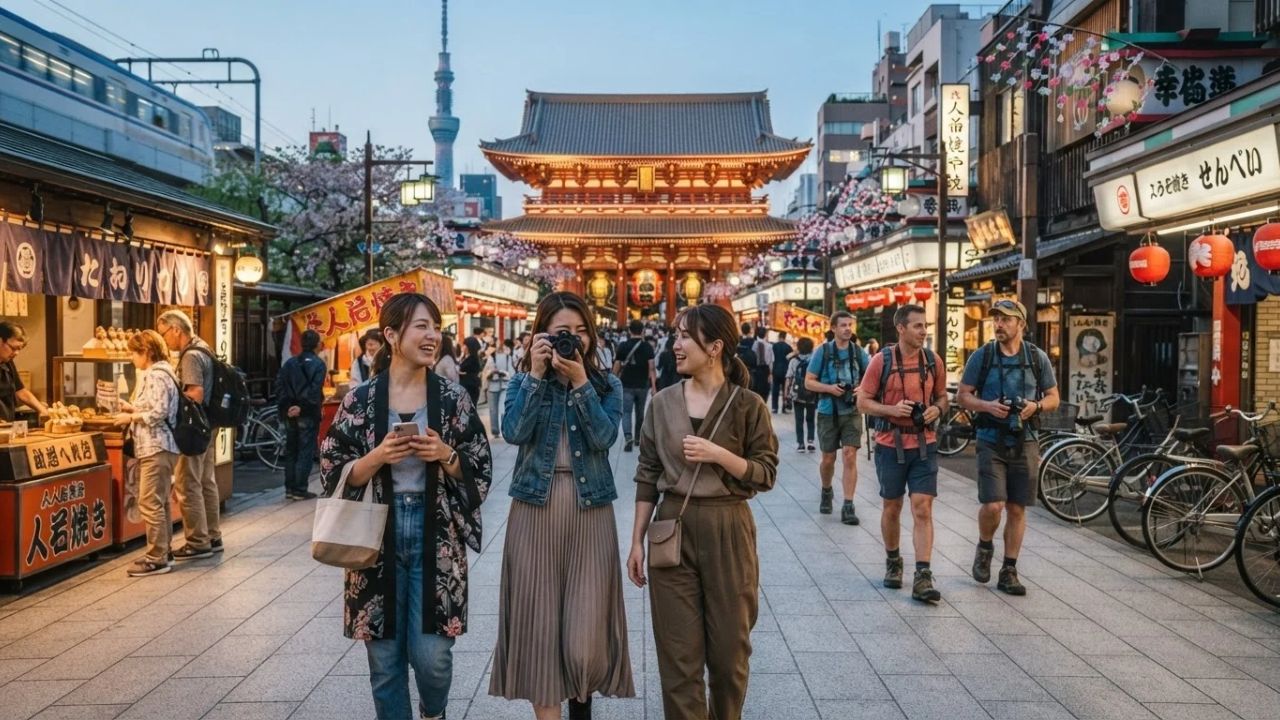
Japan approaches a historic milestone as Australian travelers expand beyond conventional city routes into regional highlands
By July 2026, an astounding 990,950 Australian voyagers had landed in Japan—bringing the island nation within a razor-thin margin of crossing the historic one-million-visitor threshold in a single reporting cycle. According to the latest Travel Trends Report published by the Australian Travel Industry Association (ATIA), drawn from official figures compiled by the Australian Bureau of Statistics and the Department of Infrastructure, this surge reflects an unprecedented appetite for Japanese culture, gastronomy, and alpine adventures. In a season where overall Australian outbound departures expanded by 3.5 per cent to reach 12.76 million overseas journeys, Japan has cemented its status as the preeminent cultural fascination for southern hemisphere wanderers, trailing only traditional tropical holiday mainstays like Indonesia, which recorded 1.79 million visits.
Yet the story behind this million-traveler milestone is not merely about sheer numbers crowding the Shibuya scramble crossing or queuing for photo opportunities at Kyoto's Fushimi Inari shrine. What began decades ago as a seasonal winter pilgrimage for powder hounds chasing legendary snowfall in Niseko and Hakuba has evolved into a year-round, nationwide cultural immersion. Australians are venturing into lesser-known prefectures, boarding bullet trains toward the volcanic calderas of Kyushu, walking centuries-old pilgrimage trails through Wakayama's sacred cedar groves, and staying in traditional rural inns across Tohoku.
The Asia-Pacific Travel Reshuffle: Japan's Ascent Amid Shifting Regional Corridors
The record-setting influx into Japan is part of a broader structural transformation across Asia-Pacific aviation and leisure travel. While inbound overseas arrivals into Australia grew by 6.9 per cent to reach 9.07 million visitors—anchored by 1.43 million arrivals from neighboring New Zealand and a 17.6 per cent leap in Chinese travelers to 1,131,650—Australian travelers themselves are redistributing their global wanderlust. Outbound travel to Mainland China rebounded by 13.4 per cent to reach 749,130 departures, while Vietnam emerged as the fastest-growing holiday market visited by Australians, leaping 15.9 per cent to 577,880 trips as travelers flocked to Da Nang, Hanoi, and southern beach districts.
Aviation capacity has shifted rapidly to support this sustained passenger movement. International carriers like Qantas and Jetstar continue to transport approximately one-third of all international passengers entering and leaving Australia, while Asian network carriers have aggressively expanded their reach. Malaysia Airlines, for instance, increased its international market share from 2.4 per cent to 3.9 per cent by funneling long-haul traffic through regional transit hubs. Domestically within Australia, passenger loads strengthened across nine of the nation's ten busiest air routes, underscoring resilient consumer confidence in discretionary travel.
Within this competitive environment, Japan's magnetic draw remains distinct. Travelers are moving past standard package itineraries. Driven by a favorable yen exchange rate, safe urban environments, world-class culinary standards, and an unmatched public transit network, Australian visitors are seeking depth over superficial sightseeing. They are trading crowded tour coaches for independent rail journeys, discovering that Japan's greatest rewards lie in quiet station towns where steam rises from roadside hot-spring vents and multigenerational soba masters hand-cut buckwheat noodles before dawn.
What Makes Japan's Regional Corridors Different: Beyond the Golden Route
The classic Golden Route connecting Tokyo, Kyoto, and Osaka continues to face significant overtourism pressures. In response, discerning travelers are charting alternative pathways that reveal the archipelago's true regional diversity. Moving north into Tohoku, one encounters an older, wilder Japan. In prefectures like Akita and Yamagata, ancient cedar forests shelter mountain temples, and steaming outdoor hot springs (rotenburo) overlook roaring river gorges. In autumn, mountain slopes blaze with brilliant scarlet maple leaves (koyo), completely free of the bus tour crowds that choke central Kyoto.
To the west, the Kii Peninsula offers the ancient Kumano Kodo pilgrimage trails, inscribed under the UNESCO World Heritage Centre. Hiking between sacred shrines along moss-covered stone staircases, travelers stay in family-run temple lodgings (shukubo) on Mount Koya, dining on delicate Buddhist vegetarian cuisine (shojin ryori) and participating in dawn fire ceremonies with Shingon monks. In the Seto Inland Sea, the tranquil art islands of Naoshima, Teshima, and Inujima merge cutting-edge contemporary art pavilions with sleepy fishing hamlets, where visitors pedal electric bicycles through quiet coastal lanes lined with weathered timber houses.
Even in Japan's culinary capital, the experience changes when approached through a local lens. While tourists line up for hours at famous department store restaurants, local life unfolds in neighborhood shotengai (covered shopping arcades) and tucked-away yokocho (narrow lantern-lit drinking alleys). In Osaka's retro Shinsekai or Tokyo's Yanaka district, standing bars (tachinomi) serve sizzling skewers of grilled chicken (yakitori) and seasonal draft sake, accompanied by warm neighborhood banter that dissolves language barriers.
Visitor Insider Tips: Navigating Japan with Local Knowledge
- Bypass Overcrowded Kyoto for Kanazawa or Takayama: If you crave historic Edo-period wooden architecture, geisha tea houses, and exquisite craft traditions without the suffocating crowds of Gion, redirect your itinerary to Kanazawa on the Sea of Japan coast. Accessible via the Hokuriku Shinkansen from Tokyo in just two and a half hours, Kanazawa features preserved samurai quarters in Nagamachi, the pristine Kenroku-en garden, and fresh seafood stalls at Omicho Market.
- Master Luggage Forwarding with Takkyubin: Never haul oversized suitcases onto regional trains or through crowded subway turnstiles. Use Japan's nationwide baggage courier service, operated by Yamato Transport (the black cat logo). Hotels and convenience stores like 7-Eleven and Lawson will forward your heavy bags directly to your next accommodation anywhere in the country for around twenty dollars per bag, freeing you to travel light on scenic regional railways.
- Integrate Digital IC Transit Cards onto Your Smartphone: Skip the ticket vending machines entirely by loading a digital transit card—such as Suica, Pasmo, or ICOCA—directly into your smartphone's digital wallet before arrival. You can tap through automated gates on subways, city buses, and local suburban trains across the country, as well as pay for vending machine drinks, station lockers, and convenience store snacks with a single tap.
- Embrace Onsen Etiquette with Care: Hot-spring bathing is a sacred ritual governed by strict cleanliness rules. Always wash thoroughly with soap and rinse completely at the low seated shower stations before stepping into communal thermal pools. Never dip towels or hair into the bathwater. If you have visible tattoos, research tattoo-friendly onsen establishments in advance or book a traditional ryokan featuring a private outdoor bath (kashikiri-buro).
- Consult Official Regional Portals for Seasonal Festivals: Check seasonal festival schedules and off-peak travel recommendations directly through the Japan National Tourism Organization. Planning your visits around shoulder seasons—such as late May after Golden Week, or early November before winter snowfall—ensures pleasant weather, lower lodging tariffs, and relaxed encounters with local artisans.
Cultural and Environmental Context: Sustainable Tourism in the Japanese Countryside
The extraordinary influx of nearly one million Australian travelers highlights the delicate balance between economic vitality and the preservation of living cultural heritage. In hyper-popular hubs like Kyoto, local municipal authorities have enacted tourist access restrictions on private residential alleys in preservation districts to safeguard geiko and maiko from aggressive photography. Overtourism has placed strains on public bus networks, leading local governments to encourage travelers to utilize rail links like East Japan Railway Company (JR East) and designated express transit routes.
Conversely, in rural and regional Japan, tourism is playing an essential role in combating rural depopulation (depopulation and aging communities). As younger generations migrate to major metropolitan centers, historic farmhouses (kominka), village craft workshops, and terraced rice paddies risk abandonment. Sustainable tourism initiatives across Shikoku, Tohoku, and rural Nagano are breathing new economic life into these traditional communities. By renovating centuries-old thatched-roof farmhouses into boutique heritage stays, supporting independent sake breweries, and hiring village guides, international visitors help preserve living traditions that might otherwise disappear.
Mindful travelers recognize that true luxury in Japan lies in respecting local rhythms. By speaking softly on public transport, carrying pocket trash bags to transport personal rubbish back to hotel rooms, patronizing independent artisans, and venturing beyond saturated tourist centers, travelers ensure that Japan's profound cultural gifts remain vibrant for generations to come.
FAQ: Visiting Japan in 2026
What is the primary factor driving Australian visitor numbers toward one million? A powerful combination of expanded direct flight capacity, a highly competitive exchange rate, safe travel conditions, and a deep appreciation for Japanese culinary, alpine, and seasonal attractions drives this record surge.
How can travelers avoid crowds in Tokyo and Kyoto? Visit major shrines at sunrise before tour coaches arrive, explore lesser-known neighborhoods like Yanaka, Tomigaya, or Uji, and redirect time toward regional cultural cities like Kanazawa, Matsue, or Takayama.
Do Australian citizens need a visa to travel to Japan for tourism? Australian passport holders traveling to Japan for short-term tourism do not require a visa for stays up to 90 days. Travelers must simply ensure their passport is valid for the duration of their stay.
What is the best way to travel long distances between Japanese cities? Japan's high-speed Shinkansen (bullet train) network remains the fastest, most punctual, and most scenic transport method. Book tickets and reserved seats in advance, especially when traveling with oversized luggage.
From the snow-powdered birch forests of Hokkaido to the lantern-lit stone alleys of old coastal provinces, Japan rewards those who venture beyond the crowd with moments of quiet, enduring beauty.
Related Travel Guides
Disclaimer
This article is for informational and educational purposes only. It does not constitute legal, financial, or professional advice. While we strive to provide accurate and up-to-date information, travel policies, regulations, and conditions change rapidly. Always verify information with official sources before making travel decisions. Nomad Lawyer makes no representations about the accuracy, reliability, completeness, or suitability of the information provided. Readers should consult qualified professionals for advice specific to their circumstances. The views expressed in this article are those of the author and do not necessarily reflect the views of Nomad Lawyer.
Raushan Kumar
Founder & Lead Developer
Full-stack developer with 11+ years of experience and a passionate traveller. Raushan built Nomad Lawyer from the ground up with a vision to create the best travel and law experience on the web.
Learn more about our team →