Japan and Vietnam Align With Many Others as Asia Hotel Performance Strengthens on Rising Arrivals and RevPAR

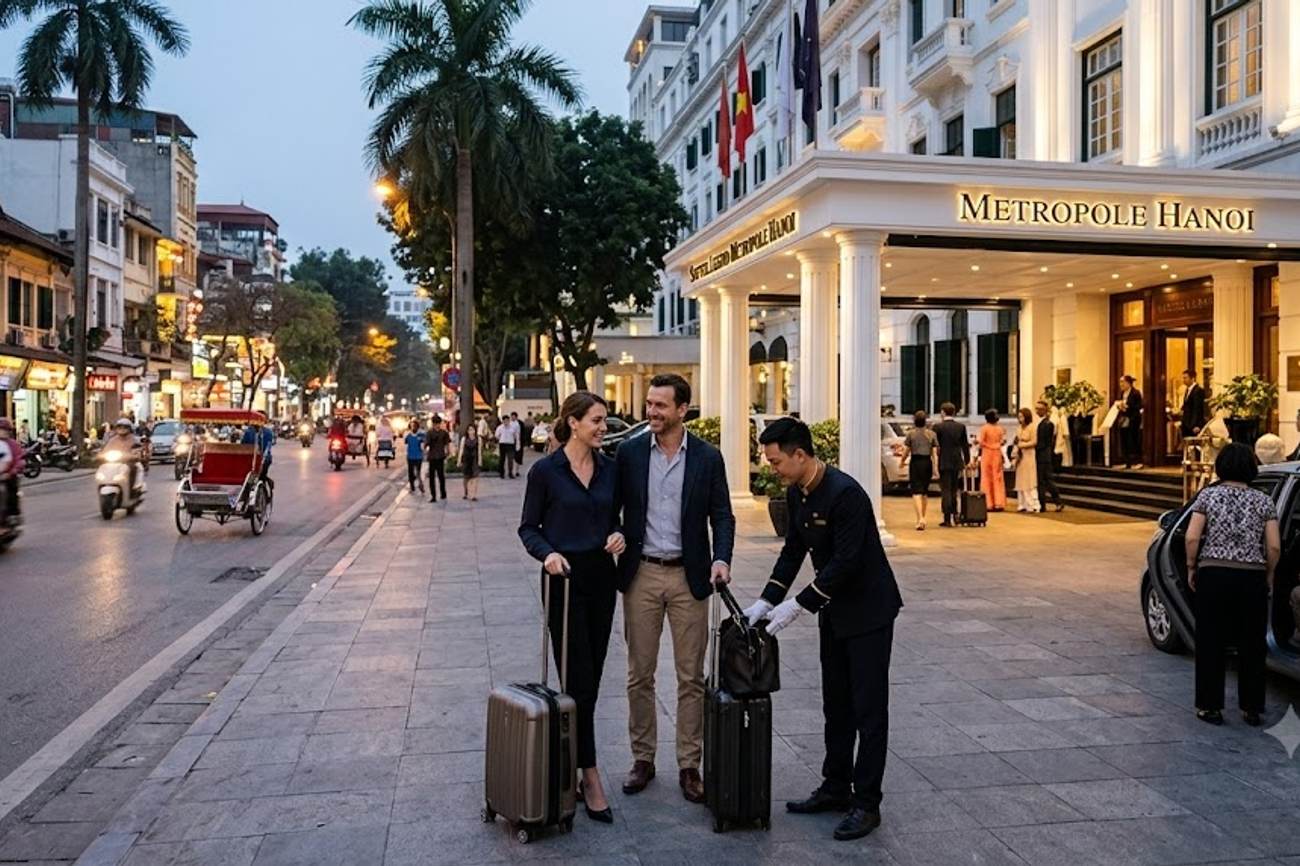
Image generated by AI
[Tokyo, May 2026] — Japan, Vietnam, and South Korea have entered a high-growth phase of the Asian hotel cycle, driven by record-breaking inbound tourism and a surge in room demand that is fundamentally reshaping pricing power across the region. While visitor volume is the primary catalyst, data indicates that each nation is employing a distinct economic model to convert these arrivals into hotel revenue, with Japan leading in pricing power and Vietnam dominating in growth velocity.
The shift is underscored by 2025 data showing Japan welcoming 42.68 million international visitors, Vietnam attracting nearly 21.2 million, and South Korea reaching 18.93 million. According to analysis from CBRE, these three markets are positioned among the strongest in the Asia-Pacific region for Revenue Per Available Room (RevPAR) growth. The trend is continuing into 2026, with Vietnam and South Korea specifically outperforming regional benchmarks in the first half of the year.
The Catalyst for Regional Hotel Expansion
The current boom is not a uniform surge but the result of three separate economic engines. Japan’s growth is characterized by a massive scale of arrivals—roughly double that of Vietnam and South Korea—and a strategic ability to raise room rates. In 2025, Japan’s arrivals grew by 15.8% year-on-year, adding 5.8 million visitors compared to 2024.
Vietnam is operating on a high-velocity model. Its inbound market expanded by 20.4% in 2025, pushing visitor numbers approximately 18–19% above 2019 levels. This growth is heavily reliant on aviation, with air travelers constituting 84.3% of all foreign arrivals.
South Korea is pursuing a diversification strategy. After hitting a record 18.93 million visitors in 2025 (surpassing the 2019 mark of 17.5 million), the government has focused on expanding its geographic footprint. In the first half of 2026, South Korea saw a 20.2% increase in European arrivals and a 12.7% rise in visitors from the Americas, reducing the country's historical reliance on short-haul Asian markets.
Markets and Metrics: The Impact Breakdown
The following data outlines the specific performance metrics for the three primary markets:
| Market | 2025 International Arrivals | Annual Change | Status vs. 2019 |
|---|---|---|---|
| Japan | 42.68 Million | +15.8% | Record High |
| Vietnam | Nearly 21.2 Million | +20.4% | 18–19% Above |
| South Korea | 18.93 Million | Record Year | 8.2% Above |
Japan: Pricing Power and Urban Pressure
Japan is successfully converting volume into higher Average Daily Rates (ADR). In the first half of 2025, hotel ADR rose by 16.9% year-on-year. This is supported by a favorable currency environment and a massive influx of foreign guests, who accounted for 179.92 million guest nights in 2025—a 9.4% increase.
While the national occupancy rate sat at 61.6%, the reality for travelers is far more constrained in urban centers. Business hotels hit 75.3% occupancy and city hotels reached 74.1%, indicating severe capacity pressure in hubs like Tokyo, Osaka, and Kyoto.
Vietnam: Volume to Value Transition
Vietnam is shifting its focus from simply attracting more people to attracting higher-spending guests. In 2025, the country generated VND843.1 trillion in accommodation and food-service revenue (up 14.6%) and VND93.9 trillion in travel-service revenue (up 20.2%).
Current data from STR/CoStar indicates a national occupancy rate of 68.4% for 2025, with an ADR of approximately VND2.98 million. The momentum is accelerating; between January and July 2026, Vietnam welcomed 13.9 million visitors (up 13.8% year-on-year), putting the nation on a trajectory to hit its 25 million visitor target.
South Korea: The Diversification Play
South Korea is leveraging "K-content" and a weaker won to attract long-haul travelers. This strategy has yielded significant pricing gains; hotel ADR grew by 6.3% in the first half of 2025 and surged by 11.6% in the first half of 2026. By diversifying its source markets, South Korea is insulating its hotel sector from regional economic volatility.
Practical Traveler Advisory and Strategic Insights
For the average nomad or tourist, these corporate metrics translate into tangible changes in how they book and pay for accommodation.
Japan is experiencing a significant surge in hotel RevPAR as international visitor numbers climb toward record highs. Travelers can find detailed entry requirements and regional guides through the Japan National Tourism Organization to navigate the country's strengthening hospitality sector.
1. Extreme Price Volatility in Japan Because Japan is prioritizing "rate optimization," travelers should expect sharp price spikes during peak seasons and weekends. The divergence between national occupancy (61.6%) and city hotel occupancy (74.1%) means that booking a hotel in Tokyo or Kyoto will be significantly more expensive and difficult than booking in regional prefectures. Travelers are encouraged to look toward emerging regional markets outside the "Golden Route" to find better value.
2. The Rise of Luxury in Vietnam Vietnam is aggressively expanding its branded-luxury supply. While budget options remain, the market is pivoting toward "visitor value." Travelers will notice a rapid increase in five-star international brands, which may drive up the average cost of mid-tier accommodation as the market matures.
3. Greater Availability in South Korea South Korea's push for a wider demand base means that while prices are rising (ADR up 11.6% in H1 2026), the growth is more distributed. Travelers may find more consistent pricing across different types of accommodation as the country moves away from a reliance on a few specific source markets.
The 2026 Outlook and Beyond
The industry is now monitoring RevPAR (Revenue Per Available Room) as the definitive health metric. While occupancy shows if rooms are full, and ADR shows the price, RevPAR reveals if the hotel is actually making more money.
In Japan, the focus is shifting toward regional dispersion. Investors are moving capital away from the saturated Tokyo-Osaka-Kyoto triangle to capture the next wave of tourism. In Vietnam, the goal is the 25 million visitor milestone, which will require continued expansion of international aviation capacity to sustain hotel occupancy.
South Korea will continue to lean into its cultural exports to maintain its ADR growth. The combination of a weak currency and high-demand "K-Wave" attractions suggests that pricing will remain firm through the end of 2026.
FAQ: East Asia Hotel Trends 2026
Why are hotel prices rising so quickly in Japan? Prices are climbing due to a combination of record-breaking visitor numbers (42.68 million in 2025) and a favorable exchange rate that makes Japan attractive to foreigners, allowing hotels to implement aggressive rate optimization.
Is it still affordable to visit Vietnam? While Vietnam remains competitive, the market is shifting toward luxury and branded-luxury supply. With ADR around VND2.98 million and a push for "visitor value," mid-to-high-end accommodation costs are increasing.
Which cities in Japan are the most crowded? Tokyo, Osaka, and Kyoto are experiencing the highest pressure. While the national occupancy is 61.6%, city hotels in these hubs are seeing rates as high as 74.1%, leading to limited availability.
How has South Korea changed its tourism approach? South Korea is diversifying its visitor base to reduce reliance on nearby Asian countries. This is evident in the 20.2% increase in European arrivals and 12.7% increase in American arrivals in early 2026.
The era of cheap urban stays in East Asia is closing as volume transforms into pricing power.
Related Travel Guides
This article is for informational purposes. Flight routes, passenger regulations, visa rules, and transit advisories are subject to change by airlines and aviation authorities. Readers are advised to verify schedules and travel documentation with relevant carriers and border agencies before departure.
Related Stories

Kyoto Hotel Rates Climb as Occupancy Slips: How Japan's New Tiered Accommodation Tax and Regional Shifts Impact Travel Budgets

EU Probes Booking.com Under Digital Services Act Over Fake Hotel Listings, Hijacked Reservations, and Search Ranking Transparency