ITILITE Integrates Voice AI for US-India Corporate Travel: Streamlining Bookings and Expense Compliance in 2026

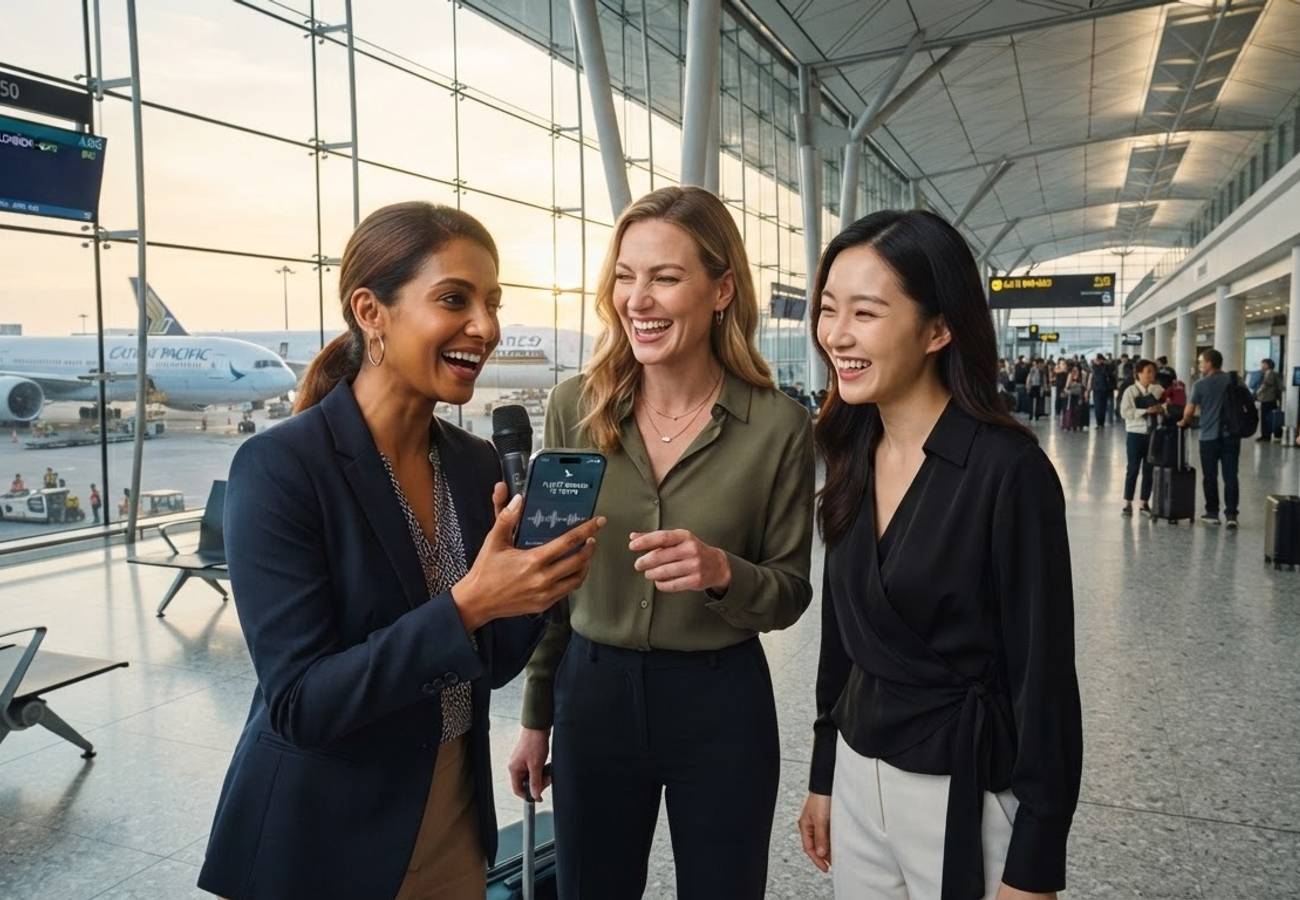
Image generated by AI
Corporate travel management is shifting toward natural-language interfaces to reduce booking friction and improve policy adherence. ITILITE has now positioned voice technology at the center of its travel and expense (T&E) workflow, allowing users to convert spoken trip requirements into filtered flight and hotel results.
The platform enables travelers to bypass manual data entry for origins, destinations, dates, and cabin classes. By utilizing a microphone-integrated interface, the system transcribes requests and populates the necessary search fields, requesting clarification if any detail remains ambiguous.
This technological rollout is supported by a strategic operational footprint in Claymont, Delaware, and Bengaluru, Karnataka. While not a government partnership, this cross-border presence allows ITILITE to serve the high-volume US mid-market while leveraging India's robust enterprise technology ecosystem.
Voice AI Capabilities and Implementation Roadmap
The current deployment focuses on immediate utility, with a reported voice-search time of just 30 seconds. All voice-initiated bookings remain subject to existing corporate approval workflows and policy filters to ensure financial control is not bypassed for the sake of speed.
The system is currently available across desktop, iOS, and Android platforms. Beyond booking, the AI extends into the financial backend, allowing for voice-created expenses and the ability for finance teams to establish audit rules using plain English.
Current Feature Status and Future Development
| Capability | Status (July 11, 2026) | Operational Function |
|---|---|---|
| Voice-led flight search | Live | Captures origin, destination, dates, trip type, and cabin preference |
| Voice-led hotel search | Live | Transfers destination and stay dates into hotel results |
| Policy-filtered results | Live | Filters travel options through the company policy engine |
| Mobile voice booking | Live | Microphone functionality available via mobile app |
| Voice expense creation | Live | Spoken entry for eligible small expenses |
| Multi-receipt AI | Live | Separates, matches, and codes batches of uploaded receipts |
| Customer-authored audit rules | Live | Converts plain English finance instructions into receipt checks |
| Exit-row availability search | Future Direction | Detailed search capability currently under development |
| Transit-visa-aware routing | Future Direction | Natural-language research and search function |
Strategic Market Positioning: United States and India
The operational link between Delaware and Bengaluru is commercially significant. The US represents the world's largest business travel spending market, while India is one of the fastest-growing, providing a dual-pronged approach to market penetration.
The US Economic Impact of Business Travel
The scale of the US market underscores the necessity for high-adoption tools. According to the latest GBTA economic-impact study, US business travel spending reached $538.5 billion in 2024, a 7.5% increase from $501.1 billion in 2023.
| US Business Travel Indicator | Latest Figure | Strategic Relevance |
|---|---|---|
| Destination spending | $538.5 billion | High volume for managed booking platforms |
| Business trips | Nearly 488 million | High transaction frequency favors faster interfaces |
| Meetings and events spending | $217.8 billion | Complex group travel requires better cost visibility |
| Jobs supported | 6.7 million | Highlights the economic scale of business mobility |
| Tax revenue generated | $148.6 billion | Significant public-finance contribution |
| GDP impact | $623.8 billion | Confirms corporate travel's role in wider economic output |
India's Growth Trajectory in 2026
India is projected to generate $48.3 billion in business travel spending in 2026, ranking sixth globally. The market is expected to grow by 12.5% year-on-year.
Research from GBTA and Visa indicates a strong appetite for modernization: 69% of Indian travel buyers expect growth in domestic programs, and 68% anticipate increased international travel. However, only 38% rate their current programs as highly mature, leaving a significant gap for ITILITE’s automation tools.
This growth is part of a broader Asia-Pacific trend, with the regional business travel economy forecast to reach $700.9 billion in 2026, growing by 10.9%.
Closing the Loop on Expense Compliance
The integration of Voice AI extends beyond the initial booking to the final audit. ITILITE’s multi-receipt AI automates the separation and coding of uploaded receipts, while voice entry handles small expenses that do not require documentation under specific company policies.
The most significant shift for finance departments is the move toward plain-English audit rules. Rather than selecting from a rigid menu of software checkboxes, administrators can write instructions in natural language, which the AI then converts into active compliance checks. This reduces the technical barrier to maintaining strict financial oversight.
By removing the friction of manual entry, Voice AI transforms the corporate travel policy from a hurdle into a seamless background process.
Related Travel Guides
This article is for informational purposes. Flight routes, passenger regulations, visa rules, and transit advisories are subject to change by airlines and aviation authorities. Readers are advised to verify schedules and travel documentation with relevant carriers and border agencies before departure.
Related Stories

Philippines Department of Tourism Launches Open Data Dashboard Tracking 4.41 Million International Arrivals and Economic Growth Metrics

Aridge Flying Cars Join Ras Al Khaimah Testing Hub to Advance UAE Aerial Tourism in 2026