
West Coast Border Chaos: Vancouver, Seattle, Portland, San Francisco, LAX Face Massive Delays as EES-Style Digital Systems Fail
Five major West Coast airports are buckling under the strain of new EES-style biometric border systems, creating four-hour queues and cascading flight delays across transpacific routes.

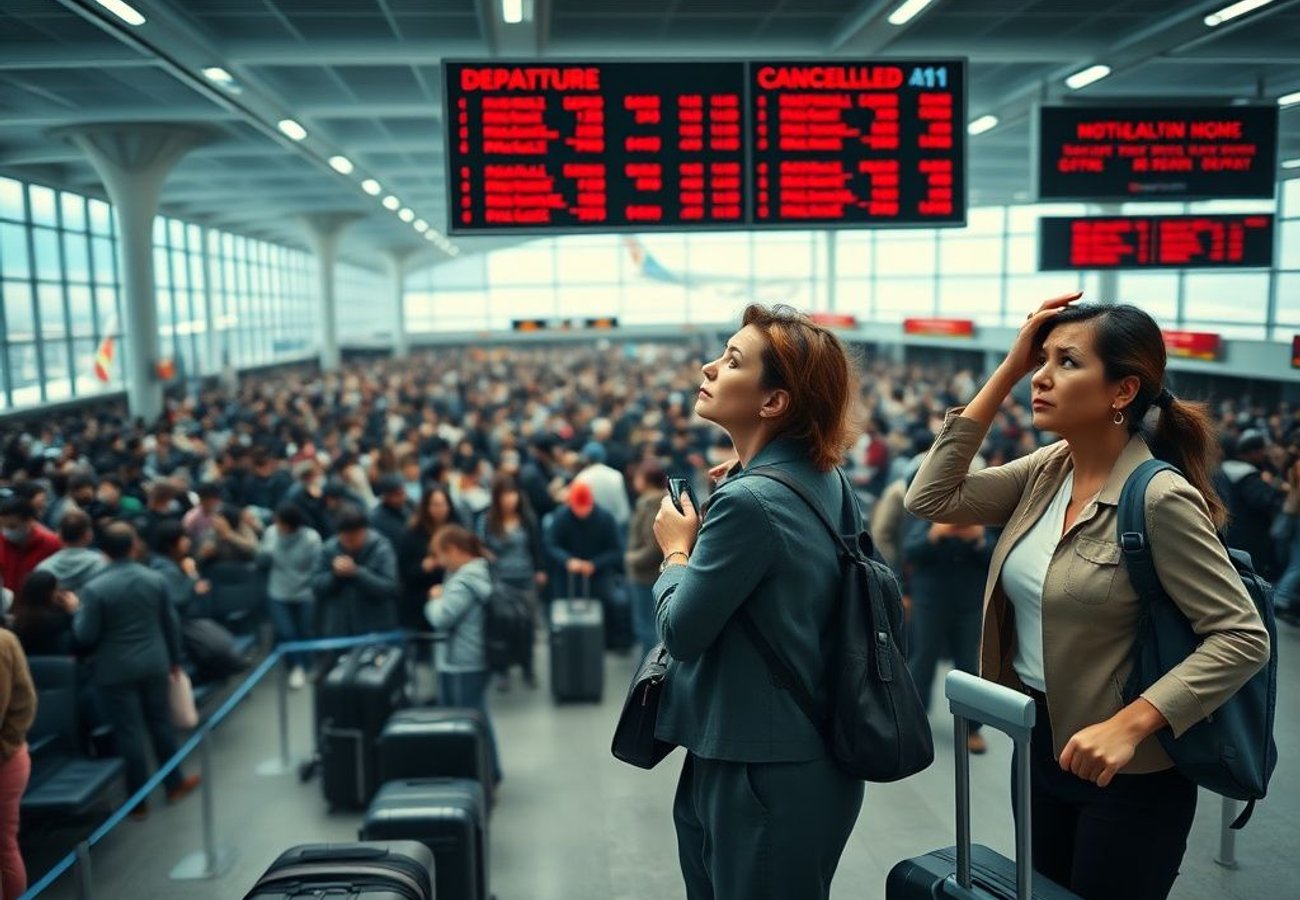
Image generated by AI
The Perfect Storm: Digital Border Systems Collide with Peak Summer Travel
As of June 20, 2026, the Pacific seaboard is experiencing what aviation authorities are calling an unprecedented technological catastrophe at its busiest international gateways. The culprit? A synchronized rollout of next-generation EES-style digital border tracking systems designed to eliminate physical passport stamping and enhance security. Instead, they've created a gridlocked nightmare.
Five major transpacific hubs are simultaneously buckling under the strain: Vancouver International (YVR), Seattle-Tacoma (SEA), Portland International (PDX), San Francisco International (SFO), and Los Angeles International (LAX). The result is a cascade of missed connections, grounded wide-body jets, and queues stretching four hours or longer into terminal concourses during peak arrival windows.
Reddit: "I was stuck at LAX for 6 hours waiting to clear the biometric gates. They kept rejecting my face scan. Meanwhile, I watched my connection to Auckland board without me." — r/travel
Why the Biometric Meltdown Happened Now
The root cause is deceptively simple: database chaos meeting passenger volume at exactly the wrong moment. Both U.S. and Canadian authorities mandated mandatory biometric verification for all non-citizen exits and entries this year, implementing what they call an Advanced Passenger Information (API) system modeled on the European Union's Entry/Exit System.
The architecture itself isn't flawed. But the execution is catastrophic.
When a traveler approaches a biometric e-gate, the system must cross-reference live facial scans with decentralized passport databases in real-time. During peak transpacific arrival banks—when six wide-body jets land simultaneously—the servers simply cannot handle the load. Network latency spikes, algorithms reject passengers at disproportionately high rates for certain demographics, and the entire express lane degrades into manual screening.
Compounding the disaster: travelers must now upload itineraries and health data into centralized government apps before boarding. Compliance failures are rampant. Passengers arriving without the proper digital tokens are automatically pulled into secondary screening, overwhelming already-understaffed border agents.
Hub-by-Hub Crisis Breakdown
Vancouver: The Cross-Border Integration Failure
Canada Border Services Agency (CBSA) has aggressively pushed a fully paperless border via its new Known Traveller Digital Identity (KTDI) framework. Canadian citizens process relatively smoothly. But transpacific transit passengers connecting to the U.S. face a different nightmare.
YVR serves as the primary funnel for East Asian travelers heading stateside. When Canada's KTDI system attempts to sync with U.S. Customs and Border Protection (CBP) preclearance databases, the API connections are failing spectacularly. On June 20 alone, processing times at YVR's U.S. preclearance facility exceeded four hours. Multiple airlines were forced to delay southbound departures by up to two hours to accommodate the gridlock.
Seattle and Portland: Biometric Hardware Breaking Down
At Seattle-Tacoma International, the newly installed CBP biometric exit verification pylons at departure gates are frequently freezing mid-scan. Gate agents are reverting to manual document verification, delaying boarding of high-capacity aircraft by up to 90 minutes.
Portland faces a different problem: architecture. Portland International's international arrivals facility was never designed to accommodate the queuing that occurs when automated passport control systems malfunction. When kiosks freeze, arriving passengers back up into sterile corridors, preventing aircraft from disembarking. The domino effect is immediate.
San Francisco: Innovation Hub's Software Irony
There's a bitter irony in watching San Francisco International—the world's epicenter of technological innovation—collapse under software failures. SFO processes an enormous volume of foreign business travelers and visa-category workers. The new biometric algorithms are struggling to automatically reconcile overlapping visa statuses and recent travel histories, triggering massive rates of automated secondary screening referrals.
The CBP mobile passport control lanes, designed to be the fastest border option, are frequently crashing under concurrent API requests as multiple Asian-origin wide-bodies land. Peak afternoon arrivals are particularly catastrophic.
Los Angeles: The Sheer Scale Problem
Los Angeles International—the undisputed heavyweight of transpacific gateways—is experiencing friction proportional to its massive scale. The Tom Bradley International Terminal (TBIT) processes tens of thousands of international arrivals daily. The mandate for 100% biometric verification has overwhelmed the terminal's physical infrastructure.
Heat dispersion issues with new camera arrays combined with intermittent Wi-Fi dead zones have created the perfect storm. On peak days, passport control queues snake through baggage claim and into terminal concourses, creating volatile crowd-control situations. Passengers are reporting three- to four-hour waits.
The Economic Fallout Nobody Expected
This isn't just about traveler frustration. The impact is rippling through the entire transpacific economic corridor.
Wide-body jets carry significant quantities of high-value, time-sensitive air freight in their cargo holds—semiconductor components, perishable agricultural exports, medical equipment. When flights are held at departure gates because gate agents are manually overriding failed biometric exit checks, the entire logistics chain breaks.
Airlines are sounding alarms. Prolonged turnaround times are wreaking havoc on aircraft utilization schedules. Carriers are canceling domestic legs to keep international fleets positioned correctly. The revenue impact is substantial, with some carriers reporting capacity losses exceeding $2 million per day during peak periods.
International tourism boards are equally alarmed. Travel agencies in Japan, South Korea, and Australia are increasingly advising clients to avoid West Coast routing or delay non-essential travel. The reputational damage to North American destinations is accelerating.
According to industry analysis from the International Air Transport Association, biometric infrastructure failures at major hubs typically require 60-90 days for stabilization once software patches are deployed and staffing is augmented.
What Travelers Can Actually Do Right Now
If you're booking transpacific travel through these hubs, here's the reality: add 4-6 hours of buffer time for border processing, minimum.
Download the relevant government apps (KTDI for Canada, CBP Border app for the U.S.) weeks before travel. Pre-upload all documentation. Avoid peak arrival windows (typically 2 PM to 8 PM local time) if possible. If you're connecting, seriously consider rerouting through alternative gateways like Denver, Dallas, or Phoenix, which aren't experiencing the same congestion.
Federal authorities promise software patches are being deployed, but real-world stabilization typically lags announcements by several weeks. Business travelers and frequent flyers should expect disruption through at least early July.
The broader lesson here is unsettling: sophisticated digital infrastructure, when rushed into production at high-volume international nodes without adequate stress-testing, doesn't simply fail gracefully. It fails spectacularly, cascading across entire networks.
The West Coast's transpacific gateway crisis is a cautionary tale about the cost of digital ambition without operational reality.
Related Travel Guides
Disclaimer
This article is for informational and educational purposes only. It does not constitute legal, financial, or professional advice. While we strive to provide accurate and up-to-date information, travel policies, regulations, and conditions change rapidly. Always verify information with official sources before making travel decisions. Nomad Lawyer makes no representations about the accuracy, reliability, completeness, or suitability of the information provided. Readers should consult qualified professionals for advice specific to their circumstances. The views expressed in this article are those of the author and do not necessarily reflect the views of Nomad Lawyer.
Preeti Gunjan
Contributor & Community Manager
A passionate traveller and community builder. Preeti helps grow the Nomad Lawyer community, fostering engagement and bringing the reader experience to life.
Learn more about our team →