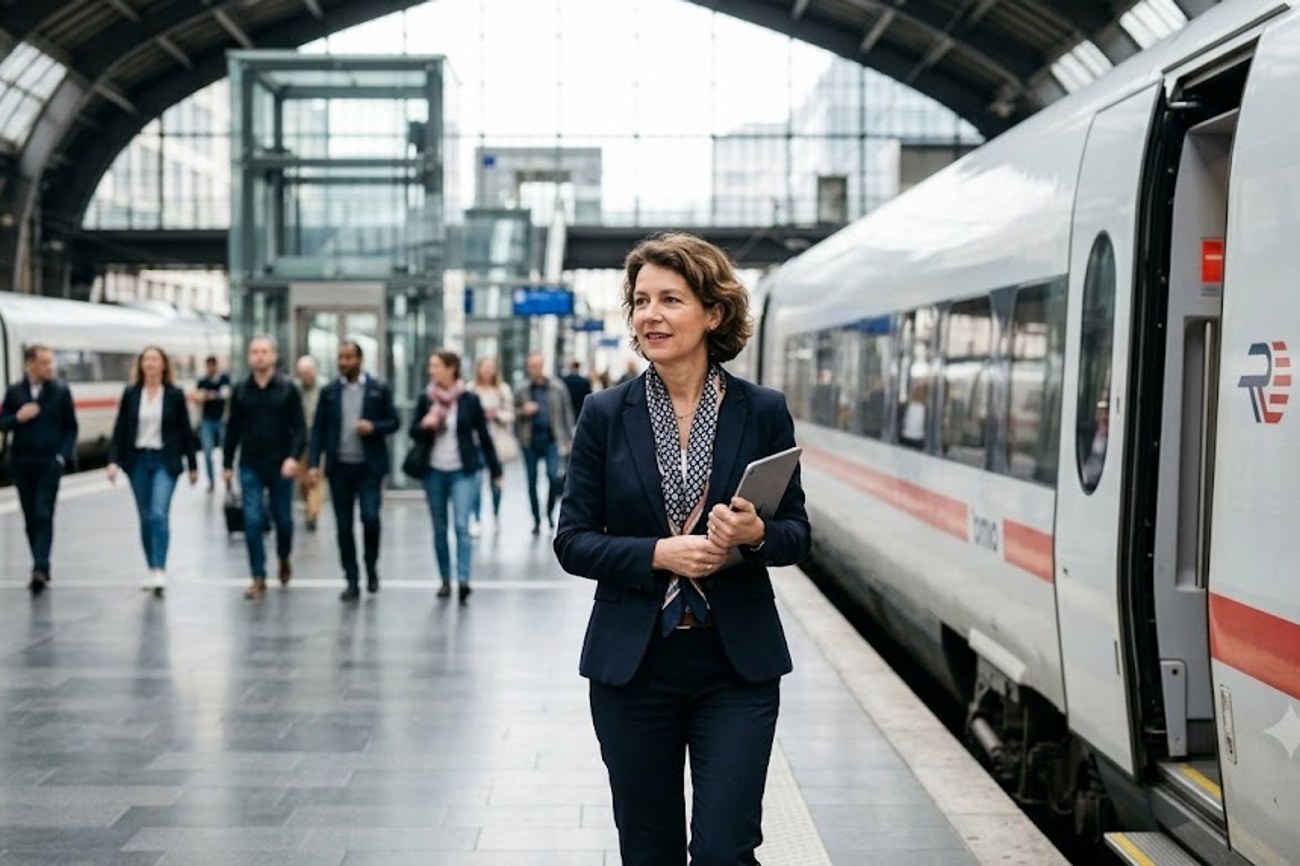
Italo Commits €3.6 Billion for High-Speed German Rail Expansion Across 18 Cities Starting in 2028

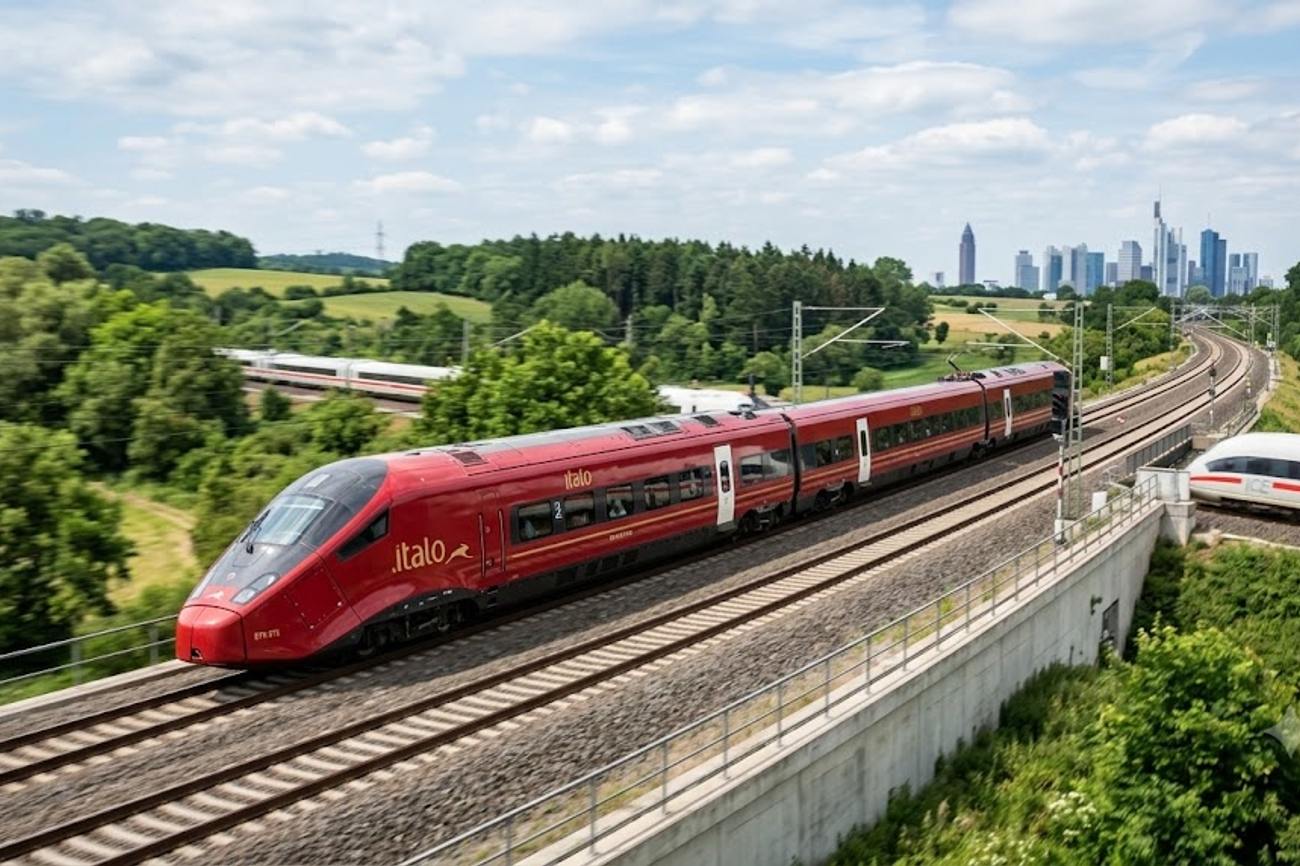
Image generated by AI
[Munich, October 2026] — Italian rail operator Italo is launching a massive expansion into the German market, committing €3.6 billion to establish a high-speed rail network connecting 18 cities by mid-2028.
Fleet Procurement, Siemens Partnership & Investment Scope
The expansion represents one of the largest private high-speed rail investments in Central Europe. Italo's €3.6 billion capital deployment encompasses rolling stock procurement, workforce recruitment for 2,500 operational jobs, IT systems, station access, and long-term fleet maintenance.
To power the network, Italo signed an agreement with Siemens Mobility to acquire 26 multi-system Siemens Velaro trainsets, with an option for 14 additional units:
- Operating Speed: Capable of maximum commercial speeds up to 320 km/h.
- Onboard Capacity & Seating: Eight-car trainsets carrying approximately 450 passengers divided across three travel classes (Club Executive, Prima Business, and Smart).
- Digital Passenger Amenities: Onboard bistro, high-speed 5G connectivity, and integrated Starlink satellite Wi-Fi.
- Industrial Footprint: Assembly will take place at Siemens Mobility's Krefeld facility, with long-term fleet maintenance anchored at a dedicated Siemens depot in Dortmund.
| Expansion Indicator | Italo Germany Network Specification | Strategic Passenger & Operational Impact |
|---|---|---|
| Total Investment | €3.6 Billion | Covers fleet, IT, station access, maintenance, and 2,500 jobs |
| Trainset Fleet | 26 Siemens Velaro Multi-System (+14 options) | 320 km/h top speed, 8 cars, 450 seats per train |
| Network Scale | 18 Cities across 1,300 km of track | Operates 50 daily high-speed departures |
| Travel Classes | Club Executive, Prima Business, Smart | Luxury corporate, mid-tier, and economy options |
| Regulatory Cap | 60%–75% DB Capacity Limit (Bundesnetzagentur) | Guarantees track access for private rail operators |
Primary Transit Corridors & Tourism Market Dynamics
Italo's German operation will center on two primary high-volume passenger corridors:
- The Western Corridor: Connecting Munich, Cologne, and Dortmund through the industrial Rhine-Ruhr region.
- The Northern & Eastern Corridor: Linking Munich, Berlin, and Hamburg via high-density intercity trunk lines.
The entry of high-speed competition aligns with record domestic tourism data published by the Federal Statistical Office of Germany (Destatis). In 2025, Germany recorded a historic 497.5 million overnight stays (413.7 million domestic and 83.8 million international visits), highlighting sustained demand for multi-city rail travel between urban centers.
Regulatory Access Framework & Infrastructure Challenges
Regulatory Access Framework & Infrastructure Challenges
Bundesnetzagentur Track Allocation Reform
Italo's expansion follows a ruling by Germany's federal network regulator, the Bundesnetzagentur. To ensure fair competition on heavily congested lines, DB InfraGO must limit Deutsche Bahn's long-distance capacity allocation to between 60% and 75% during peak timetable conflicts, guaranteeing track access for private competitors starting with the 2028 working timetable.
Practical Traveler Advisory and Strategic Insights
While Italo introduces modern rolling stock, services will navigate existing infrastructure bottlenecks. Deutsche Bahn reported long-distance punctuality of 58.7% in early 2026 due to aging signaling, heavy corridor traffic, and extensive network modernization works.
Overcoming Network Congestion
While Italo introduces modern rolling stock, services will navigate existing infrastructure bottlenecks. Deutsche Bahn reported long-distance punctuality of 58.7% in early 2026 due to aging signaling, heavy corridor traffic, and extensive network modernization works.
Traveler Logistics & High-Speed Transit Guide
For international travelers planning multi-city itineraries through Germany from 2028 onward, Italo's entry provides a viable alternative to domestic air travel:
City-Center Station Convenience
Unlike airport connections requiring long suburb-to-city transfers, Italo services will arrive directly at central terminals including Munich Hauptbahnhof (München Hbf), Berlin Hauptbahnhof (Berlin Hbf), Hamburg Hauptbahnhof (Hamburg Hbf), and Cologne Hauptbahnhof (Köln Hbf).
Onboard Work & Leisure Environment
With 5G and satellite internet integration, the trains cater to remote workers and digital nomads traveling between financial and cultural capitals. Passengers can select economy Smart seating for budget travel or premium Club Executive lounges for business privacy.
Timetable & Booking Advice
Ticket sales and finalized timetables will open ahead of the mid-2028 launch. Travelers will be able to book single-operator multi-city passes connecting Bavaria with northern and western Germany.
Key Program Takeaways
- Operator: Italo (NTV - Nuovo Trasporto Viaggiatori).
- Launch Date: Mid-2028 commercial rollout across Germany.
- Corridors: Munich–Cologne–Dortmund & Munich–Berlin–Hamburg (18 cities, 50 daily trains).
- Fleet: 26 Siemens Velaro Multi-System trains (320 km/h top speed).
Frequently Asked Questions: Italo Germany High-Speed Rail (2028)
When will Italo begin operating high-speed trains in Germany?
Italo plans to start commercial passenger services across Germany in mid-2028, operating 50 daily services across 18 cities.
Which German cities will be served by Italo's new network?
The initial network covers 18 major cities along two main corridors: Munich–Cologne–Dortmund and Munich–Berlin–Hamburg.
What amenities will be offered on Italo's German Siemens trains?
The 8-car Siemens Velaro trains will feature 450 seats across three travel classes (Smart, Prima Business, Club Executive), an onboard bistro, 5G Wi-Fi, and Starlink satellite connectivity.
Industrial Integration and Job Creation
The project is as much an industrial venture as it is a transport one. To minimize logistical friction, the trains will be built and serviced within Germany:
- Assembly: All units will be manufactured at the Siemens Mobility plant in Krefeld.
- Maintenance: A dedicated Siemens depot in Dortmund will handle long-term technical upkeep.
Italo estimates that this expansion will support roughly 2,500 jobs across its operational and technical sectors, signaling a long-term commitment to the German economy rather than a speculative market entry.
FAQ: Italo Germany 2028
When can I book tickets for Italo trains in Germany? Tickets are not yet available. Services are scheduled to begin in mid-2028, and timetables and pricing will likely be released closer to the launch date.
Which German cities will be served by Italo? The network will cover 18 cities, with primary hubs in Munich, Berlin, Hamburg, Cologne, and Dortmund.
Will Italo trains be faster than Deutsche Bahn? While the trains can reach 320 km/h, actual travel times depend on track congestion and infrastructure limits. The trains are high-speed, but they share the same rails as other services.
What onboard amenities will be available? Passengers can expect a bistro, three different classes of seating (Smart, Prima Business, and Club Executive), and high-speed internet via 5G and Starlink.
The race for the German rails has officially begun.
Related Travel Guides
This article is for informational purposes. Flight routes, passenger regulations, visa rules, and transit advisories are subject to change by airlines and aviation authorities. Readers are advised to verify schedules and travel documentation with relevant carriers and border agencies before departure.
Related Stories
Spain and Italy Lead European High-Speed Rail Expansion: Transcontinental Night Trains and Fast Corridors Reshape Travel
The World’s Most Beautiful Train Journeys Revealed: Australia’s Ghan Takes Top Spot in 2026 Index