Iran Belarus Flight Route Ends After Four Flights Raising Questions For International Travellers

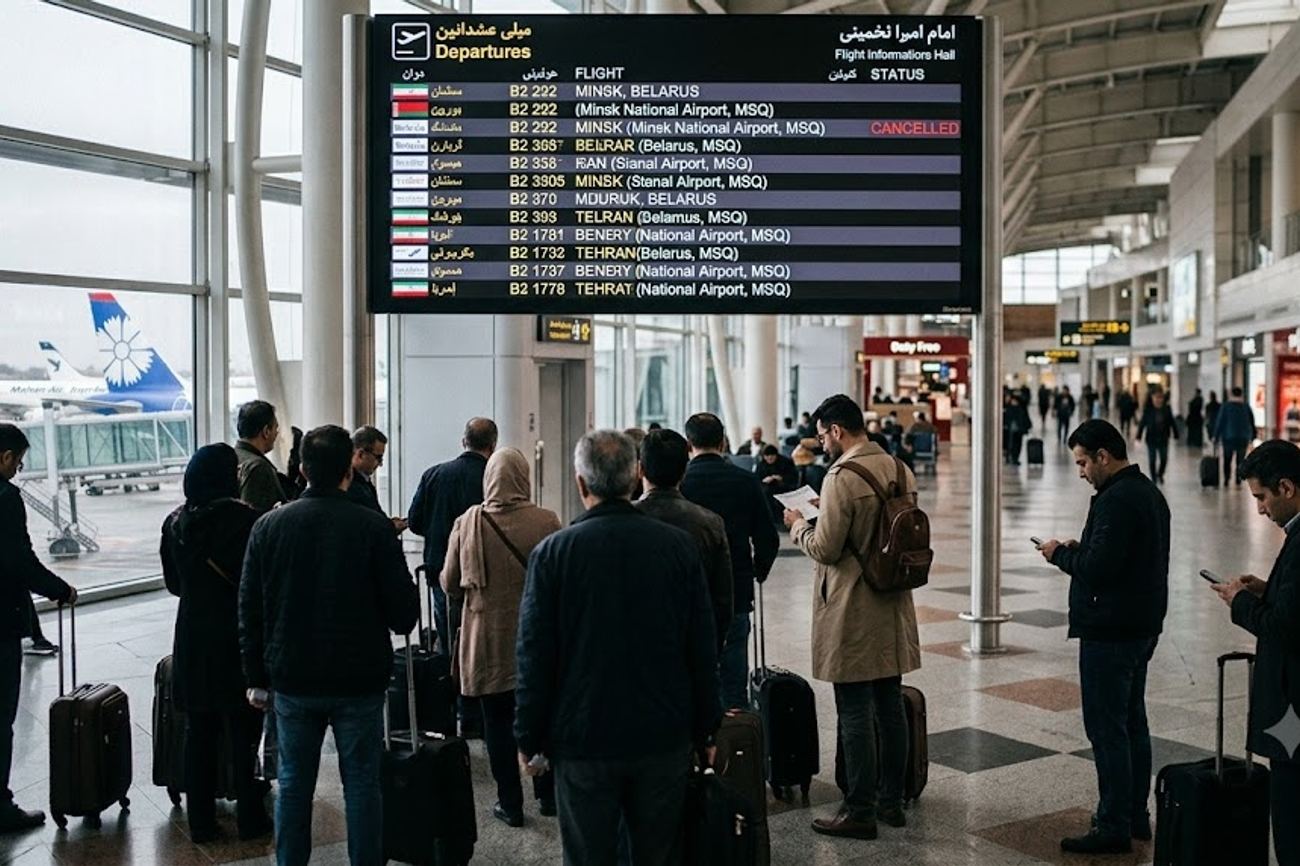
Image generated by AI
[Minsk, September 2026] — Atlas Air has abruptly terminated its direct aviation link between Tehran and Minsk after completing only four round-trip flights. The Iranian charter operator ceased all operations on the route in early September, removing the destination from its booking systems without providing a formal explanation for the sudden withdrawal.
The service, which launched on 16 August 2026, utilized a highly unconventional McDonnell Douglas MD-87 aircraft registered as EP-SAT. Unlike standard commercial flights, this aircraft featured a VIP-style configuration with only 25 seats and an onboard conference room. The flights were scheduled to operate weekly on Sundays, but the operation collapsed after the 6 September flight, with the scheduled departure for 13 September failing to materialize.
The VIP Configuration and Operational Failure
The Tehran-Minsk connection was designed as a niche, high-end service rather than a mass-market transit route. Atlas Air, which operates out of Kish Island, deployed an MD-87 that had originally been delivered to Japan Airlines in March 1992 before joining the Atlas Air fleet in late 2025.
By limiting capacity to 25 passengers and adding a corporate conference space, the airline targeted a specialized market of business executives and premium travelers. This exclusivity was reflected in the pricing structure, which sat significantly higher than regional averages. One-way fares were reported between US$960 and US$1,220, while round-trip tickets reached approximately US$2,400.
Despite the premium positioning, the service lacked transparency and stability. The flights never appeared on the official schedules of Minsk National Airport, suggesting the operation functioned more as a series of high-cost charters than a scheduled commercial service.
Impacted Routes and Passenger Data
The collapse of this route leaves a void in direct connectivity between the Middle East and Eastern Europe. The following data outlines the specific parameters of the failed operation:
| Detail | Specification |
|---|---|
| Route Pair | Tehran (IKA) $\leftrightarrow$ Minsk (MSQ) |
| Operating Carrier | Atlas Air (Iran) |
| Aircraft Model | McDonnell Douglas MD-87 (EP-SAT) |
| Capacity | 25 Seats + Conference Room |
| Flight Dates | 16, 23, 30 August; 6 September 2026 |
| Planned Frequency | Weekly (Sundays) |
| Status | Discontinued |
The failure of this route follows a pattern of instability between the two nations. In 2018, the Belarusian national carrier Belavia discontinued its Minsk–Tehran service. A subsequent attempt by Mahan Air in 2023 resulted in only a single flight before the connection was abandoned.
Practical Traveler Advisory and Strategic Insights
For passengers currently attempting to book travel between Iran and Belarus, the primary takeaway is the total absence of direct flight options. The removal of Minsk from the Atlas Air booking interface means all travelers must now revert to indirect itineraries.
Passenger Impact Assessment:
- No Direct Options: Travelers must now utilize connecting hubs, which significantly increases total travel time and requires additional transit visas depending on the layover country.
- Booking Volatility: This event serves as a warning against booking "scheduled" flights with charter operators that do not appear on official airport manifests. If a flight is not listed by the airport authority, the risk of abrupt cancellation is high.
- Price Surges: With the removal of the Atlas Air option, remaining indirect routes may see a spike in demand and pricing.
- Verification Necessity: Travelers are urged to verify the current operational status of any Iranian charter carrier through official government aviation channels or the International Civil Aviation Organization (ICAO) guidelines regarding sanctioned carriers.
Sanctions and Regulatory Pressure
While Atlas Air has not cited a specific reason for the shutdown, the timing coincides with a major regulatory shift. On 8 September 2026, the United States government added the Atlas Aviation Group to its sanctions list. This move was part of a broader strategy to increase pressure on Iran’s aviation infrastructure.
International sanctions typically create a cascade of operational failures for airlines. Even if an airline intends to fly, sanctions often trigger the following:
- Insurance Voiding: Global insurance providers often cancel policies for sanctioned entities to avoid US penalties.
- Maintenance Blocks: Access to genuine spare parts for aircraft like the MD-87 becomes nearly impossible.
- Financial Freezes: The ability to process ticket payments through international banking systems is severed.
- Airport Restrictions: Ground handling services at foreign airports may refuse to service aircraft operated by sanctioned groups.
Although a direct causal link between the 8 September sanctions and the cancellation of the 13 September flight has not been officially confirmed, the chronological overlap is a primary point of interest for aviation analysts.
The Future of Tehran-Minsk Connectivity
The repeated failure of direct links—from Belavia in 2018 to Mahan Air in 2023 and now Atlas Air in 2026—suggests that the Tehran-Minsk corridor is currently commercially and politically unsustainable.
The use of a 25-seat aircraft indicates that there is insufficient volume for a standard narrow-body jet (such as a Boeing 737 or Airbus A320), yet the high cost of operating a VIP MD-87 makes the route unprofitable unless every seat is filled at premium rates. For a sustainable connection to return, a carrier would likely need to find a middle ground between low-capacity VIP charters and high-capacity commercial flights, while navigating the complex web of international sanctions.
Until a carrier can guarantee operational stability and secure the necessary international clearances, travelers should expect the Tehran-Minsk route to remain inactive.
FAQ: Tehran-Minsk Flights 2026
Are there any current direct flights between Tehran and Minsk? No. The service operated by Atlas Air has been discontinued, and no other carriers are currently providing direct scheduled service between the two cities.
Why was the Atlas Air flight so expensive? The airline used a specialized McDonnell Douglas MD-87 with only 25 VIP seats and a conference room. The low capacity and premium amenities drove ticket prices up to US$2,400 for round trips.
Did US sanctions cause the flight cancellation? While the US added Atlas Aviation Group to its sanctions list on 8 September 2026, the airline has not officially confirmed that this led to the termination of the Minsk route.
What are the alternatives for traveling from Iran to Belarus? Travelers must use connecting flights through third-party hubs. It is recommended to check current transit visa requirements for the connecting country before booking.
Direct aviation links between Tehran and Minsk remain a geopolitical casualty.
Related Travel Guides
- Taiwan’s Hualien Travel Access Changes as Mandarin Airlines Cuts Flights and Shifts Regional Capacity
- Switzerland Travel Surges as SWISS Student Fares Unlock Budget Flights and Exclusive Benefits
- United Airlines Brings Premium Boeing 787-9 Dreamliner to Sydney San Francisco Route With New Elevated Cabin Experience
This article is for informational purposes. Flight routes, passenger regulations, visa rules, and transit advisories are subject to change by airlines and aviation authorities. Readers are advised to verify schedules and travel documentation with relevant carriers and border agencies before departure.
Related Stories

Jet Airways vs. Boeing NCLAT Battle: Why Manufacturer Litigation Offers No Quick Ticket Refunds for Indian Travel Agents

easyJet Launches Direct Liverpool to Reykjavik Flights: Inside the North West's New Winter Gateway to Iceland