
Riyadh Air's Bold 72-Aircraft Expansion: How Saudi Arabia's New Carrier Secured Coveted Heathrow Slots Through Strategic Boeing Order
Breaking airline news and aviation industry updates for 2026.

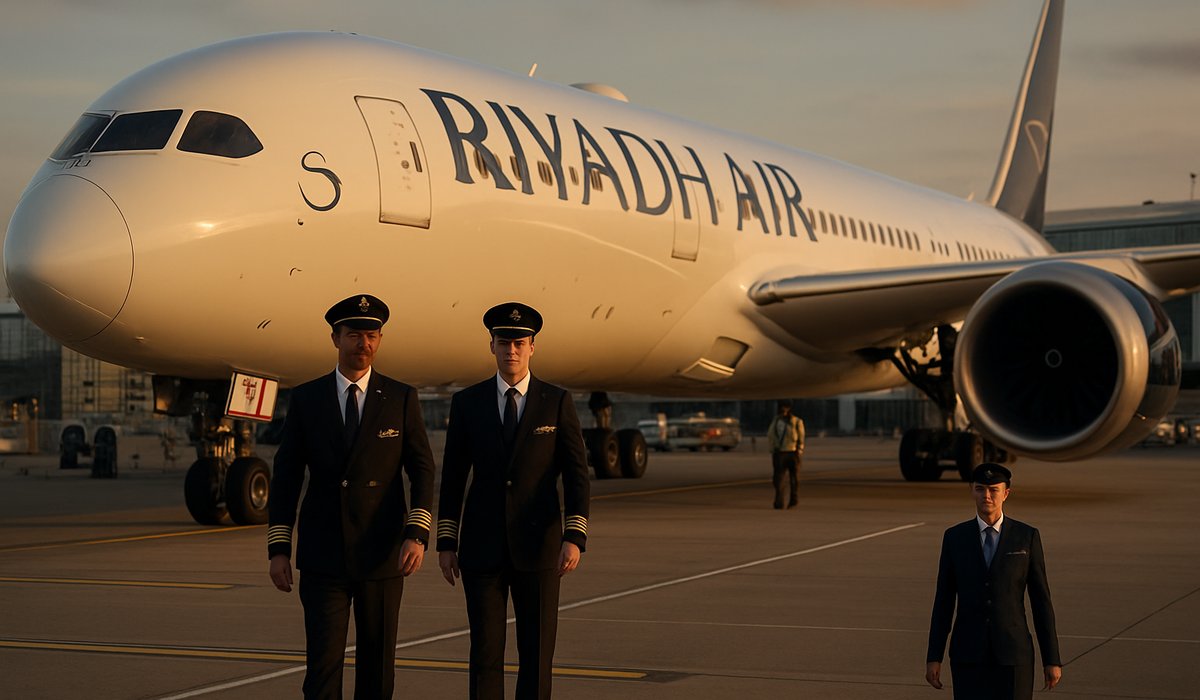
Image generated by AI
Riyadh Air's Bold 72-Aircraft Expansion: How Saudi Arabia's New Carrier Secured Coveted Heathrow Slots Through Strategic Boeing Order
The kingdom's ambitious aviation venture leverages a massive widebody fleet purchase to unlock premium European landing rights—a high-stakes gambit reshaping global airline competition
A Major Milestone in Middle Eastern Aviation
Saudi Arabia's newly-launched Riyadh Air achieved a watershed moment on June 5, 2026, when two custom-configured Boeing 787-9 aircraft—registered as HZ-RXAA and HZ-RXAB and operating under the call signs Riyadh 1 and Riyadh 2—arrived at King Khalid International Airport. The twin deliveries marked the operational commencement of what industry analysts describe as one of the most unconventional airline launches in recent memory, transforming years of strategic planning into tangible fleet operations.
The aircraft touchdowns represented far more than routine aircraft deliveries. They signaled the beginning of an aggressive market entry strategy that has already reshaped competitive dynamics in both Middle Eastern and European aviation markets.
The 72-Aircraft Commitment: Scale Beyond Typical Startups
What distinguishes Riyadh Air from conventional new carriers is the sheer magnitude of its fleet expansion. The airline's commitment to acquire 72 Boeing 787 Dreamliners—among the world's most fuel-efficient and technologically advanced widebody jets—establishes it as a heavyweight player from inception rather than a gradual entrant.
This massive order represents a significant bet on long-haul international operations, positioning Riyadh Air to compete directly with established Gulf carriers on premium routes linking Asia, Europe, and the Americas. The 787's superior fuel efficiency helps offset volatile jet fuel prices, a critical advantage given ongoing geopolitical tensions affecting energy markets.
The Slot-Sitting Strategy: Access to London Heathrow
Industry insiders recognize that securing landing slots at congested European hubs—particularly London Heathrow—requires either decades of operational history or extraordinary leverage. Riyadh Air employed an innovative approach: leveraging its massive aircraft order and Saudi Arabia's aviation investments to negotiate preferential slot allocation.
This maneuver reflects broader geopolitical and economic shifts, as Gulf states increasingly weaponize aviation infrastructure investment to expand their global influence and soft power. The Heathrow access grants Riyadh Air immediate connectivity to Europe's largest aviation market without waiting years for slot availability—a competitive advantage worth billions in potential revenue.
Broader Industry Implications
The Saudi carrier's arrival intensifies competition on premium international routes, potentially pressuring airline fees, baggage charges, and service standards across affected markets. Established carriers may face margin compression as Riyadh Air leverages capital reserves and government backing to undercut competitors during its growth phase.
For passengers, the competitive dynamics could initially deliver lower fares on Middle Eastern and European routes, though long-term consolidation remains uncertain.
FAQ: Understanding Riyadh Air's Market Entry
Q: How does Riyadh Air's fleet strategy compare to other Gulf carriers? A: Unlike incremental expansion patterns, Riyadh Air's 72-aircraft commitment positions it as an immediate peer to Emirates and Qatar Airways rather than a regional competitor.
Q: What role did the Boeing 787 order play in securing Heathrow slots? A: The massive aircraft purchase provided negotiating leverage with UK aviation authorities, effectively trading future economic investment for premium landing rights.
Q: How will Riyadh Air's entry affect airline ticket prices? A: Short-term competitive pricing pressure is likely on affected routes, though sustainability depends on market consolidation trends and fuel cost volatility.
Q: What geopolitical factors enabled this airline's rapid establishment? A: Saudi Arabia's Vision 2030 economic diversification plan prioritizes aviation infrastructure, providing unprecedented capital and political support for the venture.
Q: How does jet fuel price volatility impact Riyadh Air's 787-heavy strategy? A: The Dreamliner's 20% superior fuel efficiency provides strategic insulation against oil market fluctuations compared to older widebody competitors.
Related Travel Guides
External Resources
Disclaimer
This article is for informational and educational purposes only. It does not constitute legal, financial, or professional advice. While we strive to provide accurate and up-to-date information, travel policies, regulations, and conditions change rapidly. Always verify information with official sources before making travel decisions. Nomad Lawyer makes no representations about the accuracy, reliability, completeness, or suitability of the information provided. Readers should consult qualified professionals for advice specific to their circumstances. The views expressed in this article are those of the author and do not necessarily reflect the views of Nomad Lawyer.
Raushan Kumar
Founder & Lead Developer
Full-stack developer with 11+ years of experience and a passionate traveller. Raushan built Nomad Lawyer from the ground up with a vision to create the best travel and law experience on the web.
Learn more about our team →