
Emirates' A380 Revenue Strategy Exposed: How 15% of Premium Seats Generate Half of Aircraft Revenue
Breaking airline news and aviation industry updates for 2026.

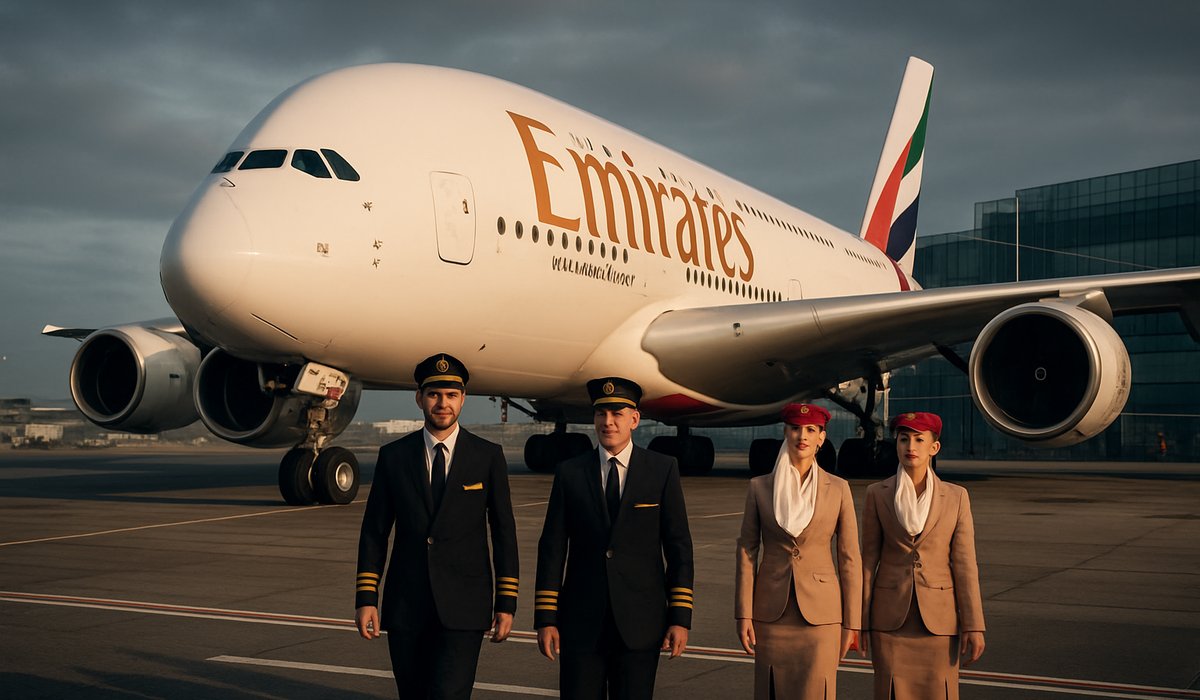
Image generated by AI
Emirates' A380 Revenue Strategy Exposed: How 15% of Premium Seats Generate Half of Aircraft Revenue
The world's largest operator of Airbus superjumbos reveals an intricate pricing model that transforms the double-decker giant into a sophisticated revenue optimization machine
The Hidden Economics Behind Aviation's Largest Passenger Aircraft
Emirates operates more Airbus A380 aircraft than any other airline globally, yet the Dubai-based carrier's financial success with the superjumbo hinges less on passenger volume than on an intricate segmentation strategy that extracts maximum revenue from premium cabin inventory. New analysis reveals a striking reality: just 15% of available seats onboard the A380 generate approximately half of the aircraft's total revenue—a disparity that underscores how modern airlines prioritize yield management over pure capacity utilization.
The A380, with its iconic double-deck configuration accommodating up to 853 passengers in all-economy layouts, represents one of aviation's most ambitious engineering achievements. Yet for Emirates, the aircraft functions as a floating boutique hotel rather than a mass-transit vehicle, with cabin stratification engineered to capture spending across multiple customer tiers.
The Seat Segmentation Formula
Emirates' A380 revenue model divides the aircraft into distinct commercial zones, each priced according to passenger expectations and willingness to pay. First-class suites—featuring direct aisle access, onboard shower facilities, and personalized service—command premium positioning despite occupying minimal floor space. These ultra-luxury compartments anchor the airline's highest-margin operations.
Business-class seating follows, offering lie-flat configurations and premium dining experiences. Premium Economy bridges the gap between standard economy and fully-flat business accommodation. Standard economy forms the volume foundation, filling remaining capacity at competitive leisure fares.
This architectural hierarchy transforms the A380 from a capacity play into a revenue optimization platform. A single A380 departure effectively sells multiple distinct products—from $15,000+ first-class experiences to $300 economy fares—maximizing per-aircraft profitability across diverse customer segments.
Industry Implications and Competitive Pressures
The A380's commercial viability increasingly depends on premium cabin penetration, particularly as fuel costs remain elevated and competition intensifies on major international routes. Airlines operating the superjumbo without sophisticated cabin pricing strategies face structural profitability challenges, explaining why several carriers have retired A380s in recent years.
Emirates' approach—leveraging premium cabins to offset the aircraft's substantial operating costs—demonstrates how legacy carriers maintain competitiveness against low-cost competitors. The strategy requires coordinated revenue management, dynamic pricing systems, and sustained premium demand on long-haul routes.
What This Means for Travelers
For business travelers and luxury passengers, the A380 remains a premium proposition with corresponding price tags. Economy passengers benefit from increased frequency on major routes but face consolidation toward larger aircraft on secondary markets. The overall effect: aviation's largest commercial aircraft increasingly serves as a premium product delivery system rather than a people mover.
Frequently Asked Questions
How much do Emirates A380 first-class seats cost compared to economy? First-class fares on Emirates A380 routes typically range from $12,000-$18,000 for long-haul journeys, while economy seats on identical routes cost $400-$800, reflecting a 15-45x price differential based on route distance and seasonality.
Why do airlines focus on premium cabin revenue instead of filling all seats? Premium cabins generate 5-10x higher revenue per square foot of aircraft space than economy, making them financially critical for covering massive fixed costs (fuel, crew, maintenance) on widebody aircraft like the A380.
Is the Airbus A380 still being produced? Airbus ceased A380 production in 2021 due to insufficient global demand, with only a handful of airlines maintaining the type. Emirates remains the largest operator with over 100 aircraft in its fleet.
How many passengers can an Emirates A380 carry? Emirates' A380 configuration seats approximately 615 passengers across four cabin classes, compared to potential maximum capacities exceeding 850 in all-economy layouts.
What's the future of the A380 in commercial aviation? The superjumbo faces declining relevance as airlines prioritize twin-engine widebodies (Boeing 787, Airbus A350) offering superior fuel efficiency. The A380 remains viable only on ultra-dense, premium-heavy routes where Emirates concentrates its fleet.
Related Travel Guides
External Resources
Disclaimer
This article is for informational and educational purposes only. It does not constitute legal, financial, or professional advice. While we strive to provide accurate and up-to-date information, travel policies, regulations, and conditions change rapidly. Always verify information with official sources before making travel decisions. Nomad Lawyer makes no representations about the accuracy, reliability, completeness, or suitability of the information provided. Readers should consult qualified professionals for advice specific to their circumstances. The views expressed in this article are those of the author and do not necessarily reflect the views of Nomad Lawyer.
Raushan Kumar
Founder & Lead Developer
Full-stack developer with 11+ years of experience and a passionate traveller. Raushan built Nomad Lawyer from the ground up with a vision to create the best travel and law experience on the web.
Learn more about our team →