
Qantas Abandons Premium Seating Promise for Project Sunrise Ultra-Long-Haul Routes
Breaking airline news and aviation industry updates for 2026.

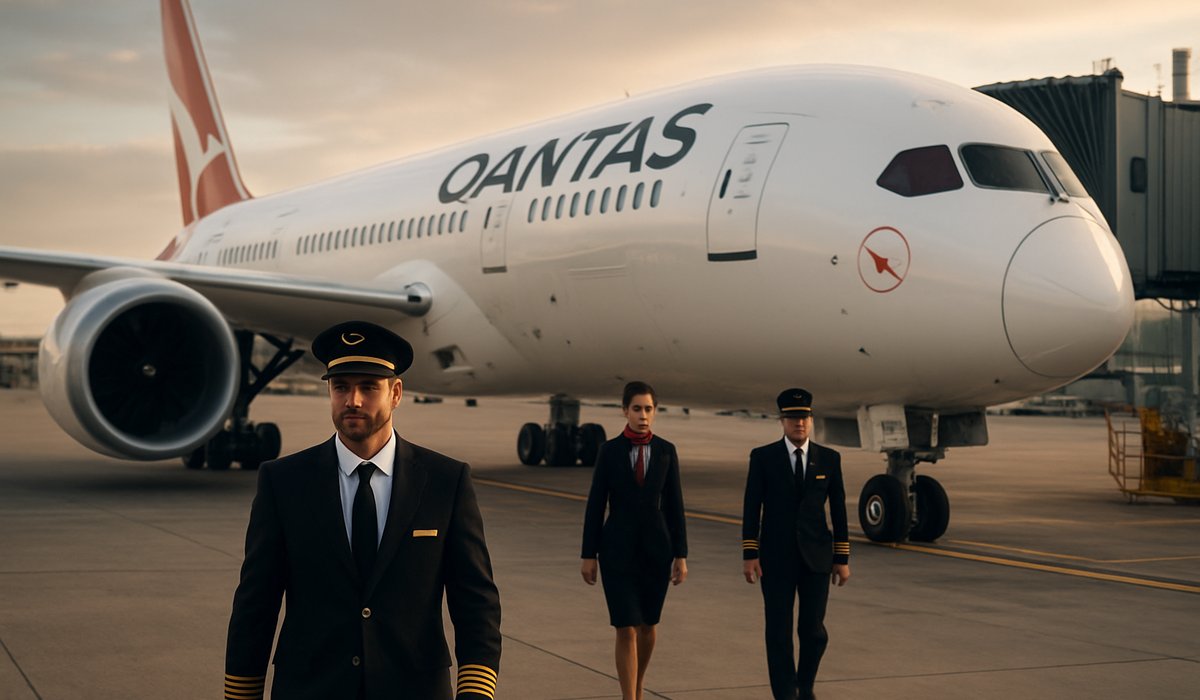
Image generated by AI
Qantas Abandons Premium Seating Promise for Project Sunrise Ultra-Long-Haul Routes
Australian carrier scales back cabin comfort commitments as it prepares 2027 London service launch amid industry-wide cost pressures
Breaking News
Qantas Airways has quietly shelved its commitment to equip Project Sunrise aircraft with enhanced 33-inch seat pitch across its premium cabin configurations, marking a significant retreat from earlier pledges to prioritize passenger comfort on the world's longest commercial flights. The decision underscores mounting financial constraints facing airlines operating ultra-long-haul services, even as the Australian carrier prepares for its anticipated October 2027 debut of nonstop Sydney-to-London operations.
The Project Sunrise Vision Under Pressure
Project Sunrise represents one of aviation's most technically ambitious initiatives. Qantas has ordered 12 Airbus A350-1000ULR aircraft specifically engineered to traverse extreme distances—up to 10,000 nautical miles—enabling unprecedented nonstop connectivity between Australia's eastern seaboard and major European and North American hubs. The maiden Sydney-London Heathrow service will consume between 19 and 22 hours of flight time depending on wind patterns and routing optimization.
The carrier has officially confirmed October 2027 as the launch target, with ticket sales expected to commence earlier that calendar year. However, the abandonment of the expanded legroom cabin configuration signals that revenue optimization now takes precedence over the premium passenger experience narrative that initially defined the project's marketing strategy.
Financial Realities in Ultra-Long-Haul Operations
The reversal reflects broader industry pressures affecting aviation economics. Sustained elevated jet fuel prices, coupled with increased labor costs and aircraft depreciation on high-specification widebodies, have forced carriers to recalibrate cabin density strategies. Airlines operating ultra-long-haul routes face razor-thin margins, compelling difficult trade-offs between passenger comfort and financial viability.
Qantas executives have not publicly detailed the business rationale behind eliminating the 33-inch pitch upgrade, though industry analysts attribute such decisions to yield management pressures and the necessity to maximize seat inventory on capacity-constrained routes.
What This Means for Premium Travelers
The decision carries implications for business and premium leisure passengers anticipating differentiated cabin experiences on Project Sunrise flights. Competitors operating comparable ultra-long-haul services—including Singapore Airlines' Airbus A350 operations and future ultra-long-range aircraft deployments—face similar pressures to balance comfort amenities with operational profitability.
The Project Sunrise initiative remains transformative for global aviation connectivity, yet the cabin configuration modification exemplifies how legacy commitments frequently succumb to prevailing economic conditions within the industry.
FAQ: Project Sunrise and Ultra-Long-Haul Aviation
When will Qantas launch Project Sunrise flights between Sydney and London? Qantas has targeted October 2027 for the inaugural Sydney-London Heathrow service, with ticket sales anticipated earlier in 2027.
What aircraft will operate Project Sunrise routes? Twelve Airbus A350-1000ULR jets capable of flying up to 10,000 nautical miles will power the ultra-long-haul network, providing sufficient range for nonstop Australia-Europe operations.
Why did Qantas reduce legroom commitments on Project Sunrise aircraft? The airline prioritized revenue optimization and financial sustainability over the initially promised enhanced cabin pitch, reflecting industry-wide pressures including elevated jet fuel prices and operational costs.
How long will Project Sunrise flights actually take? Depending on winds and routing, Sydney-London flights are expected to consume between 19 and 22 flight hours.
How does Project Sunrise impact global aviation connectivity? The service eliminates layover requirements between Australia and the United Kingdom, reducing total journey time and establishing new nonstop market access for Qantas across premium segments.
Related Travel Guides
-
Travel Airlines India: Southeast Asia Tourism Surge Amid Geopolitical Shifts in 2026
-
UAE-India Flights Resume: A Strategic Bilateral Aviation Expansion
-
Airlines American Airport: Simple Flying Episode 288 Covers Aviation Safety
External Resources
Disclaimer
This article is for informational and educational purposes only. It does not constitute legal, financial, or professional advice. While we strive to provide accurate and up-to-date information, travel policies, regulations, and conditions change rapidly. Always verify information with official sources before making travel decisions. Nomad Lawyer makes no representations about the accuracy, reliability, completeness, or suitability of the information provided. Readers should consult qualified professionals for advice specific to their circumstances. The views expressed in this article are those of the author and do not necessarily reflect the views of Nomad Lawyer.
Kunal K Choudhary
Co-Founder & Contributor
A passionate traveller and tech enthusiast. Kunal contributes to the vision and growth of Nomad Lawyer, bringing fresh perspectives and driving the community forward.
Learn more about our team →