
U.S. Air Force's B-21 Raider Emerges as Game-Changing Stealth Bomber, Surpassing Three Aging Platforms
Breaking airline news and aviation industry updates for 2026.

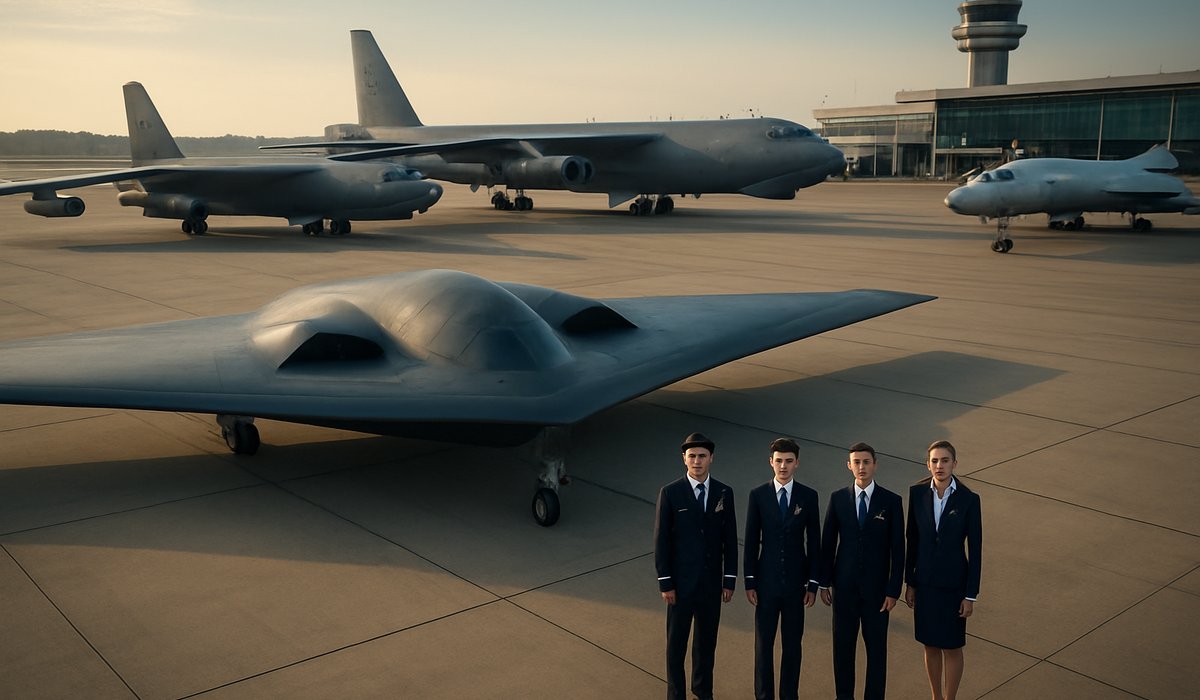
Image generated by AI
U.S. Air Force's B-21 Raider Emerges as Game-Changing Stealth Bomber, Surpassing Three Aging Platforms
New Northrop Grumman aircraft designed to overcome structural, operational, and cost limitations of legacy bombers
Legacy Fleet Faces Modernization Crisis
The United States Air Force continues operating three bomber platforms that have collectively served the military for over half a century: the Boeing B-52H Stratofortress, the Rockwell B-1 Lancer, and the Northrop Grumman B-2 Spirit. While each aircraft has demonstrated operational effectiveness in recent campaigns—including sustained operations over Yemen, targeted missions near Iranian airspace, and continuous Pacific nuclear deterrence patrols—all three platforms confront mounting technological and financial constraints that threaten their long-term viability.
The aging fleet's structural limitations, vulnerability exposure against advanced peer-state defense systems, and escalating upgrade costs have created a critical capability gap within America's strategic air command infrastructure. These challenges have prompted military strategists to accelerate development of a successor platform capable of addressing all three vulnerabilities simultaneously.
The B-21 Raider Solution
Northrop Grumman's B-21 Raider represents a comprehensive redesign of American bomber doctrine for the 21st century. Unlike its predecessors, the Raider was engineered without the technological and operational ceilings that constrain the existing fleet. The aircraft addresses the structural obsolescence of the B-52, the survivability shortcomings of conventional designs facing advanced air defense networks, and the prohibitive sustainment expenses that plague legacy platforms.
Comparative Advantages
The B-21 incorporates revolutionary design philosophies absent from earlier generations. Where the B-52 reflects 1950s engineering constraints and the B-2 carries aging avionics architecture limiting upgrade potential, the Raider features a modular framework designed for technological evolution. Its stealth architecture surpasses previous standards, offering reduced radar cross-section and enhanced countermeasure integration capabilities.
The aircraft's operational flexibility exceeds its predecessors across multiple dimensions—payload capacity, mission range, autonomous systems integration, and adaptability to emerging threat environments. Defense analysts note the Raider's architecture enables rapid incorporation of future technologies without fundamental redesign, a capability absent from legacy platforms.
Strategic Implications
The transition from Cold War-era bombers to contemporary stealth platforms reflects broader shifts in peer-state competition, advanced air defense proliferation, and the necessity for modernized strategic deterrence capabilities. The B-21 program signals accelerated retirement timelines for aging aircraft while establishing technological baselines that will define American aerial dominance through mid-century.
Frequently Asked Questions
What are the main differences between the B-21 Raider and the B-2 Spirit? The B-21 incorporates advanced stealth coatings, modern avionics, and modular upgradeable architecture compared to the B-2's 1990s-era systems design, enabling superior long-term operational relevance.
Why is the U.S. retiring the B-52 Stratofortress? The B-52's 1950s structural design and aging systems create mounting sustainment costs while limiting performance against contemporary air defense networks, necessitating replacement with modern platforms.
How does the B-21 compare in stealth capabilities? The Raider features improved radar signature reduction and enhanced countermeasure systems exceeding previous-generation stealth standards.
What is the strategic purpose of upgrading bomber fleets? Modern bombers maintain nuclear deterrence credibility, enable precision strike capabilities, and ensure American air superiority against technologically advanced adversaries.
Related Travel Guides
-
Transport Convention African 2026: How Togo's Summit Transforms Aviation
-
India Joins Alliance Supercharging Thailand Aviation Recovery in 2026
External Resources
Disclaimer
This article is for informational and educational purposes only. It does not constitute legal, financial, or professional advice. While we strive to provide accurate and up-to-date information, travel policies, regulations, and conditions change rapidly. Always verify information with official sources before making travel decisions. Nomad Lawyer makes no representations about the accuracy, reliability, completeness, or suitability of the information provided. Readers should consult qualified professionals for advice specific to their circumstances. The views expressed in this article are those of the author and do not necessarily reflect the views of Nomad Lawyer.
Kunal K Choudhary
Co-Founder & Contributor
A passionate traveller and tech enthusiast. Kunal contributes to the vision and growth of Nomad Lawyer, bringing fresh perspectives and driving the community forward.
Learn more about our team →