
Indonesia Teams Up with Malaysia, Saudi Arabia, United Arab Emirates, Türkiye, Qatar, Brunei, Singapore, and Global Muslim Travel Markets to Accelerate Halal Tourism Growth Through International Promotions and Muslim-Friendly Destinations
Indonesia Teams Up with Malaysia, Saudi Arabia, United Arab Emirates, Türkiye, Qatar, Brunei, Singapore, and Global Musl

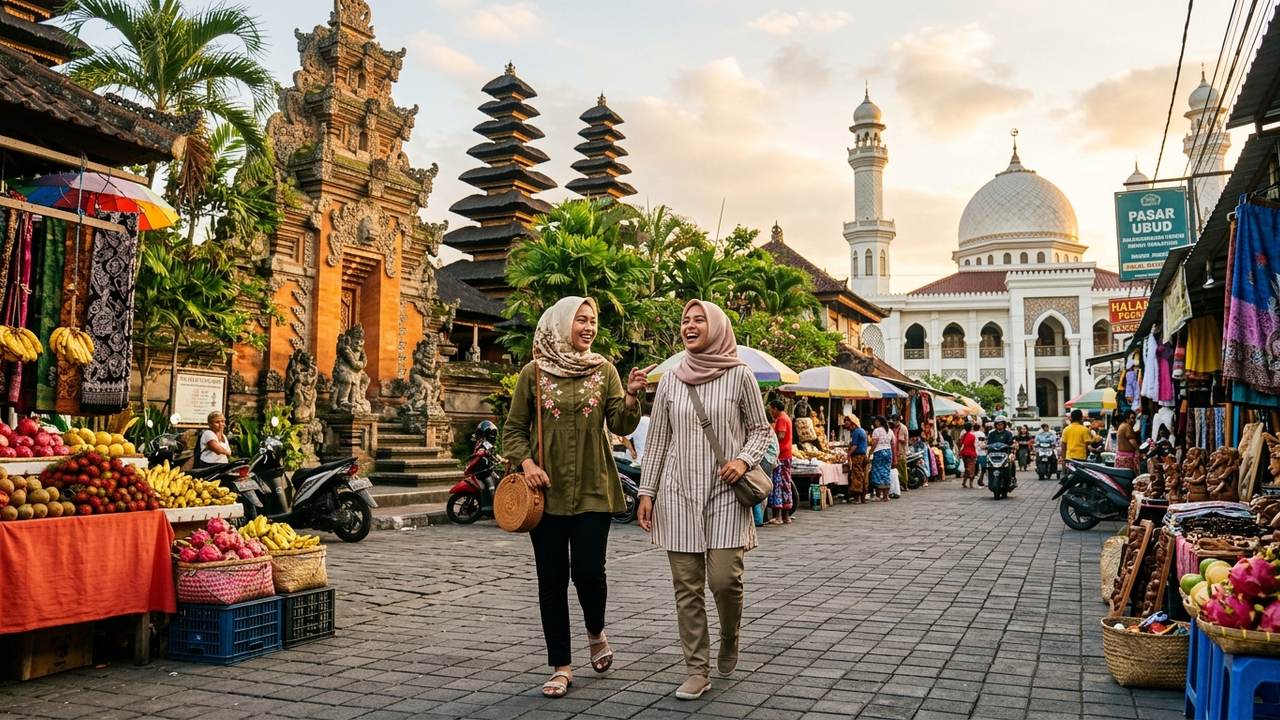
Image generated by AI
Indonesia Accelerates Halal Tourism Growth With Malaysia, Saudi Arabia, UAE, Türkiye, Qatar, Brunei, Singapore, and Global Muslim Travel Markets Through International Promotions
[Jakarta, June 27, 2026] — Indonesia is ramping up its global halal tourism outreach by deepening promotional ties with Malaysia, Saudi Arabia, the United Arab Emirates, Türkiye, Qatar, Brunei, Singapore, and other emerging Muslim travel markets, aiming to capture a larger share of one of the world's fastest-growing tourism segments. The Ministry of Tourism unveiled an expanded international marketing strategy centered on exhibitions, bidding events, and sales missions, timed alongside the International Islamic Expo 2026 in Jakarta, where 16 countries, 126 exhibitors, and an estimated 18,000 visitors are converging to explore Muslim-friendly travel opportunities across the archipelago.
The push follows Indonesia's climb to second place in the 2026 Global Muslim Travel Index, up from fifth position in 2025, signaling growing international recognition of the country's tourism infrastructure and destination development for Muslim travelers.
Indonesia's Ministry of Tourism Expands Global Muslim-Friendly Promotion
The Indonesian government is treating international marketing of Muslim-friendly destinations as a strategic priority as global demand for halal travel experiences expands across Asia, the Middle East, Europe, and beyond. Tourism Ministry officials have outlined a multi-channel approach that leverages international exhibitions, tourism bidding events, and targeted global sales missions to raise Indonesia's visibility in competitive Muslim travel markets.
The strategy is designed to generate new partnerships with travel agencies, airlines, tour operators, and tourism investors while driving up international visitor arrivals. Officials believe that stronger overseas engagement will translate into higher-value tourism receipts and deeper integration between Indonesian hospitality providers and international distribution networks.
By focusing on countries with significant or rapidly growing Muslim populations — including Malaysia, Saudi Arabia, the United Arab Emirates, Türkiye, Qatar, Brunei, and Singapore — Indonesia is positioning itself to capture travelers who actively seek destinations offering halal-certified food, prayer facilities, and culturally welcoming environments.
International Islamic Expo 2026 Becomes Jakarta's Halal Tourism Showcase
The International Islamic Expo 2026, running June 26–28 in Jakarta, has emerged as a central platform for Indonesia's halal tourism ambitions. The event brings together 80 domestic exhibitors and 46 international exhibitors from 16 countries, along with 18 tourism associations, creating a robust environment for business networking and destination promotion.
| Event Highlights | Details |
|---|---|
| Event | International Islamic Expo 2026 |
| Dates | June 26–28, 2026 |
| Location | Jakarta |
| Domestic Exhibitors | 80 |
| International Exhibitors | 46 |
| Participating Countries | 16 |
| Tourism Associations | 18 |
| Expected Visitors | 18,000 |
| Projected Transactions | Rp115 billion (US$6.43 million) |
The exhibition combines tourism promotion with structured business networking, allowing international buyers to explore Muslim-friendly destinations, accommodation providers, tourism services, and MICE (Meetings, Incentives, Conferences, and Exhibitions) opportunities across Indonesia. The projected transaction value of Rp115 billion (US$6.43 million) underscores the commercial significance of the event for Indonesian tourism operators and their international counterparts.
Thousands of domestic and international visitors are attending the three-day expo, where Indonesian provinces are presenting curated travel packages, halal-certified accommodations, and cultural experiences tailored to Islamic travelers.
West Sumatra, Lombok, and Four Other Provinces Lead Indonesia's Muslim-Friendly Destination Push
Indonesia is promoting six provinces that have already developed strong halal tourism infrastructure and services. Each destination offers a distinct combination of attractions designed to appeal to Muslim travelers while remaining accessible to visitors of all backgrounds.
| Destination | Tourism Highlights |
|---|---|
| West Sumatra | Islamic heritage, culinary tourism, cultural attractions |
| Lombok | Award-winning halal tourism destination, beaches, resorts |
| Banten | Religious tourism, coastal attractions |
| West Java | Nature tourism, family destinations, halal hospitality |
| East Java | Cultural attractions, historical sites, diverse tourism experiences |
| South Sulawesi | Marine tourism, cultural heritage, Muslim-friendly services |
Lombok, in particular, has gained recognition as an award-winning halal tourism destination, combining beach resorts and natural landscapes with certified Muslim-friendly services. West Sumatra is being promoted for its deep Islamic heritage and culinary traditions, while Banten offers religious tourism sites paired with coastal attractions. West Java emphasizes family-oriented nature tourism with halal hospitality, East Java showcases cultural and historical landmarks, and South Sulawesi highlights marine tourism alongside Muslim-friendly service standards.
These destinations are continuing to expand facilities specifically designed to meet the needs of Muslim travelers, including prayer spaces, halal-certified dining, and family-friendly accommodation, without restricting accessibility for non-Muslim international visitors.
Halal Tourism Extends Beyond Certified Food in Indonesia's Strategy
Tourism officials stress that Muslim-friendly tourism involves far more than offering halal-certified restaurants. The government is encouraging hotels, resorts, tourism attractions, airports, and hospitality providers across the country to integrate prayer facilities, family-friendly environments, appropriate accommodation services, and supporting infrastructure that enhances convenience throughout the entire visitor journey.
This comprehensive approach allows Indonesia to deliver travel experiences that align with the expectations of Muslim travelers while maintaining international hospitality standards that appeal to all visitors. The strategy covers the full travel lifecycle — from airport arrival and ground transportation to lodging, dining, sightseeing, and departure — ensuring that Muslim-friendly services are embedded at every touchpoint rather than treated as an add-on.
Industry observers note that this holistic model differentiates Indonesia from destinations that limit halal tourism to food certification alone, giving the country a competitive edge as Muslim travelers increasingly seek end-to-end faith-compatible experiences.
MICE Tourism Strengthens Indonesia's Halal Travel Strategy
Indonesia is actively integrating halal tourism into its Meetings, Incentives, Conferences, and Exhibitions (MICE) sector. International business events increasingly require destinations capable of accommodating diverse cultural and religious requirements, and Indonesian officials see an opportunity to fill that gap.
By incorporating Muslim-friendly facilities into convention centers, hotels, and event venues, Indonesia aims to attract more international conferences, corporate gatherings, and exhibitions from organizations serving Muslim-majority constituencies or seeking inclusive event environments. This approach broadens tourism revenue beyond leisure travel and strengthens Indonesia's positioning as a year-round destination capable of hosting both business and faith-oriented events.
The MICE strategy also complements the leisure tourism push by creating recurring visitor flows — delegates who attend conferences may return for personal travel or recommend destinations within their professional and social networks.
Indonesia Rises to Second in 2026 Global Muslim Travel Index
Indonesia's improved standing in the 2026 Global Muslim Travel Index reflects sustained investment in tourism services, destination quality, visitor facilities, and international marketing aimed at Muslim travelers worldwide.
| Indicator | 2025 | 2026 |
|---|---|---|
| Global Muslim Travel Index Ranking | 5th | 2nd |
The three-position jump from fifth to second place demonstrates the impact of coordinated government action, private-sector investment, and international promotional campaigns. The Global Muslim Travel Index evaluates destinations based on their appeal and accessibility for Muslim travelers, considering factors such as halal food availability, prayer facility coverage, accommodation standards, airport services, and overall destination inclusivity.
Industry sources indicate that Indonesia's rise in the rankings has generated additional momentum for international promotional efforts, as higher visibility tends to attract greater interest from travel agencies, airlines, and tour operators in target markets.
Impact on Regional and Global Tourism Markets
Indonesia's accelerated halal tourism strategy carries implications that extend well beyond its own borders. As the country with the world's largest Muslim population, Indonesia possesses a natural advantage in developing authentic Muslim-friendly experiences, and its aggressive international promotion is likely to intensify competition among Southeast Asian and Middle Eastern destinations vying for the same traveler segments.
Malaysia, which has long been a leader in halal tourism, now faces a direct regional competitor that is investing heavily in infrastructure, marketing, and MICE capabilities. Saudi Arabia, the UAE, Qatar, and Türkiye — all identified as target markets — are simultaneously developing their own tourism sectors, creating a dynamic where outbound travel from these nations could increasingly flow toward Indonesia if its promotional efforts succeed.
The projected Rp115 billion (US$6.43 million) in transactions at the International Islamic Expo 2026 alone signals the scale of economic activity that halal tourism can generate for Indonesian businesses. For hotels, airlines, tour operators, and regional governments across West Sumatra, Lombok, Banten, West Java, East Java, and South Sulawesi, the government's promotional push translates into concrete opportunities for revenue growth, job creation, and infrastructure development.
Why This Matters: Indonesia's Halal Tourism Push Signals a Shift in Global Travel Priorities
Indonesia's decision to elevate halal tourism from a niche offering to a central pillar of its international tourism strategy reflects a broader industry shift. The global Muslim travel market is expanding rapidly, driven by rising disposable incomes in Muslim-majority countries, increasing demand for faith-based travel services, and growing awareness among destinations that Muslim travelers represent a high-value, loyal visitor segment.
By targeting eight specific countries — Malaysia, Saudi Arabia, the United Arab Emirates, Türkiye, Qatar, Brunei, Singapore, and the wider global Muslim travel market — Indonesia is not simply promoting destinations. It is building a network of bilateral and multilateral tourism relationships that could reshape travel flows between Southeast Asia, the Middle East, and South Asia for years to come.
The integration of MICE tourism into the halal travel strategy is particularly significant. Business events generate higher per-visitor spending than leisure travel and create repeat visitation patterns. If Indonesia succeeds in positioning itself as the preferred destination for Muslim-friendly international conferences and corporate events, the economic returns will extend far beyond what traditional leisure tourism alone can deliver.
Indonesia's climb from fifth to second in the Global Muslim Travel Index in a single year demonstrates that coordinated investment in infrastructure, marketing, and destination development can produce rapid, measurable results. Other countries observing this trajectory may accelerate their own halal tourism initiatives, potentially transforming the competitive landscape of global Muslim travel.
With the International Islamic Expo 2026 serving as both a showcase and a transaction platform, Indonesia is sending a clear signal to the global tourism industry: the country intends to lead, not merely participate, in the halal tourism sector. The combination of natural assets, demographic advantages, government commitment, and international partnership-building positions Indonesia to capture a disproportionate share of future growth in Muslim-friendly travel — provided that execution keeps pace with ambition.
Related Travel Guides
Disclaimer
This article is for informational and educational purposes only. It does not constitute legal, financial, or professional advice. While we strive to provide accurate and up-to-date information, travel policies, regulations, and conditions change rapidly. Always verify information with official sources before making travel decisions. Nomad Lawyer makes no representations about the accuracy, reliability, completeness, or suitability of the information provided. Readers should consult qualified professionals for advice specific to their circumstances. The views expressed in this article are those of the author and do not necessarily reflect the views of Nomad Lawyer.
Raushan Kumar
Founder & Lead Developer
Full-stack developer with 11+ years of experience and a passionate traveller. Raushan built Nomad Lawyer from the ground up with a vision to create the best travel and law experience on the web.
Learn more about our team →