
Indonesia Ferry Safety Under Scrutiny: Java Sea Capsizing Sparks Island Travel Advisories Across Bali, Lombok, and Komodo

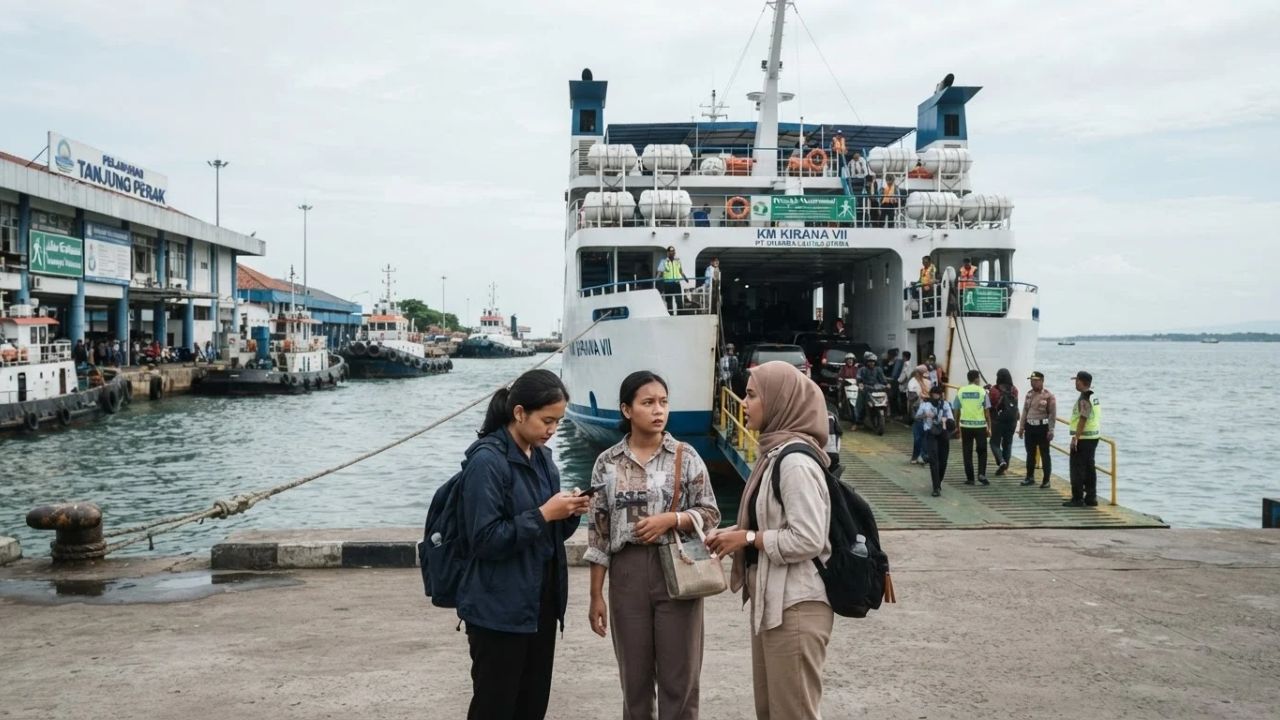
The capsizing of the inter-island ferry Virgo Transport 8 in the Java Sea prompted nationwide maritime inspections and renewed international travel advisories across Indonesia on September 14, 2026, as search and rescue teams continued operations between East Java and South Kalimantan. The roll-on/roll-off (Ro-Ro) vessel was carrying 243 individuals—including 213 passengers and 30 crew members alongside 89 motorized vehicles—when it encountered extreme sea conditions, with open-ocean swells reaching several meters before issuing a distress signal and overturning along its commercial route between Surabaya and Banjarmasin.
Coordinated emergency units from the National Search and Rescue Agency (BASARNAS), the Indonesian Navy (TNI-AL), and maritime police rescued more than 100 survivors and recovered confirmed fatalities under challenging oceanic conditions. While families gathered for operational updates at Banjarmasin’s Trisakti Port, the disaster has cast a sharp spotlight on maritime safety across the world’s largest archipelago, where millions of local commuters and international tourists rely on open-water ferries to explore island destinations spanning Bali, Lombok, the Gili Islands, and Komodo National Park.
The Maritime Reality: Navigating an Archipelagic Nation
Indonesia’s geographical expanse encompasses more than 17,000 islands spanning 5,000 kilometers from Sumatra to Papua. Unlike continental nations interconnected primarily by high-speed rail lines and multi-lane expressways, the Indonesian economy and tourism sector depend fundamentally on sea lanes.
Maritime routes handle millions of passenger journeys annually:
- Trunk Inter-Island Ro-Ro Corridors: Massive vehicle ferries operated by state-owned ASDP Indonesia Ferry connect major economic centers, including Merak to Bakauheni across the Sunda Strait (linking Java and Sumatra) and Ketapang to Gilimanuk across the Bali Strait (linking Java and Bali).
- Tourism Fast-Boat Corridors: High-speed fiberglass and aluminum catamarans ferry hundreds of thousands of international holidaymakers daily between Sanur or Padang Bai in Bali and the idyllic shores of Lombok, Nusa Penida, and the Gili Islands (Gili Trawangan, Gili Air, and Gili Meno).
- Liveaboard and Expedition Routes: Traditional multi-cabin Phinisi wooden schooners and day-boats transport divers and wildlife enthusiasts through the treacherous currents of the Lintah Strait within Komodo National Park, departing from the fishing hub of Labuan Bajo in western Flores.
While thousands of ferry crossings operate without incident daily, the Java Sea accident underscores the operational hazards posed by sudden equatorial storm squalls, intense monsoonal swells, and the technical demands of vessel stability management when transporting heavy commercial vehicular freight.
Emergency Response and Search Operations in the Java Sea
The sequence of events leading to the disaster developed rapidly in the deep open waters of the Java Sea. According to preliminary maritime dispatches, the Virgo Transport 8 departed the port of Tanjung Perak in Surabaya, bound northward across the sea toward Banjarmasin, the riverine trade capital of South Kalimantan.
Midway through the crossing, sudden meteorological deterioration generated mountainous waves that destabilized the vessel's lower vehicle deck. Once heavy commercial trucks shift within a roll-on/roll-off cargo bay during severe rolls, a vessel's center of gravity shifts irreversibly, precipitating a sudden loss of buoyancy. Following the transmission of an emergency position-indicating distress signal, the vessel capsized.
BASARNAS immediately launched a coordinated multi-asset rescue mission, dispatching:
- Specialized ocean-going rescue cutters equipped with thermal-imaging search gear and rigid-inflatable rescue boats (RIBs).
- Indonesian Navy patrol corvettes and naval aviation maritime reconnaissance aircraft to sweep sea surface search grids.
- Coordinated civilian merchant vessels transiting the Java Sea shipping corridor, which were directed by coastal radio stations to divert and pull survivors from life rafts.
Search commanders noted that operations were significantly hampered by persistent high swell heights and shifting surface drift currents, complicating the search for unaccounted individuals across dozens of nautical square miles.
Regulatory Accountability and Regional Safety Reforms
The tragedy has catalyzed urgent scrutiny from the Directorate General of Sea Transportation (Ditjen Perhubungan Laut) within the Ministry of Transportation. Marine safety advocates, regional tourism boards, and independent maritime analysts are demanding structural improvements across passenger transport operations:
- Strict Weight and Manifest Verification: Ending systemic discrepancies between physical passenger numbers and official paper manifests. Modernizing electronic terminal ticketing ensures that every individual boarding an inter-island vessel is accounted for on certified digital passenger logs covered by state passenger insurance (Jasa Raharja).
- Cargo Lashing Compliance: Mandating heavy-duty chain lashing for all commercial trucks and heavy vehicles loaded onto vehicle decks, preventing cargo shifting during adverse roll conditions.
- Pre-Departure Weather Clearances: Empowering port authorities (Syahbandar) to enforce pre-departure groundings whenever the Meteorology, Climatology, and Geophysical Agency (BMKG) issues high-wave warnings (peringatan dini gelombang tinggi), resisting commercial pressure to maintain departure timetables during severe weather events.
Practical Travel Safety Guidance for Island Explorers
For international travelers planning island-hopping itineraries across Indonesia, exercising proactive situational awareness and applying professional maritime safety checks is essential:
- Consult Official BMKG Marine Forecasts: Never rely solely on generic smartphone weather apps, which fail to measure ocean swell height and marine wind shear. Check the official marine weather portal operated by Indonesia’s meteorological agency (maritim.bmkg.go.id) before boarding fast boats or ferries. Swells exceeding 2.0 to 2.5 meters in the Lombok Strait, Bali Strait, or Flores Sea warrant rescheduling open-water crossings.
- Choose Reputable, Certified Operators: Avoid unlicensed, cut-rate boat operators. On high-volume routes between Bali, Lombok, and the Gilis, book established fast-boat operators (such as BlueWater Express or Eka Jaya) that operate purpose-built aluminum vessels equipped with modern GPS navigation, marine VHF radios, and certified liferafts. For longer sea journeys, prioritize large state-run PELNI liners or ASDP Ro-Ro vessels over unverified private charters.
- The 60-Second Onboard Safety Audit: The moment you step onto any Indonesian ferry, fast boat, or Phinisi schooner, perform an immediate visual safety check:
- Locate Life Jackets: Identify the precise overhead rack or under-seat locker housing personal flotation devices. Ensure there are sufficient life jackets accessible on your seating deck. If life jackets are locked away, demand that crew members make them immediately accessible.
- Inspect Safety Equipment: Check for visible, in-date Inflatable Liferafts (canisters mounted on upper decks) and functional bridge communication antennas.
- Identify Primary and Secondary Exits: If traveling inside an enclosed air-conditioned cabin on a fast boat, note the primary exit and the emergency window pop-out handles. During rough sea states, consider remaining on open upper decks where egress is uninhibited.
- Respect Local Port Authority Decisions: If a harbor master delays or cancels ferry departures due to weather warnings, accept the decision with patience. Attempting to hire local motorized wooden outriggers (jukung) to bypass official harbor closures is exceptionally dangerous.
Regional Port Communities: Cultural and Culinary Traditions
The ports anchoring this maritime corridor connect two historically rich cultural zones in Java and Kalimantan:
- Surabaya (East Java Gateway): Known as the "City of Heroes" (Kota Pahlawan), Surabaya is anchored by the historic Tanjung Perak port. Visitors exploring the city discover historic Arab Quarter passageways around the 15th-century Ampel Mosque and sample iconic East Javanese gastronomy:
- Rawon: A rich, slow-simmered beef soup characterized by its pitch-black, savory broth flavored with earthy keluak nuts, lemongrass, ginger, and fried shallots, served with salted duck egg and sambal.
- Rujak Cingur: A unique local culinary specialty combining boiled beef snout, tofu, tempeh, cucumber, and blanched water spinach tossed in a spicy, umami-rich fermented shrimp paste sauce (petis).
- Banjarmasin (South Kalimantan's River City): Located along the Barito River delta, Banjarmasin is world-renowned for its traditional floating markets (pasar terapung), where local traders maneuver wooden canoes (jukung) laden with fresh tropical fruits and river vegetables:
- Soto Banjar: The culinary pride of South Kalimantan—a fragrant chicken soup infused with warm sweet spices including cinnamon, star anise, nutmeg, and cloves, garnished with mashed potato patties (perkedel), hard-boiled duck egg, and a squeeze of fresh kaffir lime.
Tourism Outlook: Balancing Growth with Uncompromising Safety
Indonesia remains one of the world's most breathtaking tourism destinations, drawing global explorers to its volcanic peaks, coral atolls, and vibrant regional cultures. Yet the Java Sea disaster serves as a somber reminder that sustainable tourism expansion cannot outpace maritime safety infrastructure.
By enforcing rigorous vessel inspections, modernizing passenger manifests, and adhering strictly to meteorological forecasts, Indonesia's maritime authorities can protect both local seafaring communities and international visitors. In an island nation defined by the sea, safe and reliable maritime transport remains the foundational bridge to unforgettable travel experiences.
Related Travel Guides
- South Africa Launches Digital ETA System: How Visa Modernization Across Africa Is Reshaping Safari Travel
- Spain and EU Join Luzon Economic Corridor: Infrastructure Leap to Transform Philippines Travel Across Subic, Clark, Manila, and Batangas
- Malaysia Airlines Signs Seven Asia-Pacific Tourism Pacts at MATTA Fair 2026 to Boost Regional Travel
Disclaimer
This article is for informational and educational purposes only. It does not constitute legal, financial, or professional advice. While we strive to provide accurate and up-to-date information, travel policies, regulations, and conditions change rapidly. Always verify information with official sources before making travel decisions. Nomad Lawyer makes no representations about the accuracy, reliability, completeness, or suitability of the information provided. Readers should consult qualified professionals for advice specific to their circumstances. The views expressed in this article are those of the author and do not necessarily reflect the views of Nomad Lawyer.
Raushan Kumar
Founder & Lead Developer
Full-stack developer with 11+ years of experience and a passionate traveller. Raushan built Nomad Lawyer from the ground up with a vision to create the best travel and law experience on the web.
Learn more about our team →