
Indian Railways Strengthens Rail Network With Electric Traction Upgrade and New Four-Lane Road Over Bridge
Indian Railways Strengthens Rail Network With Electric Traction Upgrade and New Four-Lane Road Over Bridge

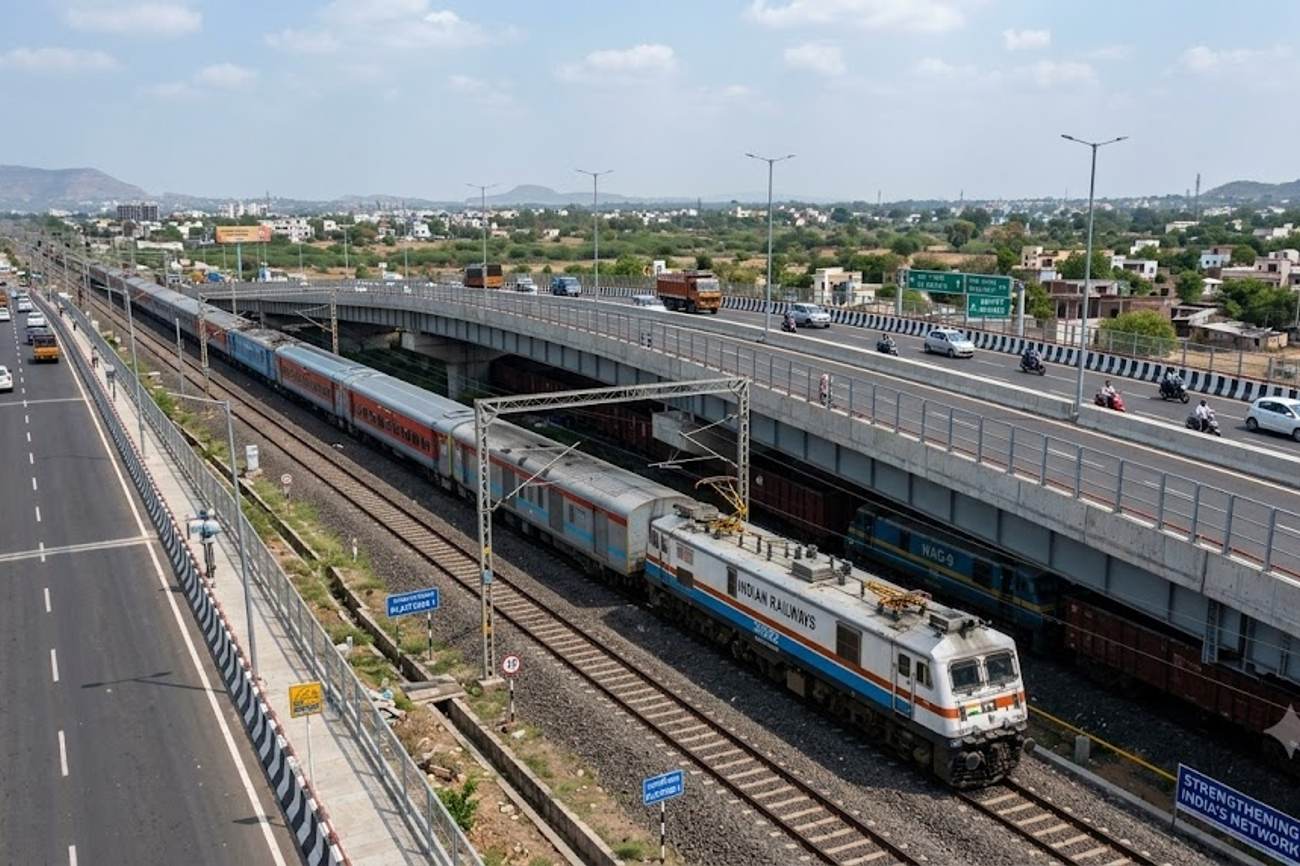
Image generated by AI
[New Delhi, October 2024] — Indian Railways has greenlit two major infrastructure projects totaling more than Rs 275 crore to expand electric rail capacity and streamline train operations across Gujarat and Andhra Pradesh.
The investment splits between a high-priority electric traction system overhaul in the South Coast Railway zone and the construction of a complex four-lane Road Over Bridge (ROB) within the Western Railway network. These upgrades target systemic bottlenecks that currently limit the frequency and reliability of train movements in these high-traffic corridors.
Infrastructure Bottlenecks Triggering Upgrades
The current operational demands on the Indian rail network have outpaced existing power and crossing infrastructure. In Andhra Pradesh, the Savalyapuram-Guntur section required a modernization of its electrical backbone to handle increased tonnage and frequency. Simultaneously, in Gujarat, the Udhna-Ukai Songadh section suffered from traffic conflicts at level crossings, where road and rail movements intersected, creating safety risks and scheduling delays.
By addressing these specific failure points, the Ministry of Railways aims to shift from reactive maintenance to proactive capacity expansion. The traction project focuses on the invisible power grids that propel electric locomotives, while the ROB project focuses on physical grade separation to eliminate the need for trains to slow or stop for road traffic.
Regional Impact and Project Scope
The approved works target two distinct geographical zones with varying engineering requirements:
-
South Coast Railway (Andhra Pradesh):
- Project: Electric Traction System Upgrade.
- Investment: Rs 142 crore.
- Scope: Modernization of a 73 Route Kilometre section, encompassing 146 Track Kilometres.
- Primary Goal: Increasing power supply reliability and supporting higher operational volumes.
-
Western Railway (Gujarat):
- Project: Four-lane Road Over Bridge (ROB).
- Investment: Rs 133.2295 crore.
- Funding Model: A 50/50 cost-sharing agreement between Indian Railways (Rs 66.6147 crore) and the state government (Rs 66.6148 crore).
- Primary Goal: Removing road-rail conflict points to increase safety and speed.
What This Means for Travelers
While these projects involve "back-end" engineering—such as power grids and concrete viaducts—the impact on the end-user is direct. For passengers booking tickets through IRCTC, these upgrades translate to three specific improvements:
1. Enhanced Punctuality The removal of level crossings via the Udhna-Ukai Songadh ROB means trains no longer face the unpredictable delays associated with road traffic congestion at crossings. This creates a more predictable arrival and departure schedule.
2. Increased Train Frequency The electric traction upgrade in the Savalyapuram-Guntur section expands the "electrical ceiling" of the route. This allows the railway to run more electric trains per hour without risking power surges or system failures, effectively increasing the number of available seats and time slots for passengers.
3. Long-Term Reliability Modernizing 146 track kilometres of electrical infrastructure reduces the likelihood of mid-journey power failures or traction-related breakdowns, which are primary causes of unplanned halts in rural sections.
Engineering the Udhna-Ukai Songadh Crossing
The Gujarat ROB project is not a standard bridge construction; it presents significant technical hurdles that justify its Rs 133.2295 crore price tag. Engineers are dealing with a 62 per cent skew at the crossing, meaning the bridge must be built at a sharp angle relative to the tracks, complicating the structural load distribution.
The project is broken down into two primary engineering components:
- The Viaduct: A 311.58-metre main span costing Rs 19.98 crore.
- The Railway Approach (RE): A 524.32-metre approach section costing Rs 10.25 crore.
These specifications ensure that the transition from road to bridge is seamless for heavy vehicle traffic, preventing new bottlenecks from forming at the bridge entrances.
Future Network Trajectory
These approvals are part of a broader strategic pivot by the Indian government to electrify the entire national network. By investing in the Savalyapuram-Guntur power systems, the railway is preparing the region for the next generation of high-speed and high-capacity electric rolling stock.
The shift toward grade-separated crossings (ROBs) across the Western Railway zone indicates a long-term goal of eliminating level crossings entirely on major arterial routes. This transition is essential for the safe implementation of higher speed limits for express trains, as the risk of vehicle-train collisions is removed.
The timeline for these projects will involve phased construction. Travelers should expect localized speed restrictions or temporary diversions in the Udhna-Ukai Songadh and Savalyapuram-Guntur sectors as work commences. However, once completed, these corridors will serve as blueprints for similar capacity-building projects across other railway zones.
FAQ: Indian Railway Infrastructure 2024
Will these projects cause immediate travel delays? Short-term disruptions, such as temporary speed restrictions or brief track closures, may occur during the construction of the ROB and the installation of traction equipment. Passengers should check current schedules for the Savalyapuram-Guntur and Udhna-Ukai Songadh sections.
How does an "electric traction upgrade" actually help a passenger? It is similar to upgrading a city's power grid to support more air conditioners in summer. By increasing the power capacity of the tracks, the railway can run more trains and faster trains without the system overloading or failing.
Who is paying for the new bridge in Gujarat? The cost of Rs 133.2295 crore is split almost exactly in half. Indian Railways is contributing Rs 66.6147 crore, and the Gujarat state government is providing Rs 66.6148 crore.
What is a "62 per cent skew" and why does it matter? A skew refers to the angle at which the bridge crosses the railway tracks. A 62 per cent skew is a sharp angle, making the engineering more complex and expensive than a bridge that crosses tracks at a perpendicular 90-degree angle.
Infrastructure investments today dictate the punctuality of tomorrow's commute.
#IndianRailways #SouthCoastRailway #WesternRailway #AndhraPradeshRail #GujaratInfrastructure #SavalyapuramGuntur2024 #UdhnaUkaiSongadh
Related Travel Guides
- Calgary Echoes Toronto and More as Film Festival Destinations of Canada Set the Stage for Unforgettable Cinema Travel
- Northern Railway Launches Festival Special Trains to Ease Dussehra, Diwali and Chhath Puja Travel Rush
- California High-Speed Rail Enters New Oversight Phase After Travel Expense Audit
Disclaimer
This article is for informational and educational purposes only. It does not constitute legal, financial, or professional advice. While we strive to provide accurate and up-to-date information, travel policies, regulations, and conditions change rapidly. Always verify information with official sources before making travel decisions. Nomad Lawyer makes no representations about the accuracy, reliability, completeness, or suitability of the information provided. Readers should consult qualified professionals for advice specific to their circumstances. The views expressed in this article are those of the author and do not necessarily reflect the views of Nomad Lawyer.
Preeti Gunjan
Contributor & Community Manager
A passionate traveller and community builder. Preeti helps grow the Nomad Lawyer community, fostering engagement and bringing the reader experience to life.
Learn more about our team →