
Indian Railways Extends 3 Special Train Services Through August 2026, Maintains Unchanged Schedules
Indian Railways extends weekly special trains on east-central, east-south, and south-east corridors through August 2026 with no operational changes to timetables or routes.

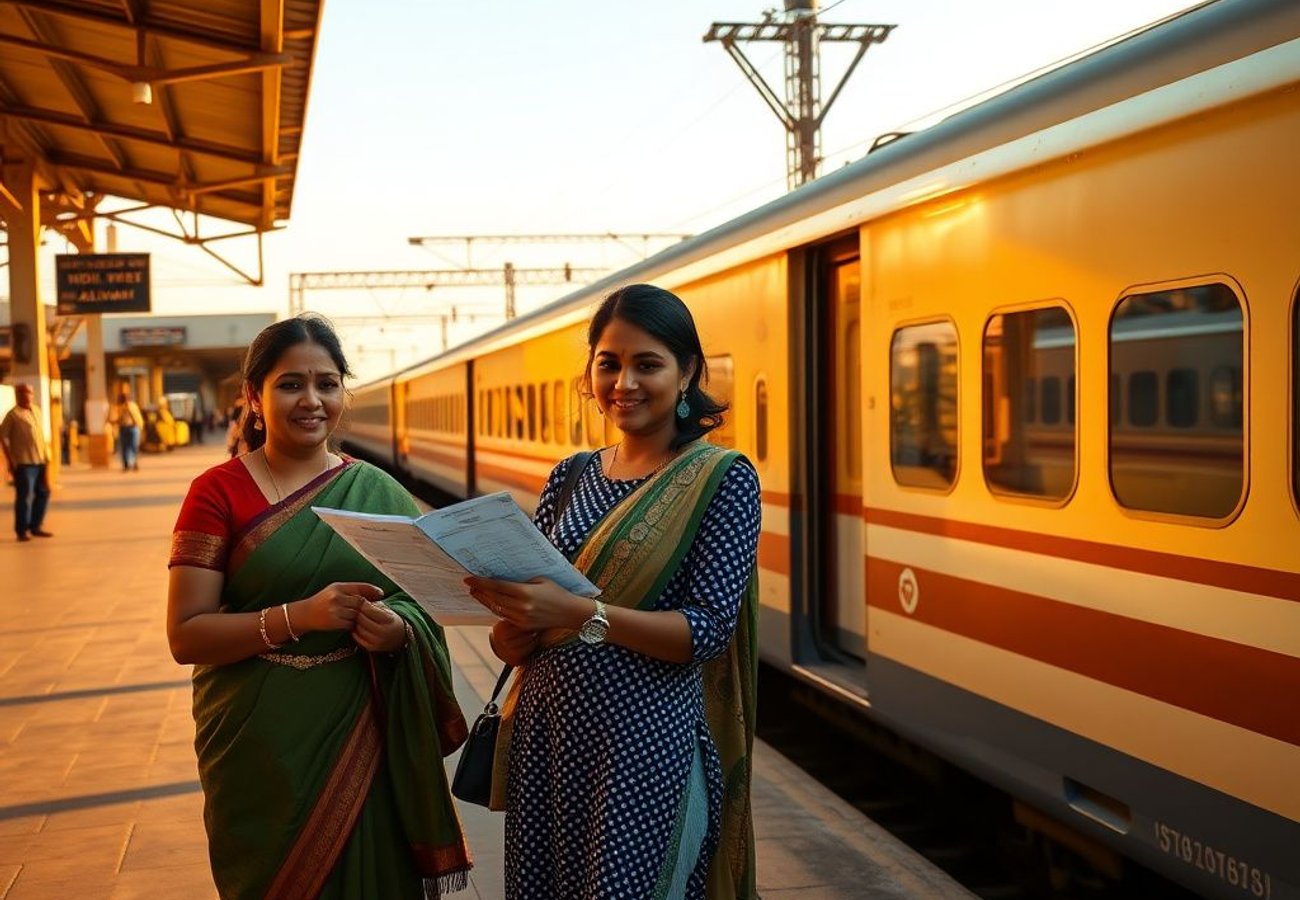
Image generated by AI
Indian Railways Doubles Down on High-Demand Routes With No Schedule Changes
Indian Railways just made a significant announcement that will matter to millions of regular commuters: three weekly special train services operating across critical inter-regional corridors have been extended through August 2026—and here's the key detail—without a single operational change.
The decision, announced on June 23, 2026, reflects sustained passenger demand on routes connecting central, eastern, and southern India. No timetable adjustments. No stoppage changes. No coach composition modifications. Passengers get continuity; railways get to keep capacity where it matters.
Reddit: "Finally, some consistency in Indian Railways operations. These extensions without changes mean I can actually plan my travel reliably." — r/IndianRailways
The Jhansi-Khurda Road Corridor Extension
The first major extension involves the Jhansi–Khurda Road weekly special train pair, which now runs through late August 2026.
Train No. 01929 departs from Virangana Lakshmibai Jhansi railway station and terminates at Khurda Road Junction. This outbound service operates until 28 August 2026. The return journey, Train No. 01930, runs from Khurda Road back to Jhansi and has been extended to 30 August 2026.
This east-central link is crucial infrastructure. It connects Uttar Pradesh's industrial heartland with Odisha's railway network, serving professionals, students, and families moving between states. The extension signals that occupancy remains strong enough to justify continuous operation without modification.
Bhubaneswar-Yesvantpur: Bridging East and South
The second extension tackles one of India's longest and most economically important corridors: Bhubaneswar to Yesvantpur Junction, a vital east-south connection.
Train No. 02811 (Bhubaneswar to Yesvantpur) will operate until 29 August 2026, while the return service, Train No. 02812, runs through 31 August 2026. This route serves a broad demographic: students heading to India's technology corridor, professionals with inter-state employment, and families maintaining ties across regions.
The extension of this particular pair suggests passenger loads remain consistently high—the kind of data that justifies keeping trains on their existing schedules rather than introducing operational changes that could disrupt travel planning.
Chennai Central-Santragachi: South-to-East Lifeline
The third extension involves the Chennai Central–Santragachi weekly special train, connecting Tamil Nadu's metropolitan hub with West Bengal's railway network.
Train No. 06077 operates from Puratchi Thalaivar Dr. MGR Central railway station to Santragachi Junction and continues until 4 July 2026. The reverse service, Train No. 06078, runs through 6 July 2026. This corridor serves travelers between Tamil Nadu and West Bengal for employment, education, and family-related journeys.
Why These Extensions Matter—No Hidden Changes
Here's what makes this announcement newsworthy: Indian Railways is extending service validity while maintaining complete operational uniformity. Departure timings remain identical. Arrival schedules don't shift. Stoppage patterns stay the same. Coach composition is unchanged.
For passengers, this is gold. You build a schedule around these trains—departure at 14:30, arrival at 09:15 three days later, stops in five cities. That structure holds firm through August 2026.
Weekly special trains exist specifically to supplement regular services on high-demand routes. According to Indian Railways official documentation, these services address capacity gaps and seasonal demand fluctuations. The fact that multiple train pairs are being extended indicates sustained occupancy across several long-distance corridors.
The Bigger Picture: Regional Connectivity
Collectively, these three extensions strengthen connectivity across five states: Odisha, Uttar Pradesh, Karnataka, Tamil Nadu, and West Bengal. The network effect matters—each route handles a distinct travel flow, creating what amounts to an inter-state mobility backbone supporting economic movement, education access, and social connectivity.
By extending without redesign, Indian Railways is choosing stability over disruption. The approach trades operational flexibility for passenger predictability—a calculation that works when demand data supports it.
For nomad lawyers, digital workers, and professionals managing irregular travel schedules across India, these extensions provide a reliable foundation for booking and planning. When a train operates on an unchanged schedule through August, you can lock in connections with confidence.
Indian Railways proves that sometimes the best operational decision is to leave well enough alone.
Related Travel Guides
Disclaimer
This article is for informational and educational purposes only. It does not constitute legal, financial, or professional advice. While we strive to provide accurate and up-to-date information, travel policies, regulations, and conditions change rapidly. Always verify information with official sources before making travel decisions. Nomad Lawyer makes no representations about the accuracy, reliability, completeness, or suitability of the information provided. Readers should consult qualified professionals for advice specific to their circumstances. The views expressed in this article are those of the author and do not necessarily reflect the views of Nomad Lawyer.
Raushan Kumar
Founder & Lead Developer
Full-stack developer with 11+ years of experience and a passionate traveller. Raushan built Nomad Lawyer from the ground up with a vision to create the best travel and law experience on the web.
Learn more about our team →