
India, Nepal, and Bhutan Form Himalayan Green Tourism Circuit: Unified Trekking Pass and Mountain Safety Alliance
India, Nepal, and Bhutan unite under the Trans-Himalayan Sustainable Tourism Alliance, launching a universal digital trekking pass and shared mountain rescue protocols.

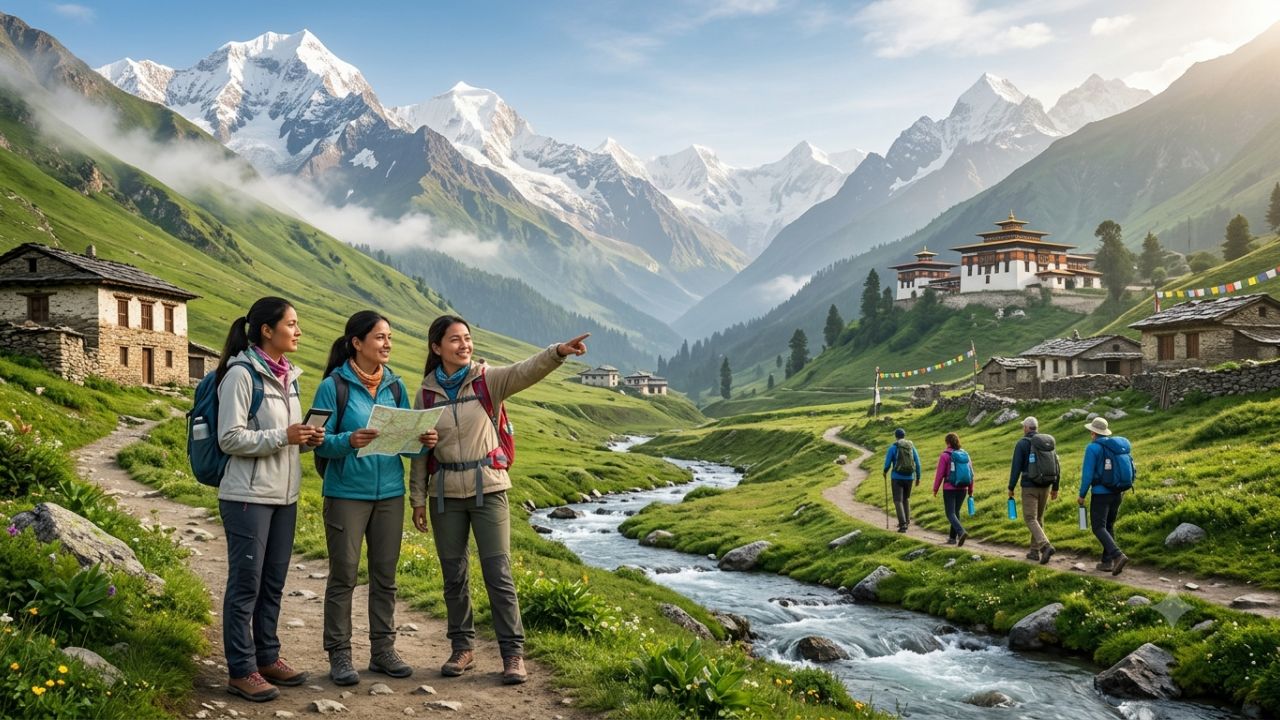
The Trans-Himalayan Sustainable Tourism Alliance brings India, Nepal, and Bhutan together under the Himalayan Green Circuit starting November 2026.
In a groundbreaking tri-nation conservation and adventure tourism milestone, India, Nepal, and Bhutan have officially aligned to launch the "Himalayan Green Circuit," a unified cross-border mountain tourism corridor aimed at transforming high-altitude exploration across the world's highest peaks. Operating under the newly ratified Trans-Himalayan Sustainable Tourism Alliance (THSTA), scheduled to commence full operations on 15 November 2026, the joint initiative coordinates tourism boards, forestry departments, and environment ministries from all three sovereign states. The pact establishes a universal digital trekking pass for qualifying cross-border itineraries, introduces standardized high-altitude search-and-rescue (SAR) and medical evacuation protocols, and channels shared permit revenue directly into local community conservation funds and alpine carbon-offset projects.
The initiative marks the first time the three Himalayan nations have formalized an integrated administrative and ecological safety net across their shared mountain ranges. While the Himalayas attract hundreds of thousands of international trekkers, mountaineers, and cultural pilgrims each year, travelers attempting multi-country journeys have long struggled with fragmented regional permits, duplicated national border clearances, and uncoordinated emergency response networks during severe weather events. By linking India’s diverse northern sectors—from Ladakh and Himachal Pradesh to Uttarakhand and Sikkim—with Nepal’s legendary Everest and Annapurna trails and Bhutan’s high-value, low-impact cultural sanctuaries, the Himalayan Green Circuit establishes a sustainable, resilient blueprint for global mountain tourism.
The Trans-Himalayan Alliance: Uniting Three Mountain Cultures
The Himalayan mountain system spans nearly 2,400 kilometers, forming an unbroken ecological and spiritual spine across South Asia. Despite sharing contiguous watersheds, fragile alpine biodiversity, and centuries-old trade routes, modern adventure travel across the region has historically functioned within rigid national silos.
                      ┌──────────────────────────────────────────────┐
                      │    Trans-Himalayan Sustainable Alliance      │
                      └──────────────────────┬───────────────────────┘
                                             │
             ┌───────────────────────────────┼───────────────────────────────┐
             ▼                               ▼                               ▼
    ┌──────────────────┐           ┌──────────────────┐           ┌──────────────────┐
    │  India (North)   │           │   Nepal (Core)   │           │  Bhutan (East)   │
    │ • Ladakh & Spiti │           │ • Everest/Khumbu │           │ • Druk Path      │
    │ • Uttarakhand    │           │ • Annapurnas     │           │ • Paro & Punakha │
    │ • Sikkim Trails  │           │ • Langtang Core  │           │ • High-Value SDF │
    └──────────────────┘           └──────────────────┘           └──────────────────┘
The Himalayan Green Circuit brings together three distinct tourism models into a complementary framework:
- India (High-Altitude Wilderness & Eastern Borderlands): Encompassing trans-Himalayan rain-shadow deserts like Ladakh's Markha Valley and Himachal's Spiti Valley, alongside the sacred river valleys of Uttarakhand (Garhwal and Kumaon) and the lush biodiversity of Sikkim framing Mount Kanchenjunga. India provides extensive trekking diversity, expansive state trail systems, and a rich tapestry of Buddhist and Hindu pilgrimage heritage.
- Nepal (Global Mountaineering & Epic Ridge Treks): The epicenter of commercial Himalayan trekking, Nepal houses eight of the world's fourteen eight-thousanders. From the iconic teahouse trails of the Everest Base Camp (Khumbu) and the Annapurna Circuit to remote wilderness routes like the Manaslu Circuit and Upper Mustang, Nepal contributes high-capacity infrastructure, seasoned Sherpa mountain guiding expertise, and vibrant mountain communities.
- Bhutan (High-Value, Low-Impact Conservation): Renowned globally for its Gross National Happiness philosophy and mandatory Sustainable Development Fee (SDF), Bhutan approaches tourism through strict ecological preservation. Treks such as the Druk Path and the grueling Snowman Trek offer pristine rhododendron forests, ancient cliffside dzongs, and untouched high-altitude passes where tourist footfall is carefully managed.
| Region / Nation | Key Trekking Hubs | Unique Geographic Asset | Regulatory Model |
|---|---|---|---|
| India | Ladakh, Himachal, Uttarakhand, Sikkim | Vast geographic variety; alpine deserts to subtropical foothills | State forest permits, Inner Line Permits (ILP) & protected area clearances |
| Nepal | Khumbu (Everest), Annapurna, Langtang, Manaslu | High concentration of 8,000m giants & established teahouse networks | TIMS card (Trekkers' Information Management System) & National Park entries |
| Bhutan | Paro, Punakha, Haa Valley, Bumthang | Carbon-negative kingdom; pristine ancient cultural landscapes | Mandatory licensed guides & Sustainable Development Fee (SDF) daily tariff |
The Universal Digital Trekking Pass: How the "Himalayan Green Pass" Works
At the operational core of the alliance is the introduction of the Himalayan Green Pass (HGP)—a centralized, blockchain-verified digital credential designed to eliminate redundant administrative hurdles for adventure travelers embarking on multi-country Himalayan expeditions.
┌────────────────────────────────────────────────────────────────────────┐
│             Himalayan Green Pass (HGP) Architecture & Flow             │
├────────────────────────────────────────────────────────────────────────┤
│                                                                        │
│   Adventure Traveler / Licensed Tour Operator                          │
│   └──> Single Application via THSTA Centralized Digital Portal         │
│        • Route itinerary & guide accreditation                         │
│        • High-altitude travel insurance details                        │
│        • Biometric ID verification & medical declaration               │
│                                                                        │
│                                  │                                     │
│                                  ▼                                     │
│   Coordinated Tri-Nation Verification Engine                           │
│   ├──> Ministry of Tourism / Home Affairs (India)                      │
│   ├──> Nepal Tourism Board (NTB) & Department of Immigration           │
│   └──> Department of Tourism (Bhutan)                                  │
│                                                                        │
│                                  │                                     │
│                                  ▼                                     │
│   Issuance: Universal Digital Himalayan Green Pass (QR-Enabled)        │
│   • Pre-authorized checkpoint clearances along designated trails       │
│   • Integrated carbon-offset fee distribution to local host villages   │
│   • Live GPS-linked emergency search-and-rescue beacon profile         │
│                                                                        │
└────────────────────────────────────────────────────────────────────────┘
Currently, an international traveler planning to hike through Sikkim, cross into Nepal for an Annapurna circuit, and conclude with cultural trekking in Bhutan must navigate three separate visa regimes, distinct local park permits, restricted-area authorizations (such as Protected Area Permits in India or Special Restricted Area Permits in Nepal), and disjointed fee systems.
The Himalayan Green Pass reorganizes this workflow without compromising national security:
- Unified Application Dossier: International adventurers submit their travel plans, medical fitness declarations, and licensed guide details once through the centralized THSTA portal at least 14 days prior to departure.
- Synchronized Checkpoint Verification: Rather than queuing for paper stamps at remote police outposts and forestry checkpoints, trekkers carry an offline-capable digital pass with an encrypted QR code verified instantly by border rangers and checkpoint officials.
- Transparent Combined Fee Billing: All trail fees, regional national park entries (e.g., Sagarmatha National Park, Kanchenjunga Biosphere, Jigme Dorji National Park), and local eco-levies are calculated transparently in one consolidated payment.
- Sovereign Visa Policies Intact: The alliance clarifies that the digital pass covers trekking and environmental permits only. Sovereign immigration requirements, national tourist visas, and sovereign border immigration clearances remain strictly required and enforced at official land crossings and international airports.
Standardized High-Altitude Search-and-Rescue (SAR) Coordination
High-altitude trekking in the Himalayas carries inherent medical risks, including Acute Mountain Sickness (AMS), High-Altitude Pulmonary Edema (HAPE), sudden blizzards, landslides, and glacial crevasse hazards. In the past, cross-border rescue operations—particularly along border ridges between Nepal and Sikkim, or western Nepal and Uttarakhand—faced severe delays due to restricted cross-border communications and complex airspace permissions.
┌────────────────────────────────────────────────────────────────────────┐
│            Tri-Nation High-Altitude Emergency Response System          │
├────────────────────────────────────────────────────────────────────────┤
│ 1. Unified Emergency Beacon: Shared SOS radio & satellite frequencies  │
│ 2. Pre-Authorized Heli-Evacuation: Streamlined cross-border airspace   │
│ 3. Standardized Medical Triage: Hyperbaric chambers & alpine clinics   │
│ 4. Porter & Guide Safety Standards: Mandatory gear & rescue coverage   │
└────────────────────────────────────────────────────────────────────────┘
The Trans-Himalayan Sustainable Tourism Alliance introduces rigorous emergency protocols:
- Harmonized SOS Frequency and Satellite Tracking: All registered expeditions will have their digital itineraries synchronized with regional rescue centers. Trekkers using satellite messaging devices (such as Garmin inReach) can trigger SOS alerts that route instantly to the nearest qualified mountain rescue team, regardless of which side of a mountain ridge the incident occurs.
- Pre-Authorized Medevac Aviation Protocols: Emergency helicopter services operating in border-adjacent mountain zones will operate under expedited clearance corridors, allowing swift evacuation of critically injured climbers or trekkers directly to high-altitude medical centers in Kathmandu, Leh, Gangtok, or Thimphu.
- Mandatory Insurance Standards: To qualify for the Himalayan Green Pass, travelers must possess travel insurance that covers emergency high-altitude helicopter evacuation up to 6,000 meters and acute altitude treatment without restrictive exclusion clauses.
- Porter and Mountain Guide Protections: The pact establishes mandatory baseline standards for local support staff, guaranteeing proper cold-weather gear, fair wage structures, and automatic inclusion in helicopter search-and-rescue coverage.
Funding Alpine Conservation and Empowering Remote Mountain Communities
Mass tourism in fragile alpine ecosystems has raised severe environmental alarms across the Himalayas. Abandoned climbing gear, plastic litter, trail erosion, deforestation for firewood, and sewage accumulation in high-altitude base camps threaten glaciers and downstream river basins that provide fresh water to more than one billion people.
To address these vulnerabilities, the Himalayan Green Circuit establishes a dedicated Trans-Himalayan Eco-Fund:
┌────────────────────────────────────────────────────────────────────────┐
│          Trans-Himalayan Eco-Fund: Revenue Distribution Model          │
├────────────────────────────────────────────────────────────────────────┤
│                                                                        │
│   Permit Revenues Generated via Himalayan Green Pass                   │
│                               │                                        │
│          ┌────────────────────┼────────────────────┐                   │
│          ▼                    ▼                    ▼                   │
│   40% Trail & Waste    35% Community Wealth   25% Reforestation &      │
│   Management           Funds                  Glacial Monitoring       │
│   • Pack-it-out depots • Village homestays    • High-altitude native   │
│   • Zero-plastic bins  • Guide academies      tree nurseries           │
│   • Solar trail lodges • Women-led co-ops     • Cryosphere monitoring  │
│                                                                        │
└────────────────────────────────────────────────────────────────────────┘
Key environmental directives enforced under the pact include:
- Zero Single-Use Plastics Above 3,000m: Trekkers and expedition organizers must carry refillable metal flasks, portable water filtration systems, or purification tablets. Commercial sale of bottled water will be progressively phased out along designated Green Circuit routes in favor of community-run filtered water stations.
- Community Wealth Retention: A guaranteed 35% of all digital pass permit fees will be deposited directly into village-level micro-grants in remote valleys, financing community-run homestays, solar power installations, school programs, and clean sanitation infrastructure.
- Carry-Your-Trash "Pack-It-Out" Audits: Expeditions operating in designated wilderness zones must weigh their non-biodegradable waste at trailheads upon departure and return with matching or exceeding weight, with stiff penalties for non-compliance.
Sample 14-Day Cross-Himalayan Green Circuit Expedition
With administrative procedures synchronized, adventure travel specialists can now market multi-destination itineraries that blend the unique cultural and physical topography of all three nations:
┌────────────────────────────────────────────────────────────────────────┐
│             Sample 14-Day Tri-Nation Himalayan Green Itinerary         │
├───────┬──────────────────────┬─────────────────────────────────────────┤
│ Day   │ Region & Country     │ Highlights & Key Activities             │
├───────┼──────────────────────┼─────────────────────────────────────────┤
│ Day 1 │ Kathmandu, Nepal     │ Briefing at THSTA Center; gear check    │
├───────┼──────────────────────┼─────────────────────────────────────────┤
│ Day 2 │ Pokhara & Annapurnas │ Flight to Pokhara; trek to Australian   │
│       │ (Nepal)              │ Camp; view of Machapuchare (Fishtail)   │
├───────┼──────────────────────┼─────────────────────────────────────────┤
│ Days  │ Annapurna Foothills  │ Eco-lodge trekking through Ghorepani;   │
│ 3–5   │ (Nepal)              │ sunrise over Dhaulagiri from Poon Hill  │
├───────┼──────────────────────┼─────────────────────────────────────────┤
│ Day 6 │ Transit to Sikkim    │ Overland crossing / flight to Bagdogra; │
│       │ (India)              │ transfer to Gangtok; verify Green Pass  │
├───────┼──────────────────────┼─────────────────────────────────────────┤
│ Days  │ Western Sikkim       │ Yuksom to Dzongri ridge; views of       │
│ 7–9   │ (India)              │ Mount Kanchenjunga; homestay immersion  │
├───────┼──────────────────────┼─────────────────────────────────────────┤
│ Day 10│ Transit to Paro      │ Short scenic flight to Paro, Bhutan;    │
│       │ (Bhutan)             │ visit historic Rinpung Dzong            │
├───────┼──────────────────────┼─────────────────────────────────────────┤
│ Days  │ Druk Path Trail      │ High-altitude lake trekking; camping    │
│ 11–12 │ (Bhutan)             │ among pristine pine and rhododendron    │
├───────┼──────────────────────┼─────────────────────────────────────────┤
│ Day 13│ Tiger's Nest         │ Ascent to iconic Paro Taktsang;         │
│       │ (Bhutan)             │ evening traditional hot-stone bath      │
├───────┼──────────────────────┼─────────────────────────────────────────┤
│ Day 14│ Paro Disembarkation  │ International flight departure          │
└───────┴──────────────────────┴─────────────────────────────────────────┘
Practical Guide for Himalayan Adventure Travelers
For trekkers, climbing parties, and tour operators preparing for the 15 November 2026 launch, keeping several essential operational rules in mind will ensure a smooth journey:
- Apply Well Ahead of the Peak Season: While the digital pass accelerates processing, multi-country journeys still require advance visa clearances for India, Nepal, and Bhutan. Expeditions should initiate their digital applications 4 to 6 weeks before intended travel dates.
- Respect Bhutan’s Sustainable Development Fee (SDF): Although Bhutan participates fully in the Himalayan Green Circuit, its national daily SDF tariff ($100 per adult per night for most international visitors) remains mandatory and will be integrated into the final billing calculation.
- Strict Physical and Acclimatization Readiness: Crossing between high-altitude valleys demands rigorous acclimatization. Trekkers should ensure itineraries incorporate scheduled rest days and follow the golden rule of high-altitude mountaineering: climb high, sleep low.
- Engage Certified Local Guides: In line with safety mandates across Nepal, Bhutan, and several Indian state forestry divisions, solo unguided trekking remains restricted in high-risk alpine zones to prevent disorientation and hypothermia accidents.
Frequently Asked Questions
What is the Himalayan Green Circuit?
It is a unified cross-border mountain tourism corridor established by India, Nepal, and Bhutan launching on 15 November 2026 to coordinate trekking permits, high-altitude search-and-rescue, and alpine conservation funding.
Does the Himalayan Green Pass replace country visas?
No. The Himalayan Green Pass streamlines trekking, park, and restricted-area permits, but travelers must still obtain valid sovereign entry visas and clear immigration checks for India, Nepal, and Bhutan.
How does the alliance handle high-altitude emergencies?
The alliance establishes shared satellite emergency radio frequencies, standardized medevac helicopter clearance protocols across border regions, and coordinated rescue dispatch to ensure rapid medical evacuations.
How does the circuit protect the Himalayan environment?
A dedicated Trans-Himalayan Eco-Fund directs 40% of permit fees to trail restoration and waste management, bans single-use plastics above 3,000 meters, and channels 35% of revenues into remote host community projects.
Related Travel Guides
- Saudi Arabia, Egypt, and Jordan Forge Red Sea Yachting Tourism Pact: NEOM, Sharm El-Sheikh, and Aqaba Unite
- South Africa Declares Grasslands National Park in Eastern Cape: High-Altitude Ecotourism and Stewardship Guide
- Singapore, Malaysia, and Indonesia Launch SIJORI Smart-Pass Corridor: Biometric Borderless Travel for Digital Nomads
Disclaimer
This article is for informational and educational purposes only. It does not constitute legal, financial, or professional advice. While we strive to provide accurate and up-to-date information, travel policies, regulations, and conditions change rapidly. Always verify information with official sources before making travel decisions. Nomad Lawyer makes no representations about the accuracy, reliability, completeness, or suitability of the information provided. Readers should consult qualified professionals for advice specific to their circumstances. The views expressed in this article are those of the author and do not necessarily reflect the views of Nomad Lawyer.
Kunal K Choudhary
Co-Founder & Contributor
A passionate traveller and tech enthusiast. Kunal contributes to the vision and growth of Nomad Lawyer, bringing fresh perspectives and driving the community forward.
Learn more about our team →