India Launches International Digi Yatra Trials: Seven Airports Test E-Passport Biometrics

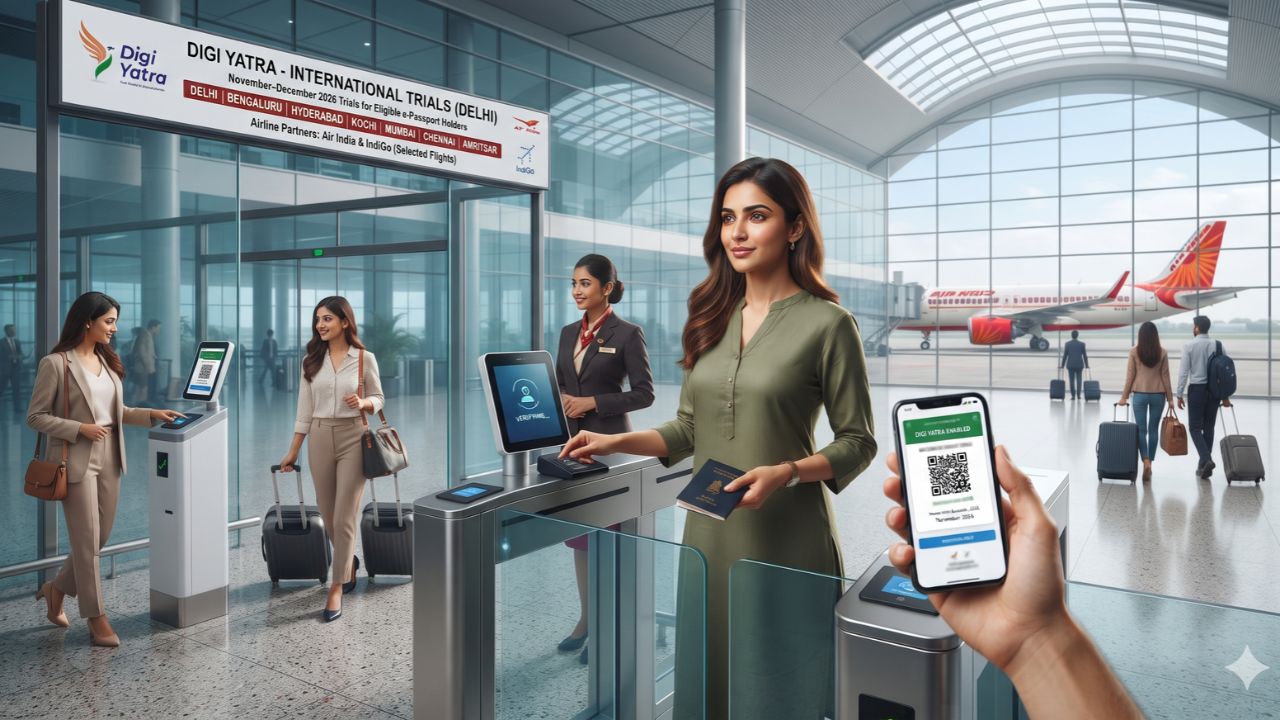
After processing over 110 million domestic passenger journeys across 39 airports using facial recognition identity validation, India’s Ministry of Civil Aviation has expanded biometric airport processing beyond national borders—initiating international Digi Yatra trials across seven major hubs throughout November and December 2026.
Announced officially by the Ministry of Civil Aviation on 1 November 2026, the testing phase focuses on eligible Indian citizens holding electronic passports (e-passports) equipped with embedded biometric chips. Deployed across departure terminals in Delhi, Mumbai, Bengaluru, Hyderabad, Chennai, Kochi, and Amritsar, the pilot integrates digital identity verification on selected overseas flights operated by anchor carriers Air India and IndiGo. The trial serves as a proving ground for operational scalability, collecting real-time passenger feedback to prepare for an extensive international commercial rollout across Indian aviation hubs in 2027.
International Digi Yatra Framework and Airport Scope
The progression into international operations represents a complex technological evolution for the Digi Yatra ecosystem. Domestically, the platform operates by cross-referencing boarding passes with government-issued Aadhaar credentials to grant access through terminal gates and domestic security queues. For international journeys, identity validation must comply with stringent International Civil Aviation Organization (ICAO) standards and cross-border border control protocols.
Under the pilot framework, eligible travelers utilize smartphones equipped with Near Field Communication (NFC) readers to scan the Machine Readable Zone (MRZ) of their Indian e-passport, extract the cryptographic signature from the embedded microchip, and capture a live facial selfie. This generates an e-passport-based Verifiable Credential stored in the user's local Digi Yatra mobile wallet. At the airport, biometric cameras at terminal entry gates, Security Hold Areas (SHA), and boarding gates match the traveler's face against the local credential token.
The table below details the trial airports, participating carriers, credential criteria, and domestic operational benchmarks published by civil aviation authorities:
| Program Dimension | Trial Parameters (Nov – Dec 2026) | Full Scale Projection (2027 Expansion) | Domestic Foundation (1 Nov 2026 Baseline) |
|---|---|---|---|
| Participating Airports | 7 gateways: DEL, BOM, BLR, HYD, MAA, COK, ATQ | Nationwide international rollout | 39 operating domestic airports (expanding by +25) |
| Target Passenger Group | Indian nationals holding valid e-passports | Broadened citizen and foreign national groups | Domestic passengers with Aadhaar / DigiLocker |
| Operating Airlines | Selected overseas flights on Air India & IndiGo | All participating international carriers | Full domestic scheduled fleet |
| Active Biometric Touchpoints | Terminal e-gates, Security Hold Area, Boarding gates | Integrated terminal biometric corridor | Complete kerb-to-gate domestic network |
| Adoption Milestones | Initial pilot feedback and load testing | System-wide commercial deployment | 26.5+ million users; 110+ million journeys |
| Physical Document Rules | Physical passport and visa mandatory | Physical passport retention required | Digital boarding pass and biometric ID |
Crucially, the Ministry of Civil Aviation emphasizes that the international trial complements established border procedures rather than supplanting them. Holding a verified Digi Yatra credential does not exempt passengers from physical document checks. Travelers must continue carrying their physical passport and visa documentation, and all passengers must clear mandatory manual immigration desks administered by the Bureau of Immigration.
What Makes International Biometric Processing Different
Navigating an international departure from an Indian mega-terminal like Delhi Indira Gandhi Terminal 3 or Mumbai Chhatrapati Shivaji Maharaj Terminal 2 historically involves multiple repetitive identity checks: showing a ticket and passport at the outer terminal perimeter to CISF officers, queueing for physical check-in, clearing customs and immigration, entering security screening, and presenting documentation again at the boarding bridge.
The international Digi Yatra framework aims to eliminate queue friction at three non-immigration pinch points. The primary difference lies in data privacy and storage architecture. Unlike centralized governmental surveillance databases, Digi Yatra operates on a decentralized, self-sovereign identity framework. The passenger's facial biometric template and e-passport cryptographic keys reside exclusively within the encrypted digital wallet on their personal smartphone.
When an eligible passenger arrives at a participating terminal entry gate in Kochi or Bengaluru, their smartphone broadcasts a temporary credential hash to the local gate validator. The terminal camera matches the passenger's face against the locally decrypted token, opening the speed gates in under three seconds. Once the flight departs, the temporary facial data cached at the airport checkpoint servers is automatically purged, satisfying strict data protection standards.
Visitor Insider Tips for Using Digi Yatra on International Departures
Eligible international travelers participating in the November and December trials can optimize their airport transit by following targeted local preparation steps:
- Verify E-Passport Chip Functionality via Passport Seva: Only Indian electronic passports containing embedded RFID chips qualify for the international trial. Conventional printed passports without chips cannot generate the required Verifiable Credential. Verify your passport status and chip issuance rules through the Ministry of External Affairs Passport Seva Portal.
- Complete NFC Registration at Home Before Departure: Do not attempt to register your e-passport while standing on the terminal forecourt curb. Read the chip using your phone’s NFC sensor in a quiet, well-lit room at home, taking care to hold the passport back cover flat against your phone's antenna until the progress bar completes 100%.
- Confirm Specific Flight Eligibility with Air India and IndiGo: Participation is limited to specific flight numbers operated by Air India and IndiGo out of the seven trial airports. Check your booking dashboard or airline SMS notifications to verify whether your flight rotation is equipped with active international Digi Yatra departure gates.
- Keep Physical Documents Instantly Accessible: Remember that Digi Yatra currently automates only terminal entry, security screening gates, and selected boarding gates. You must present your physical passport, destination entry visas, or overseas residency permits at the airline check-in desk and the Bureau of Immigration counter.
- Review National Civil Aviation Guidelines: Monitor official updates regarding gate availability and future terminal expansions through the Ministry of Civil Aviation.
Cultural and Environmental Context
The international expansion of Digi Yatra forms a cornerstone of India’s broader Digital India and "Ease of Flying" policy initiatives. As Indian international passenger traffic expands rapidly with massive wide-body aircraft deliveries and expanding transcontinental route maps, airport physical infrastructure faces acute capacity constraints.
Physical terminal footprints cannot always be expanded outward without claiming valuable urban land or intruding into neighboring communities. By substituting manual document inspections with high-speed automated biometric validation, airport operators can double the passenger throughput of existing departure gates without building additional terminal wings.
From an environmental standpoint, digitized processing eliminates millions of printed boarding passes and baggage claim stubs. Furthermore, reducing terminal congestion cuts idling time for shuttle buses and airside transport, curbing localized carbon emissions across major metropolitan transit corridors like Delhi and Mumbai.
FAQ: International Digi Yatra Trials 2026–2027
Which airports are testing international Digi Yatra in 2026?
The trials run during November and December 2026 across seven airports: Delhi (DEL), Mumbai (BOM), Bengaluru (BLR), Hyderabad (HYD), Chennai (MAA), Kochi (COK), and Amritsar (ATQ).
Who is eligible to use Digi Yatra for international flights?
The pilot is restricted to Indian citizens holding valid electronic passports (e-passports) with embedded chips, traveling on selected international flights operated by Air India and IndiGo.
Does international Digi Yatra replace immigration counters?
No. Passengers must continue to carry their physical passports and relevant visas. Digi Yatra streamlines terminal entry, security access, and boarding gates, but all travelers must still clear manual Bureau of Immigration checkpoints.
When will international Digi Yatra launch nationwide?
The Ministry of Civil Aviation will use operational data and passenger feedback collected during the late-2026 trials to determine the timeline for a full commercial expansion across international terminals in 2027.
As biometric e-gates illuminate international departure halls from Amritsar to Kochi, India takes a decisive step toward redefining cross-border digital passenger travel.
Related Travel Guides
This article is for informational purposes. Flight routes, passenger regulations, visa rules, and transit advisories are subject to change by airlines and aviation authorities. Readers are advised to verify schedules and travel documentation with relevant carriers and border agencies before departure.
Related Stories

India Winter Flight Schedules 2026: Air India Cuts 645 Weekly Flights Amid Capacity Shift

Asia Aviation Crisis 2026: 4,544 Flight Disruptions Hit Bangkok, Tokyo and Delhi Hubs