Air Arabia Dammam Launches First International Route: Five Weekly Flights to Amman

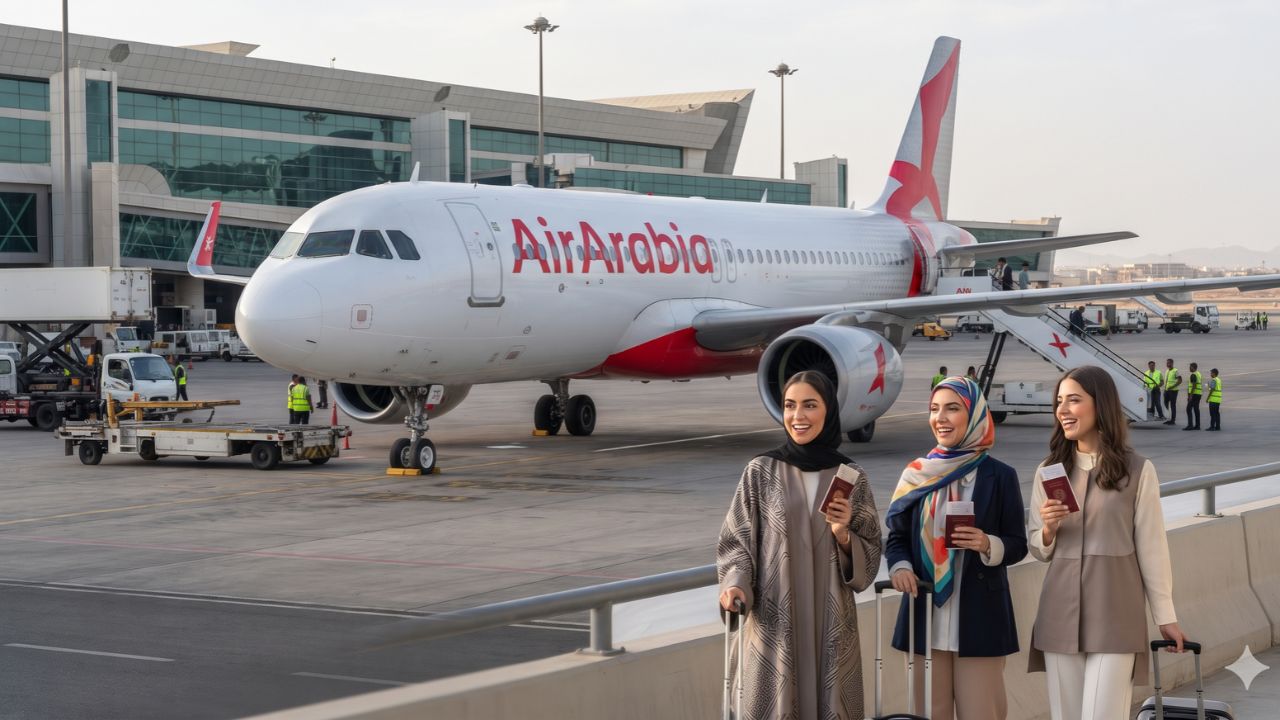
Although Dammam’s King Fahd International Airport occupies 776 square kilometers—making it the largest commercial airport on earth by surface area—passengers throughout Saudi Arabia's Eastern Province long endured inconvenient domestic layovers in Riyadh or Jeddah just to cross into the Levant, until Air Arabia Dammam inaugurated its first international route with five weekly non-stop flights to Amman.
Marking the budget carrier's milestone expansion beyond domestic routes within the Kingdom, the scheduled non-stop service directly pairs King Fahd International Airport (DMM) with Queen Alia International Airport (AMM) in Jordan. Following a formal ribbon-cutting ceremony in Dammam and a traditional ceremonial water cannon salute on arrival in Amman on 21 November 2026, the route deploys 174-seat Airbus A320 aircraft configured in a single-class layout. The new connection provides immediate air access for business executives in Eastern Province energy corridors, regional holidaymakers seeking cooler Levantine mountain climates, and travelers heading toward ancient Nabataean trade heritage.
Air Arabia Dammam Enters the International Arena
The launch represents an operational shift for Air Arabia’s Saudi subsidiary. Previously restricted to internal Kingdom connections, the carrier's pivot toward international point-to-point services decentralizes Saudi civil aviation, empowering secondary industrial hubs like Dammam, Al Khobar, and Dhahran to bypass congested metropolitan gateways.
Operating on an unbundled low-cost business framework, the five weekly rotations offer passengers access to the carrier's digital amenities, including SkyTime, a free digital streaming platform delivering entertainment to personal mobile devices, and SkyCafe, a buy-on-board food and beverage service. Passengers enrolled in the Air Rewards loyalty scheme can earn and redeem points across regional flights, providing a cost-effective alternative to legacy regional carriers.
The table below outlines the core operating metrics and route specifications for the new international corridor:
| Route Parameter / Service Feature | Air Arabia Dammam Operations | Legacy Carrier Alternatives (Connecting) |
|---|---|---|
| Origin Airport | King Fahd International Airport (DMM), Dammam | King Fahd International Airport (DMM) |
| Destination Airport | Queen Alia International Airport (AMM), Amman | Queen Alia International Airport (AMM) via RUH / JED |
| Flight Frequency | 5 weekly non-stop services | Daily connecting services |
| Operating Aircraft | Airbus A320 (Single-class layout) | Airbus A320 / A321 / Boeing 777 combinations |
| Seating Capacity | 174 passenger seats | Variable multi-class cabins |
| Average Non-Stop Flight Time | Approximately 2 hours 25 minutes | 4 hours 45 minutes to 7 hours (with layovers) |
| Onboard Connectivity & Dining | Complimentary SkyTime streaming; SkyCafe retail menu | Seatback IFE; included standard meals |
| Loyalty Program | Air Rewards | Alfursan / Royal Club |
Eliminating connection transfers saves travelers between two and four hours per journey, significantly reducing friction for short weekend escapes and cross-border commercial itineraries.
What Makes Amman and the Levant Route Different
Jordan occupies a unique geographic and historical position in the Middle East. While Dammam and the Persian Gulf coast are defined by coastal desert plains, massive oil refining complexes, and ultra-modern corniche developments, Amman spreads across rolling limestone hills (jebels) that have been continuously inhabited for thousands of years.
Arriving at Queen Alia International Airport, travelers find a temperate Mediterranean highland environment. Amman acts as an open-air historical corridor where the Roman Theatre and the Temple of Hercules atop the Amman Citadel stand adjacent to lively contemporary art galleries on Rainbow Street.
Beyond the capital city limits, the five weekly flights unlock Jordan’s premier historical circuit. Travelers can head north along ancient olive groves to the Greco-Roman colonnades of Jerash, float in the mineral-rich waters of the Dead Sea, or follow the King's Highway south toward the desert canyons of Wadi Rum and the rose-red sandstone facade of the UNESCO World Heritage site of Petra. For Saudi nationals and Gulf expatriates, Amman provides a culturally familiar Arab destination with cooler evening breezes, distinctive Levantine gastronomy, and deep archaeological roots.
Visitor Insider Tips for Flying Between Dammam and Jordan
Traveling between the Eastern Province and Jordan requires understanding local customs, airport transport logistics, and seasonal high-plateau weather:
- Secure the Jordan Pass Before Arrival: International tourists planning to visit Petra and cultural sites should purchase the official Jordan Pass online through Visit Jordan prior to boarding in Dammam. The pass waives the 40 JOD single-entry tourist visa fee for qualifying nationalities if staying a minimum of three consecutive nights, while including prepaid entrance to more than 40 national attractions.
- Prepare for Amman's Winter Hill Temperatures: Amman sits at an elevation of roughly 1,000 meters above sea level. From November through March, evening temperatures routinely drop below 8 degrees Celsius (46 degrees Fahrenheit), with sudden winter rains making walking stone staircases treacherous. Pack thermal layers and sturdy rubber-soled footwear.
- Coordinate Ground Transport from Queen Alia Airport: Queen Alia International Airport sits 35 kilometers south of downtown Amman. The Airport Express bus runs every 30 minutes between the terminal and North Bus Station (Sariyah) for approximately 3.30 JOD. Alternatively, agree upon official fixed-rate airport yellow taxi tariffs displayed at the ground transport desk before setting off.
- Budget for Ancillary Airline Fees: As an ultra-low-cost carrier, Air Arabia applies separate fees for checked baggage exceeding carry-on allowances, advance seat reservations, and hot meals. Pre-book checked luggage allowances online during ticket purchase to avoid inflated counter surcharges at King Fahd International Airport.
- Navigate Dammam Airport Check-In Windows: King Fahd International Airport is situated roughly 30 kilometers northwest of central Dammam and 45 kilometers from Khobar. Account for highway security checkpoints along Route 613 and King Fahd Road, arriving at least 2.5 hours before departure to clear international exit immigration.
Cultural and Environmental Context
The strengthening of air corridors between the Eastern Province of Saudi Arabia and Jordan reflects expanding regional economic integration. Under Saudi Arabia’s Vision 2030, transforming regional airports into international gateways reduces reliance on capital hubs, driving private-sector commercial activity across logistics, light industry, and service sectors.
At the same time, cultural exchange between the two nations is historically intertwined. Thousands of Jordanian professionals contribute to Saudi Arabia’s engineering, healthcare, and educational sectors in Dhahran and Dammam, while Saudi tourists have long ranked among the largest source markets for Jordan’s hospitality sector.
From an environmental standpoint, direct point-to-point flights are inherently more fuel-efficient than multi-leg routings. Flying an Airbus A320 non-stop between Dammam and Amman cuts total flight distances by roughly 25% compared to routing through Riyadh or Dubai, avoiding extra takeoff and climb cycles that burn the highest concentration of aviation kerosene. As Jordan works to balance heavy tourism footprints at fragile archaeological sites like Petra with conservation policies, sustainable visitor dispersal across less-visited northern circuits like Umm Qais and Ajloun becomes increasingly vital.
FAQ: Flying Air Arabia Dammam to Amman 2026
What is the flight frequency for Air Arabia between Dammam and Amman?
Air Arabia Dammam operates five non-stop flights weekly between King Fahd International Airport (DMM) and Queen Alia International Airport (AMM).
What aircraft is used on the Dammam to Amman route?
The service operates with an Airbus A320 aircraft configured in a single-class cabin offering 174 seats.
Do passengers receive complimentary meals and baggage on Air Arabia?
No. Air Arabia operates a low-cost model. Checked baggage, seat selection, and meals from SkyCafe must be purchased as add-ons, though free streaming entertainment is available via SkyTime.
Do GCC residents need a visa to enter Jordan?
GCC citizens enjoy visa-free entry to Jordan. Many expatriate residents holding valid GCC residency permits can obtain visas on arrival or through the online Jordan Pass platform, subject to specific nationality guidelines.
By connecting Dammam's industrial heartland directly to Amman's ancient limestone ridges, this five-flight weekly link proves that true regional exploration begins by cutting out the layover.
Related Travel Guides
This article is for informational purposes. Flight routes, passenger regulations, visa rules, and transit advisories are subject to change by airlines and aviation authorities. Readers are advised to verify schedules and travel documentation with relevant carriers and border agencies before departure.
Related Stories

Air Arabia Dammam Launches Direct Damascus Flights: A320 Schedule, Ancient City Heritage, and Levant Guide

India Launches International Digi Yatra Trials: Seven Airports Test E-Passport Biometrics