India Emerges As A Major Travel Partner As Philippine Airlines Expands Manila Network With Powerful Delhi Mumbai Connections

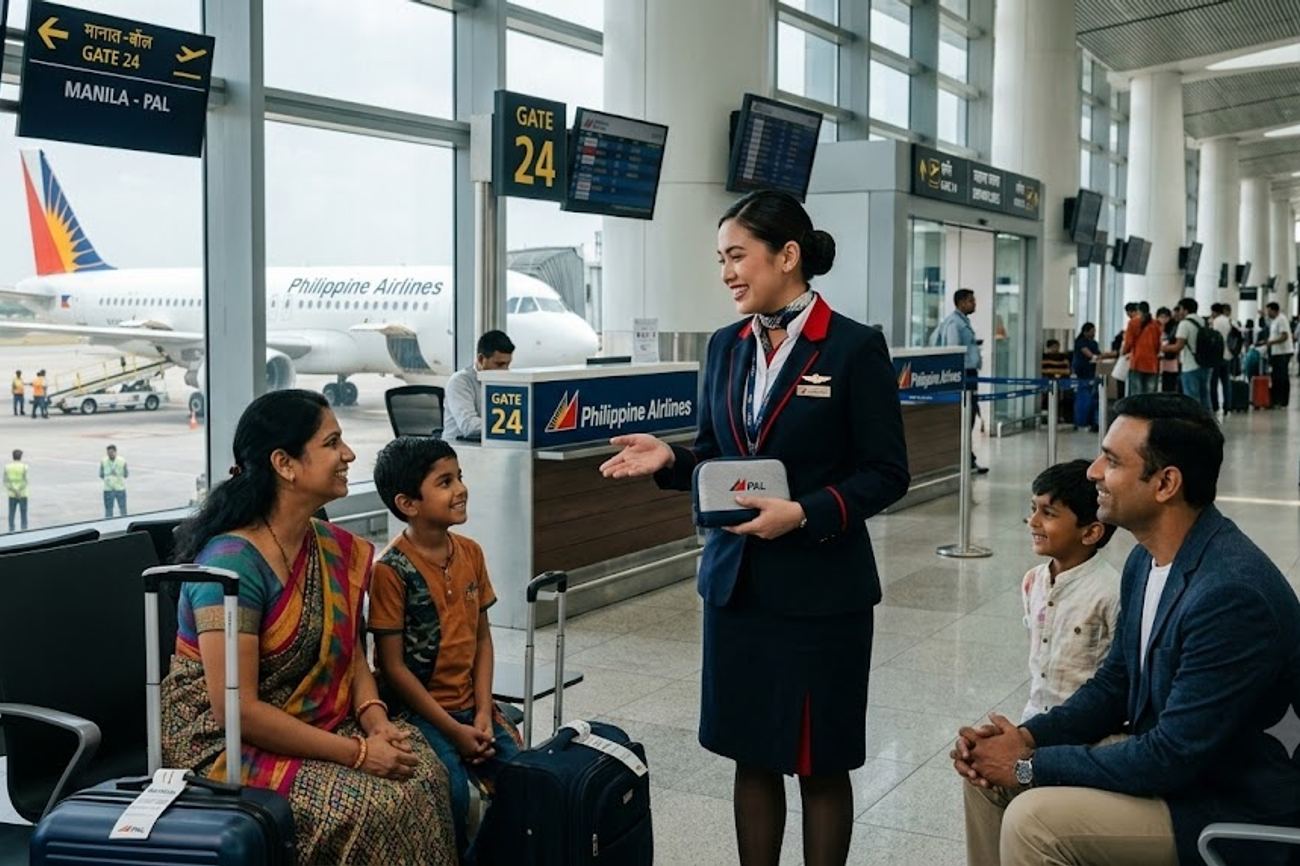
Image generated by AI
168 seats per aircraft will define the initial capacity of a new aerial bridge connecting Manila to India's primary economic engines. Starting in December 2026, Philippine Airlines (PAL) intends to bypass the traditional reliance on third-country hubs by launching direct, nonstop services from Manila to Delhi and Mumbai. This strategic pivot shifts the logistical burden away from transit points in Singapore, Bangkok, Kuala Lumpur, and Hong Kong, placing the Philippines in a direct competitive position within the South Asian market.
The Logistics of the Manila-India Corridor
The proposed expansion is not merely a route addition but a calculated move to capture a growing segment of business and leisure traffic between two of Asia's fastest-growing economies. By eliminating the need for connecting flights, PAL is targeting a reduction in total travel time and a decrease in the operational friction associated with multi-airport itineraries.
The deployment of the Airbus A321neo is a specific tactical choice. This aircraft model allows for a balanced configuration of 12 lie-flat Business Class seats and 156 Economy Class seats, catering simultaneously to high-yield corporate travelers and the burgeoning middle-class tourism market. The scheduling is designed to provide consistent but lean frequency to gauge market demand before scaling.
| Route | Flight Numbers | Weekly Frequency | Aircraft Model | Total Capacity |
|---|---|---|---|---|
| Manila $\leftrightarrow$ Delhi | PR642 / PR643 | 3x Weekly | Airbus A321neo | 168 Seats |
| Manila $\leftrightarrow$ Mumbai | PR646 / PR647 | 4x Weekly | Airbus A321neo | 168 Seats |
These services remain contingent upon formal approval from the Indian Government, a regulatory step that involves negotiating bilateral air service agreements and slot allocations at some of the world's most congested airports.
The Economic Engine: Beyond Passenger Seats
The introduction of these routes creates a dual-stream revenue opportunity for Philippine Airlines. While the passenger cabins focus on tourism and corporate travel, the belly hold of the A321neo opens a critical channel for air freight.
The movement of high-value, time-sensitive goods is the hidden driver of this expansion. By establishing a direct link, the airline is facilitating a faster supply chain for sectors that cannot afford the delays of hub-and-spoke transit. This is particularly relevant for the pharmaceutical and healthcare sectors, where India acts as a global pharmacy, and the electronics sector, where the Philippines maintains a strong manufacturing presence.
Furthermore, the strategic selection of Delhi and Mumbai is intentional. Delhi serves as the diplomatic and administrative nerve center, while Mumbai remains the undisputed financial capital. By anchoring its Indian operations in these two cities, PAL is positioning Manila as a primary gateway for Indian nationals looking to access not only the Philippines but also PAL's broader network extending into North America and the rest of Asia.
Expert Analysis: The Geopolitical and Market Shift
For travelers booking these routes, the direct consequence is a significant reduction in "transit fatigue" and a lower probability of luggage loss or connection failures associated with third-party hubs. However, the deeper industry implication is the challenge this poses to the dominance of the "Big Three" Southeast Asian hubs: Changi (Singapore), Suvarnabhumi (Bangkok), and KLIA (Kuala Lumpur).
The pricing pressure created by these direct flights will likely force competing carriers to reassess their transit pricing for India-Philippines itineraries. When a direct option exists, the "convenience premium" shifts from the hub carrier to the direct operator. For the International Air Transport Association (IATA), this represents a trend toward "point-to-point" connectivity over traditional hub-and-spoke models in the mid-haul segment.
From a business perspective, the synergy between India's technology sector and the Philippines' Business Process Outsourcing (BPO) industry is the primary catalyst. As these two service-oriented economies integrate, the demand for "face-to-face" corporate governance, trade delegations, and investment discussions increases. The move to 3-4 weekly flights suggests that PAL is building a foundation for corporate contracts rather than relying solely on seasonal tourism.
Philippine Airlines' expansion of its Manila network with direct flights to Delhi and Mumbai is expected to boost tourism and trade between India and the Philippines, with the airline offering competitive fares and convenient schedules, for more information on flight schedules and bookings, visit the Philippine Airlines official website. This move is seen as a significant development in the aviation industry, enhancing connectivity between the two countries. The airline's decision to expand its network is likely to attract more Indian tourists to the Philippines, promoting cultural exchange and economic growth.
For the Indian traveler, this opens a streamlined path to high-growth destinations like Palawan, Boracay, and Cebu. By reducing the friction of entry, the Philippines is effectively competing for a larger share of the Indian outbound tourism wallet, which has historically been dominated by shorter-haul destinations or established Western markets.
Key Takeaways
- Direct Access: Nonstop flights from Manila to Delhi (PR642/643) and Mumbai (PR646/647) are slated for December 2026.
- Hardware Specification: The Airbus A321neo will be utilized, featuring a 168-seat configuration (12 Business / 156 Economy).
- Frequency: Mumbai will see higher frequency with 4 flights per week, while Delhi will operate 3 flights per week.
- Cargo Integration: The routes will prioritize the transport of pharmaceuticals, electronics, and high-value retail goods.
- Regulatory Status: Final implementation is subject to the approval of the Indian Government.
FAQ: Manila-India Flights 2026
When do the direct flights from Manila to India begin? Philippine Airlines plans to launch nonstop services to Delhi and Mumbai starting in December 2026, pending government approval.
What aircraft will be used for the Manila-Delhi and Manila-Mumbai routes? PAL will deploy the Airbus A321neo, which provides 168 seats, including 12 lie-flat beds in Business Class and 156 seats in Economy.
How often will the flights operate? The Mumbai route is scheduled for four flights per week, while the Delhi route will operate three times weekly.
Will these flights help with shipping goods between the two countries? Yes, the new routes will expand cargo capacity for electronics, pharmaceuticals, and healthcare products, bypassing the need for third-country transit hubs.
A calculated gamble on the growing synergy between two Asian giants.
Related Travel Guides
This article is for informational purposes. Flight routes, passenger regulations, visa rules, and transit advisories are subject to change by airlines and aviation authorities. Readers are advised to verify schedules and travel documentation with relevant carriers and border agencies before departure.
Related Stories

MakeMyTrip Launches Travel Ka Muhurat Sale 2026 With 35 Airlines and 33,500 Hotels
US and Global Biometric Border Shifts: Analyzing the 2027 Passport and E-Gate Transformation